
When planning a hiking trip with your dog, one of the most important decisions you’ll make is how to transport them—especially if they’re small, young, tired, or not built for long trails. Two popular options dominate the market: dog backpacks and dog carriers. While both serve the purpose of carrying your pet safely, their design, functionality, and impact on comfort differ significantly. Choosing the wrong one can lead to discomfort for your dog, strain on your body, or even trail hazards. Understanding the nuances between a dog backpack and a traditional carrier helps ensure a safer, more enjoyable outdoor experience for both of you.
Understanding the Core Differences
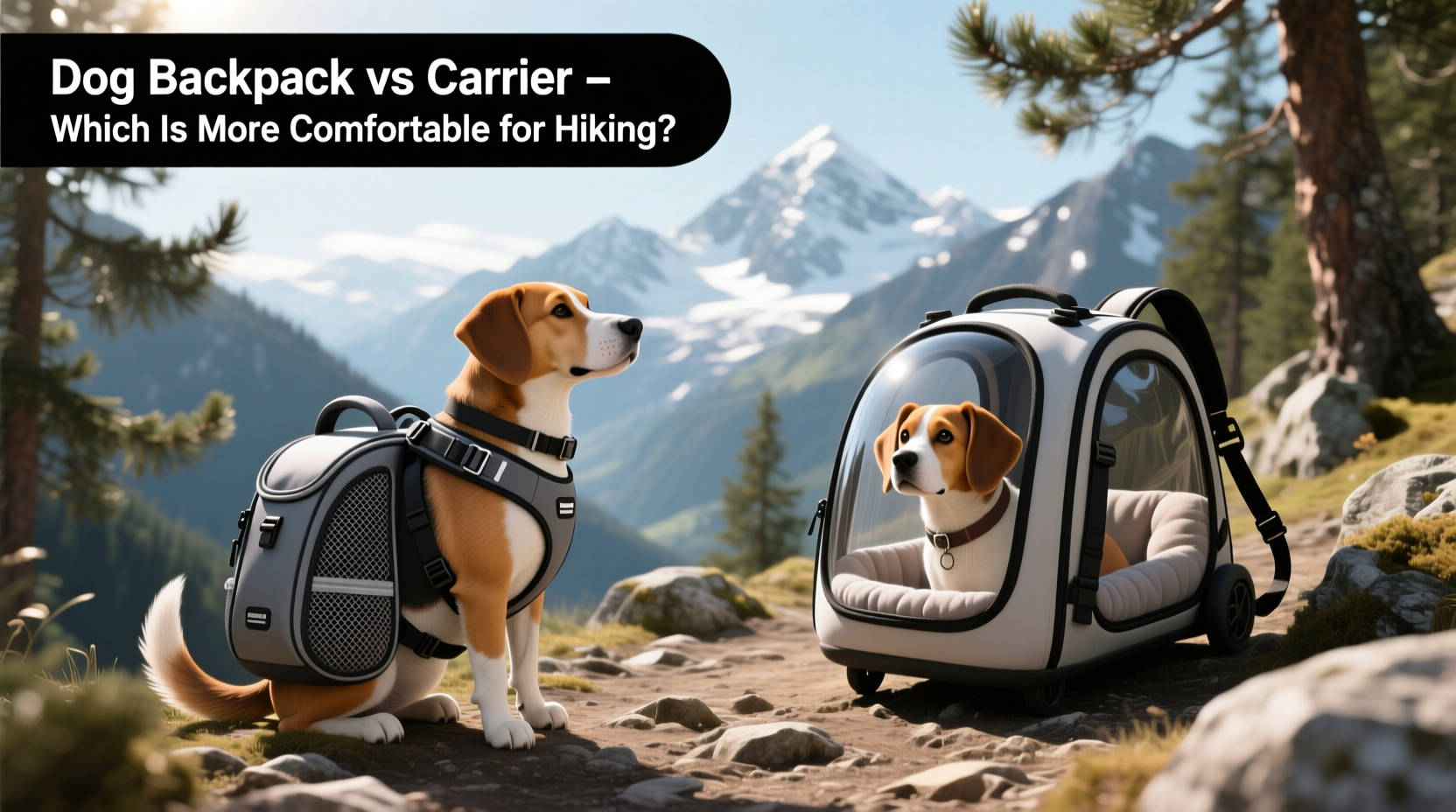
At first glance, dog backpacks and carriers may seem interchangeable, but their structural and functional purposes vary. A dog backpack is designed like a human hiking pack, with dedicated compartments for your dog—typically positioned on your back or hips—with ventilation, harness attachments, and weight distribution systems. These are built for active use, allowing dogs to ride while you hike, sometimes even letting them peek out or partially participate in walking.
In contrast, a dog carrier usually refers to a tote-style bag, sling, or front-facing pouch that holds your dog close to your chest or side. These are often lighter, less structured, and better suited for short walks, travel, or urban environments. While some carriers are frame-supported or have backpack straps, many lack the ergonomic support needed for extended hikes.
The key difference lies in intent: backpacks are engineered for endurance and integration into outdoor activity; carriers prioritize accessibility and closeness over long-distance performance.
Tip: Always test carry your dog in the pack or carrier before hitting the trail—simulate movement and check for shifting weight or discomfort.Comfort for Your Dog: What Really Matters?
Dog comfort hinges on several factors: ventilation, space, stability, visibility, and security. Let’s break down how each type performs.
- Ventilation: Backpacks typically feature mesh panels on multiple sides, ensuring consistent airflow. Carriers, especially soft-sided ones, may trap heat unless specifically designed with breathable materials.
- Space: Most backpacks offer larger enclosures, allowing small to medium dogs to sit or lie down comfortably. Carriers often restrict movement due to compact dimensions.
- Stability: Backpacks secure the dog with internal harness clips and padded walls, minimizing bounce during motion. Carriers held by hand or worn loosely can sway unpredictably.
- Visibility: Many backpacks allow dogs to look forward through mesh windows, reducing anxiety. Front carriers offer similar benefits, but side or tote carriers limit sightlines.
- Security: High-quality backpacks include escape-proof zippers and double stitching. Some carriers rely on single zippers or drawstrings, posing risks on rugged terrain.
“Dogs are sensitive to motion and confinement. A well-ventilated, stable carrying system reduces stress and prevents overheating—critical on trails where help isn’t immediate.” — Dr. Lena Torres, Veterinary Behavior Specialist
Ergonomics and Hiker Comfort: Who Bears the Load?
Your physical comfort directly affects how long and safely you can hike. A poorly balanced load leads to back pain, shoulder strain, or fatigue—potentially cutting your trip short.
Backpacks distribute weight across your shoulders, back, and hips using padded straps and waist belts. This mimics traditional hiking pack design, enabling longer treks without undue strain. Many models let you adjust torso length and load-lifter straps for a custom fit.
Carriers, particularly front-slung or tote styles, concentrate weight on your chest, arms, or one shoulder. Over time, this uneven pressure can cause neck tension, poor posture, and reduced endurance. Even dual-strap carriers often lack lumbar support, making them impractical for hikes exceeding a few miles.
Consider this: carrying a 15-pound dog for two hours equates to lugging a heavy suitcase nonstop. Without proper support, that burden takes a toll.
Weight Distribution Comparison
| Feature | Dog Backpack | Dog Carrier |
|---|---|---|
| Weight Distribution | Full back + hip support (torso-balanced) | Limited; often upper body only |
| Adjustable Fit | Yes – customizable straps, waist belt | Sometimes – basic shoulder or chest adjustments |
| Recommended Max Duration | 4+ hours (with breaks) | 1–2 hours |
| Impact on Posture | Minimal when properly fitted | High risk of forward lean or imbalance |
| Hiking Terrain Suitability | Rugged, steep, long-distance | Urban, flat, short excursions |
Real-World Scenario: A Weekend Hike in the Rockies
Meet Sarah, an avid hiker from Colorado, and her 12-pound Cairn Terrier, Baxter. She planned a weekend backpacking trip along the Bear Creek Trail—a 7-mile out-and-back route with elevation gain and rocky sections. Baxter loves hiking but tires after about three miles.
Last summer, Sarah used a soft-sided front carrier. By mile four, she was struggling with shoulder numbness and couldn’t adjust the load evenly. Baxter became restless, whining from overheating and limited airflow. They turned back early.
This year, Sarah invested in a dual-compartment hiking backpack with hip support, ventilation panels, and an internal leash clip. The difference was immediate. The weight felt balanced, her stride remained natural, and Baxter stayed calm, peering out through the mesh window. They completed the full hike, taking breaks as needed, and even camped overnight.
“It wasn’t just easier—it felt safer,” Sarah said. “I could focus on the trail instead of adjusting my grip every five minutes.”
This case illustrates a broader truth: the right gear transforms not just comfort, but capability.
Step-by-Step Guide: Choosing the Right Option for Your Needs
Follow these steps to determine whether a backpack or carrier suits your hiking goals.
- Assess Your Dog’s Size and Breed
Dogs under 20 pounds are generally eligible for either option. Larger breeds may exceed carrier limits but could still use specialized backpacks with rear support. - Evaluate Your Typical Hike Length and Terrain
For trails under 2 miles on flat ground, a carrier may suffice. For anything longer, steeper, or off-trail, opt for a backpack with full support. - Test Weight Distribution
Load the pack or carrier with a bag matching your dog’s weight. Walk around for 10–15 minutes. Note any pressure points, instability, or difficulty breathing. - Check Safety Features
Ensure the product has:- Internal harness attachment point
- Escape-proof closures
- Reflective strips for low-light visibility
- Reinforced stitching and durable fabric (e.g., ripstop nylon)
- Consider Multi-Use Functionality
Some dog backpacks double as cargo carriers—removable dog compartment lets you convert it to a standard hiking pack. This adds value for solo hikes or gear-heavy trips. - Read Verified User Reviews
Look for feedback on long-term comfort, durability, and real trail performance—not just aesthetics.
Do’s and Don’ts at a Glance
| Action | Recommended | Not Recommended |
|---|---|---|
| Carry duration | Break every 30–45 mins for water, stretch, bathroom | Continuous carry beyond 1 hour without rest |
| Pack loading | Evenly distribute extra gear around dog compartment | Overloading top or sides, causing imbalance |
| Dog preparation | Short trial hikes to build tolerance | First long hike as debut experience |
| Weather considerations | Avoid midday heat; use sunshade add-ons | Hiking above 80°F (27°C) without cooling breaks |
| Cleaning | Wipe down interior weekly; machine wash removable liners | Using harsh detergents or soaking entire pack |
Frequently Asked Questions
Can I use a regular hiking backpack to carry my dog?
No. Standard hiking packs aren’t designed for live animals. They lack ventilation, secure compartments, and harness anchors. Attempting to modify one can endanger your dog and compromise balance. Always use a purpose-built dog hiking backpack.
Are dog carriers safe for hiking?
Only certain types are suitable. Rugged, backpack-style carriers with waist support and ventilation can work for short trails. Traditional tote or sling carriers are unsafe—they don’t secure the dog properly and impair mobility. If you choose a carrier, verify it’s marketed for outdoor use and meets safety standards.
How do I know if my dog is stressed inside the pack?
Signs include excessive panting, whining, trembling, or trying to climb out. Stop immediately and let your dog rest outside the pack. Monitor behavior closely during initial uses. Some dogs adapt quickly; others may never feel comfortable being carried.
Final Checklist Before You Hit the Trail
- ✅ Dog has been acclimated to the pack/carrier indoors
- ✅ Weight is within manufacturer’s limit
- ✅ Internal harness is clipped securely
- ✅ Ventilation is unobstructed
- ✅ You’ve tested the loaded pack for comfort and balance
- ✅ Water, collapsible bowl, and waste bags are packed
- ✅ Emergency contact info is attached to the pack
Conclusion: Prioritize Comfort, Safety, and Shared Adventure
When it comes to hiking with your dog, comfort isn’t a luxury—it’s a necessity. Between a dog backpack and a carrier, the backpack emerges as the superior choice for most trail conditions, offering better weight distribution, enhanced safety, and greater long-term comfort for both dog and handler. That said, carriers have their place: for quick errands, vet visits, or brief nature walks on easy paths.
The decision ultimately depends on your lifestyle, hiking frequency, and your dog’s needs. But if you’re serious about exploring the outdoors together, investing in a high-quality dog hiking backpack pays dividends in safety, endurance, and shared joy.
💬 Have a favorite dog backpack model or a hiking story with your pup? Share your experience in the comments—your insight could help another pet parent make the right choice!








