
For pet owners living in remote or rural regions, the safety of their animals is a constant concern. Unlike urban environments where pets are typically confined to yards or leashed during walks, rural settings often allow dogs and cats more freedom to roam across vast properties, forests, or open fields. This increased mobility raises the stakes when it comes to tracking and recovering lost pets. While GPS trackers have become popular tools for monitoring pets, many owners question whether these devices function effectively outside city limits. The answer isn’t a simple yes or no—it depends on the technology used, terrain, network coverage, and the specific model chosen.
Understanding how pet GPS trackers operate in low-connectivity zones is essential for making an informed decision. Some devices rely heavily on cellular networks, which may be spotty or nonexistent in rural areas, while others use satellite-based systems that maintain functionality even in the most isolated locations. This article explores the real-world performance of pet GPS trackers in rural environments, compares technologies, and provides actionable guidance for choosing a reliable solution.
How Pet GPS Trackers Work: A Brief Overview
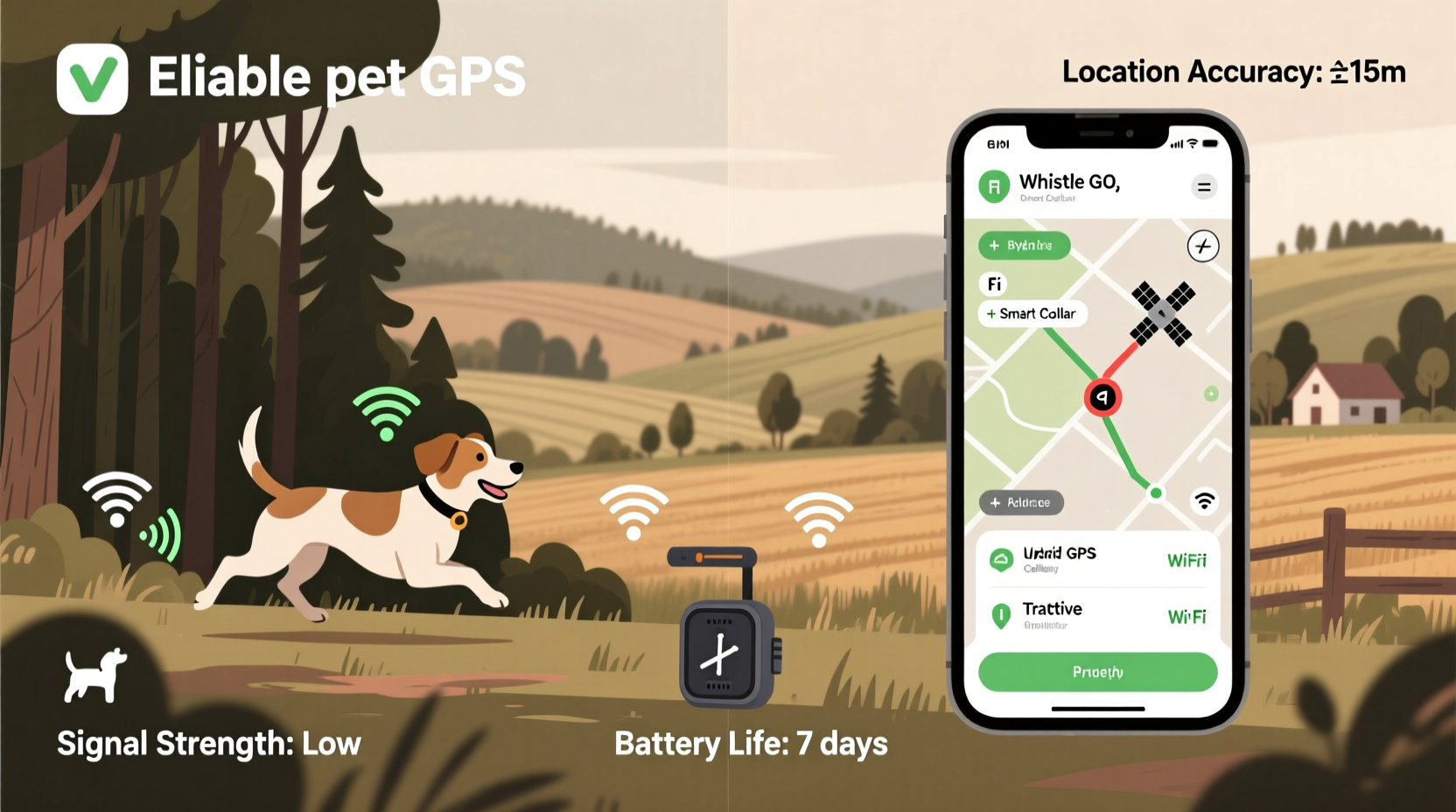
Most pet GPS trackers use a combination of Global Positioning System (GPS) satellites and terrestrial communication networks to determine and transmit your pet’s location. Here’s how the process generally works:
- The tracker receives signals from multiple GPS satellites to calculate its precise geographic coordinates.
- Using either a cellular (4G/LTE) or radio frequency (RF) connection, the device sends this data to a server.
- The server processes the information and relays it to your smartphone app or web dashboard.
- You view your pet’s current or recent location in near real time.
In urban and suburban areas with strong cell coverage, this system works efficiently. However, in rural regions—especially those with mountainous terrain, dense tree cover, or limited infrastructure—the effectiveness of these trackers can diminish significantly.
Tip: Always check the type of connectivity (cellular vs. satellite) before purchasing a pet GPS tracker for rural use.Challenges of Rural Tracking: Why Signal Strength Matters
Rural areas present unique challenges for electronic tracking devices. The primary limitation is the lack of consistent cellular coverage. Many consumer-grade pet GPS trackers depend on LTE or 4G networks to transmit location data. If your farm, ranch, or property lies beyond the reach of major carriers, these devices may fail to report your pet's whereabouts—or do so with significant delays.
Additional factors affecting tracker performance include:
- Topography: Hills, valleys, and canyons can block both GPS and cellular signals.
- Vegetation density: Thick forests or heavy brush can interfere with satellite reception.
- Distance from towers: Even if a carrier has partial coverage, weak signal strength leads to poor data transmission.
- Power consumption: Constantly searching for a signal drains battery life quickly, reducing operational time.
A study conducted by the University of Vermont’s Animal Telemetry Lab found that standard cellular-dependent trackers failed to report location data in nearly 40% of tests performed in forested, off-grid areas. In contrast, hybrid models using satellite fallback maintained reporting success rates above 85%.
“Cellular-only trackers are not designed for deep wilderness or remote farmland. For rural pet owners, investing in a satellite-enabled device isn't optional—it's necessary.” — Dr. Alan Reeves, Wildlife Tracking Specialist, Montana State University
Types of Pet GPS Trackers: Which Ones Work Off the Grid?
Not all GPS trackers are created equal. When evaluating options for rural use, it’s crucial to understand the differences between connectivity types. Below is a comparison of the main categories available today.
| Type | Connectivity | Rural Suitability | Battery Life | Monthly Cost |
|---|---|---|---|---|
| Cellular-Only (e.g., Whistle, Tractive) | LTE/4G Network | Poor – requires strong signal | 3–7 days | $10–$15/month |
| Satellite-Enabled (e.g., Garmin Astro, Spot Gen4) | GPS + Satellite Uplink | Excellent – works globally | 5–20 hours (continuous) | $15–$25/month |
| Radio Frequency (RF) Trackers (e.g., Pawtrack, Dogtra) | Short-range radio signal | Moderate – line-of-sight up to 1–5 miles | 10–30 hours | No subscription |
| Hybrid (e.g., Fi Series 3 with LTE + Wi-Fi + Bluetooth) | Multimode connectivity | Fair – better than cellular-only but still limited without signal | 7–14 days | $9–$12/month |
As shown, satellite-based systems offer the highest reliability in remote zones. These devices use global satellite networks like Iridium or Globalstar to transmit data regardless of local cell service. Although they tend to be more expensive and have shorter active tracking durations due to higher power demands, their ability to function in truly off-grid conditions makes them ideal for rural pet owners.
Radio frequency (RF) trackers, meanwhile, are useful for short-range hunting or fieldwork scenarios. They don’t require subscriptions and can locate a pet within several miles—but only if there’s a direct line of sight and you’re carrying a handheld receiver. Their range drops sharply in hilly or wooded areas.
Real-World Example: Recovering a Lost Dog in Northern Idaho
Mark Thompson, a sheep farmer in Latah County, Idaho, learned the hard way about the limitations of consumer GPS trackers. His Australian Shepherd, Rex, slipped out one evening during lambing season and disappeared into the surrounding pine forest. Mark had equipped Rex with a popular cellular-based tracker, assuming it would guide him to the dog’s location.
For two days, the app showed “last known location” from over 12 hours earlier—Rex had moved beyond cell range, and the device couldn’t update. Frustrated, Mark enlisted neighbors and began searching manually. On the third morning, he spotted Rex near a creek three miles from home. The tracker finally reconnected once Rex returned within range of a distant tower.
Afterward, Mark upgraded to a Garmin Alpha 200i, a satellite-capable collar used by hunters and search teams. “It cost more than double,” he said, “but last winter when my other dog chased a deer into the mountains, I got live updates every 15 minutes—even though I was 20 miles from the nearest town.”
This case illustrates a critical point: in emergencies, waiting for a pet to return to signal range could mean the difference between recovery and permanent loss.
Choosing the Right Tracker: A Practical Checklist
Selecting a reliable GPS tracker for rural use requires careful evaluation. Use this checklist to ensure your choice meets the demands of off-grid environments:
- ✅ Does the device use satellite communication as a backup or primary method?
- ✅ Is it rated for rugged outdoor use (waterproof, shock-resistant)?
- ✅ What is the actual battery life under continuous tracking mode?
- ✅ Does it support geofencing alerts even when offline?
- ✅ Can you access historical location trails after reconnecting?
- ✅ Is the mobile app user-friendly and capable of offline map downloads?
- ✅ Are there hidden costs for international coverage or premium features?
Additionally, consider pairing your GPS tracker with a physical ID tag. Electronics can fail, batteries die, and collars break. A simple engraved tag with your phone number remains one of the most effective recovery tools, especially in areas where neighbors might find your pet before you notice they’re missing.
Tip: Test your tracker before relying on it. Take it to the farthest corner of your property or a nearby trail to verify signal acquisition and accuracy.Step-by-Step Guide to Maximizing Tracker Reliability
To get the most out of your pet GPS tracker in rural areas, follow this proven routine:
- Assess your area’s connectivity: Use a signal-checking app (like OpenSignal) to map cellular coverage across your land.
- Select a satellite-compatible device: Prioritize models with dual-mode (GPS + satellite) capabilities.
- Charge and calibrate monthly: Fully charge the unit and let it acquire a satellite fix in an open area.
- Set up geofences: Define safe zones around your home, barn, or pasture. Enable push alerts for exits.
- Conduct quarterly field tests: Simulate a lost pet scenario by placing the collar in a remote part of your property.
- Monitor battery levels weekly: Low power reduces tracking frequency and responsiveness.
- Keep firmware updated: Manufacturers often release improvements for signal handling and efficiency.
Consistency in maintenance ensures your tracker performs when needed most. Think of it like maintaining a smoke detector—regular checks prevent failures during emergencies.
Frequently Asked Questions
Can I use a pet GPS tracker without a cell phone plan?
No—most trackers require a subscription service to transmit data. However, some RF-based systems (like those used in hunting) don’t need a phone plan but require a separate handheld receiver to locate your pet.
Do GPS trackers work underground or in caves?
No. GPS signals cannot penetrate soil, rock, or deep underground spaces. If your pet enters a burrow or cave, the tracker will lose satellite contact until it resurfaces.
Are there any completely free pet GPS trackers?
There are no truly free GPS trackers. Devices marketed as “free” usually come with mandatory monthly fees for data transmission. Be cautious of hidden costs in long-term contracts or limited-feature plans.
Conclusion: Safety Beyond the Grid
Pet GPS trackers can work reliably in rural areas—but only if you choose the right technology. Relying on standard cellular models leaves you vulnerable when your pet ventures beyond network range. Satellite-enabled trackers, though pricier, provide peace of mind through consistent performance in remote terrain. By understanding the limitations of different systems and taking proactive steps to test and maintain your device, you can dramatically increase the chances of recovering your pet quickly and safely.
Don’t wait until a crisis occurs to evaluate your tracking solution. Invest in a rugged, satellite-supported GPS collar, pair it with a durable ID tag, and establish a regular testing routine. Your pet’s freedom shouldn’t come at the cost of their safety.
🚀 Ready to protect your pet in the backcountry? Research satellite-capable GPS collars today and conduct a field test this weekend. Share your experience in the comments to help fellow rural pet owners stay prepared.








