Hair gloss treatments have surged in popularity over the past few years, praised by stylists and clients alike for their ability to refresh color, smooth frizz, and deliver an undeniable mirror-like shine. But with so many products making bold claims, a critical question remains: do these treatments truly enhance hair health and reflectivity, or are they merely a cosmetic illusion—a fleeting color boost with no lasting impact? The answer lies somewhere between science, formulation, and proper application.
Unlike permanent dyes or deep conditioning masks, hair glosses operate on a different principle. They’re designed to sit on the outer layer of the hair shaft, sealing the cuticle and depositing subtle pigments. This action can dramatically improve appearance—but whether that translates to genuine shine enhancement or just a temporary tint depends on several factors, including hair condition, product type, and aftercare.
Understanding How Hair Gloss Works
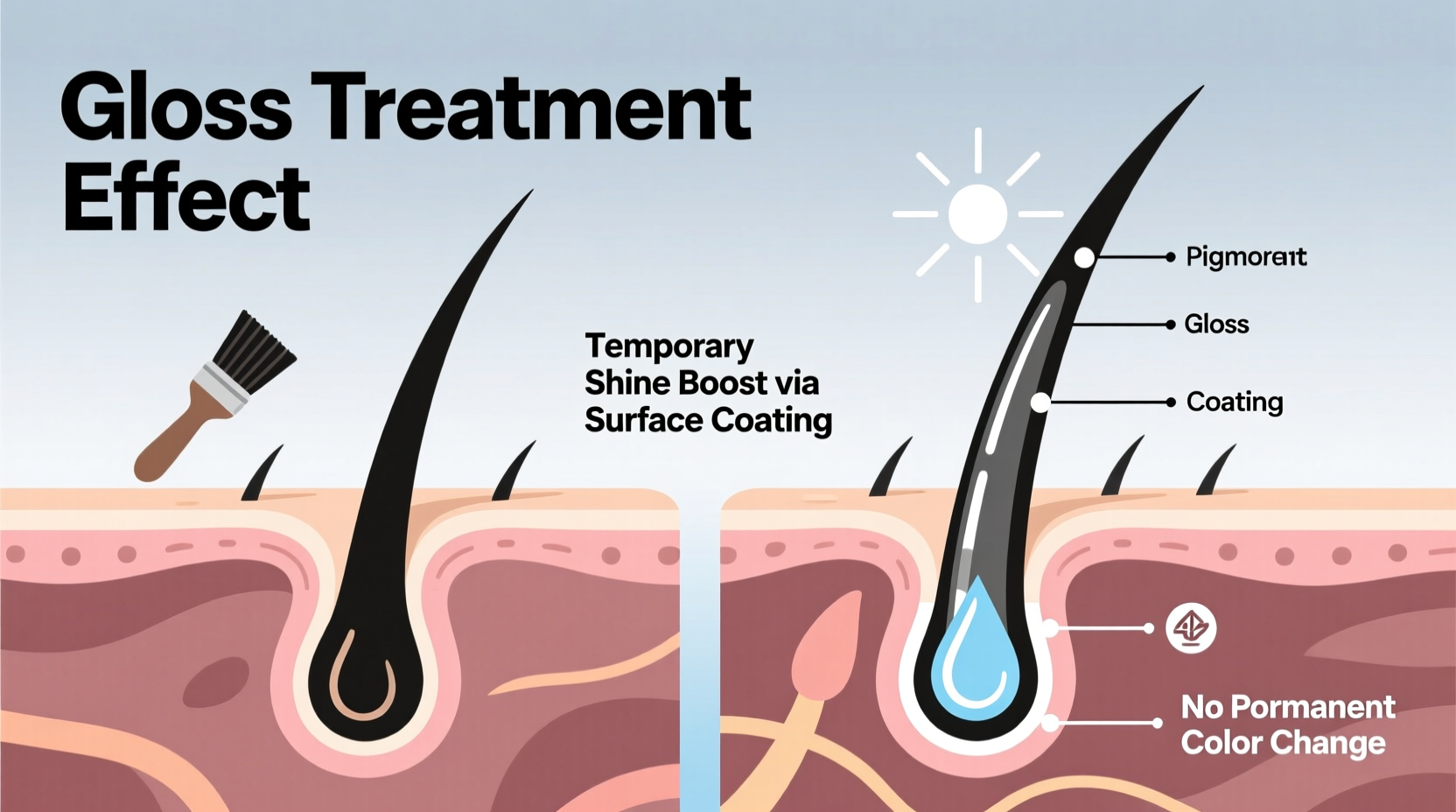
A hair gloss is a semi-permanent treatment that combines conditioning agents with low-level pigments. It doesn’t penetrate the cortex like traditional hair color but instead coats the surface of the hair. This coating smooths the cuticle—the outermost layer of the strand—which plays a crucial role in how light reflects off the hair.
When the cuticle is raised or damaged, light scatters unevenly, making hair appear dull and lifeless. A gloss flattens this rough surface, allowing light to reflect uniformly. This is the foundation of true shine—not just added color, but improved light reflection due to structural smoothing.
Glosses typically contain ingredients such as:
- Cationic polymers – which adhere to negatively charged hair surfaces, helping seal the cuticle.
- Silicones (like dimethicone) – that create a slick, reflective layer.
- Plant-based oils (e.g., argan, jojoba) – to nourish without heavy buildup.
- Pigments – usually ammonia-free and low in concentration, ideal for toning brassiness or enhancing natural tones.
The result is a multi-benefit treatment: enhanced vibrancy, reduced frizz, and increased luminosity—all without the damage associated with bleach or permanent dye.
Tip: For maximum shine, apply gloss to clean, freshly washed hair—product buildup can block even absorption.Shine vs. Color Boost: What’s Really Happening?
It’s easy to conflate shine with color richness, especially when both improve simultaneously. However, they are distinct outcomes:
- Shine refers to the physical reflection of light from a smooth surface. True shine comes from cuticle integrity.
- Color boost is the visual enhancement of hue, depth, or tone—often achieved through pigment deposition.
A high-quality gloss delivers both. But not all glosses are created equal. Drugstore formulas may rely heavily on silicones for immediate shine while offering minimal conditioning or pigment stability. Salon-grade glosses, on the other hand, often use advanced polymer technology to bond with the hair, providing longer-lasting effects.
Consider this: if you apply a clear gloss (no pigment) to gray or platinum hair, you’ll still see a dramatic increase in shine. That proves the effect isn’t solely about color—it’s about surface refinement.
“Gloss treatments are one of the most effective tools we have for restoring luster to compromised hair. When applied correctly, they don’t just mask damage—they mitigate its visible effects.” — Dr. Lena Torres, Trichologist & Cosmetic Chemist
Comparing Gloss Types: Which Delivers Real Shine?
| Type of Gloss | Shine Level | Color Effect | Lasts | Best For |
|---|---|---|---|---|
| Clear Gloss (No Pigment) | ★★★★☆ | None | 1–3 weeks | Dull, porous, or post-chemical hair |
| Toning Gloss (e.g., purple, blue) | ★★★☆☆ | Moderate (corrects brassiness) | 2–4 weeks | Blondes, gray-haired individuals |
| Deposit-Only Color Gloss | ★★★★☆ | High (adds warmth/coolness) | 3–5 weeks | Fading color-treated hair |
| At-Home DIY Gloss Kits | ★★☆☆☆ | Low to Moderate | 1–2 weeks | Budget-conscious users |
| Professional In-Salon Gloss | ★★★★★ | High & Customizable | 4–6 weeks | All hair types seeking premium finish |
The data shows that professional treatments consistently outperform retail options in both shine longevity and color fidelity. This is largely due to precise pH balancing and higher-quality film-forming agents that resist washout.
Step-by-Step: Maximizing Shine with a Gloss Treatment
To get the most out of your gloss—not just a flash-in-the-pan shimmer but sustained radiance—follow this professional protocol:
- Wash hair with clarifying shampoo to remove residue. Avoid conditioner, as it can block gloss adhesion.
- Towel-dry to damp. Too wet, and the gloss will dilute; too dry, and coverage becomes patchy.
- Section hair evenly using clips. Work in four quadrants for thorough saturation.
- Apply gloss from midshaft to ends first, then roots if adding color. Use a tint brush for precision.
- Leave on for 10–20 minutes, depending on brand instructions. Over-processing won’t increase shine and may cause buildup.
- Rinse thoroughly with cool water. Cold water helps seal the cuticle, locking in smoothness and reflection.
- Follow with a lightweight conditioner only on ends. Avoid heavy formulas that could mute shine.
- Air-dry or diffuse on low heat. High heat can disrupt the newly sealed surface.
Real Results: A Mini Case Study
Take Sarah, a 34-year-old brunette who colors her hair every eight weeks. After her last root touch-up, she noticed increasing dullness by week five—especially around the mid-lengths where sun and chlorine exposure were highest. Her stylist recommended a custom chestnut-toned gloss during a routine trim.
The gloss was applied in-salon using a professional brand with hydrolyzed keratin and cationic conditioning agents. Immediately, her hair looked healthier: the faded band near her ears vanished, split ends appeared less noticeable, and under office lighting, her hair reflected light like polished wood.
Over the next three weeks, Sarah reported fewer styling complaints—her hair dried faster, felt smoother, and required less serum. Even after seven washes, the shine remained perceptible, though the color toning had faded slightly. By week six, she returned for another session, noting that “it’s the only thing that makes my color look fresh between appointments.”
This case illustrates that gloss does more than temporarily paint over problems. When used strategically, it enhances manageability, reduces porosity, and creates a durable shine that persists beyond initial application.
Common Myths About Hair Gloss Treatments
Despite growing awareness, misconceptions persist:
- Myth: Gloss is just diluted hair dye.
Reality: While some glosses contain pigment, their primary function is conditioning and smoothing. Most lack ammonia, peroxide, or alkaline developers. - Myth: Gloss damages hair with frequent use.
Reality: Gloss is gentler than most styling tools. Regular use can actually protect hair by reinforcing the cuticle. - Myth: Only colored hair needs gloss.
Reality: Natural hair benefits too—especially if exposed to UV, hard water, or friction from hats and scarves. - Myth: Shine means healthy hair.
Reality: Shine can be cosmetically enhanced even on weak hair. True health includes elasticity, moisture retention, and strength.
Checklist: Is a Hair Gloss Right for You?
Answer yes to two or more of the following? A gloss might be your best next step:
- Do your highlights look brassy or faded?
- Does your hair feel rough despite conditioning?
- Do you use heat tools daily?
- Has your color lost its “wet look” shine?
- Are your ends noticeably lighter or drier than your roots?
- Do you swim regularly or spend time in the sun?
If so, consult your stylist about incorporating a gloss every 3–6 weeks as part of a maintenance regimen.
FAQ: Your Gloss Questions Answered
Can I apply a gloss at home and get salon-like shine?
Yes, but results vary. At-home kits are improving, yet they often lack the pH optimization and professional application needed for uniform shine. For best results, start with a salon visit, then maintain with quality retail glosses.
Will a gloss make my oily scalp worse?
Not if applied correctly. Focus the product from ear level down. Avoid the scalp, especially if prone to oiliness. Many glosses are water-based and non-comedogenic.
How soon after coloring should I get a gloss?
You can apply a gloss immediately after coloring—many salons do this as a final step. It seals the cuticle, boosts shine, and neutralizes unwanted tones right after dye processing.
Conclusion: Shine With Purpose
Hair gloss treatments are far more than a superficial color refresh. While they undeniably enhance tone and reduce brassiness, their greatest value lies in their ability to restore optical smoothness to the hair surface. This structural refinement is what generates real, measurable shine—not just a momentary glimmer masked by silicones.
The key is choosing the right formula for your hair type and maintaining it with sulfate-free care. Whether you’re battling fade, frizz, or flatness, a well-applied gloss can bridge the gap between salon visits and keep your hair looking vibrant, healthy, and luminous.
🚀 Ready to revive your hair’s glow? Schedule a gloss treatment with your stylist or try a reputable at-home kit this week. Share your before-and-after experience in the comments—your journey could inspire someone else to shine brighter.








