Thunderstorms can be terrifying—not just for children or sensitive adults, but especially for dogs. The sudden booms of thunder, flashes of lightning, shifts in barometric pressure, and static electricity can trigger intense fear responses in even the most confident canines. For pet owners, witnessing a dog tremble, pace, hide, or bark uncontrollably during a storm is distressing. In recent years, calming collars have emerged as a popular solution. Marketed as drug-free, easy-to-use tools, these collars claim to soothe anxious dogs using pheromones or gentle pressure. But do they really work—especially when it comes to storm-related anxiety?
This article dives into the science behind calming collars, evaluates user experiences, compares different types, and offers practical advice for pet owners considering this option. Whether your dog suffers from mild unease or full-blown storm phobia, understanding what these collars can—and cannot—do is essential.
How Calming Collars Work: The Science Behind the Claims
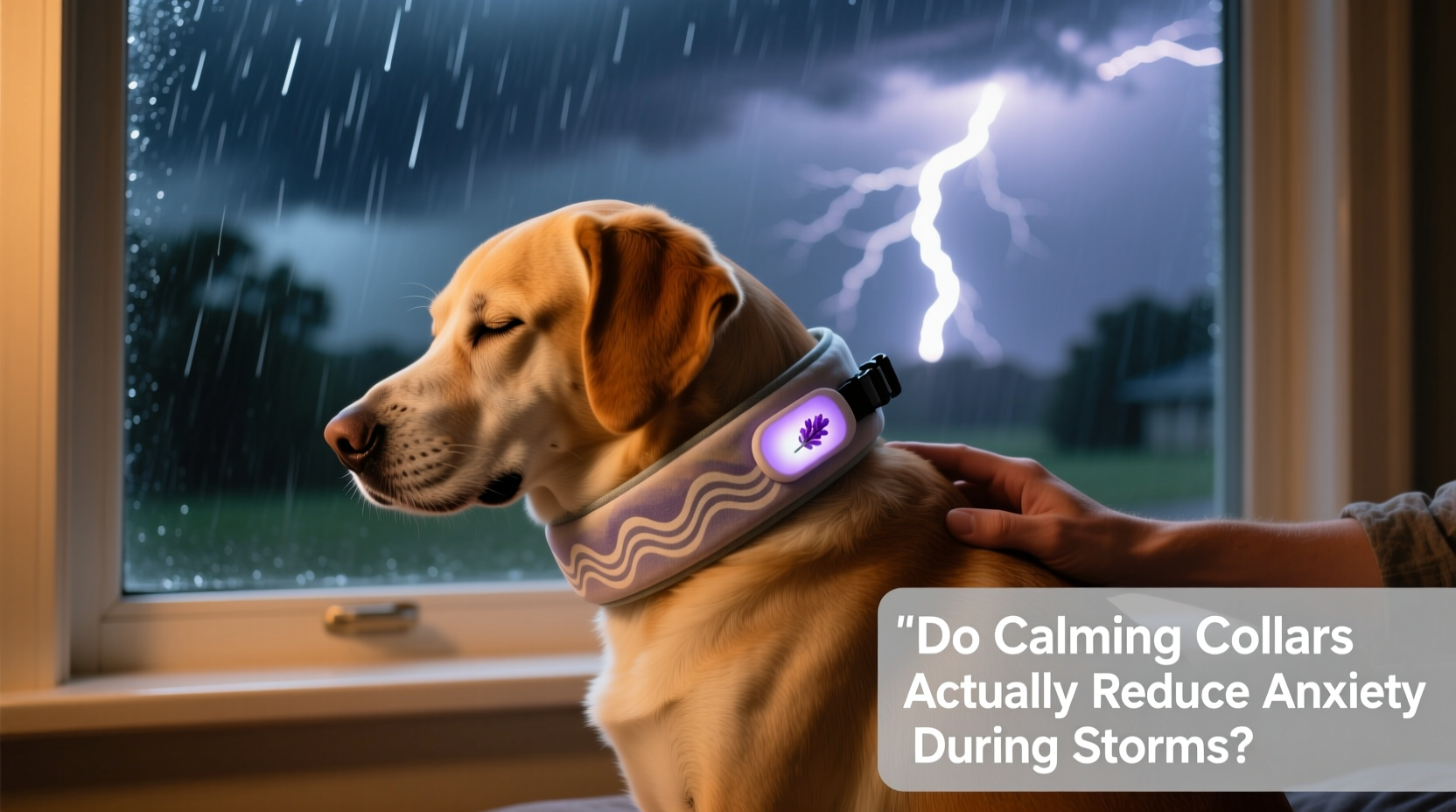
Calming collars primarily fall into two categories: pheromone-based and pressure-based. Each operates on a different principle, targeting canine anxiety through distinct biological pathways.
Pheromone collars release synthetic versions of dog-appeasing pheromones (DAP), which are naturally produced by mother dogs during nursing to comfort their puppies. These chemical signals are undetectable to humans but are picked up by dogs through the vomeronasal organ. Manufacturers claim that mimicking these pheromones creates a sense of safety and reduces stress responses.
One of the most well-known brands, Adaptil, has funded studies suggesting that DAP can lower cortisol levels—the hormone associated with stress—in dogs exposed to stressful stimuli. A 2009 study published in the *Journal of Veterinary Behavior* found that dogs wearing DAP collars exhibited fewer signs of separation anxiety compared to controls. However, storm-specific data remains limited.
Pressure-based collars, such as those inspired by Temple Grandin’s “hug machine” for cattle, apply gentle, constant pressure around the dog’s neck or torso. The theory draws from deep pressure touch stimulation (DPTS), which is believed to activate the parasympathetic nervous system, promoting calmness. While not technically collars, some products like the ThunderShirt use similar principles via vests rather than neckwear.
Despite anecdotal support, scientific validation for pressure-based calming devices is mixed. A 2014 study in the same journal found no statistically significant difference in physiological stress markers between dogs wearing anxiety wraps and those without—though behavioral improvements were noted by owners.
Tip: Pheromone collars typically take 15–30 minutes to begin releasing active compounds. Put them on before a storm arrives for best results.Real-World Effectiveness During Storms: What Pet Owners Report
While laboratory conditions offer controlled insights, real-world performance is often more telling. Thousands of pet owners have shared experiences online about using calming collars during thunderstorms, fireworks, or travel.
Many report noticeable reductions in panting, pacing, and vocalization. Some describe dogs that normally hide under beds now choosing to stay near their owners while wearing the collar. Others note partial improvement—less barking, but still trembling.
However, results are inconsistent. A subset of users finds no change at all, while others observe initial success that fades over time. This variability suggests that effectiveness depends on multiple factors: the dog’s temperament, severity of anxiety, environment, and even the specific storm’s intensity.
“Pheromone collars aren’t a magic fix, but they can take the edge off moderate anxiety. For severe cases, they should be part of a broader plan.” — Dr. Lisa Jacobson, DVM, Veterinary Behaviorist
A Mini Case Study: Max, the German Shepherd
Max, a 4-year-old German Shepherd from Ohio, began showing signs of storm anxiety at age 2. During summer thunderstorms, he would howl, scratch at doors, and sometimes urinate indoors out of panic. His owner, Sarah, tried white noise, hiding him in a basement, and even melatonin supplements with limited success.
She then purchased an Adaptil calming collar. The first storm after use was mild, and Max remained unusually quiet—still alert, but not pacing. Encouraged, Sarah kept the collar on during subsequent storms. Over three months, she recorded behavior using a simple scale: 1 (calm) to 10 (panic). Average scores dropped from 8.2 to 5.7. While Max still reacted, the intensity lessened significantly.
Sarah combined the collar with a consistent routine: closing curtains, playing classical music, and offering a high-value chew toy. She credits the collar as one component of a multi-pronged approach. “It didn’t stop his fear,” she said, “but it gave him a better chance to cope.”
Types of Calming Collars: A Comparison
Not all calming collars are created equal. Below is a comparison of common types based on mechanism, duration, cost, and suitability for storm anxiety.
| Type | Mechanism | Lifespan | Cost (USD) | Best For |
|---|---|---|---|---|
| Pheromone (e.g., Adaptil) | Releases synthetic dog-appeasing pheromones | 4 weeks | $20–$25 | Mild to moderate anxiety; long-duration events |
| Pressure (e.g., ThunderShirt-style collar) | Applies gentle compression to neck/shoulders | Indefinite (reusable) | $30–$40 | Dogs responsive to touch; situational stress |
| Essential Oil-Infused (e.g., certain holistic brands) | Releases lavender or chamomile scent | 2–4 weeks | $15–$20 | Cautious use only; avoid if dog has respiratory issues |
| Electronic (e.g., vibrating calming collars) | Emits low-frequency pulses to distract or soothe | Several months (battery-powered) | $50–$80 | High-tech households; consult vet first |
Note: Essential oil-based collars remain controversial. While scents like lavender have shown mild sedative effects in some animals, concentrated oils can be toxic to dogs if ingested or absorbed excessively. Veterinarians generally advise against unsupervised use.
When Calming Collars Fall Short: Limitations and Risks
Despite their appeal, calming collars are not a universal solution. Several limitations affect their reliability during storms:
- Delayed onset: Pheromone collars require time to saturate the air around the dog. If applied during an ongoing storm, effects may come too late.
- Habituation: Some dogs stop responding after repeated use, possibly due to sensory adaptation.
- Severity mismatch: Dogs with extreme storm phobias may need medication (like fluoxetine or trazodone) prescribed by a veterinarian.
- Fitting issues: Too tight causes discomfort; too loose reduces pheromone exposure or pressure efficacy.
- Environmental interference: Fans, open windows, or large rooms can disperse pheromones before they reach the dog.
Moreover, relying solely on a collar without addressing underlying triggers may reinforce fear over time. Anxiety often worsens when coping mechanisms fail. A dog that learns hiding doesn’t help and the calming collar doesn’t work may escalate to destructive behaviors or self-injury.
Expert Insight: Integrating Calming Tools Into a Broader Plan
Veterinary behaviorists emphasize that calming collars should be viewed as adjuncts—not replacements—for comprehensive anxiety management.
“Think of calming collars like seatbelts. They improve safety, but they don’t replace good driving. Similarly, a collar supports a dog during stress, but training, environment control, and sometimes medication are the real drivers of change.” — Dr. Karen Overall, DACVB, Canine Behavior Specialist
Step-by-Step Guide: Using a Calming Collar Effectively During Storm Season
To maximize the potential benefits of a calming collar, follow this evidence-based sequence:
- Choose the right type: For storm anxiety, pheromone collars have more research backing than alternatives. Start with a reputable brand like Adaptil.
- Fit properly: You should be able to fit two fingers between the collar and your dog’s neck. It should not rotate freely or cause hair loss.
- Activate early: Put the collar on at least 30 minutes before expected storm activity. Monitor weather forecasts daily during storm season.
- Combine with environmental management: Close windows, draw blinds, play calming music or white noise to reduce auditory and visual stimuli.
- Add positive reinforcement: Offer treats, toys, or gentle petting when your dog remains calm. Avoid overly comforting fearful behavior, which can reinforce it.
- Track progress: Keep a log of storm dates, collar use, and your dog’s reaction. Note changes over time.
- Reevaluate monthly: If no improvement occurs after three storms, consider consulting a veterinary behaviorist or exploring other treatments.
Complementary Strategies for Storm Anxiety
No single tool eliminates storm anxiety in all dogs. The most successful outcomes come from combining multiple approaches:
- Behavioral training: Desensitization using recorded storm sounds at low volume, gradually increasing over weeks.
- Safe spaces: Create a den-like area with blankets, familiar scents, and minimal echo.
- Dietary support: Some vets recommend L-theanine, CBD oil (where legal), or alpha-casozepine supplements.
- Medication: For severe cases, short-term anti-anxiety meds like benzodiazepines can prevent trauma during critical events.
- Professional help: Certified animal behaviorists can design customized treatment plans.
Checklist: Preparing Your Dog for Storm Season
- ✔ Purchase a high-quality pheromone calming collar
- ✔ Test the collar during mild weather to check fit and tolerance
- ✔ Set up a designated safe room or crate
- ✔ Download storm sound recordings for desensitization training
- ✔ Consult your vet about anxiety severity and possible supplements
- ✔ Subscribe to a reliable weather alert service
- ✔ Begin using the collar proactively, not reactively
FAQ: Common Questions About Calming Collars and Storm Anxiety
Can calming collars be used with other anxiety treatments?
Yes, and they often work best in combination. Calming collars can be safely paired with behavioral training, environmental adjustments, and even prescription medications. Always inform your vet about all products you’re using to avoid interactions.
Are calming collars safe for puppies?
Generally, yes. Pheromone collars like Adaptil are considered safe for puppies over 8 weeks old. Adjust the fit carefully as puppies grow quickly. Avoid pressure collars unless recommended by a vet, as excessive force could affect development.
Do calming collars work for fireworks too?
Many owners report similar benefits during fireworks, which share acoustic and atmospheric similarities with thunderstorms. However, fireworks are often more unpredictable in timing, so preemptive use is harder. Consider keeping the collar on during peak firework seasons (e.g., July 4th week).
Conclusion: A Tool, Not a Cure
Calming collars can reduce anxiety in some dogs during storms—but they are not a guaranteed solution. Scientific evidence supports modest efficacy, particularly for mild to moderate cases. Real-world results vary widely, influenced by individual temperament, proper usage, and complementary care strategies.
The key takeaway is this: calming collars are most effective when integrated into a thoughtful, proactive plan. They should not be opened during a thunderstorm and expected to work instantly. Instead, treat them as one element in a broader approach that includes training, environmental control, and, when necessary, professional guidance.
If your dog struggles with storm anxiety, start today. Try a reputable pheromone collar, track its impact, and build a supportive routine around it. For many dogs, even a small reduction in fear can lead to a better quality of life. And for owners, seeing your companion endure a storm with less distress is worth the effort.
💬 Have experience with calming collars during storms? Share your story in the comments to help fellow dog owners find relief for their anxious pets.








