
In a world where Labrador Retrievers and German Shepherds dominate popularity charts, a handful of dog breeds remain hidden in plain sight—so rare that even seasoned dog lovers may never have seen one in person. These exceptional canines are more than just uncommon; they carry centuries-old lineages, cultural significance, and personalities as distinct as their appearances. From ancient Arctic guardians to island-born herders, these rare dogs offer a glimpse into forgotten corners of canine history. Here’s an in-depth look at ten of the world’s rarest dog breeds, each with its own story, charm, and quiet legacy.
The Norwegian Lundehund: A Living Fossil of the Cliffs
Bred over 500 years ago to hunt puffins along Norway’s treacherous coastal cliffs, the Norwegian Lundehund is unlike any other breed. It possesses six fully functional toes per foot, giving it unparalleled grip on slippery rocks. Its joints are hyper-flexible, allowing it to scale narrow crevices and turn corners within tight spaces. Most astonishingly, it can close its ears to keep out water and debris—a trait evolved for life among sea spray and caves.
By the mid-20th century, disease nearly wiped out the breed. A population bottleneck reduced genetic diversity, making modern Lundehunds susceptible to digestive disorders. Today, fewer than 600 exist worldwide, mostly in Scandinavia and select parts of North America.
“Few breeds embody adaptation like the Lundehund. It’s not just rare—it’s a biological marvel shaped by isolation and necessity.” — Dr. Ingrid Svendsen, Canine Evolution Biologist, University of OsloTip: If you're considering a Lundehund, work with a breeder who prioritizes health screening, especially for intestinal lymphangiectasia.
The Azawakh: Desert Guardian of West Africa
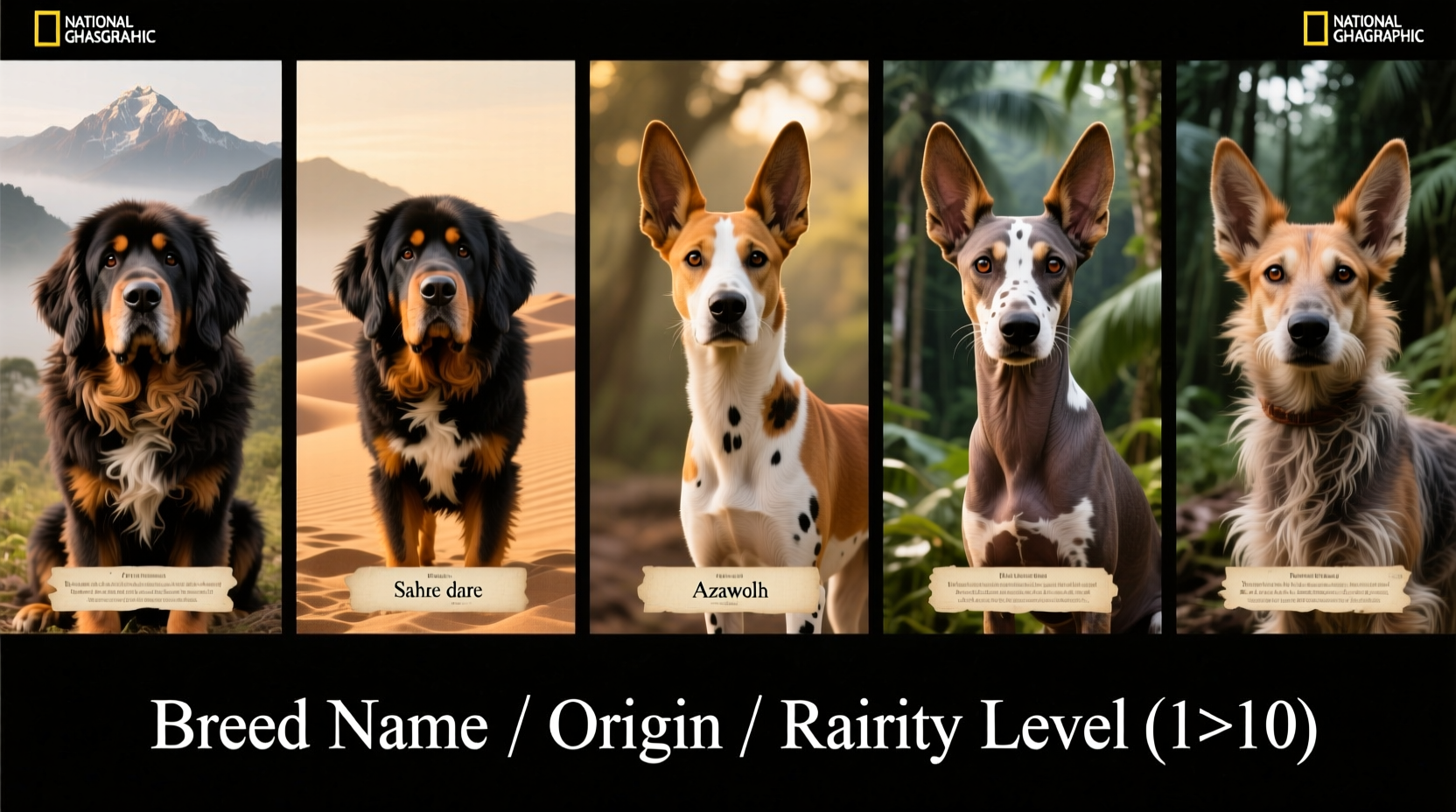
Hailing from the Sahel region across Mali, Niger, and Burkina Faso, the Azawakh is a sighthound built for endurance in extreme heat. With long, slender limbs and a deep chest, it can sprint after prey across arid plains, then return to rest under the shade of a thorn tree. Unlike many hounds, the Azawakh forms intense bonds with its family and is deeply protective, though reserved with strangers.
Rarity stems from both geographic isolation and cultural specificity. The breed has been raised for generations by nomadic Tuareg people, who value it as much for companionship as for hunting. Exporting them was historically rare, and even today, ethical acquisition requires working through preservation societies to avoid disrupting indigenous stewardship.
Why the Azawakh Remains Rare
- Native to remote regions with limited breeding infrastructure
- Cultural significance limits commercial export
- High sensitivity to stress and change makes international transport risky
The Otterhound: A Beard of Purpose
With a shaggy double coat, webbed feet, and a keen nose for tracking otters through rivers and marshes, the Otterhound was once a staple of British gamekeeping. Now, otter hunting is banned, and the breed’s original purpose has vanished. What remains is a dog of extraordinary character—boisterous, intelligent, and famously vocal, with a “merry” bark that carries for miles.
Fewer than 1,000 Otterhounds exist globally, and the UK Kennel Club estimates only 15–20 puppies are born annually. Their low reproduction rate, combined with declining interest from breeders, places them on the Vulnerable Native Breed list.
| Attribute | Detail |
|---|---|
| Origin | England |
| Average Lifespan | 10–13 years |
| Coat Type | Wire-haired, waterproof |
| AKC Recognition | Recognized but extremely rare |
| Annual Puppies (UK) | ~20 |
The Mudi: Hungary’s Forgotten Herder
While the more famous Puli and Pumi often steal the spotlight, the Mudi remains Hungary’s best-kept canine secret. Energetic, alert, and highly trainable, this medium-sized herding dog excels in agility, obedience, and even search-and-rescue. Its tightly curled coat ranges from black to rare merle or white, and its upright ears give it a perpetually curious expression.
Despite its versatility, the Mudi is absent from most mainstream registries outside Europe. In the U.S., fewer than 50 live specimens are registered with national clubs. Enthusiasts praise its intelligence and lack of aggression, making it ideal for active families—if they can find one.
Checklist: What to Consider Before Seeking a Rare Breed
- Verify breeder credentials and ethical practices
- Research breed-specific health issues
- Confirm availability of experienced veterinarians familiar with the breed
- Understand import regulations if sourcing internationally
- Evaluate time and lifestyle compatibility—many rare breeds need high mental stimulation
The Thai Ridgeback: Stripes and Independence
One of only three ridged dog breeds in the world (alongside the Rhodesian and Phu Quoc Ridgebacks), the Thai Ridgeback is a primitive breed native to eastern Thailand. Its defining feature—a strip of hair growing backward along its spine—is the result of a dominant genetic mutation. Agile and muscular, it was used for hunting, guarding, and even pulling small carts.
Still largely confined to rural Thailand, the breed is slowly gaining attention abroad. However, its independent nature and strong prey drive make it unsuitable for novice owners. It thrives in homes with secure fencing and consistent leadership.
Tip: Socialize Thai Ridgebacks early and consistently—they can be aloof with strangers and reactive to fast-moving stimuli.Mini Case Study: The Hunt for a Peruvian Inca Orchid
Sophie Carter, a software engineer from Portland, spent two years searching for a Peruvian Inca Orchid—one of the oldest breeds in the Americas, dating back over 3,000 years. Hairless varieties were revered by pre-Columbian civilizations for their warmth and spiritual symbolism. After contacting breed clubs in Peru and navigating complex import laws, Sophie finally connected with a breeder in Lima who partnered with a U.S.-based preservation group.
The puppy arrived with documentation tracing its lineage to ancient Andean bloodlines. “It wasn’t just about owning something rare,” Sophie said. “It was about honoring a piece of living history.” Today, she volunteers with a rescue network dedicated to protecting the breed from extinction.
The Xoloitzcuintli: Ancient Companion of the Aztecs
Also known as the Xolo (pronounced “show-low”), this hairless breed was believed by the Aztecs to guide souls to the underworld. Revered in mythology and frequently depicted in ancient pottery, the Xolo comes in toy, miniature, and standard sizes. While gaining modest popularity due to appearances in films like *Coco*, purebred specimens remain scarce.
Xolos are calm, loyal, and surprisingly warm to the touch—their skin radiates body heat, making them natural bed warmers. Health-wise, they require special skincare to prevent sunburn and dryness, but they are generally robust and long-lived.
The King Charles Spaniel’s Rarer Cousin: The Bluetick Coonhound?
No—surprise twist: the **Norrbottenspets**, a small spitz-type dog from northern Sweden, deserves the spotlight. Bred by the Sami people for hunting fox and bird, this compact, white-and-brown-coated dog is alert, fearless, and deeply attached to its handler. With fewer than 300 registered outside Scandinavia, it remains one of Europe’s best-kept secrets.
Its rarity is partly due to strict breeding standards in Sweden and limited demand elsewhere. Yet those who own Norrbottenspets praise their trainability and adaptability—even in urban settings, provided they get sufficient exercise.
FAQ: Understanding Rare Dog Breeds
Why are some dog breeds so rare?
Rarity often results from geographic isolation, loss of traditional roles (e.g., hunting bans), small gene pools, or cultural protection. Some breeds were never intended for mass domestication and thrive best in specific environments.
Are rare dog breeds good pets?
They can be, but they often come with unique needs. Many rare breeds are high-energy, require specialized care, or have limited availability of veterinary knowledge. Thorough research and access to breed-specific communities are essential.
How can I ethically acquire a rare dog?
Work with recognized breed clubs, preservation societies, or conservation-focused breeders. Avoid purchasing from sources that exploit rarity for profit. Consider adoption—some rare breeds end up in rescue due to owner unpreparedness.
Conclusion: Embracing Rarity with Responsibility
The world’s rarest dogs are not merely curiosities—they are living links to human history, culture, and regional ecosystems. Owning one is less about status and more about stewardship. Each breed carries a legacy that demands respect, informed care, and a commitment to ethical breeding practices.
💬 Have you encountered one of these rare breeds? Or are you considering welcoming one into your life? Share your thoughts, questions, or experiences below—let’s build a community that values preservation over trends.








