When it comes to choosing toys that captivate children for more than just a few minutes, parents often face a dilemma. Should they go for the soft, imaginative appeal of a dinosaur bean bag or the action-packed excitement of a toy gun? Both have their place in a child’s world, but longevity of engagement is what separates passing fads from lasting favorites. The real question isn’t just about fun—it’s about how each toy supports sustained play, creativity, physical activity, and emotional development.
This comparison dives into the practical, psychological, and developmental aspects of both options. By understanding how children interact with these toys over time, parents can make informed decisions that promote not only entertainment but also growth.
The Role of Imagination in Long-Term Play
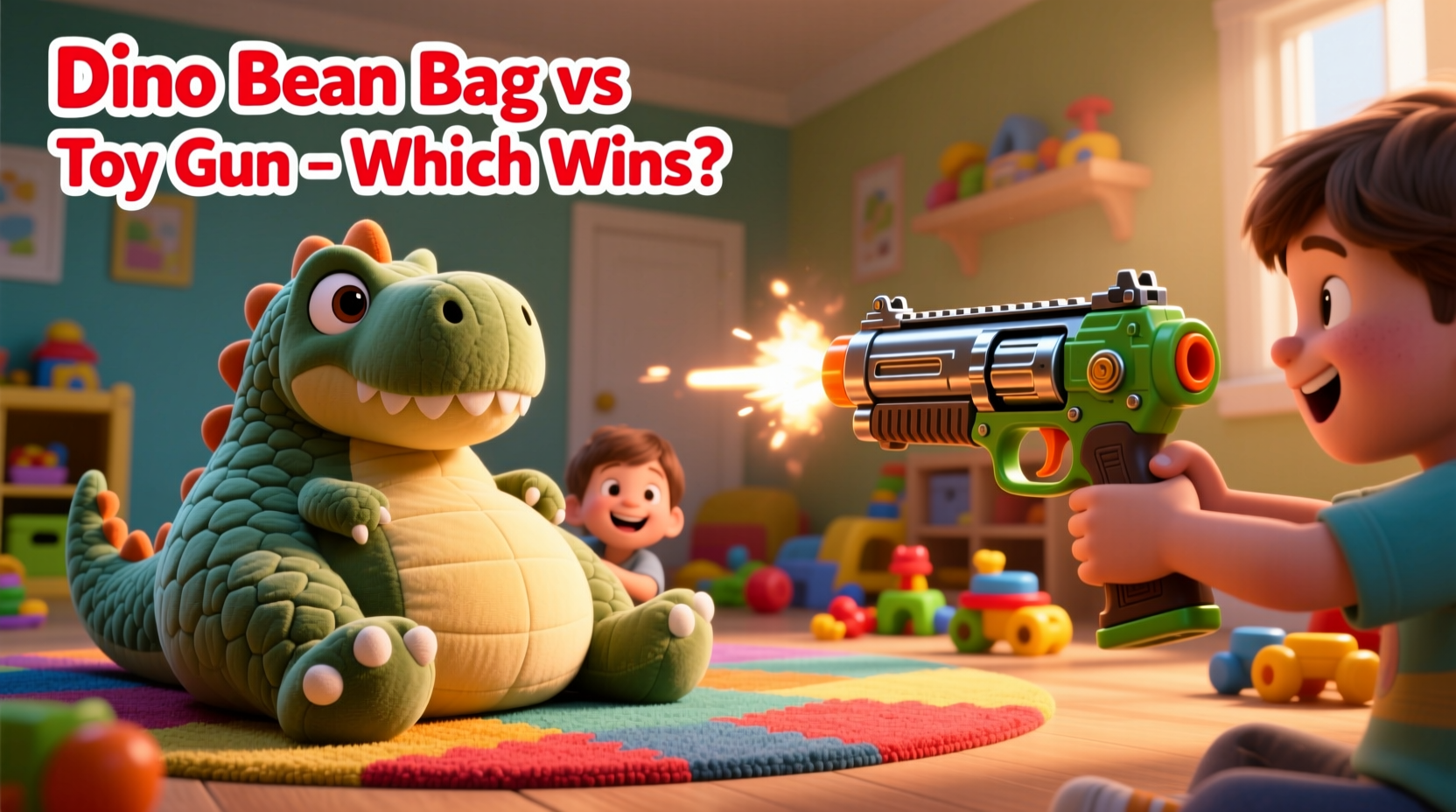
One of the strongest predictors of how long a toy holds a child’s interest is its potential to inspire imaginative play. Toys that serve as open-ended tools—those without a single defined function—tend to remain relevant across different stages of childhood. A dinosaur bean bag naturally fits this category. It can be a pet, a guard, a character in a story, or even a seat during quiet time. Its versatility allows children to reinvent its role daily.
In contrast, toy guns are typically tied to specific types of play: shooting, battling, or pretending to be a hero or soldier. While exciting in short bursts, this form of play can become repetitive if not supported by broader narrative structures. Without encouragement to expand the storyline, children may exhaust the novelty within days.
Tip: Pair any action-oriented toy with storytelling prompts to extend its imaginative lifespan.Safety, Durability, and Everyday Use
Durability plays a major role in whether a toy stays in rotation. Dinosaur bean bags are generally made from soft, washable fabrics filled with polystyrene beads. They withstand drops, throws, and indoor tumbles without breaking. Most are machine-washable, making them ideal for homes with young children who are hard on their belongings.
Toy guns, especially electronic ones, contain batteries, moving parts, and sometimes fragile plastic components. These can break after rough use or accidental drops. Additionally, many households restrict toy weapons due to safety concerns or personal values, limiting where and when they can be used. Even non-shooting models may be banned in schools or public spaces, reducing opportunities for shared play.
“Open-ended toys like plush items or seating props encourage longer, self-directed play because they adapt to the child’s evolving interests.” — Dr. Lena Torres, Child Development Psychologist
Comparative Features: Bean Bag vs Toy Gun
| Feature | Dinosaur Bean Bag | Toy Gun |
|---|---|---|
| Play Duration (Typical) | Months to years | Days to weeks (without expansion) |
| Imaginative Flexibility | High – multiple roles possible | Moderate – limited to combat/scenario play |
| Safety Level | Very high – soft, no projectiles | Variable – depends on design and rules |
| Durability | High – resistant to wear and tear | Moderate to low – prone to mechanical failure |
| Storage & Space Use | Doubles as seating or decor | Takes space; requires safe storage |
| Developmental Benefit | Creative thinking, emotional comfort | Motor skills, role-playing (with guidance) |
Encouraging Sustained Engagement: A Practical Guide
Even the most engaging toy can lose its luster without thoughtful integration into a child’s environment. Here’s how to maximize playtime with either option:
- Create a themed play zone. Surround the dinosaur bean bag with jungle-themed books, sounds, or drawings to build an immersive experience. For a toy gun, set up a “mission base” with maps and costumes to deepen narrative play.
- Rotate toys regularly. Introduce the item after a break to renew interest. This works especially well with the bean bag, which can reappear as a “new friend” after being stored.
- Join in the play. Children stay engaged longer when adults participate. Pretend the dinosaur is giving orders or that you’re part of a rescue squad using non-violent objectives.
- Set creative challenges. Ask, “What adventure did the dinosaur have last night?” or “Design a mission where no one gets hurt.” This redirects aggressive play toward problem-solving.
- Use the toy as a storytelling prop. Record your child’s stories featuring the dinosaur or hero character. Revisiting them later reinforces attachment.
Real-Life Example: Two Families, Two Choices
In a suburban neighborhood, two families bought birthday gifts for their 5-year-old sons on the same day. One chose a bright green T-Rex bean bag; the other selected a light-up laser tag blaster. At first, both boys were thrilled. The blaster sparked intense play sessions—running, shouting, aiming—with visible excitement.
Within three weeks, however, the laser toy was left under the couch. It required batteries that died frequently, and house rules limited its use to the backyard. Without structured games, the boy grew bored. His parents eventually donated it.
The T-Rex, meanwhile, became a constant companion. It served as a reading buddy, a pillow during movie nights, and the star of countless adventures drawn in crayon. Eight months later, it still appears in bedtime stories and school show-and-tell. The family reports it has become a comfort object, not just a toy.
This case illustrates a key insight: toys that integrate into multiple areas of a child’s life—emotional, physical, cognitive—tend to endure far beyond those confined to a single mode of play.
Developmental Considerations
Early childhood is a critical window for developing language, empathy, and executive function. Open-ended toys support these domains by encouraging narrative construction, perspective-taking, and self-regulation. A dinosaur bean bag invites questions like “How does he feel?” or “Where is he going?”—promoting emotional vocabulary and cause-effect reasoning.
Toy guns, while capable of supporting role-play, often shift focus toward action and competition. Without adult guidance, this can limit conversational depth. However, when reframed—for example, as tools for rescuing others or protecting nature—they can foster courage and responsibility without glorifying violence.
Checklist: Choosing the Right Toy for Longevity
- ✅ Does the toy allow for multiple types of play (resting, pretending, building stories)?
- ✅ Is it safe for indoor and outdoor use?
- ✅ Can it be easily cleaned and maintained?
- ✅ Does it encourage verbal interaction or collaboration?
- ✅ Will it still be usable in six months, regardless of trends?
- ✅ Does it align with your family’s values around safety and behavior?
Frequently Asked Questions
Can toy guns ever be educational?
Yes, when used intentionally. Toy guns can teach aim, hand-eye coordination, and turn-taking in structured games. When paired with storytelling or cooperative missions (“Rescue the stuffed animals!”), they can also support narrative development and teamwork.
Isn’t a bean bag just furniture? Why call it a toy?
A dinosaur-shaped bean bag bridges function and fantasy. It serves as seating but also becomes a character in a child’s world. Its dual role increases utility and emotional connection, making it more likely to be used daily in varied ways.
My child loves toy guns. How can I make them last longer in play?
Introduce themed scenarios that emphasize protection over aggression. Create missions involving puzzles, stealth, or rescue. Rotate the toy in and out of play to maintain novelty. Most importantly, discuss the difference between pretend and real-world actions regularly.
Final Thoughts: Building Play That Lasts
The dinosaur bean bag and the toy gun represent two philosophies of play: one rooted in imagination and comfort, the other in action and stimulation. While both can entertain, the bean bag consistently demonstrates greater staying power. It adapts to moods, grows with the child, and integrates seamlessly into daily routines. The toy gun, though thrilling initially, often fades unless supported by deliberate efforts to expand its use.
Ultimately, the best toys are not those that scream for attention, but those that quietly become part of a child’s world. They don’t need batteries or flashing lights—they just need room to grow in the mind. If long-term engagement, emotional connection, and developmental benefit are priorities, the dinosaur bean bag emerges as the clear winner.
💬 Have a toy that surprised you with its lasting appeal? Share your story in the comments—your experience could help another parent make a smarter choice.








