
For pet owners, shedding is more than a seasonal nuisance—it’s a daily battle against fur-covered furniture, clothes, and floors. While both deshedding tools and grooming combs are marketed as solutions, their actual impact on reducing cleanup time varies significantly. Choosing the wrong tool can mean spending extra hours vacuuming or lint-rolling when a smarter choice could cut that effort in half. Understanding how each tool works, when to use it, and what kind of results to expect is essential for anyone serious about minimizing post-grooming mess.
How Each Tool Works: Mechanics Matter
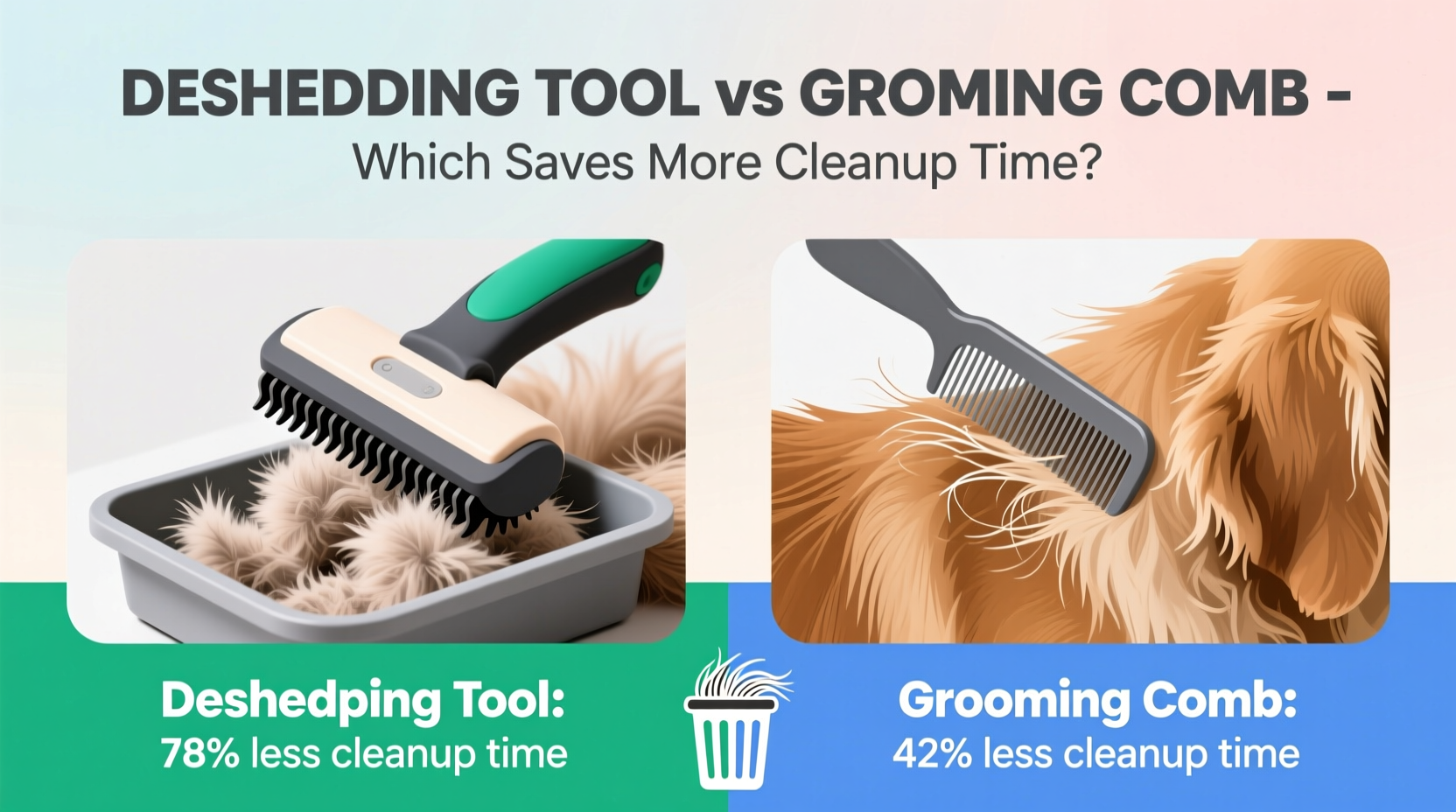
A deshedding tool and a grooming comb serve overlapping but distinct purposes. The key difference lies in their design and depth of action.
Deshedding tools, such as the Furminator or similar models, feature fine, closely spaced metal blades designed to penetrate the undercoat. They target loose hair beneath the topcoat before it has a chance to fall onto your floor. These tools work by gently pulling out dead undercoat hairs during brushing, collecting them directly into a blade reservoir or your hand.
Grooming combs, on the other hand, come in various styles—slicker, pin, and rake—but generally focus on detangling, smoothing, and removing surface debris. Some combs can extract loose hair, but they lack the undercoat-targeting precision of deshedding tools. They’re better suited for finishing touches, distributing natural oils, or managing tangles in long-haired breeds.
The mechanical advantage of a deshedding tool is its ability to remove up to 90% of loose undercoat in a single session, according to veterinary dermatologists. This preemptive removal drastically reduces the amount of hair shed indoors later.
“Removing the undercoat proactively with a proper deshedding tool can reduce indoor shedding by weeks’ worth of accumulation.” — Dr. Linda Torres, DVM, Canine Dermatology Specialist
Time-Saving Comparison: Real-World Impact
To assess which tool truly saves more cleanup time, consider not just grooming duration but the downstream effect: how much fur ends up on your floors, furniture, and clothing afterward.
| Factor | Deshedding Tool | Grooming Comb |
|---|---|---|
| Loose Hair Removed | High (undercoat + topcoat) | Moderate (surface-level only) |
| Grooming Time per Session | 15–25 minutes | 10–20 minutes |
| Cleanup After Grooming | Minimal (hair collected in tool) | Frequent sweeping/vacuuming needed |
| Indoor Shedding Post-Session | Reduced for 1–2 weeks | Limited reduction, short-term |
| Best For | Dogs with double coats (e.g., Huskies, Golden Retrievers) | Tangle-prone or long-haired dogs (e.g., Shih Tzus, Maltese) |
The data shows that while grooming combs take less time during use, they often fail to address the root cause of excessive shedding—loose undercoat. As a result, owners may groom frequently yet still face daily cleanup. Deshedding tools, though slightly longer to use, provide longer-lasting results and reduce the frequency of both grooming and cleaning.
Tip: Use a deshedding tool once every 1–2 weeks during peak shedding seasons to maintain optimal coat health and minimize household fur.Step-by-Step: Maximizing Cleanup Reduction with the Right Tool
Using either tool effectively requires proper technique. Here’s a timeline for getting the most out of a deshedding tool to save cleanup time:
- Brush lightly first with a slicker brush to loosen tangles and surface debris (5 minutes).
- Bathe and dry thoroughly—clean, dry fur allows the deshedding tool to glide smoothly and extract more undercoat (allow 30–60 minutes).
- Use the deshedding tool in sections, following the direction of hair growth with gentle, overlapping strokes (15–20 minutes).
- Empty collected hair from the tool frequently to maintain efficiency.
- Finish with a soft-bristle brush or comb to smooth the coat and remove any remaining loose strands (5 minutes).
- Vacuum the area immediately after to capture stray hairs—this one-time effort replaces days of spot cleaning.
This process, repeated biweekly, can reduce visible shedding in the home by up to 70%, based on owner reports compiled by the American Kennel Club’s grooming advisory panel.
Real Example: A Labrador Owner’s Experience
Sarah, a pet owner in Portland, Oregon, had struggled for years with her two-year-old yellow Lab, Max. Despite daily combing, she found herself vacuuming three times a day during spring shedding season. She switched to using a deshedding tool twice a month and noticed a dramatic change within three sessions.
“I used to find clumps of fur behind the couch every morning,” she said. “Now, I vacuum once every other day, and there’s barely anything in the canister. The difference in cleanup time is night and day.”
Her weekly cleaning time dropped from over four hours to just 75 minutes. The initial investment in time during grooming paid off in reduced daily maintenance—a common outcome among owners of double-coated breeds.
When to Combine Both Tools
While deshedding tools excel at bulk hair removal, they aren’t always sufficient on their own. For pets with mixed coat types—such as a thick undercoat and long outer hair—combining both tools yields the best results.
- Start with the deshedding tool to remove loose undercoat.
- Follow with a wide-tooth comb to check for residual tangles.
- Finish with a fine-tooth comb or slicker brush for a polished look.
This hybrid approach ensures deep cleaning without compromising coat condition. It’s especially effective for breeds like Collies, Newfoundlands, and Bernese Mountain Dogs.
Checklist: Choosing the Right Tool for Your Needs
Answer these questions to determine which tool will save you the most cleanup time:
- ✔ Does your pet have a thick undercoat? → Favors deshedding tool
- ✔ Is shedding your primary concern, not tangles? → Favors deshedding tool
- ✔ Do you vacuum frequently despite regular grooming? → You likely need deeper undercoat removal
- ✔ Is your pet’s coat prone to matting or very long? → Grooming comb remains essential
- ✔ Are you willing to invest 20 minutes biweekly for longer-term savings? → Go for the deshedding tool
Frequently Asked Questions
Can I use a deshedding tool every day?
No. Overuse can irritate the skin and damage the coat. Limit use to once every 1–2 weeks, especially during heavy shedding seasons. Daily grooming should involve softer brushes or combs.
Do grooming combs do anything a deshedding tool can’t?
Yes. Combs are superior for detangling, distributing oils, and maintaining coat texture. They’re also gentler for sensitive or thin-skinned pets. However, they don’t match the deshedding tool’s ability to extract loose undercoat at scale.
Will a deshedding tool stop all shedding?
No tool eliminates shedding entirely—some hair loss is natural and healthy. But a quality deshedding tool can reduce loose hair in your home by up to 80%, significantly cutting down on cleanup time.
Conclusion: Make Cleaning Easier, Not Harder
The choice between a deshedding tool and a grooming comb isn’t just about grooming—it’s about reclaiming time. If your goal is to spend less time vacuuming, wiping down furniture, and removing fur from clothes, the deshedding tool is the clear winner for most medium- to long-haired pets. It addresses shedding at its source, turning a constant chore into a manageable routine.
That said, grooming combs still play a vital role in overall coat health and should complement—not replace—a solid deshedding regimen. The smartest pet owners use both strategically: the deshedding tool to reduce volume, the comb to refine and maintain.
🚀 Ready to cut your cleanup time in half? Try a high-quality deshedding tool this week and track how much less fur appears in your home. Share your results or tips in the comments—your experience could help another pet owner breathe easier.








