Dogs don’t speak in words, but they are constantly talking. Their communication is rich, nuanced, and deeply rooted in body language, vocalizations, and behavioral patterns. Understanding what your dog is trying to tell you isn’t about mind reading—it’s about learning the subtle signals they use every day. Whether it’s a flick of the tail, a shift in posture, or a soft whine, each gesture carries meaning. By becoming fluent in canine communication, you can strengthen your bond, prevent misunderstandings, and respond more effectively to your dog’s emotional and physical needs.
The Foundation of Canine Communication
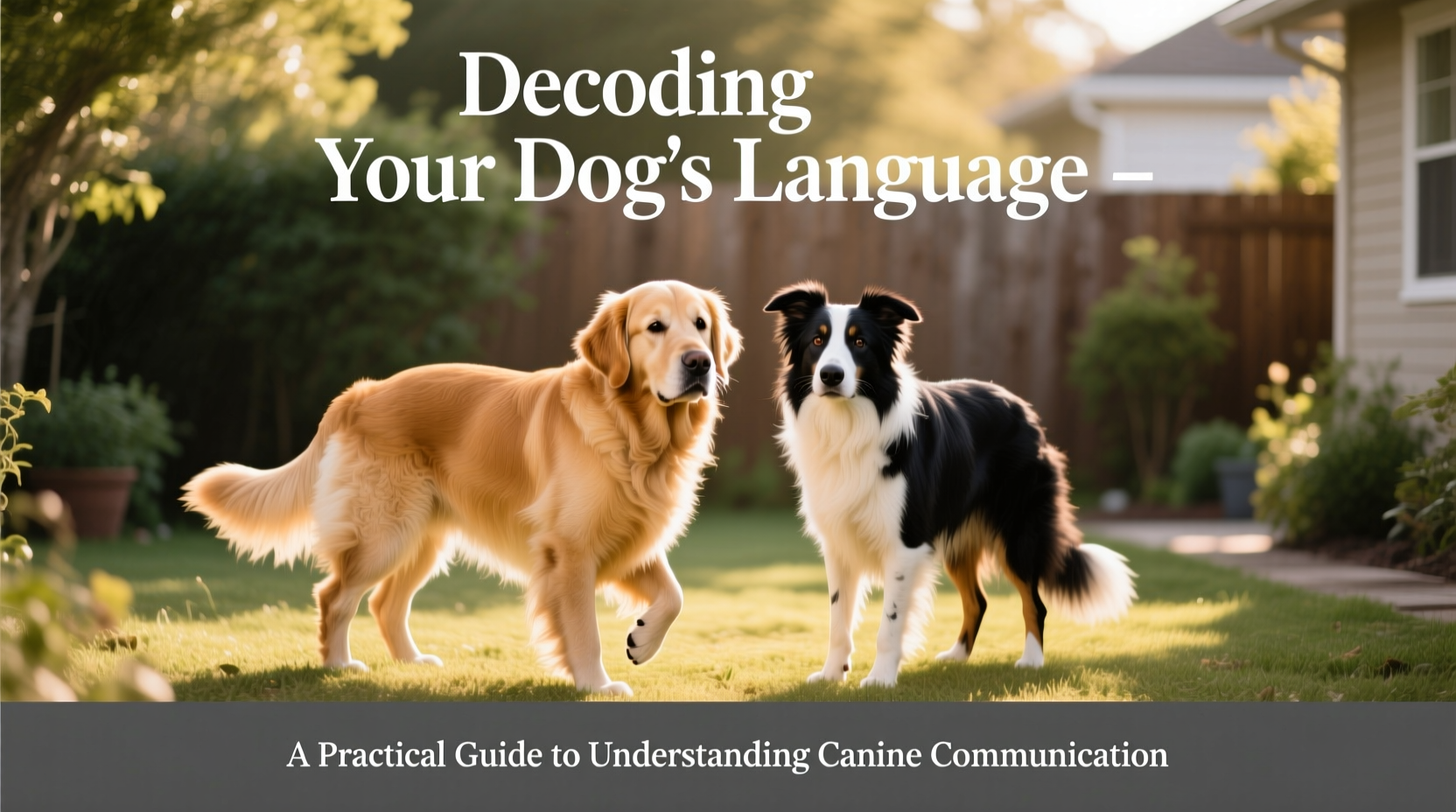
Dogs rely on a combination of visual, auditory, and olfactory signals to express themselves. Unlike humans, who prioritize verbal language, dogs process information primarily through body posture, facial expressions, and movement. This multimodal system evolved to help them navigate social hierarchies, avoid conflict, and signal intentions in the wild. Even domesticated dogs retain these instincts, which means their behavior often reflects ancestral survival strategies.
Understanding canine communication begins with recognizing that dogs are not small humans. They don’t experience guilt, spite, or revenge—emotions we sometimes project onto them. Instead, their actions are responses to stimuli: fear, excitement, curiosity, or discomfort. When a dog growls at a stranger or hides during thunderstorms, it’s not being “bad”—it’s communicating distress.
“Dogs are always communicating. The key is whether we’re listening.” — Dr. Patricia McConnell, animal behaviorist and author of *The Other End of the Leash*
Reading Body Language: Key Signals Explained
A dog’s body is a dynamic instrument of expression. From the tip of the nose to the base of the tail, every part plays a role in conveying emotion and intent. Here are the most important areas to observe:
- Ears: Forward ears may indicate alertness or interest; flattened ears suggest fear or submission.
- Eyes: Soft, blinking eyes signal relaxation. Hard stares or “whale eye” (when the whites show) often mean stress or anxiety.
- Mouth: A relaxed, slightly open mouth is calm. Lip licking, yawning, or showing teeth can be signs of discomfort or appeasement.
- Tail: High and stiff = arousal or dominance. Low and tucked = fear. A loose, sweeping wag usually indicates friendliness—but context matters.
- Posture: A crouched stance with weight shifted back suggests fear. A rigid, upright stance may signal aggression or high alert.
Common Misinterpretations and What They Really Mean
Many well-meaning owners misread their dog’s signals because human interpretations don’t align with canine reality. Below is a table comparing common misconceptions with accurate interpretations:
| Human Interpretation | Actual Canine Meaning | Why It Matters |
|---|---|---|
| “He’s smiling!” (lips pulled back) | Submissive grin or stress signal | Misreading can lead to pushing a dog past comfort zones |
| “She’s happy—she’s wagging her tail!” | High, rapid tail wag with tense body = arousal, possibly aggression | Could result in unsafe interactions with people or other dogs |
| “He knows he did wrong” (guilty look) | Appeasement behavior in response to owner’s tone/posture | Punishing after the fact teaches nothing and increases anxiety |
| “He loves kids—he licks them!” | Licking can be a calming signal or displacement behavior | May mask discomfort around children, increasing bite risk |
Step-by-Step Guide to Responding to Your Dog’s Signals
Becoming an effective communicator means not only interpreting signals but also responding appropriately. Follow this timeline to build better responsiveness:
- Observe consistently: Spend 5–10 minutes daily watching your dog in different environments—home, park, vet clinic—to identify baseline behaviors.
- Note triggers: Record situations where your dog shows stress (e.g., loud noises, strangers approaching). Look for early warning signs like lip licking or turning away.
- Intervene early: If your dog shows discomfort, create space. Step between them and the trigger, or gently redirect with a toy or command.
- Reinforce calm behavior: Use treats or praise when your dog remains relaxed in potentially stressful situations.
- Adjust environment: Modify routines or spaces to reduce recurring stressors—e.g., crate training for noise sensitivity, controlled greetings.
Vocalizations: Beyond Barks and Whines
Vocal cues are just one piece of the puzzle, but they offer valuable insight when combined with body language. Dogs use a range of sounds to communicate:
- Barking: Can signal alarm, excitement, boredom, or territoriality. A sharp, repetitive bark differs from a single alert bark.
- Whining: Often indicates desire (food, attention) or anxiety. Paired with pacing, it may suggest distress.
- Growling: A clear warning. Never punish growling—it suppresses an essential communication tool and may lead to unprovoked bites.
- Howling: Can be social (responding to sirens) or a sign of loneliness.
Pay attention to pitch, duration, and frequency. A high-pitched bark during play is very different from a low, sustained growl during a confrontation.
Real-Life Example: Interpreting a Park Encounter
Sarah takes her dog Max to the dog park weekly. One afternoon, another dog approaches enthusiastically. Max turns his head away, licks his lips, and slowly backs up. Sarah assumes Max is being “shy” and encourages him to say hello. The other dog persists, and Max growls. The owner scolds Max for being “aggressive.”
In reality, Max displayed three clear signs of discomfort: avoidance, lip licking (a calming signal), and retreat. His growl was a last-ditch effort to communicate. Had Sarah recognized the earlier signals, she could have calmly removed Max before escalation. This scenario highlights how missing subtle cues can lead to unnecessary conflict—and how advocacy starts with awareness.
Checklist: Becoming a Better Listener to Your Dog
Use this checklist to improve your ability to understand and respond to your dog’s communication:
- ✅ Observe your dog daily without interference—note normal vs. stressed behaviors
- ✅ Learn the difference between calming signals and aggressive postures
- ✅ Avoid forcing interactions when your dog shows avoidance
- ✅ Respect growls as warnings, not defiance
- ✅ Consult a certified behaviorist if your dog shows frequent anxiety or reactivity
- ✅ Share your observations with trainers, sitters, and family members to ensure consistency
Frequently Asked Questions
Why does my dog yawn when I scold him?
Yawning is a common calming signal used in stressful situations. Your dog isn’t bored—he’s trying to diffuse tension. This is especially common when receiving loud tones or direct stares.
Is it bad if my dog licks me a lot?
Occasional licking is normal bonding behavior. However, excessive licking—especially when anxious—can indicate stress. Watch for other signs like pacing or panting to determine the cause.
Can dogs understand human body language?
Yes, dogs are highly attuned to human gestures like pointing, eye gaze, and posture. They’ve evolved to read us closely, which makes mutual understanding even more critical.
Conclusion: Speak Their Language, Strengthen Your Bond
Decoding your dog’s language isn’t about mastering a dictionary of gestures—it’s about cultivating empathy and attentiveness. Every twitch of the ear, every pause before a step, tells a story. When you learn to listen with your eyes, you transform from a caretaker into a true partner. Misunderstandings decrease, trust deepens, and your dog feels seen and safe.
💬 Start today: Pick one behavior—like tail position or ear movement—and observe it for a week. Journal what you notice and how context changes its meaning. Share your insights with fellow dog lovers and help spread the message: understanding is the foundation of compassion.