
Darkened or discolored gums can be alarming, especially if the change appears suddenly. While many cases are harmless, others may signal underlying health issues. Gum pigmentation ranges from light brown to deep black and can affect one area or spread across the entire gum line. Understanding the root causes, available treatments, and key warning signs empowers individuals to make informed decisions about their oral health.
Common Causes of Darkening Gums
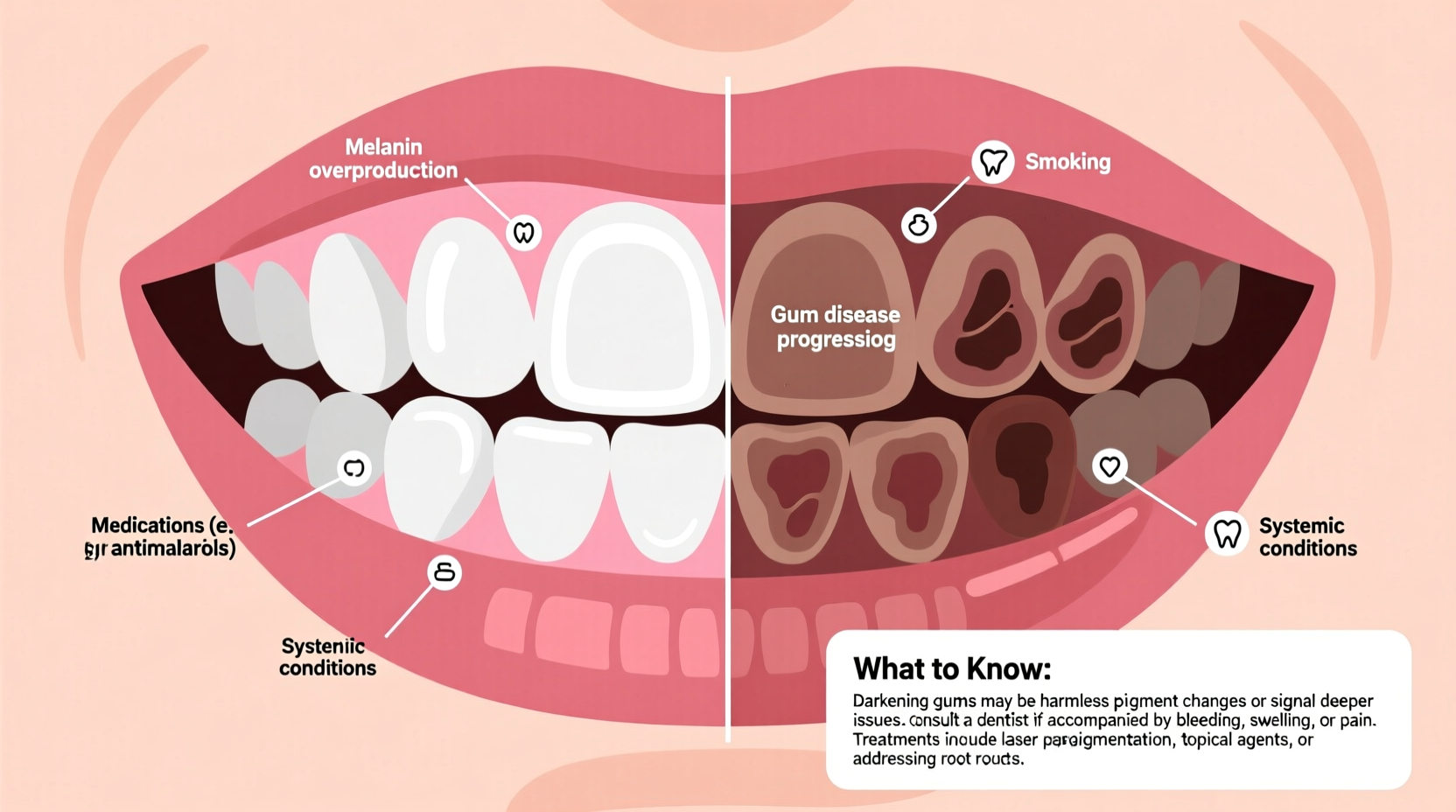
Gum discoloration stems from various factors, including genetics, lifestyle habits, medical conditions, and medications. Identifying the cause is essential for determining whether treatment is necessary.
- Genetic Pigmentation: Melanin production varies among individuals, particularly in people with darker skin tones. This natural pigmentation is usually symmetrical and benign.
- Smoking and Tobacco Use: Nicotine and tar stimulate melanin production, leading to dark spots or patches along the gum line—a condition known as smoker’s melanosis.
- Amalgam Tattoo: A bluish-gray spot may appear after dental procedures involving silver-based fillings. Tiny particles of amalgam can become embedded in the gum tissue permanently.
- Medications: Certain drugs—including antimalarials, some psychiatric medications, and minocycline (a type of antibiotic)—can cause diffuse or focal gum darkening.
- Oral Diseases: Conditions like Addison’s disease, Peutz-Jeghers syndrome, or oral melanotic macules may present with hyperpigmented gums.
- Poor Oral Hygiene: Chronic inflammation from plaque buildup can lead to localized discoloration due to irritation and vascular changes.
Treatment Options Based on Cause
Not all dark gums require treatment. When aesthetics or health concerns arise, several interventions are available. The appropriate approach depends on the underlying cause.
1. No Treatment Needed (Physiological Pigmentation)
In individuals with naturally pigmented gums due to ethnicity or heredity, no medical intervention is required. This variation is normal and healthy.
2. Discontinuation of Causative Agents
If medication or tobacco use is responsible, stopping the substance often leads to gradual improvement. For example, quitting smoking may reduce melanin overproduction within weeks to months.
3. Laser Depigmentation
A popular cosmetic procedure, laser therapy removes excess melanin by targeting pigment-containing cells without damaging surrounding tissue. It's minimally invasive, relatively painless, and offers quick recovery.
“Laser gingival depigmentation provides excellent aesthetic results with high patient satisfaction, especially in visible smile zones.” — Dr. Lena Patel, Periodontist and Cosmetic Dentistry Specialist
4. Surgical Scraping (Scalpel Technique)
In this method, a dentist uses a scalpel to gently scrape off the top layer of pigmented tissue. Healing takes longer than lasers, and discomfort may be greater, but it remains effective in resource-limited settings.
5>Electrocautery
This technique uses electric current to burn away pigmented tissue. Less precise than lasers, it carries a higher risk of scarring but is more accessible in some clinics.
When to See a Dentist: Warning Signs
While many cases of dark gums are benign, certain symptoms warrant immediate professional attention:
- Sudden appearance or rapid growth of a dark patch
- Irregular borders or uneven color distribution
- Pain, swelling, bleeding, or ulceration in the affected area
- Loose teeth or persistent bad breath accompanying discoloration
These could indicate oral melanoma, a rare but serious form of cancer. Early diagnosis significantly improves outcomes.
Step-by-Step Guide to Addressing Dark Gums
Follow this structured process to assess and manage gum discoloration effectively:
- Self-Assessment: Note when the discoloration appeared, its location, color, and any associated symptoms.
- Review Lifestyle Factors: Consider smoking, medication history, and recent dental work.
- Schedule a Dental Exam: A dentist will perform a visual inspection and may take a biopsy if malignancy is suspected.
- Diagnosis Confirmation: Blood tests or imaging may be needed if systemic disease is possible.
- Determine Treatment Plan: Decide between monitoring, lifestyle changes, or cosmetic procedures based on findings.
- Follow-Up: Regular check-ups ensure stability and prevent complications.
Do’s and Don’ts: Managing Gum Health and Appearance
| Do’s | Don’ts |
|---|---|
| Practice daily brushing and flossing | Ignore sudden changes in gum color |
| Use a soft-bristled toothbrush to avoid trauma | Smoke or chew tobacco products |
| Attend regular dental cleanings (every 6 months) | Self-treat dark spots with home remedies |
| Discuss medication side effects with your doctor | Assume all pigmentation is harmless without evaluation |
| Protect your mouth during sports with a mouthguard | Delay seeking help for painful or growing lesions |
Real Case Example: A Patient’s Journey
Maria, a 34-year-old graphic designer, noticed a dark streak forming near her lower front teeth. Initially dismissing it as staining, she became concerned when the area expanded slightly over two months. She had quit smoking five years earlier but recalled using minocycline for acne in her early twenties.
Her dentist performed an intraoral examination and identified residual pigmentation consistent with past antibiotic use. A biopsy ruled out malignancy. After discussing options, Maria opted for diode laser depigmentation. The procedure took under an hour, with minimal discomfort. Within two weeks, her gums healed with a uniform pink appearance. She now schedules annual screenings to monitor oral tissue health.
Frequently Asked Questions
Is dark gum pigmentation dangerous?
Most cases are benign, especially when symmetrical and longstanding. However, new, asymmetrical, or changing lesions should be evaluated to rule out oral cancer or systemic disease.
Can poor hygiene cause black gums?
Not directly. However, chronic plaque buildup leads to inflammation, which may alter gum color locally. Severe periodontitis can expose darker root surfaces, creating the illusion of blackened gums.
How long do laser treatment results last?
Laser depigmentation typically yields long-lasting results. In non-smokers and those not on causative medications, recurrence is rare. Some patients experience mild repigmentation after several years.
Final Thoughts and Action Steps
Darkening gums are more common than many realize, and while often harmless, they deserve attention. Whether driven by genetics, lifestyle, or medication, understanding your specific situation is crucial. Cosmetic treatments like laser therapy offer safe, effective solutions for those seeking aesthetic improvement. But never overlook the importance of professional diagnosis—especially when changes occur rapidly or involve other symptoms.
💬 Have you experienced gum discoloration? Share your story or questions below. Your experience could help others recognize early signs and seek timely care.








