Transforming ordinary pool noodles into lifelike coral reefs might sound impossible, but it’s surprisingly simple—and stunningly effective. This DIY project brings the ocean indoors, ideal for classroom displays, party decorations, or home aquarium-themed interiors. Using affordable, readily available materials, you can create a vibrant underwater scene that captures the texture and color diversity of real coral. The best part? It's beginner-friendly, safe for children, and encourages eco-conscious crafting by repurposing foam that might otherwise sit unused after summer.
Why Pool Noodles Make Perfect Coral Replicas
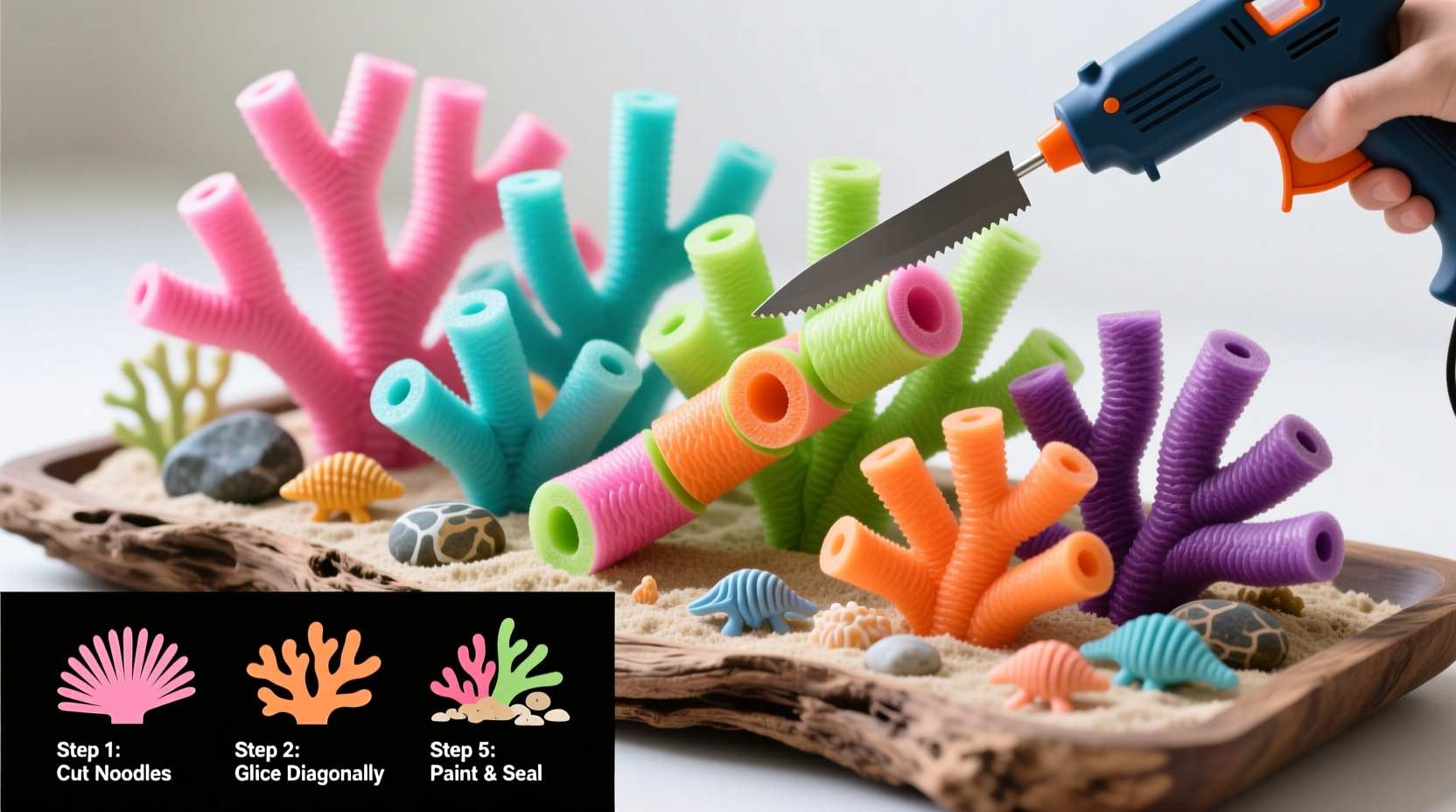
Pool noodles are lightweight, flexible, and come in a wide range of bright colors—making them an excellent base material for simulating soft and branching corals. Their closed-cell foam structure resists moisture, holds shape well when cut, and accepts paint and glue efficiently. Unlike fragile papier-mâché or complex resin molds, pool noodle coral requires no drying time and minimal tools. Crafters can build entire reef ecosystems in a single afternoon.
Marine educators have begun adopting these models for teaching ocean biodiversity. According to Dr. Lena Torres, a marine science outreach coordinator at the Coastal Discovery Center:
“Physical models help students visualize coral anatomy and understand reef complexity. Foam-based replicas like these spark curiosity without requiring lab access.” — Dr. Lena Torres, Marine Science Educator
Materials and Preparation Checklist
Tip: Use older or damaged pool noodles—this is a great way to upcycle foam that’s no longer suitable for swimming.Gathering your supplies before starting ensures a smooth workflow. Here’s what you’ll need:
- 3–5 colored pool noodles (assorted hues: pinks, blues, oranges, purples)
- Sharp utility knife or serrated kitchen knife
- Hot glue gun with heat-resistant glue sticks
- Acrylic paints (waterproof, if possible)
- Fine and medium paintbrushes
- Clear sealant spray (optional, for durability)
- Cardboard or plastic base (to mount coral on)
- Sand, small pebbles, or fake seaweed (for scenic detailing)
- Rubber gloves (for handling glue and paint)
Pre-Cutting Tips
Before shaping, lay out all noodles and inspect for cracks or sun damage. Cut test pieces first to understand how the foam responds to pressure. Always cut away from your body and use a cutting mat or scrap wood as a surface protector.
Step-by-Step Guide to Crafting Realistic Coral Shapes
- Select Your Coral Type: Decide whether you want fan coral, brain coral, staghorn, or mushroom coral. Each shape uses different cutting techniques.
- Cut Noodle Sections: Slice 2–4 inch segments depending on desired size. For branching forms, leave one end intact and slice partially along the length to create “fingers.”
- Create Texture: Use the edge of a spoon or fork to press wavy patterns into flat surfaces, mimicking natural ridges in brain or boulder coral.
- Shape Fan Coral: Take a full-length noodle and make parallel slits every ½ inch along one side. Gently bend the strips outward to form a feathered effect.
- Layer for Volume: Stack smaller rings or curled pieces on top of larger bases using hot glue. Offset layers slightly for organic asymmetry.
- Attach to Base: Arrange completed pieces on your cardboard or plastic platform. Secure with generous dabs of hot glue, varying heights for depth.
- Paint Details: Mix acrylics with a bit of water to create translucent washes. Dab darker shades into crevices and highlight tips with neon accents.
- Seal (Optional): Once dry, apply a light coat of clear matte or gloss sealant to protect paint and add a wet-looking sheen.
Design Inspiration: Building a Mini Reef Ecosystem
A single coral piece is eye-catching, but grouping multiple types creates immersive impact. Think about balance, color contrast, and negative space when arranging your reef.
| Coral Type | Noodle Technique | Best Color Pairings |
|---|---|---|
| Staghorn | Partial longitudinal cuts, splayed ends | Bright orange + electric blue |
| Brain Coral | Thick rings with textured grooves | Deep purple + lime green |
| Mushroom Coral | Flattened domes with ruffled edges | Pink + white swirl |
| Sea Fan | Feathered slit design, mounted diagonally | Translucent yellow + red gradient |
For added realism, sprinkle fine sand around the base and tuck in plastic seaweed or netting painted green. Small toy fish or glass beads can suggest movement within the reef.
Real Example: A Classroom Ocean Project That Went Viral
Last spring, Ms. Rachel Nguyen’s third-grade class in Miami undertook a unit on marine conservation. With limited funds, they collected donated pool noodles from local swim centers and crafted a 3-foot-wide coral wall display for their school lobby. Students researched real coral species and matched their creations to scientific names like *Acropora* and *Porites*. They even included signs explaining bleaching and reef restoration.
The project caught media attention when a parent shared photos online. Within a week, three other schools reached out to replicate the model. “The kids didn’t just learn about coral,” Nguyen said, “they felt responsible for protecting it. That emotional connection is priceless.”
Common Mistakes and How to Avoid Them
- Over-gluing: Excess hot glue creates unsightly blobs. Apply small dots and press firmly for 10 seconds.
- Ignoring structural stability: Tall pieces may topple. Reinforce with wire armatures or wider bases.
- Using only primary colors: Real coral features gradients and mottling. Blend paints directly on the foam for subtle variation.
- Skipping ventilation: Acrylic fumes can be strong. Work in a well-ventilated area, especially with children.
Frequently Asked Questions
Can I make these coral crafts waterproof for outdoor use?
Yes, but with limitations. While pool noodles resist moisture, prolonged exposure to rain or direct sprinklers will degrade them over time. For semi-outdoor use (e.g., covered patio), seal all surfaces with outdoor-rated clear spray. Avoid submerging in water.
Are these safe for young children to make?
With supervision, yes. Replace utility knives with child-safe scissors for pre-cutting. Use non-toxic, washable paints. Consider assembling complex parts yourself while letting kids handle painting and gluing.
How long do pool noodle coral crafts last?
Indoors, they can last 2–5 years if kept out of direct sunlight. UV rays cause fading and brittleness. Store disassembled pieces in a cool, dark closet if reusing seasonally.
Final Thoughts and Creative Next Steps
This DIY coral craft proves that sustainability and artistry go hand in hand. What begins as a fun weekend activity can evolve into a meaningful conversation about ocean health, recycling, and creative reuse. Whether you're decorating a child’s room, enhancing a science fair exhibit, or simply enjoying hands-on crafting, these foam corals offer endless possibilities.
Consider expanding the project: link multiple bases to form a room divider, incorporate LED string lights for a glowing lagoon effect, or host a community workshop to build a collaborative reef installation. Every piece you create becomes a tiny act of environmental storytelling.
🚀 Ready to dive in? Grab those leftover pool noodles, gather your tools, and start building your underwater masterpiece today. Share your creations online with #DIYCoralReef and inspire others to explore eco-art!








