When bringing a new dog or puppy into your home, one of the first decisions you’ll face is how to manage their space. Two popular options—crates and playpens—are often pitted against each other in debates about safety, comfort, and ethics. Advocates of crate training praise its role in housebreaking and reducing anxiety, while critics argue it may border on confinement. On the flip side, playpens offer freedom of movement but can lack structure. So which approach truly supports a dog’s well-being? The answer isn’t binary. It depends on implementation, timing, and the individual dog.
Understanding the nuances between crate training and using a playpen isn’t just about convenience—it’s about creating an environment where your dog feels secure, learns boundaries, and develops confidence. Done right, both tools can be humane and beneficial. Done poorly, either can contribute to stress or behavioral issues. This article explores the science, psychology, and practical application behind both methods to help you make an informed decision.
The Psychology Behind Canine Confinement
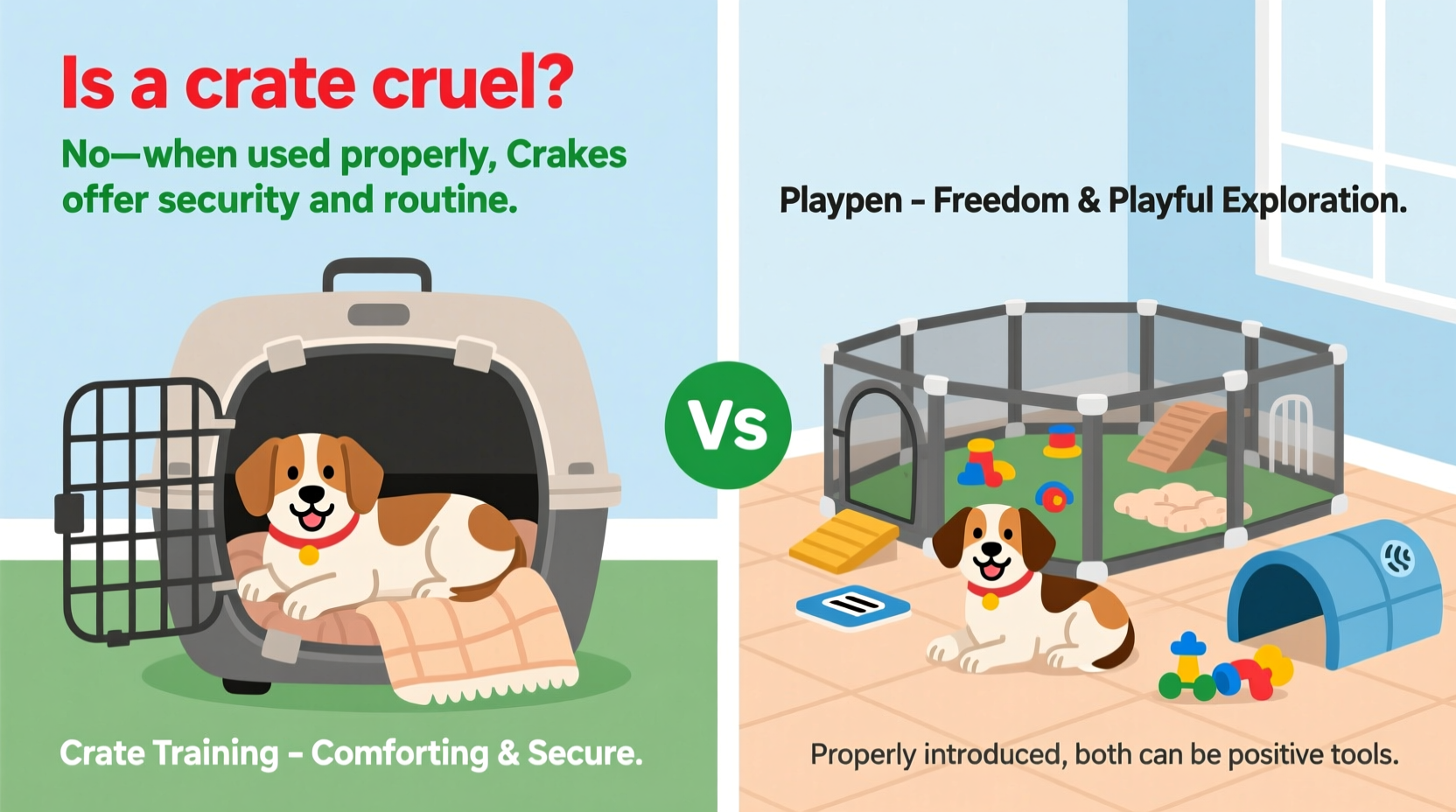
Dogs are den animals by instinct. In the wild, wolves and other canids seek out enclosed, sheltered spaces to rest, raise pups, and feel safe from predators. This evolutionary trait explains why many dogs naturally gravitate toward small, cozy areas like under furniture or in closets. A properly introduced crate taps into this instinct, transforming a confined space into a personal sanctuary.
However, not all confinement feels safe. The key difference lies in choice and association. When a dog enters a space voluntarily and links it with positive experiences—like treats, toys, or quiet time—it becomes a refuge. When forced inside, used as punishment, or left unattended for hours, the same space can become a source of fear and frustration.
“Dogs don’t perceive crates the way humans perceive cages. For many, a crate is less prison and more bedroom—a place they control and retreat to.” — Dr. Sarah Hartwell, Veterinary Ethologist
This distinction is critical. The emotional impact of a crate or playpen isn’t determined by the tool itself, but by how it’s used. A crate isn’t inherently cruel, nor is a playpen automatically superior. Both require thoughtful management to align with a dog’s psychological needs.
Crate Training: Benefits and Best Practices
Crate training has long been a cornerstone of responsible dog ownership, particularly during puppyhood. When implemented gradually and positively, it offers several advantages:
- Housetraining support: Dogs instinctively avoid soiling their sleeping area, making crates effective for establishing bathroom routines.
- Safety during travel: Crates protect dogs in vehicles and are often required for air travel.
- Reduced separation anxiety: A familiar crate can act as a calming anchor when owners are away.
- Prevention of destructive behavior: Puppies and young dogs can’t chew shoes or dig at carpets if safely contained.
- Recovery space: Injured or post-surgical dogs benefit from restricted movement and a quiet zone.
Despite these benefits, crate training must follow strict guidelines to remain humane. The American Kennel Club recommends no more than 3–4 hours for adult dogs and even shorter durations for puppies, whose bladders are still developing. Extended confinement without breaks violates basic welfare standards.
Tip: Always associate the crate with positivity. Feed meals inside, toss in treats, and never use it as punishment.Step-by-Step Crate Introduction Timeline
- Day 1–3: Place the crate in a common area with the door open. Toss treats or toys inside to encourage exploration.
- Day 4–7: Feed meals near the crate, then gradually move the bowl inside. Let the dog enter and exit freely.
- Week 2: Close the door briefly while you’re present. Start with 30 seconds, increasing duration over days.
- Week 3: Leave the room for short periods while the dog is crated. Return before any signs of distress.
- Week 4 and beyond: Gradually extend crating time, ensuring the dog remains relaxed and comfortable.
Rushing this process leads to resistance. Patience ensures the crate becomes a trusted retreat, not a feared trap.
Playpens: Freedom With Limits
A playpen—typically a portable metal or plastic enclosure—offers dogs more physical space than a crate. Ideal for larger areas like living rooms or basements, playpens allow dogs to stand, stretch, turn around, and even play with toys. They’re especially useful for puppies who need room to move but aren’t yet ready for full-house freedom.
Advantages of playpens include:
- Greater mobility for growing puppies
- Ability to include multiple amenities (bed, water, potty pad, toys)
- Less restrictive appearance, which may ease owner guilt
- Better suited for longer daytime supervision when owners are home
However, playpens come with trade-offs. Without proper setup, they can become chaotic. Puppies may soil one corner and sleep next to it, undermining housetraining. They also enable chewing and digging if unsupervised. Unlike crates, playpens rarely foster the same sense of den-like security unless carefully arranged with a covered bed or igloo-style shelter within the enclosure.
Additionally, playpens are less portable and impractical for travel or vet visits. Their open design means dogs aren’t protected in emergencies like car crashes or sudden loud noises that might trigger panic.
Comparing Crate and Playpen: A Practical Breakdown
| Feature | Crate | Playpen |
|---|---|---|
| Space | Limited; just enough to stand, turn, lie down | Ample; allows movement and play |
| Housetraining Support | High—encourages bladder control | Moderate—risk of soiling if not monitored |
| Sense of Security | High—mimics den behavior | Variable—depends on interior setup |
| Portability | High—easy to transport | Low to moderate—bulky and heavy |
| Safety During Travel | Excellent—protects in vehicles | Poor—not designed for motion |
| Best For | Nighttime, travel, naps, short absences | Daytime supervision, active play, socialization |
The table reveals a crucial insight: crates and playpens serve different purposes. Rather than choosing one over the other, many trainers recommend using both situationally. A crate at night promotes better sleep and prevents accidents. A playpen during the day allows exercise and mental stimulation while maintaining boundaries.
Real-Life Example: Managing a 10-Week-Old Puppy
Consider Mia, a new owner of a 10-week-old Labrador mix named Scout. She lives in a small apartment and works from home part-time. Her goal is to housetrain Scout quickly while preventing destructive chewing.
Mia starts with a wire crate in the living room. She lines it with a soft bed, places a chew toy inside, and feeds Scout breakfast there with the door open. Over five days, Scout begins napping in the crate voluntarily. By day seven, Mia can close the door for 20 minutes while working nearby.
During the day, she sets up a 4x6-foot playpen in the kitchen, adding a puppy pad in one corner, water, and safe toys. When she’s on calls, Scout stays in the playpen. At night, he sleeps in the crate beside her bed. Within three weeks, Scout signals to go outside, sleeps through the night, and shows no signs of stress.
Mia’s success comes not from choosing one tool over the other, but from using each appropriately. The crate provides structure; the playpen offers freedom. Together, they create a balanced routine that supports learning and emotional well-being.
Common Mistakes That Make Crates Seem Cruel
The perception that crates are cruel often stems from misuse. These practices undermine a dog’s trust and comfort:
- Overconfinement: Leaving a dog crated for 8+ hours daily, especially without potty breaks.
- Punishment association: Sending a dog to the crate after misbehaving, linking it to negative emotions.
- Inadequate sizing: Using a crate too small for standing or too large, reducing den-like security.
- Lack of enrichment: Providing no toys, bedding, or mental stimulation inside.
- Ignoring distress: Allowing prolonged whining or pacing without addressing the cause.
These behaviors aren’t flaws of crate training—they’re violations of ethical pet care. Just as leaving a child in a room for days would be abuse, so is extreme crating. But dismissing all crates because of such cases is like rejecting car seats because someone misused one.
Checklist: Is Your Crate Use Humane?
- ✅ Dog enters crate willingly or with encouragement (no force)
- ✅ Crating duration matches age and bladder capacity
- ✅ Crate is used for rest, not punishment
- ✅ Bedding, water (if appropriate), and safe toys are provided
- ✅ Dog is taken out frequently for potty, exercise, and social interaction
- ✅ Environment is quiet, temperature-controlled, and safe
FAQ: Addressing Common Concerns
Isn’t confining a dog inhumane?
Not when done correctly. Confinement isn’t the same as isolation. Dogs thrive on routine and secure spaces. A crate used for reasonable periods—as part of a balanced day—is no more inhumane than a child’s bedroom. The issue arises when confinement replaces companionship, exercise, or mental stimulation.
Can I switch from crate to playpen as my dog grows?
Yes, and many owners do. Puppies often benefit from the structure of a crate early on. As they mature and gain self-control, a playpen or designated room may offer better long-term comfort. The transition should be gradual, ensuring the dog doesn’t regress in training.
My dog hates the crate. What should I do?
Never force a dog into a crate. Go back to basics: leave the door open, scatter treats, and let them explore at their own pace. If anxiety persists, consult a trainer or veterinarian. Some dogs have past trauma or high anxiety that requires specialized approaches, such as medication or alternative management strategies.
Conclusion: Tools Are Neutral—Intent Matters
The debate over crate training versus playpens often misses the bigger picture. Neither tool is inherently cruel or comforting. Their impact depends entirely on how they’re used. A crate can be a sanctuary or a prison. A playpen can be a playground or a holding pen.
Responsible pet ownership means understanding your dog’s needs: for safety, routine, affection, and space. Crates excel at providing security and aiding training. Playpens support activity and daytime supervision. Used together, they form a flexible system that evolves with your dog’s life stage.
Instead of asking whether a crate is cruel, ask whether your dog feels safe, loved, and respected. Observe their body language. Reward calm behavior. Prioritize connection over convenience. When tools serve the dog’s well-being—not just the owner’s schedule—they become extensions of care.
🚀 Ready to build a happier, healthier routine for your dog? Start today by reevaluating how you use confinement—not as control, but as comfort. Share your experience or questions in the comments below and help others find balance in their training journey.








