
Bringing home a new puppy is an exciting milestone, but few experiences test a pet owner’s patience like nighttime crying. Whether you're considering crate training or allowing your puppy to roam freely at night, understanding the pros, cons, and practical strategies can make all the difference. The goal isn’t just silence—it’s helping your puppy feel safe, secure, and well-adjusted in their new environment. This guide compares crate training and free roaming, offers science-backed solutions for nighttime crying, and provides actionable steps to foster healthy sleep habits from day one.
The Crate Training Approach: Structure and Security
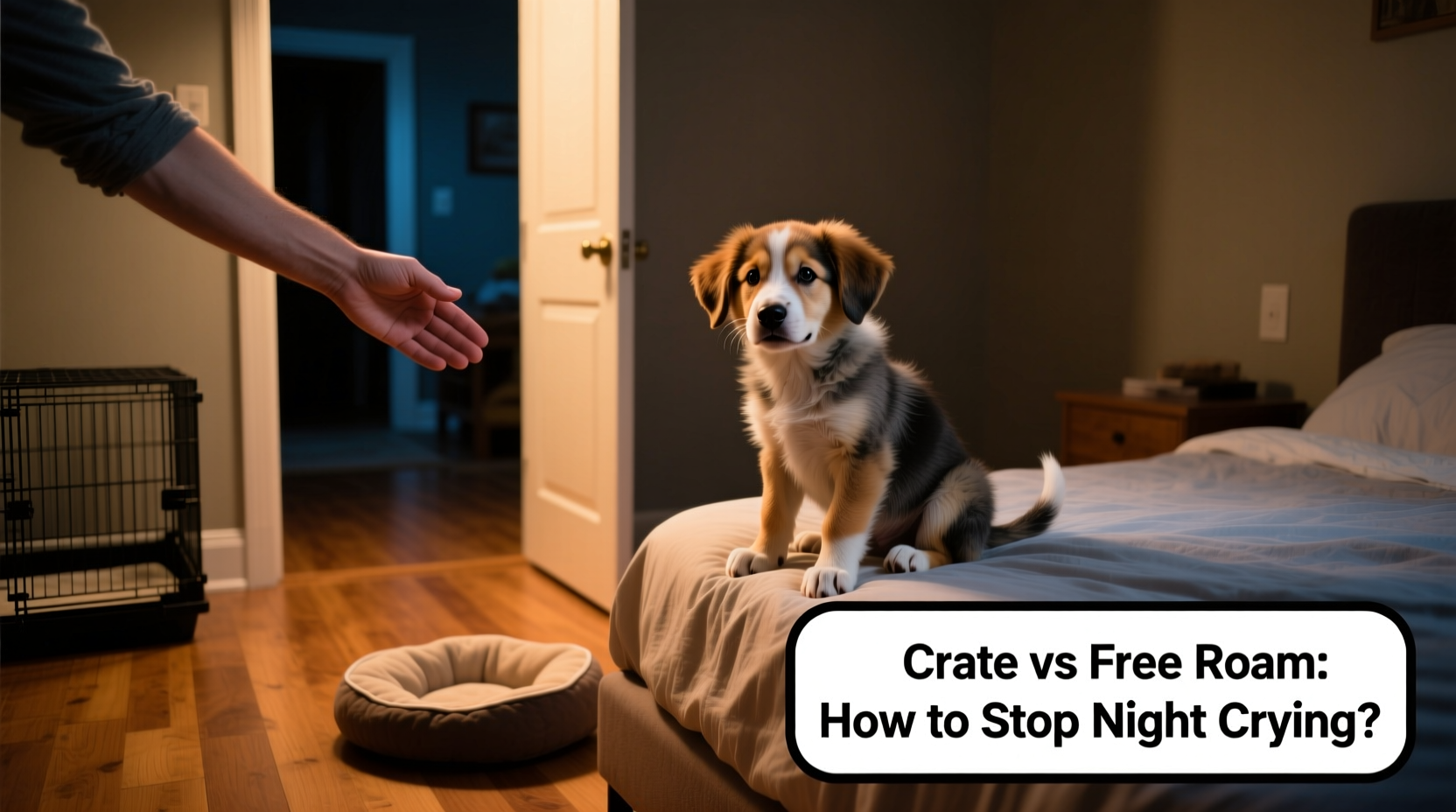
Crate training leverages a dog’s natural instinct to seek den-like spaces. When introduced properly, a crate becomes a sanctuary—a personal space where the puppy feels protected and calm. Unlike confinement as punishment, positive crate training builds confidence and supports housebreaking, reduces destructive behavior, and establishes boundaries.
A well-sized crate should allow the puppy to stand, turn around, and lie down comfortably—but not so large that they can eliminate in one corner and sleep in another. This limitation aids in developing bladder control, especially critical during the first few months.
Tip: Place the crate in your bedroom during the first few weeks. Your presence reassures the puppy and strengthens bonding.Success depends on gradual acclimation. Start by feeding meals near the crate, then inside it. Use treats and praise to encourage voluntary entry. Never force the puppy in, and avoid using the crate as a timeout zone during early stages.
Free Roaming: Freedom with Trade-offs
Some owners prefer letting puppies explore a designated area of the home overnight. This method emphasizes freedom and trust, aiming to create a sense of inclusion. However, without structure, free roaming often leads to accidents, chewing, and inconsistent sleep patterns.
Proponents argue that unrestricted movement helps puppies learn spatial awareness and reduces separation anxiety. Yet, this approach demands rigorous supervision, extensive puppy-proofing, and consistent reinforcement of boundaries—resources many new owners underestimate.
Without a defined sleeping zone, puppies may develop poor habits, such as waking up to play or bark for attention. Moreover, unsupervised access increases risks: chewed electrical cords, ingestion of household toxins, or injury from falls.
“Dogs thrive on routine and predictability. A lack of structure in early development can lead to long-term behavioral issues.” — Dr. Karen Becker, DVM and Animal Wellness Advocate
Crate Training vs Free Roam: A Practical Comparison
| Factor | Crate Training | Free Roaming |
|---|---|---|
| Housetraining Success Rate | High – leverages den instinct | Low to moderate – accidents more frequent |
| Sleep Quality (Puppy & Owner) | Improves faster with consistency | Often disrupted due to wandering |
| Safety at Night | High – contained and monitored | Riskier – exposure to hazards |
| Separation Anxiety Prevention | Moderate – if done positively | Potentially lower if co-sleeping |
| Long-Term Behavior | Better impulse control | May develop attention-seeking habits |
| Owner Effort Required | Moderate – structured routine | High – constant vigilance needed |
The data suggests crate training offers a more predictable path to nighttime peace. That said, neither method works without empathy, patience, and consistency.
Why Puppies Cry at Night: Understanding the Causes
Nighttime crying isn’t defiance—it’s communication. Puppies cry for several reasons:
- Hunger or thirst: Young puppies have small stomachs and may need late-night feeding until 12–16 weeks.
- Need to eliminate: Bladders aren’t fully developed; most puppies under 12 weeks need a potty break every 2–3 hours.
- Fear or loneliness: Separated from littermates, the puppy may feel abandoned.
- Overstimulation: Too much activity before bedtime can delay sleep onset.
- Discomfort: Cold, noise, or an ill-fitting crate can cause distress.
Identifying the root cause is essential before applying solutions. Responding incorrectly—such as immediately releasing a puppy from the crate when they cry—can reinforce attention-seeking behavior.
Step-by-Step Guide to Stopping Nighttime Crying
Follow this timeline during the first two weeks to establish healthy sleep habits:
- Evening Routine (6–8 PM): Feed the last meal, followed by 20–30 minutes of calm play. Avoid high-energy games.
- Pre-Bed Potty Break (8:30 PM): Take the puppy outside to eliminate. Use a consistent command like “Go potty.”
- Crate Setup (9:00 PM): Place the crate in your bedroom. Line it with soft bedding and include a chew-safe toy. Avoid stuffed animals that resemble littermates—these can increase attachment-related crying.
- Bedtime (9:30 PM): Place the puppy in the crate with a treat or food-stuffed toy (e.g., Kong). Say a calm phrase like “Good night,” then ignore whining for 5–10 minutes.
- Nighttime Response: If crying persists beyond 10 minutes, quietly check for urgent needs (vomiting, shivering). If none, wait another 5 minutes before responding. Never reward crying with play or cuddles.
- Middle-of-Night Potty Break: Set an alarm for 2–3 AM during week one. Carry the puppy outside, keep the trip quiet and dark, then return directly to the crate.
- Morning Routine: Let the puppy out first thing, take them to eliminate, then offer breakfast only after success.
By week three, most puppies can sleep 6–7 hours uninterrupted. Gradually move the crate to its permanent location once consistent nighttime behavior is established.
Tip: Use a white noise machine or fan to mask household sounds that might startle the puppy awake.Real Example: Bella the Border Collie Mix
Sarah adopted Bella, an 8-week-old Border Collie mix, and chose crate training over free roaming. On the first night, Bella cried for nearly 40 minutes. Sarah resisted the urge to let her out, instead sitting quietly beside the crate, reading a book. She responded only after 15 minutes of silence, offering gentle praise.
By night three, Bella began settling within 10 minutes. Sarah maintained a strict pre-bed routine and used a covered crate with a breathable blanket to create a den-like atmosphere. By week two, Bella slept through the night and ran straight to her crate when it was time to wind down.
In contrast, Sarah’s neighbor allowed their puppy to roam freely. While the puppy didn’t cry initially, they woke multiple times to chew shoes and had accidents on the carpet. After three weeks, they reverted to crate training—only to face setbacks due to ingrained habits.
Bella’s case illustrates that short-term discomfort leads to long-term gains. Consistency, not convenience, determines success.
Essential Checklist for Nighttime Success
- ✅ Choose a crate size appropriate for adult dog dimensions (use a divider for puppies).
- ✅ Position the crate in your bedroom for the first 2–4 weeks.
- ✅ Establish a fixed bedtime routine: feed, play, potty, sleep.
- ✅ Remove water 1.5–2 hours before bed to reduce nighttime urination.
- ✅ Use a chew-safe toy or food puzzle to encourage self-soothing.
- ✅ Respond calmly and consistently—never punish, but don’t reward crying.
- ✅ Monitor progress weekly and adjust schedule as the puppy grows.
Common Mistakes That Worsen Nighttime Crying
Even well-meaning owners inadvertently reinforce crying. Watch for these pitfalls:
- Releasing the puppy immediately when they cry: Teaches them that vocalizing gets results.
- Overhandling at night: Picking up or playing with the puppy disrupts sleep cycles.
- Inconsistent routines: Varying bedtimes confuse internal clocks.
- Poor crate placement: A cold basement or noisy hallway increases anxiety.
- Using the crate for punishment: Associates the space with negativity.
Instead, focus on building positive associations. Toss treats into the crate during the day when the puppy enters voluntarily. Leave the door open so they can come and go freely during waking hours.
Frequently Asked Questions
Should I ignore my puppy crying at night completely?
Not entirely. Rule out physical needs first—especially in puppies under 12 weeks. Check for signs of illness, extreme cold, or the need to eliminate. Once basic needs are met, brief periods of controlled ignoring help teach self-soothing. Respond only after silence, and keep interactions low-key.
How long does it take for a puppy to stop crying at night?
Most puppies adapt within 3–7 nights with consistent training. Some may take up to two weeks. Factors like breed sensitivity, prior socialization, and owner consistency influence the timeline. Patience and routine are key.
Can I let my puppy sleep in bed with me instead of a crate?
You can, but it may delay housetraining and encourage dependency. If you choose co-sleeping, ensure the room is puppy-proofed and use a baby gate to limit roaming. Be aware that transitioning to a crate later can be challenging if behavioral issues arise.
Final Thoughts: Building Trust Through Structure
Whether you choose crate training or free roaming, the foundation of success lies in empathy and consistency. Crate training, when done humanely, offers a balanced blend of safety, structure, and emotional security. It sets the stage for lifelong discipline, while minimizing stress for both puppy and owner.
Stopping nighttime crying isn’t about silencing your puppy—it’s about teaching them they’re safe, loved, and capable of resting independently. Every whimper is an opportunity to build trust. Respond with calm confidence, stick to your plan, and remember: the temporary challenge of the first few nights leads to years of peaceful mornings.
💬 Have a crate training success story or tip? Share your experience in the comments—your insight could help a new puppy parent tonight.








