
Bringing an older dog into your home is a rewarding experience, but it often comes with behavioral challenges—especially when the dog has never been crate trained or suffers from separation anxiety. Unlike puppies, adult dogs carry past experiences that can make them wary of confinement. However, with patience, consistency, and the right approach, crate training can become a safe haven for your dog rather than a source of stress. This guide provides a structured, compassionate method to help your older dog adapt to crate use while managing separation anxiety effectively.
Understanding Separation Anxiety in Older Dogs
Separation anxiety occurs when a dog becomes distressed upon being left alone. Symptoms include excessive barking, destructive chewing, pacing, house soiling, or attempts to escape. In older dogs, this behavior may stem from past abandonment, changes in environment, or loss of a previous caregiver. The crate, if introduced improperly, can intensify these fears. But when used correctly, it can serve as a secure den-like space that reduces anxiety.
It’s crucial to distinguish between true separation anxiety and general disobedience. A dog with separation anxiety shows signs of distress within minutes of the owner’s departure, not after hours. These behaviors are involuntary and rooted in fear, not spite.
“Crate training an older dog isn’t about control—it’s about creating a predictable, comforting environment where the dog feels safe even when alone.” — Dr. Karen Becker, Integrative Veterinarian
Step-by-Step Crate Training Process
Crate training an older dog requires more time and sensitivity than training a puppy. Rushing the process can backfire, reinforcing fear instead of trust. Follow this gradual timeline to build positive associations with the crate.
- Choose the Right Crate: Select a well-ventilated, appropriately sized crate. Your dog should be able to stand, turn around, and lie down comfortably. Avoid oversized crates, as they reduce the den-like feeling.
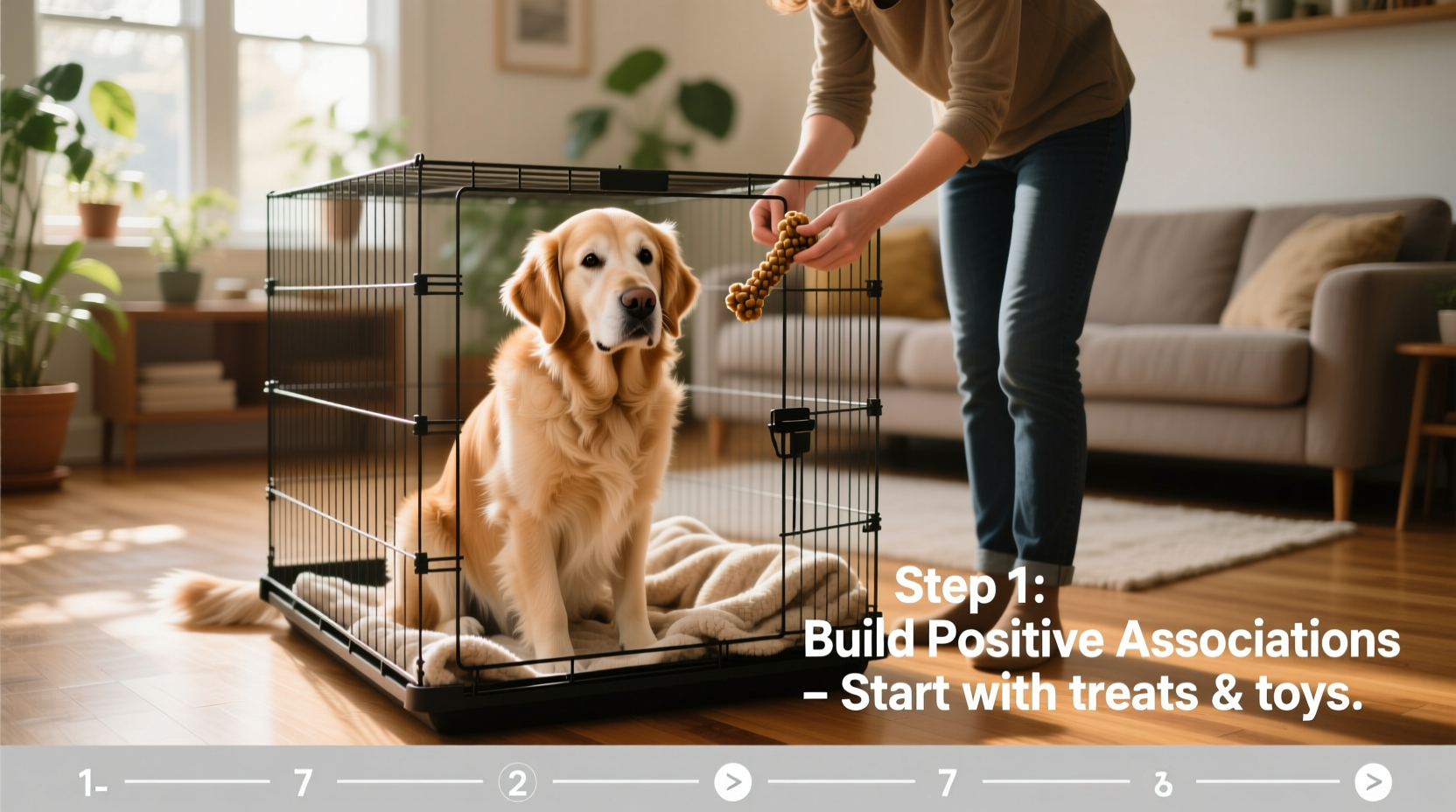
- Introduce the Crate Gradually: Place the crate in a quiet but familiar area of the home. Leave the door open and encourage exploration with treats, toys, or meals placed inside.
- Create Positive Associations: Toss high-value treats (like small pieces of chicken or cheese) into the crate throughout the day. Never force entry.
- Feed Meals Near and Inside the Crate: Start by placing the food bowl beside the crate, then gradually move it closer until it rests just inside. Over several days, shift the bowl deeper into the crate.
- Add Comfort Items: Place a soft blanket, old t-shirt with your scent, or a favorite toy inside. Familiar smells provide emotional security.
- Close the Door Briefly: Once your dog enters willingly, close the door for 30 seconds while you stay nearby. Gradually increase duration up to five minutes, always ensuring the dog remains calm.
- Leave the Room for Short Periods: After successful closed-door sessions, step out of sight for 30 seconds, then return. Slowly extend your absence over days.
- Practice Departure Cues: Pick up keys, put on shoes, or grab your bag without leaving. This desensitizes the dog to triggers that typically precede abandonment.
- Build Up Alone Time: Once comfortable, leave for increasing intervals—from two minutes to 30 minutes—always returning before the dog becomes distressed.
- Maintain Consistency: Use the crate daily during naps, mealtimes, or short errands to normalize its presence in routine life.
Managing Separation Anxiety During Training
For dogs with existing separation anxiety, crate training must go hand-in-hand with behavior modification. Simply locking a fearful dog in a crate will worsen anxiety and may lead to self-injury.
- Start with Low-Stress Absences: Begin training when you’re only stepping outside to check the mailbox, not going to work for eight hours.
- Use Calming Aids: Consider pheromone diffusers (like Adaptil), calming music for dogs, or vet-approved supplements such as L-theanine or CBD oil (consult your vet first).
- Exercise Before Crating: A tired dog is less likely to feel anxious. Take a long walk or play fetch before initiating any crating session.
- Avoid Emotional Goodbyes: Keep departures and reunions low-key. Excessive affection can heighten anticipation and anxiety.
- Monitor Behavior: If your dog whines, paces, or injures itself, the training pace is too fast. Scale back and rebuild confidence.
Real Example: Max, the Rescue Hound
Max, a 5-year-old mixed breed, was adopted from a shelter after living in a backyard kennel for most of his life. He showed extreme panic when left alone—chewing through window screens and howling for hours. His new owner started crate training slowly: placing treats inside over two weeks, feeding meals near the crate, and using a fleece-lined bed with her worn hoodie. She began closing the door only after Max entered voluntarily. For the first week, she sat quietly in another room for just one minute at a time. Within six weeks, Max could stay calmly in his crate for 30 minutes while she ran errands. By pairing crate exposure with counter-conditioning exercises, Max now views the crate as his personal sanctuary.
Do’s and Don’ts of Crate Training an Anxious Adult Dog
| Do’s | Don’ts |
|---|---|
| Use high-value treats to reward voluntary entry | Force your dog into the crate |
| Keep initial sessions very short and positive | Leave your dog crated for hours on day one |
| Place the crate in a family-centered area like the living room | Put the crate in a cold basement or isolated garage |
| Use a consistent verbal cue like “kennel” or “den” | Change commands frequently or use negative tones |
| Gradually increase alone time based on comfort level | Rush progression due to schedule demands |
| Provide chew-safe toys or stuffed Kongs | Leave collars or leashes inside the crate |
Essential Checklist for Success
Follow this actionable checklist to ensure every phase of crate training supports your older dog’s emotional well-being:
- ☐ Choose a properly sized, sturdy crate with good airflow
- ☐ Introduce the crate with treats and no pressure
- ☐ Feed at least one meal per day near or inside the crate
- ☐ Add bedding with your scent for familiarity
- ☐ Practice closing the door with you present, starting under one minute
- ☐ Desensitize to departure cues (keys, coat, bag)
- ☐ Begin short absences (under 2 minutes) and gradually increase
- ☐ Monitor for signs of stress: panting, drooling, trembling, or vocalizing
- ☐ Incorporate calming aids if needed (diffusers, music, supplements)
- ☐ Maintain a consistent routine—dogs thrive on predictability
When to Seek Professional Help
While many cases of mild to moderate separation anxiety improve with structured crate training, some dogs require expert intervention. If your dog exhibits any of the following, consult a certified veterinary behaviorist or force-free trainer:
- Self-injurious behavior (chewing paws, banging against walls)
- Extreme vocalization lasting more than 15–20 minutes after departure
- Inability to remain calm even with the door open and owner present
- House soiling exclusively when alone (not due to medical issues)
Medication may be recommended in severe cases. Drugs like fluoxetine (Reconcile) or clomipramine (Clomicalm) are FDA-approved for canine separation anxiety and work best when combined with behavior modification.
“Treating separation anxiety is not about fixing a ‘bad’ dog—it’s about understanding a frightened one. Patience and empathy are the foundation of recovery.” — Dr. Sophia Yin, Veterinary Behavior Specialist
Frequently Asked Questions
Can I crate train a 7-year-old dog who’s never been in a crate?
Yes, absolutely. Age is not a barrier to learning. Older dogs may take longer due to established habits or past trauma, but with gentle, consistent training, most adapt well. The key is moving at the dog’s pace and avoiding coercion.
How long should I leave my older dog in the crate?
Adult dogs should not be crated for more than 4–6 hours at a time unless overnight. Extended confinement can lead to physical discomfort and increased anxiety. If your workday exceeds this, consider hiring a dog walker or using a doggy daycare service.
What if my dog hates the crate and tries to escape?
If your dog panics in the crate, stop using it immediately and reassess your approach. You may have progressed too quickly. Go back to earlier steps, reinforce positive associations, and consult a professional trainer. Escape attempts indicate significant distress and should never be ignored.
Conclusion: Building Trust One Step at a Time
Crate training an older dog with separation anxiety is not a quick fix—it’s a journey of rebuilding trust and creating emotional safety. The crate should evolve from a foreign object into a self-selected refuge. By respecting your dog’s limits, celebrating small wins, and maintaining a calm, predictable environment, you lay the groundwork for lasting confidence.
This process strengthens your bond and gives your dog the tools to cope when alone. Every treat tossed into the crate, every quiet moment spent nearby, and every brief absence returned from safely contributes to a more secure, balanced companion.
💬 Have you successfully crate trained an older dog? Share your story or questions in the comments—your experience could help another pet parent find hope and direction.








