For pet owners who groom their dogs or cats at home, choosing the right clippers is a decision that affects both efficiency and comfort—for both the pet and the groomer. Among the most important considerations is whether to go with cordless or corded clippers. Each option comes with distinct advantages and trade-offs in terms of power, mobility, maintenance, and overall usability. Understanding these differences helps ensure you make an informed choice that aligns with your grooming habits, pet temperament, and household setup.
Power and Performance Comparison
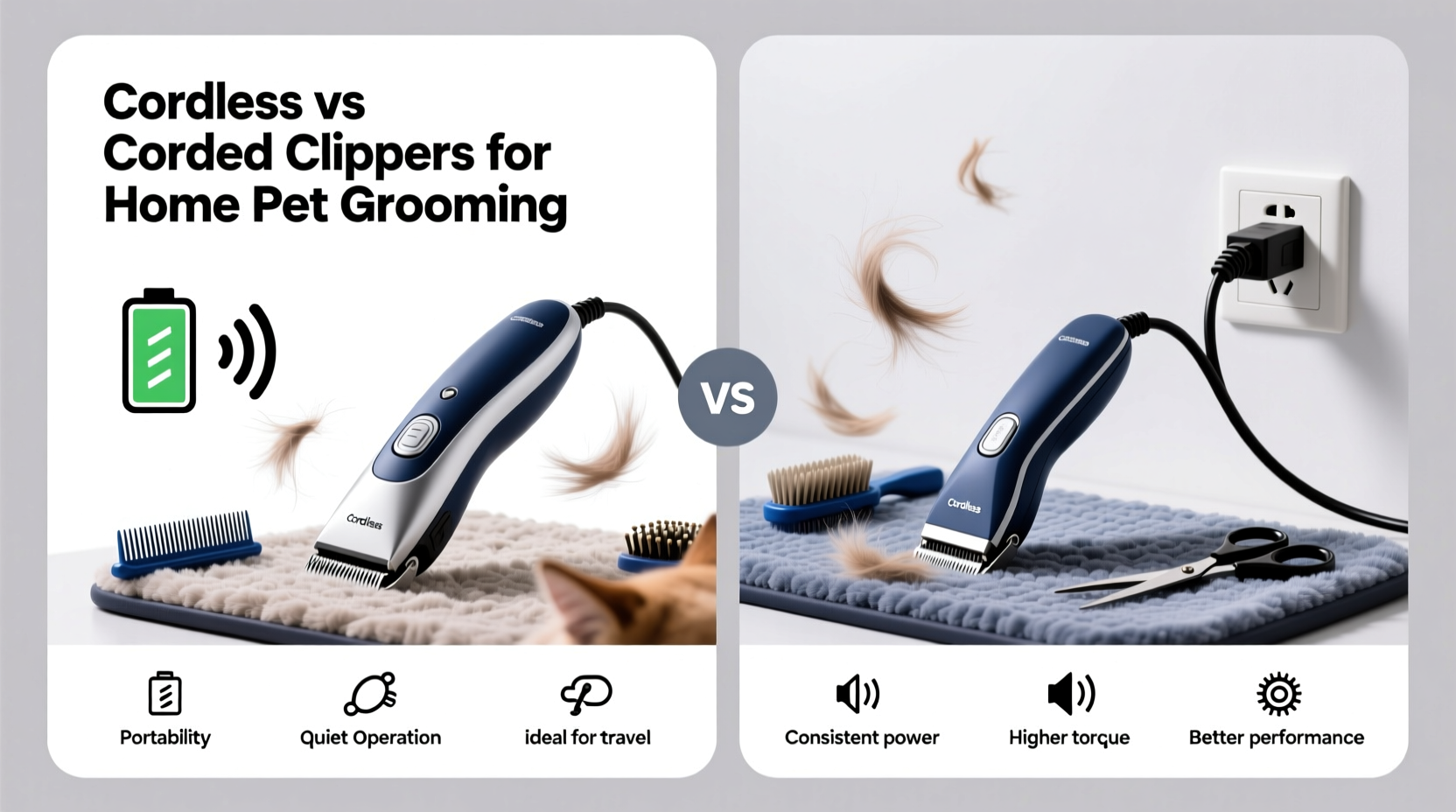
One of the most critical factors in clipping performance is consistent power delivery. Corded clippers are directly connected to a power source, which means they can deliver steady, uninterrupted motor strength throughout the entire grooming session. This is especially beneficial when working with thick, matted, or coarse coats—such as those found on Golden Retrievers, Newfoundlands, or double-coated breeds like Huskies.
Corded models typically feature more robust motors, often rated in watts (e.g., 60W–120W), allowing them to cut through dense fur without bogging down. They maintain full speed even under pressure, reducing strain on the motor and minimizing heat buildup.
In contrast, cordless clippers rely on rechargeable lithium-ion batteries. While modern models have improved significantly, battery-powered units may experience a drop in torque as the charge depletes. High-end cordless clippers now offer brushless motors and advanced cooling systems, but they still generally fall short of corded models in sustained heavy-duty performance.
“Corded clippers remain the gold standard for professional-grade cutting power. If you're dealing with frequent or intensive grooming sessions, nothing matches a direct power supply.” — Dr. Lena Patel, Veterinary Dermatology TechnicianTip: For pets with thick or tangled fur, always opt for higher-wattage clippers—preferably corded—to avoid stalling and overheating.
Mobility and Convenience
The primary advantage of cordless clippers lies in their freedom of movement. Without a power cord tethering you to an outlet, you gain greater flexibility to groom in different areas—whether it's the bathroom, backyard, or even during travel. This mobility can be a game-changer when dealing with nervous or restless pets who won’t stay in one place.
Cordless models also reduce tripping hazards and eliminate the frustration of managing cords around wiggly animals. You’re not limited by outlet placement, which is particularly helpful in homes where bathrooms lack accessible electrical sockets near sinks or grooming stations.
However, this convenience comes with limitations. Battery life varies widely—from 30 minutes on budget models to up to 180 minutes on premium versions. A long-haired dog might take 45–60 minutes to groom fully, meaning mid-session recharging could interrupt the process if the battery isn’t sufficient. Additionally, cold environments (like garages in winter) can reduce battery efficiency.
Corded clippers, while less mobile, never run out of power mid-use. As long as there’s electricity, they’ll keep running. This makes them ideal for multi-pet households or extended grooming sessions.
Battery Life and Charging Considerations
When evaluating cordless clippers, pay close attention to battery specifications. Look beyond just “up to X hours” claims—real-world usage often falls short due to motor load, ambient temperature, and blade resistance.
Many high-quality cordless models offer quick-charge capabilities (e.g., 1 hour for full charge, or 10 minutes for 30 minutes of runtime). Some include removable batteries, allowing you to swap in a fresh one mid-session—a feature favored by mobile groomers.
Still, battery longevity is a concern over time. Lithium-ion cells degrade after 300–500 charge cycles. After 1–2 years of regular use, you may notice reduced runtime even when fully charged. Replacing batteries can be costly or impossible if the model is discontinued.
Corded clippers bypass these issues entirely. No charging, no downtime, no degradation. Their only dependency is access to a working outlet and a safe extension cord if needed.
Detailed Comparison Table: Cordless vs Corded Clippers
| Feature | Cordless Clippers | Corded Clippers |
|---|---|---|
| Power Source | Rechargeable battery | Electrical outlet |
| Runtime | 30–180 minutes (varies by model) | Unlimited (while plugged in) |
| Mobility | High – usable anywhere | Limited – requires outlet proximity |
| Cutting Power | Good to very good (may dip with low battery) | Consistently high |
| Heat Buildup | Moderate – some models overheat under load | Low to moderate – better heat dissipation |
| Maintenance | Battery care required; clean after each use | Minimal; focus on blade care |
| Ideal For | Small-to-medium pets, travel, quick trims | Large breeds, thick coats, frequent use |
Real-World Scenario: Grooming a Nervous Rescue Dog
Sarah adopted a mixed-breed rescue dog named Milo, who was anxious around loud noises and unfamiliar sensations. Her first attempt at home grooming with a powerful corded clipper failed—Milo became frightened by the constant hum and tugged against the cord, nearly pulling the unit off the counter. The noise and restriction heightened his stress.
She switched to a quiet, cordless model with a soft-start motor and ergonomic design. With no cord to get tangled and the ability to move freely around Milo in a quiet corner of the living room, she completed a light trim in stages over two days. The portability allowed her to work in a space where Milo felt safest, and the lower noise profile helped him relax.
This case illustrates how cordless clippers can be the better emotional fit—even if slightly less powerful—when dealing with skittish animals. The psychological benefit of mobility and reduced sensory overload sometimes outweighs raw performance metrics.
Step-by-Step Guide: Choosing the Right Clipper Type
- Assess Your Pet’s Coat Type: Thick, double-layered, or matted fur demands consistent power—favor corded. Short, fine, or low-maintenance coats may suit cordless models.
- Evaluate Grooming Frequency: Weekly touch-ups? Occasional trims? Daily use suggests corded for durability. Infrequent use may favor cordless for convenience.
- Consider Your Environment: Do you groom near an outlet? Is your space cluttered? Cordless wins in tight or outlet-limited areas.
- Check Noise Sensitivity: Some pets react poorly to constant motor noise. Cordless models are often quieter and less intimidating.
- Review Battery Needs: Can you commit to regular charging? Do you need swappable batteries? If not, corded avoids battery anxiety.
- Set a Realistic Budget: Premium cordless clippers cost more upfront and may require battery replacements. Corded models are often cheaper and longer-lasting.
Maintenance and Longevity
Both corded and cordless clippers require regular upkeep to function optimally. Blades should be cleaned after every use to remove hair, oils, and debris. Use a small brush and manufacturer-recommended oil to prevent rust and ensure smooth operation.
Cordless models demand extra attention to battery health. Avoid leaving them fully discharged for long periods. Store them in a cool, dry place—not in humid bathrooms or hot cars. Charge them periodically even when not in use to prolong cell life.
Corded clippers are generally more durable over time. With fewer electronic components vulnerable to wear (like batteries), they often last 5–10 years with proper care. Motors are built for continuous operation, making them a sound investment for serious home groomers.
Frequently Asked Questions
Can I use cordless clippers on a large dog with a thick coat?
Yes, but only if the model is specifically designed for heavy-duty use. Look for high-voltage motors (e.g., 10V+), low-noise brushless technology, and extended battery life (at least 90 minutes). Be prepared to pause and let the unit cool if it starts to heat up.
Are corded clippers dangerous because of the cord?
Not inherently, but precautions are necessary. Use a grounded outlet, keep the cord away from water sources, and avoid placing it where pets can chew it. A cord cover or retractable reel can help manage tangles and reduce tripping risks.
Do cordless clippers lose power over time?
Yes, all rechargeable batteries degrade with use. After 1–3 years, you may notice shorter runtimes or slower startup. High-quality brands offer replaceable batteries or extended warranties to mitigate this issue.
Final Recommendation and Checklist
The choice between cordless and corded clippers ultimately depends on your specific needs. There’s no universal “best” option—only what works best for your pet, lifestyle, and grooming goals.
If you prioritize power, consistency, and long-term value, and you groom in a fixed location, corded clippers are likely your best bet. If you value portability, reduced noise, and flexibility—especially for smaller pets or occasional use—cordless models offer compelling benefits.
Grooming Clipper Selection Checklist
- ✅ Determine your pet’s coat type and grooming frequency
- ✅ Decide whether mobility or power is more important
- ✅ Check battery life (for cordless) or wattage (for corded)
- ✅ Read reviews focusing on noise level and heat management
- ✅ Confirm availability of replacement blades and accessories
- ✅ Test the weight and grip comfort—especially for long sessions
- ✅ Ensure the model includes safety features like blade guards or auto-shutoff
Conclusion
Selecting between cordless and corded clippers is more than a technical decision—it’s about matching tools to your real-life grooming routine. Whether you’re trimming a Poodle’s curls or managing a Siberian Husky’s undercoat, the right clipper can make the difference between a stressful struggle and a calm, efficient session. Weigh the pros and cons carefully, consider your pet’s temperament, and invest in quality. With the right choice, home grooming becomes not just manageable, but enjoyable.
💬 Have experience with both corded and cordless clippers? Share your insights below and help fellow pet owners make smarter choices!








