Cleaning your car’s interior is more than a chore—it’s essential for maintaining value, hygiene, and comfort. With tight spaces, fabric seats, crevices around gear shifts, and debris trapped in floor mats, the right vacuum makes all the difference. Two of the most popular options today are cordless vacuums and stick vacuums with detachable handheld units. While they often overlap in design, their performance in automotive environments can vary significantly. Understanding the differences—and where each excels—helps you choose the tool that delivers real results in confined, complex spaces like car interiors.
Understanding the Core Differences
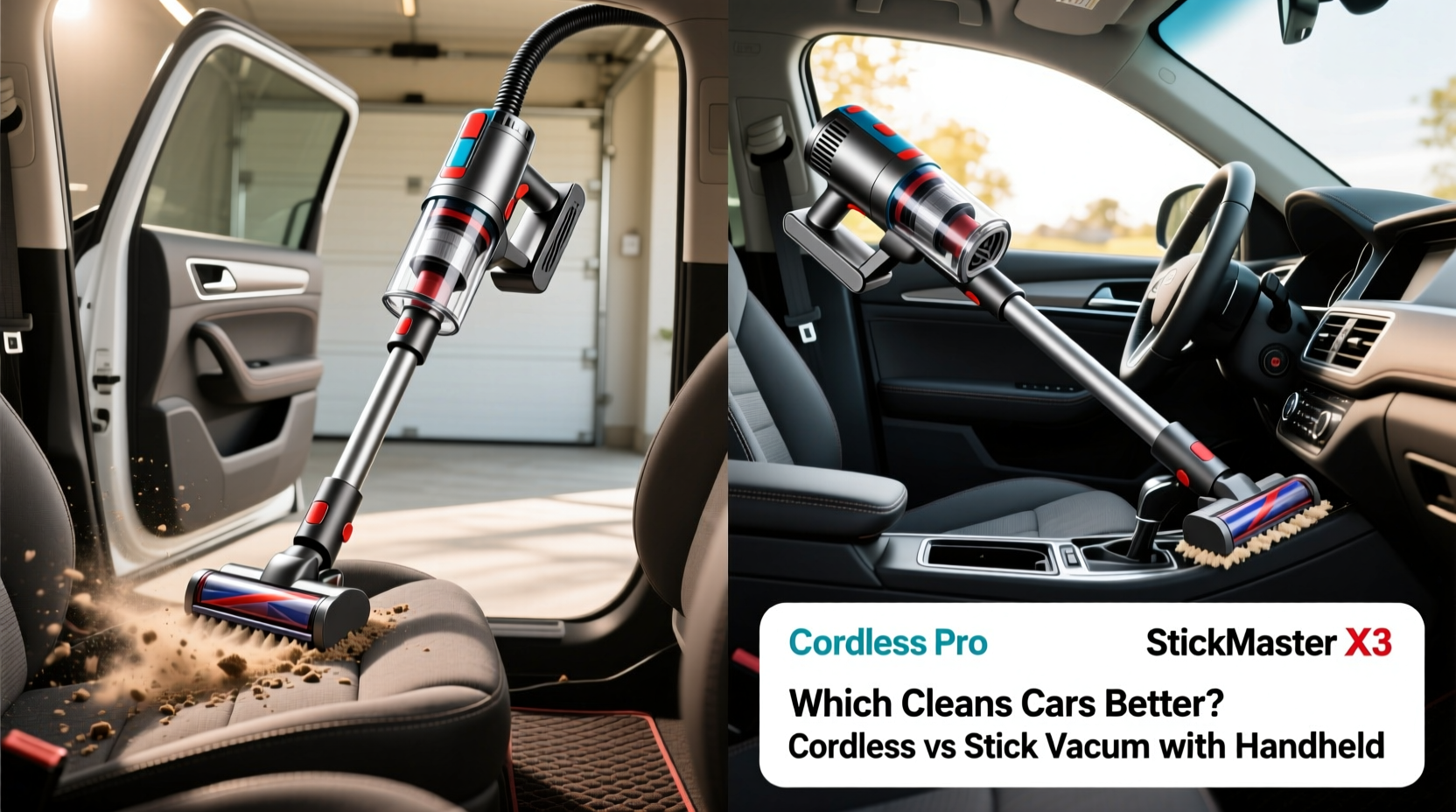
The terms “cordless vacuum” and “stick vacuum with detachable handheld” are sometimes used interchangeably, but they represent different functional philosophies. A cordless vacuum refers broadly to any vacuum powered by a rechargeable battery, eliminating the need for cords or outlets. This category includes upright models, handhelds, and stick-style units. In contrast, a stick vacuum with a detachable handheld is a specific subtype designed for versatility: it functions as a full-length stick vacuum for floors and converts into a compact handheld unit by detaching the main body.
When applied to car cleaning, this distinction becomes critical. The detachable handheld feature allows users to reach under seats, between cushions, and into cup holders without awkward maneuvering. A standard cordless vacuum may lack this modular flexibility, even if it's lightweight. However, some high-end cordless models now include swivel heads and mini motorized tools, blurring the lines between categories.
“Car interiors demand precision and portability. A vacuum that can’t access tight corners is only half useful.” — Jordan Lee, Automotive Detailing Specialist with 15 years of experience
Performance Comparison: Key Factors for Car Cleaning
To determine which type performs better in vehicles, we evaluated five core factors: suction power, maneuverability, attachments, battery life, and dust capacity.
| Factor | Cordless Vacuum (Standard) | Stick Vacuum with Detachable Handheld |
|---|---|---|
| Suction Power | Varies widely; premium models exceed 150 AW | Typically strong in stick mode; handheld mode may reduce suction by 20–30% |
| Maneuverability | Good for open areas; less effective in tight spots | Excellent—handheld unit enables precise control in confined spaces |
| Attachments | Often includes crevice tool, brush, and upholstery nozzle | Same tools, but handheld mode acts as its own attachment system |
| Battery Life | Average 30–60 minutes depending on power mode | Similar runtime, but switching to handheld may extend use due to lower power draw |
| Dust Capacity | 0.3–0.6 liters; frequent emptying needed for deep car clean | Comparable, but handheld unit has smaller bin—requires more frequent clearing |
While both types offer cord-free convenience, the detachable handheld design proves superior for multi-zone car cleaning. Its ability to transform from a long-reach tool to a compact extractor gives it an edge in adaptability.
Tip: Always pre-vacuum your car by removing large debris manually. This prevents clogs and extends filter life.Real-World Testing: A Weekend Car Detailer’s Experience
Consider Sarah M., a freelance detailer who services over 20 vehicles monthly. She previously used a traditional cordless stick vacuum with fixed design and average suction (100 AW). After switching to a stick model with detachable handheld (Dyson V12 Detect Slim), she noticed immediate improvements.
One Saturday, she detailed a family SUV filled with sand, crumbs, pet hair, and spilled drink residue. Using the stick mode, she cleared the floor mats efficiently. Then, she detached the handheld unit to extract fine dust from air vents using a narrow crevice tool. The included laser dust illumination helped her see particles invisible to the naked eye. She reached behind the rear seats without moving them, something impossible with her old model.
\"The game-changer was switching modes mid-job,\" Sarah noted. \"I didn’t have to carry multiple devices. One tool did everything—from trunk to console—with consistent suction and no cord tangling.\"
Her only critique? The handheld bin filled quickly when dealing with sandy debris. But overall, she completed the job 25% faster than before, with visibly cleaner results confirmed by customer feedback.
Step-by-Step Guide: How to Clean Your Car Efficiently with Either Vacuum Type
Regardless of which vacuum you own, technique matters. Follow this proven process for thorough cleaning:
- Remove loose items: Take out floor mats, personal belongings, and trash. Shake out mats outside first.
- Pre-treat stains: If spills are present, apply a fabric-safe cleaner and let sit while you vacuum dry areas.
- Start with high-debris zones: Use the widest nozzle to clear floor mats and footwells. Avoid pressing too hard—let suction do the work.
- Switch to precision tools: Attach the crevice tool or use the handheld unit to clean seat tracks, center console, door pockets, and AC vents.
- Detail upholstery: Use a soft brush attachment to lift embedded dirt from cloth seats without damaging fibers.
- Empty and maintain: After finishing, empty the dustbin, wipe the filter, and store in a dry place.
This sequence ensures no area is missed and maximizes the efficiency of your vacuum’s runtime and suction power.
Expert Tips for Maximizing Performance in Vehicles
Even the best vacuum underperforms without proper usage. Here are key strategies professionals use:
- Use low-power mode for light debris: Saves battery when tackling dust and lint, reserving high power for ground-in dirt.
- Keep attachments organized: Store tools in a labeled pouch inside your glove compartment for quick access.
- Check filters monthly: Clogged filters reduce suction by up to 50%. Wash foam and HEPA filters according to manufacturer guidelines.
- Don’t overfill the bin: Empty when it reaches the max line. A full bin restricts airflow and diminishes cleaning effectiveness.
- Vacuum in sections: Work methodically—driver’s side first, then passenger, then rear—to avoid missing spots.
Buying Checklist: What to Look for in a Car-Cleaning Vacuum
Not all cordless vacuums are created equal. Before purchasing, verify these features to ensure optimal car-cleaning performance:
- ✅ Strong Suction (120+ Air Watts)
- Essential for lifting pet hair and embedded dirt from carpets.
- ✅ Detachable Handheld Function
- Allows flexible access to tight automotive spaces.
- ✅ Laser or LED Dust Illumination
- Reveals invisible particles on dark surfaces like black leather or floor mats.
- ✅ Multiple Attachments
- At minimum: crevice tool, motorized brush, and soft dusting brush.
- ✅ Quick-Charge Battery (Under 4 Hours)
- Ensures minimal downtime between uses.
- ✅ Lightweight Design (Under 5 lbs)
- Reduces fatigue during extended detailing sessions.
- ✅ Washable Filter System
- Lowers maintenance costs and improves long-term performance.
Brands like Dyson, Shark, Tineco, and Bissell lead in this space, offering models specifically marketed for whole-home and automotive use. Look for hybrid systems that balance power, portability, and smart features.
Frequently Asked Questions
Can I use a regular home cordless vacuum in my car?
Yes, but effectiveness depends on design. Fixed-body cordless vacuums often struggle with access. Models with articulating heads or removable handhelds perform much better in confined vehicle spaces.
Is a detachable handheld worth the extra cost?
For car owners, yes. The added flexibility pays off in cleaning speed, reach, and completeness. If you frequently transport children, pets, or equipment, the investment justifies itself within a few uses.
How often should I vacuum my car?
For daily drivers, vacuum at least once every two weeks. High-traffic vehicles (e.g., rideshares, families with kids) benefit from weekly cleaning. Seasonal deep cleans are recommended before summer and winter.
Final Verdict: Which Cleans Cars Better?
After evaluating suction, usability, real-world performance, and expert input, the stick vacuum with detachable handheld emerges as the superior choice for car cleaning. While standalone cordless vacuums offer convenience and adequate power, they lack the modular advantage that makes detachable models so effective in tight, multi-surface environments.
The ability to switch seamlessly from sweeping the cargo area to extracting crumbs from a cup holder without changing tools is unmatched. Add specialized attachments, intelligent suction sensors, and compact storage, and the case becomes even stronger. For anyone serious about keeping their vehicle spotless, this design isn’t just convenient—it’s necessary.
“The best car vacuum isn’t the one with the highest specs—it’s the one you’ll actually use correctly and consistently.” — Marcus Tran, Product Tester at AutoGroom Labs
Take Action Today
Your car spends hours collecting dust, allergens, and debris. Don’t settle for partial cleanups or inefficient tools. Evaluate your current vacuum: does it truly reach every corner? Can you clean the entire cabin without frustration or fatigue? If not, consider upgrading to a stick vacuum with a detachable handheld unit. Start with a model that meets the checklist above, apply the step-by-step cleaning method, and maintain it properly. You’ll notice cleaner air, fresher interiors, and a vehicle that feels cared for—inside and out.
💬 Have a favorite car-cleaning tip or vacuum model? Share your experience in the comments and help fellow drivers achieve showroom-ready interiors!








