For pet owners, cleaning stairs can be a daily battle. Hair clings to carpet fibers, hides in corners, and resists casual sweeping. While both cordless vacuums and stick vacuums are marketed as convenient solutions, not all perform equally when tackling pet hair on stairs. Understanding the differences—and where each excels—can save time, effort, and frustration. This guide breaks down performance factors, usability, and real-world effectiveness to help you choose the right tool for your home.
Understanding the Key Differences
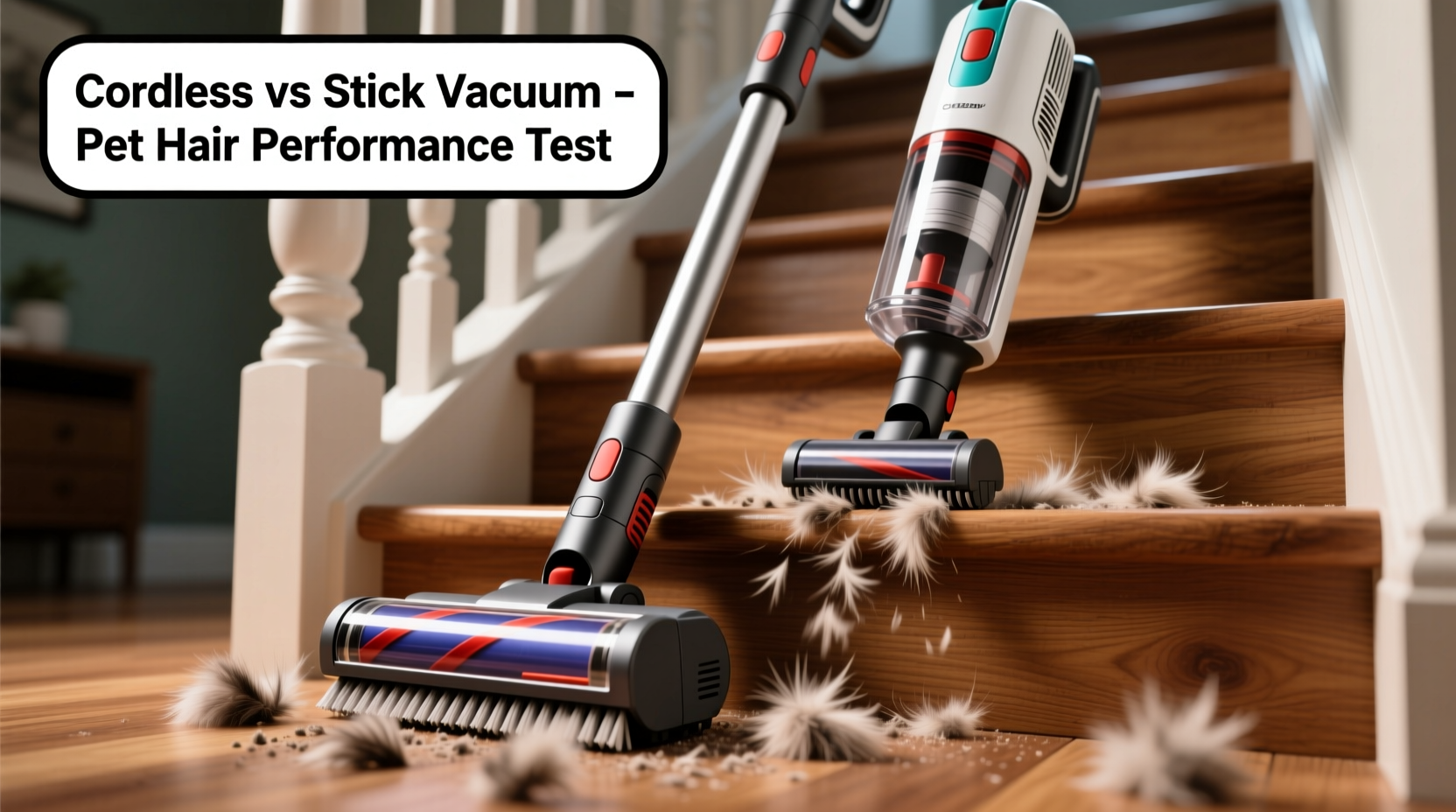
The terms “cordless vacuum” and “stick vacuum” are often used interchangeably, but they aren’t mutually exclusive. A stick vacuum refers to the design—a long, slender unit with a motorized head and dustbin mounted inline. Cordless vacuums simply operate without a power cord, relying on rechargeable batteries. Many modern stick vacuums are cordless, but some corded stick models still exist. The overlap causes confusion, so it’s essential to evaluate based on function, not just form.
Cordless vacuums offer freedom of movement and easy storage. They’re lightweight and typically designed for quick cleanups. Stick vacuums, especially corded ones, may deliver more consistent suction because they don’t rely on battery power. However, most high-end stick vacuums today are cordless, combining portability with strong motors.
When it comes to stairs, two factors dominate: maneuverability and sustained suction. Stairs require precise handling—tight turns, awkward angles, and often narrow spaces between banisters. A vacuum that’s too bulky or top-heavy becomes unwieldy. At the same time, pet hair, especially from dogs like huskies or cats with undercoats, demands powerful suction and effective brush roll agitation to lift embedded fur.
Tip: Look for a vacuum with a swivel steering head—it makes navigating tight stair corners significantly easier.Performance on Carpeted Stairs: Suction, Brush Rolls, and Filtration
Pet hair doesn’t just sit on the surface. It embeds into carpet pile, clings to fibers due to static, and accumulates in crevices. To remove it effectively, a vacuum needs three things: strong suction, a rotating brush roll, and sealed filtration to prevent recontamination.
Suction power is measured in air watts (AW) or water lift (inH₂O), though many brands use proprietary metrics. Generally, models with at least 150 AW perform well on low-to-medium pile carpets. High-pile stairs—common in older homes—require even more power. Cordless models have improved dramatically; flagship units now rival corded machines in short bursts. However, sustained suction on stairs (which may take 3–5 minutes to clean) depends on battery mode and heat management.
Brush rolls are critical. Rubberized or combination bristle/rubber brushes tend to resist hair wrap better than pure nylon. Some models feature self-cleaning brush rolls with anti-tangle technology. For pet owners, this isn’t a luxury—it’s a necessity. A clogged brush roll loses effectiveness within minutes, requiring frequent stops to cut out hair.
| Feature | Cordless Vacuum Advantage | Stick Vacuum Consideration |
|---|---|---|
| Maneuverability | Lightweight, often modular; some convert to handheld | May be longer and harder to tilt vertically |
| Suction Consistency | Varies by battery level; eco mode reduces power | Corded sticks maintain constant suction |
| Run Time | Average 20–40 mins; may not finish large staircases on max | Unlimited if corded |
| Attachments | Often includes mini motorized tools for stairs | Fewer specialized tools in budget models |
| Hair Tangle Resistance | Newer models lead in anti-tangle tech | Older designs prone to wrapping |
“Pet hair is one of the toughest debris types because of its length and static charge. You need a brush roll that agitates deeply without jamming.” — Dr. Lena Patel, Home Appliance Engineer at Consumer Dynamics Lab
Real-World Use Case: Cleaning a 12-Step Carpeted Staircase
Consider Sarah, a pet owner with two golden retrievers living in a two-story colonial home. Her staircase has 12 steps covered in medium-pile Berber carpet. Every morning, she spends 10 minutes removing visible dog hair before work. She tested two vacuums over a week: a premium cordless stick vacuum (Dyson V15 Detect) and a traditional corded stick model (Hoover Tempo WidePath).
With the Dyson, Sarah detached the wand and used the mini motorized pet tool. The lightweight design made lifting and angling easy. The LED headlights revealed hidden hair in shadowed risers. Suction was strong for the first eight steps, but in max mode, the battery dropped to 30% by step 10. She finished using eco mode, which reduced pickup efficiency slightly. Still, the results were impressive—visible hair gone, and the bin collected a dense clump of fur.
The Hoover required dragging a cord up the stairs, which snagged on banister posts twice. The wider cleaning path covered more area per pass, but the rigid body made it hard to clean close to the wall. No attachments were included for tight spots. On the plus side, suction never weakened, and she completed the job in seven minutes. However, hair remained along the edges, and the brush roll needed cleaning afterward due to tangling.
In her final assessment, Sarah preferred the cordless model for stairs despite the shorter runtime. The precision, attachments, and ease of vertical handling outweighed the need to monitor battery life.
Choosing the Right Tool: A Step-by-Step Decision Guide
Selecting between a cordless and stick vacuum for stairs shouldn’t be guesswork. Follow this practical sequence to identify your best option:
- Evaluate your staircase layout. Note the number of steps, handrail obstructions, carpet type, and storage space near the stairs. Compact, winding staircases favor lightweight, agile vacuums.
- Assess pet hair volume. Heavy shedders require stronger suction and anti-tangle features. If you collect handfuls of fur weekly, prioritize models with motorized pet tools.
- Determine cleaning frequency. Daily quick cleans suit cordless models. If you deep-clean stairs weekly with other tasks, a corded stick might integrate better into longer sessions.
- Check battery specs. Look for at least 30 minutes of runtime in mid-power mode. Removable batteries allow swapping for extended use.
- Test attachment availability. A crevice tool and motorized pet mini-tool are essential for stairs. Some brands offer magnetic accessory storage for quick access.
- Verify maintenance requirements. Can you easily clear the brush roll? Is the filter washable? Frequent use demands low-maintenance design.
- Try before you buy, if possible. Retailers like Best Buy or Crate & Barrel often have display models. Mimic stair-cleaning motions to assess balance and reach.
Top Features That Matter Most for Stair Cleaning
Not all vacuums are built with stairs in mind. Focus on these specific attributes when comparing models:
- Convertibility: Models that detach into handheld units offer superior control on stairs. You can clean treads, risers, and banisters without repositioning a full stick.
- Weight distribution: A front-heavy vacuum strains your wrist during prolonged use. Look for balanced designs where the motor and bin are centered or rear-mounted.
- LED lighting: Built-in lights on the nozzle reveal debris in dimly lit stairwells. This feature alone can double effective cleanup.
- Bin capacity and emptying mechanism: Small bins fill quickly with voluminous pet hair. Choose a model with a one-touch ejector to avoid touching dirty contents.
- Noise level: Stair cleaning often happens early or late. Models under 75 dB are less disruptive to household members or pets.
Brands like Dyson, Shark, and LG lead in innovation for stair-friendly designs. The Dyson Gen5detect, for example, offers point-and-shoot laser illumination that highlights invisible particles. The Shark Vertex Pro has a zero-turn radius and a detachable canister for handheld use—ideal for vertical surfaces.
Frequently Asked Questions
Can a cordless vacuum handle thick pet hair on high-pile carpet stairs?
Yes, but only high-end models with strong suction (180+ AW) and anti-tangle brush rolls. Avoid budget cordless vacuums, as their motors struggle with dense fur. Look for dual-mode brush rolls that switch between hard floor and carpet settings.
Is a corded stick vacuum obsolete for stairs?
Not entirely. If your staircase is near an outlet and you prefer uninterrupted suction, a corded stick remains viable. However, newer cordless models offer greater flexibility and are generally better suited to the dynamic movements required on stairs.
How often should I clean the brush roll when dealing with pet hair?
After every 2–3 uses on stairs. Pet hair wraps tightly around rollers and reduces suction over time. Regular inspection prevents motor strain and maintains performance. Some models include a deshedding tool to slice through tangled hair quickly.
Final Recommendation: Why Cordless Wins for Most Pet Owners
While both cordless and stick vacuums can clean stairs, the evidence points to cordless models—especially convertible stick-cum-handheld units—as the superior choice for pet hair removal. Their agility, targeted attachments, and evolving battery technology make them ideal for the physical demands of stair cleaning. Modern cordless vacuums no longer sacrifice power for convenience; many now exceed 200 air watts and include smart sensors that adjust suction based on debris load.
Stick vacuums, particularly older or corded versions, remain functional but lack the finesse needed for thorough stair maintenance. Their rigid structure limits access, and the absence of specialized tools reduces effectiveness in tight areas. Unless you have a simple, straight staircase and minimal shedding, a dedicated cordless system delivers better long-term results.
Ultimately, the best vacuum is the one you’ll use consistently. A lightweight cordless model stored near the stairs encourages daily touch-ups, preventing hair buildup and reducing allergens. For pet owners, that small habit leads to cleaner air, fresher carpets, and fewer lint-covered clothes.
🚀 Ready to reclaim your stairs from pet hair? Invest in a high-performance cordless vacuum with a motorized pet tool and wall mount. Start with one cleaning session today—you’ll see (and breathe) the difference.








