For pet owners, managing loose fur is a daily chore. Whether it's clumps of dog hair on the sofa or fine cat dander embedded in carpets, effective cleaning tools are essential. Two popular options dominate the market: cordless stick vacuums and traditional upright models. While both claim to handle pet hair efficiently, their actual performance varies significantly based on design, suction power, maneuverability, and maintenance needs. Understanding these differences helps pet parents choose the vacuum that not only removes hair quickly but also integrates seamlessly into their cleaning routine.
Suction Power and Motor Design
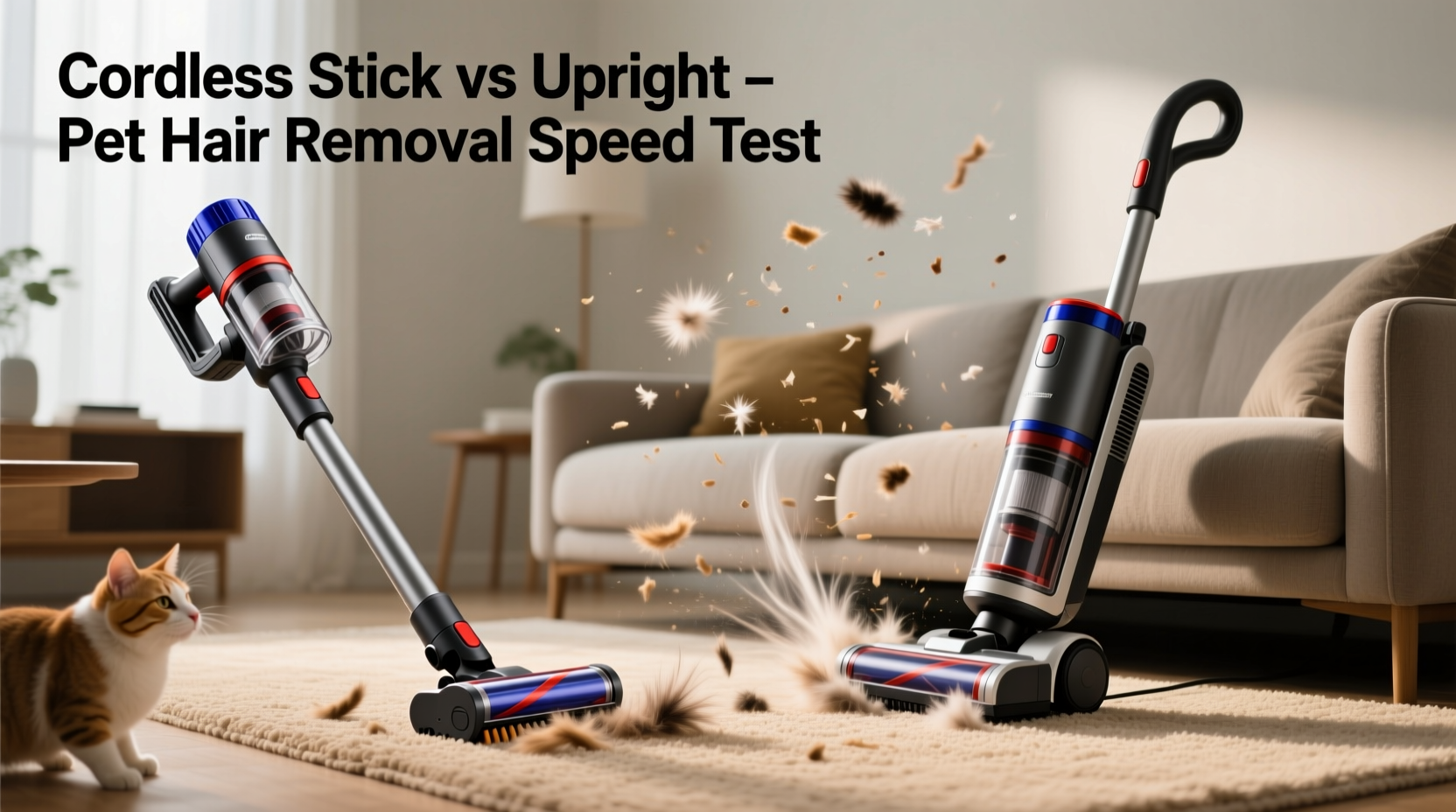
The ability to lift and trap pet hair starts with suction. Upright vacuums typically feature larger motors powered by direct electrical current, enabling higher airwatt output. Many high-end uprights generate over 100 airwatts—significantly more than most cordless sticks, which average between 60 and 90 airwatts. This raw power gives uprights an edge when pulling deeply embedded pet hair from medium-pile carpets.
Cordless stick vacuums, while improving rapidly, rely on compact brushless motors and lithium-ion batteries. Their suction is often optimized for hard floors and low-pile rugs. On thicker carpeting, they may require multiple passes to match the single-pass efficiency of an upright. However, some premium cordless models now offer “boost” modes that temporarily increase suction, narrowing the gap in short bursts.
“Uprights still lead in sustained suction depth, especially on textured flooring where pet hair anchors itself. But modern cordless vacuums are closing the performance gap with smarter airflow engineering.” — Dr. Lena Torres, Home Appliance Researcher at CleanTech LabsTip: Check the airwatt rating, not just advertised suction strength. Real-world performance correlates more closely with airflow (CFM) and water lift (inches) metrics.
Maneuverability and Cleaning Speed
Speed isn’t just about suction—it’s about how fast you can cover ground. Cordless stick vacuums excel here. Lightweight designs (typically 5–8 lbs) allow quick transitions between rooms. There’s no cord to manage, no heavy body to drag, and many models convert into handheld units for stairs, furniture, and car interiors.
Upright vacuums, though sturdier, weigh 12–20 lbs and require more physical effort to push and turn. Their bulk makes them less ideal for spot-cleaning accidents or reaching under furniture. For homes with pets that shed heavily throughout the house—not just on floors—this lack of agility slows overall cleaning time.
A Boston-based household with two golden retrievers reported reducing daily cleanup from 22 minutes to 9 minutes after switching from an upright to a cordless stick model. The reduction came not from better suction, but from eliminating setup time, unplugging/replugging, and moving between floor types without changing settings.
Real Example: The Multi-Level Home Challenge
In Denver, Sarah K., a veterinarian and mother of three, owns a two-story home with hardwood, area rugs, and a basement playroom used by her two dogs and visiting pets from neighbors. She initially relied on a premium upright vacuum but found herself avoiding daily cleanups due to its weight and storage size. After switching to a top-tier cordless stick vacuum, she began cleaning high-traffic zones twice daily—something she never did before. “I grab it like a broom,” she said. “If my lab sheds during breakfast, I’m done in two minutes before heading to work.” While the stick doesn’t extract every last hair from her plush living room rug, her overall cleanliness improved because she uses it more frequently.
Filtration and Hair Containment
Pet hair isn’t just visible debris—it carries allergens, dander, and oils. Effective filtration prevents these particles from recirculating into the air. Most upright vacuums come with sealed HEPA systems, multi-stage filters, and larger dust bins that reduce filter clogging. These features help maintain consistent suction over long cleaning sessions.
Cordless models vary widely. Entry-level versions often use basic foam or mesh filters that degrade suction as hair accumulates. Higher-end sticks now include washable HEPA filters and cyclonic separation technology, minimizing loss of power. However, smaller dust bins (0.3–0.7 liters) mean more frequent emptying—a drawback when dealing with large amounts of shedding.
Another concern is hair wrapping around brush rolls. Both types suffer from tangles, but uprights usually have wider, more accessible roller brushes and easier access panels. Some newer cordless models feature anti-tangle brush bars made of rubberized bristles or continuous filament designs that resist缠绕.
| Feature | Cordless Stick Vacuums | Upright Models |
|---|---|---|
| Average Weight | 5–8 lbs | 12–20 lbs |
| Battery/Runtime | 20–60 mins (rechargeable) | Unlimited (corded) |
| Suction (Airwatts) | 60–90 (boost mode up to 110) | 80–150+ |
| Dust Capacity | 0.3–0.7 L | 1.0–2.5 L |
| Filtration Standard | Varies; mid-to-high end = HEPA | Often sealed HEPA standard |
| Carpet Performance | Fair to good (low/medium pile) | Excellent (all pile heights) |
| Hard Floor Agility | Excellent | Good |
| Maintenance Access | Limited (compact design) | Easy roller removal, filter access |
Best Use Cases: Matching Vacuum Type to Lifestyle
Choosing between a cordless stick and an upright shouldn’t be based solely on specs—it should align with your household’s habits and layout.
- Choose a cordless stick if: You have mostly hard floors, need quick cleanups, live in an apartment or small home, own one or two light-shedding pets, or value convenience over deep-cleaning intensity.
- Opt for an upright if: You have wall-to-wall carpeting, large dogs that shed heavily, allergies requiring maximum filtration, or prefer thorough weekly cleans rather than daily touch-ups.
Interestingly, many households benefit from owning both. A 2023 survey by HomeClean Weekly found that 43% of pet owners who rated their cleaning effectiveness as “excellent” used a dual-vacuum strategy: an upright for weekly deep cleans and a cordless stick for daily maintenance.
Action Checklist: Choosing the Right Vacuum for Pet Hair
Checklist:- Assess your primary flooring type (carpet vs. hard surface).
- Measure average daily shedding volume (light, moderate, heavy).
- Determine how often you’re willing to clean (daily, every few days, weekly).
- Evaluate storage space and portability needs.
- Test runtimes: ensure battery lasts through your typical cleaning session.
- Verify filter type and ease of emptying (look for hygienic eject features).
- Check brush roll design—rubberized or tangle-free is best for pet hair.
Step-by-Step Guide to Maximizing Pet Hair Removal
No vacuum performs optimally without proper technique. Follow this sequence to get the fastest, most complete results regardless of model type:
- Prep the Area: Remove small obstacles, fluff rugs, and lightly mist heavily matted fur with water to reduce static and improve pickup.
- Select the Right Attachment: Use a motorized pet tool for upholstery or a wide nozzle for open floors. Disable beater bar on hard surfaces to avoid scattering hair.
- Vacuum in Multiple Directions: Pass over carpeted areas at least twice—once vertically, once horizontally—to loosen anchored hair.
- Use Short, Overlapping Strokes: Especially with cordless models, slow and steady movements maximize airflow contact time.
- Empty Bin Mid-Session if Needed: A full bin reduces suction by up to 40%. Don’t wait until the end if collecting large volumes.
- Clean Filters Weekly: Wash reusable filters monthly and let them dry completely before reinserting.
- Maintain the Brush Roll: Cut away tangled hair every 2–3 weeks to preserve rotation speed and suction efficiency.
Common Misconceptions About Pet Hair Cleaning
Several myths persist about what makes a vacuum effective against pet hair:
- Myth: More suction always means better pet hair removal.
Truth: Suction must be paired with proper airflow design and brush roll synergy. Excessive suction on hard floors can scatter lightweight fur. - Myth: All HEPA filters are created equal.
Truth: Only sealed HEPA systems trap 99.97% of particles. Unsealed units allow leakage around the filter. - Myth: Cordless vacuums are too weak for real pet homes.
Truth: With frequent use and proper maintenance, they maintain superior day-to-day cleanliness despite lower peak power.
FAQ: Quick Answers for Pet Owners
Which vacuum removes pet hair from carpets faster?
Upright vacuums generally remove more pet hair from carpets in a single pass due to stronger, sustained suction and wider cleaning paths. However, cordless sticks can achieve similar results with multiple passes and boost mode activation.
Can cordless vacuums handle heavy dog shedding?
Yes, but with caveats. High-end cordless models (e.g., Dyson V15, Samsung Jet 90) can manage heavy shedding on low-pile carpets and hard floors. For thick carpeting or very large dogs, expect to recharge mid-clean and empty the bin frequently.
Do robot vacuums outperform cordless or upright models for pet hair?
Not yet. While robot vacuums excel at scheduled maintenance, their suction is weaker, bins are smaller, and they struggle with tangles. They complement but don’t replace manual vacuums for intensive pet hair control.
Final Verdict: What Cleans Pet Hair Faster?
When measuring “faster” purely by suction intensity and per-pass efficiency on carpet, upright vacuums win. They deliver deeper cleaning with less user effort per square foot. However, when considering total time invested—including setup, storage, frequency of use, and coverage across different surfaces—cordless stick vacuums often result in faster overall hair management.
The key insight is frequency. A vacuum used daily for five minutes removes more cumulative pet hair than one used weekly for 30 minutes. Cordless sticks encourage consistent use. Their convenience leads to proactive cleaning—before hair migrates to furniture or embeds in fibers. In contrast, uprights, while powerful, are often reserved for weekend chores, allowing hair to accumulate.
For fastest results across a week, the cordless stick has the edge. For fastest deep-cleaning of a single carpeted room, the upright prevails.
“The fastest way to clean pet hair isn’t about horsepower—it’s about habit. The vacuum you use every day beats the one you use perfectly once a week.” — Mark Renner, Professional Organizer & Cleaning Consultant
Take Action Today
If you're tired of chasing pet hair with inconsistent results, reassess your vacuum not just by power, but by practicality. Try using your current model with the step-by-step method outlined above. If you still struggle, consider upgrading—not necessarily to the strongest vacuum, but to the one you’ll actually use every day. Whether it’s a nimble cordless stick or a robust upright, the best tool is the one that fits your life. Share your experience in the comments below: what’s your go-to vacuum for pet hair, and how has it changed your cleaning routine?
🚀 Ready to upgrade your pet hair cleanup? Test a cordless stick for daily touch-ups—even if you keep your upright for deep cleans. Small changes in routine lead to big improvements in home hygiene.








