
Choosing between a corded vacuum and a cordless stick vacuum isn't just about convenience—it's about matching your cleaning needs with the right tool. While both types have evolved significantly over the past decade, they still serve different purposes based on home layout, flooring type, and lifestyle demands. The real question isn’t just which is more powerful or easier to use, but which one delivers superior cleaning results across multiple surfaces and situations.
For years, corded vacuums were considered the gold standard for deep cleaning due to their consistent power delivery. But today’s high-end cordless models rival—and sometimes surpass—their wired counterparts in suction strength and versatility. So, which one actually cleans better overall? The answer depends on several key factors, from sustained performance to accessibility and maintenance.
Suction Power and Consistency
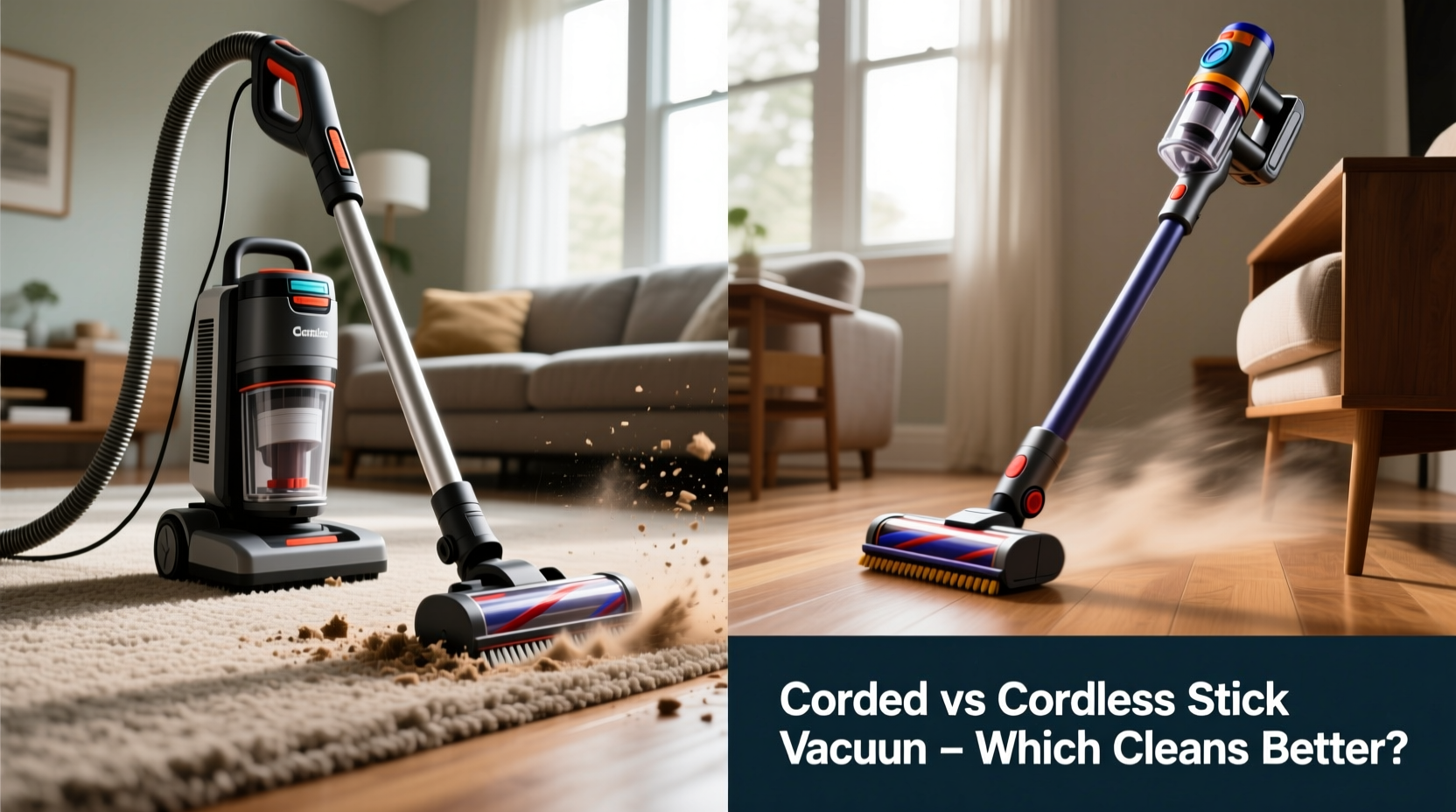
Suction power is arguably the most critical factor when evaluating cleaning performance. It determines how effectively a vacuum lifts embedded dirt, pet hair, and fine dust from carpets, rugs, and hard floors.
Corded vacuums draw continuous electricity from an outlet, allowing them to maintain maximum suction throughout use. This means no drop-off in performance, even during extended cleaning sessions. Most upright or canister corded models deliver between 100–200 air watts of suction—more than enough to extract deeply trapped debris from medium-pile carpets.
In contrast, cordless stick vacuums rely on lithium-ion batteries. Even the best models experience some decline in suction as the battery drains. While many feature \"boost\" modes that temporarily increase suction, these settings often reduce runtime to under five minutes. Over time, battery capacity also degrades, leading to shorter effective cleaning cycles and reduced peak suction—even after a full charge.
“While modern cordless vacuums are impressive, nothing beats the sustained power delivery of a corded system for deep carpet cleaning.” — Dr. Alan Zhou, Appliance Performance Analyst at HomeTech LabsTip: If you have wall-to-wall carpeting or pets that shed heavily, prioritize sustained suction over portability.
Battery Life and Runtime Limitations
A cordless vacuum’s runtime directly impacts its ability to clean thoroughly. Most standard models offer 20–40 minutes of operation on eco mode, dropping to 5–10 minutes in max power mode. For small apartments or quick cleanups, this may be sufficient. However, larger homes (over 1,500 sq ft) often require recharging mid-session, interrupting workflow and reducing efficiency.
Recharging times vary widely—from 2 to 4 hours—meaning you can’t simply swap and go unless you’ve purchased a spare battery (which adds $70–$120 to the cost). Even then, managing multiple batteries introduces complexity and long-term expense.
Corded vacuums eliminate this limitation entirely. As long as there’s an accessible outlet, they can run indefinitely. A single pass over each room ensures complete coverage without worrying about sudden shutdowns. For households with frequent spills, tracked-in dirt, or high foot traffic, uninterrupted operation is a significant advantage.
However, cord management remains a drawback. Cords typically range from 20 to 30 feet, requiring frequent plug changes in large spaces. Tangling, tripping hazards, and limited reach near doorways or stairs can slow down cleaning.
Cleaning Versatility and Surface Coverage
The best vacuum doesn’t just work well on one surface—it adapts seamlessly across hardwood, tile, low-pile rugs, and thick carpets. Both corded and cordless models now come with motorized brush rolls, height adjustments, and specialized attachments, but differences in weight, balance, and maneuverability affect real-world usability.
Cordless stick vacuums excel in agility. Their lightweight design makes them ideal for quick pickups, above-floor cleaning (like stairs, furniture, and car interiors), and tight corners. Many convert into handheld units, enhancing their flexibility. However, their smaller dust bins (typically 0.3–0.6 liters) require frequent emptying during whole-home cleanings.
Corded vacuums usually have larger capacities (0.8–1.5 liters), reducing interruptions. Upright models often include wider cleaning paths (10–12 inches), covering more ground per pass. Canister designs offer excellent reach under furniture and smoother transitions between floor types. Some high-end corded models even feature HEPA filtration systems, capturing 99.97% of particles as small as 0.3 microns—ideal for allergy sufferers.
Still, corded units tend to be heavier and less convenient for spot-cleaning. Lugging a 15-pound upright up a flight of stairs daily isn’t practical for everyone. Cordless models win here by offering instant access and easy storage.
Real-World Performance: A Case Study
Consider Sarah, a homeowner with two dogs, a mix of hardwood and area rugs, and a 2,000-square-foot ranch-style house. She initially bought a premium cordless stick vacuum for its sleek design and ease of use. For daily touch-ups and kitchen messes, it worked perfectly. But every weekend, she found herself needing to recharge twice while vacuuming the entire home. On max setting, the battery lasted only six minutes—barely enough to finish the living room.
After switching to a bagged upright corded model, her cleaning time dropped by 30%. The wider nozzle and constant suction allowed her to make fewer passes, especially on her medium-loop carpet. Dust and pet hair that used to get left behind were now fully removed. Although she missed the cordless convenience for stairs, she kept her old stick vacuum mounted in the garage for targeted jobs.
This hybrid approach reflects what many experts recommend: using a corded vacuum as the primary cleaner for deep, whole-house jobs, and a cordless model as a secondary tool for quick cleanups.
Maintenance and Long-Term Reliability
Long-term performance depends not just on initial specs but on how well a vacuum holds up over time. Corded vacuums generally have simpler electronics and more durable motors. With proper filter cleaning and belt replacement, many last 8–10 years or longer. Bagged models contain dust better, reducing internal clogging and extending motor life.
Cordless vacuums, however, integrate complex components—batteries, digital displays, smart sensors—that increase failure points. Battery degradation begins within 2–3 years, even with careful charging habits. Replacement batteries are often proprietary and expensive. Additionally, cyclonic separation systems require regular washing of filters and chambers; if neglected, airflow drops sharply, diminishing suction.
Repairs are another consideration. Corded models are frequently serviceable—local repair shops can replace belts, hoses, or motors. Cordless units are often designed for disposal rather than repair, making them less sustainable in the long run.
| Feature | Corded Vacuum | Cordless Stick Vacuum |
|---|---|---|
| Suction Power | High, consistent | High initially, declines with battery |
| Runtime | Unlimited (with outlet access) | 20–40 min (eco), 5–10 min (boost) |
| Dust Capacity | 0.8–1.5 L | 0.3–0.6 L |
| Weight | 10–18 lbs | 5–8 lbs |
| Floor Type Strength | Excellent on carpets | Better on hard floors |
| Lifespan | 8–12 years | 3–5 years (battery-limited) |
| Best For | Large homes, deep cleaning, pet owners | Small spaces, quick cleanups, mobility needs |
Expert Tips for Maximizing Cleaning Performance
No matter which type you choose, proper usage dramatically affects results. Here’s how to get the most out of either system:
Tip: Empty the dustbin or replace the bag before it reaches 70% capacity to maintain optimal airflow and suction.- Use the correct attachment for each surface—hard floor brushes prevent scratching, while turbo brushes tackle pet hair on upholstery.
- Clean filters monthly. Washable filters should be air-dried completely before reinsertion to prevent mold and motor strain.
- Vacuum slowly. Rushing reduces contact time and leaves debris behind. Aim for 1 foot per second on carpets.
- Check for blockages regularly, especially in hose bends and brush roll ends.
- Store upright or vertically to protect moving parts and prolong battery health (for cordless).
Step-by-Step: Choosing the Right Vacuum for Your Home
- Evaluate your space. Homes under 1,000 sq ft with mostly hard floors favor cordless. Larger homes with mixed flooring benefit from corded power.
- Assess your cleaning frequency. Daily light cleaning suits cordless; weekly deep cleans align better with corded models.
- Consider household members. Pets, children, and allergy sufferers generate more debris and need stronger filtration and suction.
- Test maneuverability needs. Do you clean stairs, cars, or ceilings often? Cordless wins for overhead and tight-space tasks.
- Factor in storage and charging. Cordless requires outlet access for docking; corded needs wrap storage and plug availability.
- Budget for longevity. A $300 corded vacuum may outlast two $400 cordless models over seven years.
Frequently Asked Questions
Can a cordless vacuum replace a corded one entirely?
For small homes or minimal messes, yes. But in larger homes with carpets or heavy shedding pets, most users find they still need a corded backup for deep cleaning. Battery limitations and smaller dust bins make full-home cleaning inefficient over time.
Do cordless vacuums lose suction over time?
Yes—both due to battery degradation and poor maintenance. As the battery ages, it can’t deliver peak voltage to the motor. Additionally, clogged filters or full bins restrict airflow, creating the perception of weaker suction even if the motor is fine.
Are corded vacuums safer than cordless?
Safety risks are minimal with either. Corded models pose a slight tripping hazard, but modern cords are designed to resist tangling. Cordless batteries are generally safe but should be stored away from extreme heat and replaced if swollen. Neither presents a significant danger when used properly.
Final Verdict: Which Cleans Better Overall?
When judged purely on cleaning effectiveness—especially across diverse surfaces and over time—corded vacuums deliver superior overall performance. Their consistent suction, larger capacity, and durability make them better equipped for thorough, reliable cleaning in most households.
Cordless stick vacuums shine in convenience and responsiveness. They lower the barrier to cleaning, encouraging more frequent use. But their limitations in runtime, bin size, and long-term power retention mean they often fall short in delivering deep, whole-home cleanliness without interruption.
The ideal solution for many homes is not choosing one over the other, but using both strategically. Keep a high-performance corded vacuum as your primary machine for weekly deep cleans. Pair it with a cordless stick model for daily spills, car cleanouts, or quick bedroom sweeps. This dual-system approach leverages the strengths of each while minimizing their weaknesses.
Ultimately, “cleans better” depends on your definition of clean. If your priority is removing every speck of dust from baseboards to under furniture, a corded vacuum remains unmatched. If you value speed and simplicity for surface-level tidying, a cordless stick offers unmatched accessibility. Knowing your priorities helps you invest wisely—not just in power, but in lasting cleanliness.
🚀 Ready to upgrade your cleaning routine? Evaluate your home’s needs, test both types if possible, and choose the vacuum that matches your lifestyle—not just the latest trend.








