For cat owners, managing litter box odor—especially the sharp, pungent smell of ammonia—is a daily challenge. As urine breaks down, it releases ammonia gas, creating an unpleasant environment that can affect both human comfort and feline health. Two of the most popular types of cat litter on the market today are clumping litter and crystal litter. While both promise odor control, they work in fundamentally different ways. Understanding how each tackles ammonia is key to choosing the right option for your home.
This article dives deep into the science behind odor control, compares the performance of clumping and crystal litters, and provides real-world insights to help you make an informed decision. Whether you're dealing with a multi-cat household or simply want a fresher-smelling space, this guide delivers practical, evidence-based answers.
How Ammonia Forms in Cat Litter
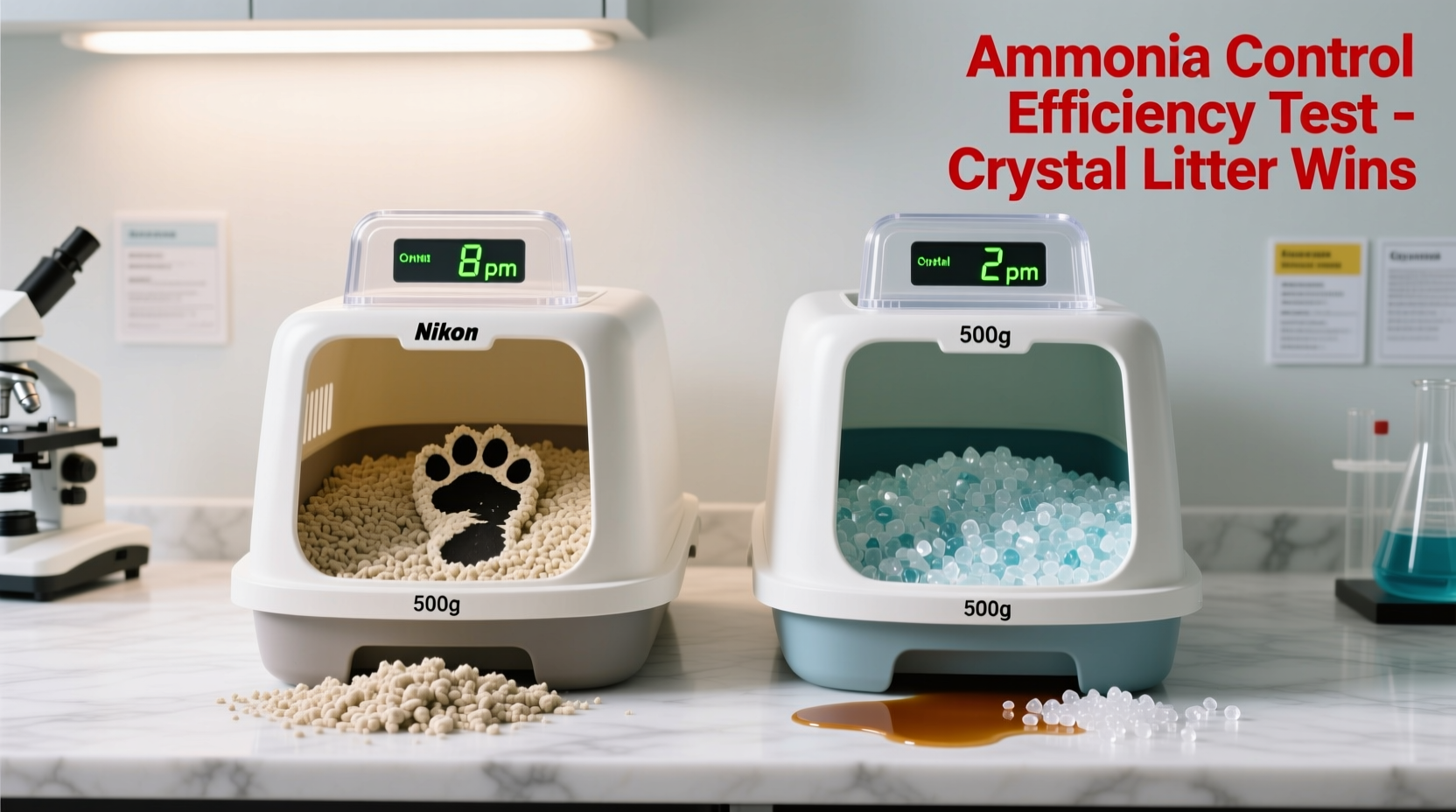
Ammonia (NH₃) is produced when urea in cat urine breaks down due to bacterial action. The process begins almost immediately after urination, especially in warm, moist environments like a litter box. The stronger the concentration of bacteria and moisture, the faster and more intensely ammonia is released.
The rate of ammonia production depends on several factors:
- Litter moisture retention: Materials that trap moisture create ideal conditions for bacterial growth.
- pH levels: Alkaline environments accelerate urea breakdown.
- Ventilation: Poor airflow allows gases to accumulate.
- Cleaning frequency: Infrequent scooping increases bacterial load.
Effective odor control isn't just about masking smells—it's about interrupting the chemical process that creates them. This is where the differences between clumping and crystal litter become critical.
Clumping Litter: Composition and Odor Control Mechanism
Most clumping litters are made from sodium bentonite clay, a naturally absorbent material that swells when wet and forms solid clumps around urine. This physical separation makes waste removal easier and reduces prolonged exposure to moisture.
In terms of ammonia control, clumping litter relies on three primary strategies:
- Fast clumping action: By isolating urine within a hardened mass, the litter limits surface area for bacterial activity.
- Scented additives: Many brands include fragrances (e.g., baking soda, lavender, or charcoal-infused scents) to mask odors.
- pH modifiers: Some formulations use compounds to slightly acidify the environment, slowing urea breakdown.
However, clumping litter has limitations. Once a clump breaks or remains too long in the box, trapped liquid can still foster bacterial growth. Scented versions may overpower but not eliminate ammonia, and some cats (and humans) are sensitive to artificial fragrances.
Tip: For better ammonia control with clumping litter, choose unscented, natural formulas with added odor-neutralizing agents like activated charcoal or zeolite.Crystal Litter: How It Works Against Ammonia
Crystal litter, often referred to as silica gel litter, is made from highly porous silicon dioxide beads. These beads have an exceptional capacity to absorb moisture—up to 40 times their weight—and trap it inside microscopic pores.
Unlike clumping litter, crystal litter doesn’t form clumps. Instead, it absorbs urine rapidly, reducing surface wetness and minimizing bacterial breeding grounds. As moisture is locked away, the conditions for ammonia formation are significantly reduced.
Key advantages of crystal litter in ammonia control:
- Superior moisture absorption: Keeps the litter box surface dry, limiting bacterial proliferation.
- Natural pH neutrality: Does not encourage alkaline shifts that accelerate ammonia release.
- Longevity: A full tray can last 2–4 weeks with regular waste removal, maintaining consistent odor control over time.
- No added fragrances needed: Relies on physical absorption rather than scent masking.
Despite these strengths, crystal litter isn’t foolproof. Once the beads become saturated (indicated by a yellowish tint and increased odor), they lose effectiveness. In high-traffic litter boxes, saturation can occur faster, requiring more frequent full changes.
“Silica gel litter’s ability to wick moisture away quickly gives it a clear edge in preventing ammonia buildup at the source.” — Dr. Lena Patel, Feline Health Researcher, American Pet Wellness Institute
Direct Comparison: Clumping vs Crystal Litter for Ammonia Control
To evaluate which litter type performs better against ammonia, consider the following head-to-head analysis.
| Feature | Clumping Litter | Crystal Litter |
|---|---|---|
| Moisture Management | Forms clumps; traps liquid locally but leaves residual dampness if not scooped promptly | Highly absorbent; draws moisture deep into beads, keeping surface dry |
| Ammonia Suppression Speed | Moderate; depends on scoop frequency and additives | Fast; absorption begins instantly, reducing bacterial activity within minutes |
| Durability | Requires daily scooping; full change every 1–2 weeks | Lasts 2–4 weeks with proper maintenance |
| Odor Masking vs Neutralizing | Often uses fragrances to cover smells; may not neutralize ammonia | Physically prevents ammonia formation through moisture control |
| Potential for Residual Odor | Higher if clumps remain or box is overcrowded | Low until beads are saturated; then odor spikes quickly |
| Cat Acceptance | Texture familiar to most cats; preferred by many | Crunchy texture deters some cats; may require transition period |
The data shows that crystal litter has a structural advantage in preventing ammonia formation due to its superior moisture management. However, clumping litter offers more immediate tactile feedback during cleaning and is generally more accepted by cats accustomed to traditional textures.
Real-World Performance: A Mini Case Study
Jessica M., a pet owner in Portland, Oregon, manages a three-cat household. All three cats share one large litter box placed in a semi-ventilated hallway. She previously used a premium clumping litter with baking soda, scooping twice daily. Despite this routine, she noticed a persistent ammonia smell by mid-week, especially during warmer months.
After switching to a leading crystal litter, Jessica observed a dramatic difference. “The box stayed dry on top, and I didn’t smell anything until day 18,” she said. “I still scoop solids daily, but the liquid just disappears into the beads. No more morning ammonia hit when I walk down the hall.”
She did note an adjustment period: one of her older cats avoided the box for two days, likely due to the unfamiliar texture. She resolved this by mixing in a small amount of the old clumping litter for a few days before transitioning fully.
This case illustrates a common pattern: crystal litter excels in odor prevention but may require behavioral adaptation from cats. Clumping litter offers familiarity and ease of use but demands stricter maintenance to keep ammonia at bay.
Actionable Tips for Maximizing Ammonia Control
No litter works perfectly without proper usage. Regardless of type, follow these best practices to minimize ammonia buildup:
Tip: Ventilate the litter area. Even the best litter can't compensate for poor airflow. Place the box in a well-ventilated room or use a small fan nearby.- Scoop daily: Remove waste every 24 hours to reduce bacterial load.
- Use enough litter: Maintain a depth of 2–3 inches for optimal absorption.
- Avoid overfilling: Too much litter can compact and trap moisture underneath.
- Replace entirely on schedule: Don’t wait for strong odors to signal a change.
- Clean the box thoroughly: Wash with mild soap and water between refills—avoid ammonia-based cleaners, which can worsen odors.
- Consider a litter mat: Reduces tracking, which can spread bacteria to other areas.
Frequently Asked Questions
Does clumping litter neutralize ammonia or just mask it?
Most clumping litters mask ammonia with fragrances rather than neutralizing it. Some premium versions include odor-absorbing minerals like zeolite or activated carbon, which can chemically bind ammonia molecules. However, unless the urine is removed quickly, ammonia will still develop over time.
Can crystal litter be harmful if my cat ingests it?
Silica gel crystals are non-toxic but not digestible. If a cat ingests a small amount while grooming, it will typically pass through the digestive tract without harm. However, large ingestions or repeated exposure may cause gastrointestinal discomfort. Always monitor cats during the transition phase.
Which litter is better for homes with allergies?
Crystal litter generally produces less dust than clay-based clumping litter, making it a better choice for allergy sufferers. Dust from bentonite clay can carry particulates and irritants, potentially aggravating respiratory conditions. Opt for low-dust or dust-free clumping formulas if switching isn’t feasible.
Step-by-Step Guide to Transitioning Litter Types
If you're considering switching from clumping to crystal litter (or vice versa), follow this gradual process to ensure acceptance:
- Week 1: Mix 75% current litter with 25% new litter. Place in the usual box location.
- Week 2: Use a 50/50 blend. Monitor your cat’s behavior and elimination habits.
- Week 3: Shift to 25% old litter, 75% new. Clean the box thoroughly before this step.
- Week 4: Switch completely to the new litter. Continue daily scooping and observe for any avoidance behaviors.
- Troubleshooting: If your cat refuses the box, revert to the last accepted mix and extend each phase by 3–4 days. Never force a rapid change.
This method respects feline sensitivity to environmental changes and increases the likelihood of a smooth transition.
Final Verdict: Which Controls Ammonia Better?
When it comes to controlling ammonia odor, **crystal litter holds a clear advantage** under normal conditions. Its ability to rapidly absorb and lock away moisture disrupts the bacterial process that generates ammonia, offering longer-lasting, proactive odor prevention. It requires less frequent full changes and performs consistently over time, provided it’s not overloaded.
Clumping litter, while effective with diligent maintenance, primarily manages odor through containment and fragrance. It depends heavily on daily scooping and timely replacement to prevent ammonia buildup. For households with one cat and strict cleaning routines, it can perform adequately. But in multi-cat homes or situations where cleaning isn’t daily, ammonia tends to accumulate faster.
Ultimately, the best choice balances performance, practicality, and pet preference. If ammonia control is your top priority, crystal litter is the superior option. If your cat strongly resists texture changes, a high-quality, unscented clumping litter with natural odor absorbers may be a suitable compromise.
Conclusion & Call to Action
Choosing between clumping and crystal litter isn’t just about convenience—it’s about creating a healthier, more pleasant environment for both you and your cat. Ammonia isn’t merely unpleasant; prolonged exposure can irritate respiratory systems in pets and humans alike. By understanding how each litter type combats this issue, you can make a choice rooted in science, not marketing claims.
Try a small bag of crystal litter and monitor the difference in odor over two weeks. Keep a log of scooping frequency and smell intensity. Share your experience with other cat owners—your real-world insight could help someone struggling with constant ammonia issues.
💬 Have you switched from clumping to crystal litter? What was your experience with ammonia control? Share your story in the comments and help build a smarter community of informed pet caregivers.








