
Birds are naturally designed to fly—flight is not just a mode of movement but an essential part of their physical and mental well-being. Yet in homes around the world, owners face a difficult decision: should they clip their bird’s wings or allow full flight? The choice carries significant implications for safety, behavior, and the emotional bond between bird and human. While some argue that wing clipping prevents accidents, others believe it compromises a bird’s autonomy and psychological health. This article examines both sides of the debate with evidence-based insights, real-life scenarios, and expert perspectives to help owners make informed decisions.
Safety Risks of Free Flight Indoors
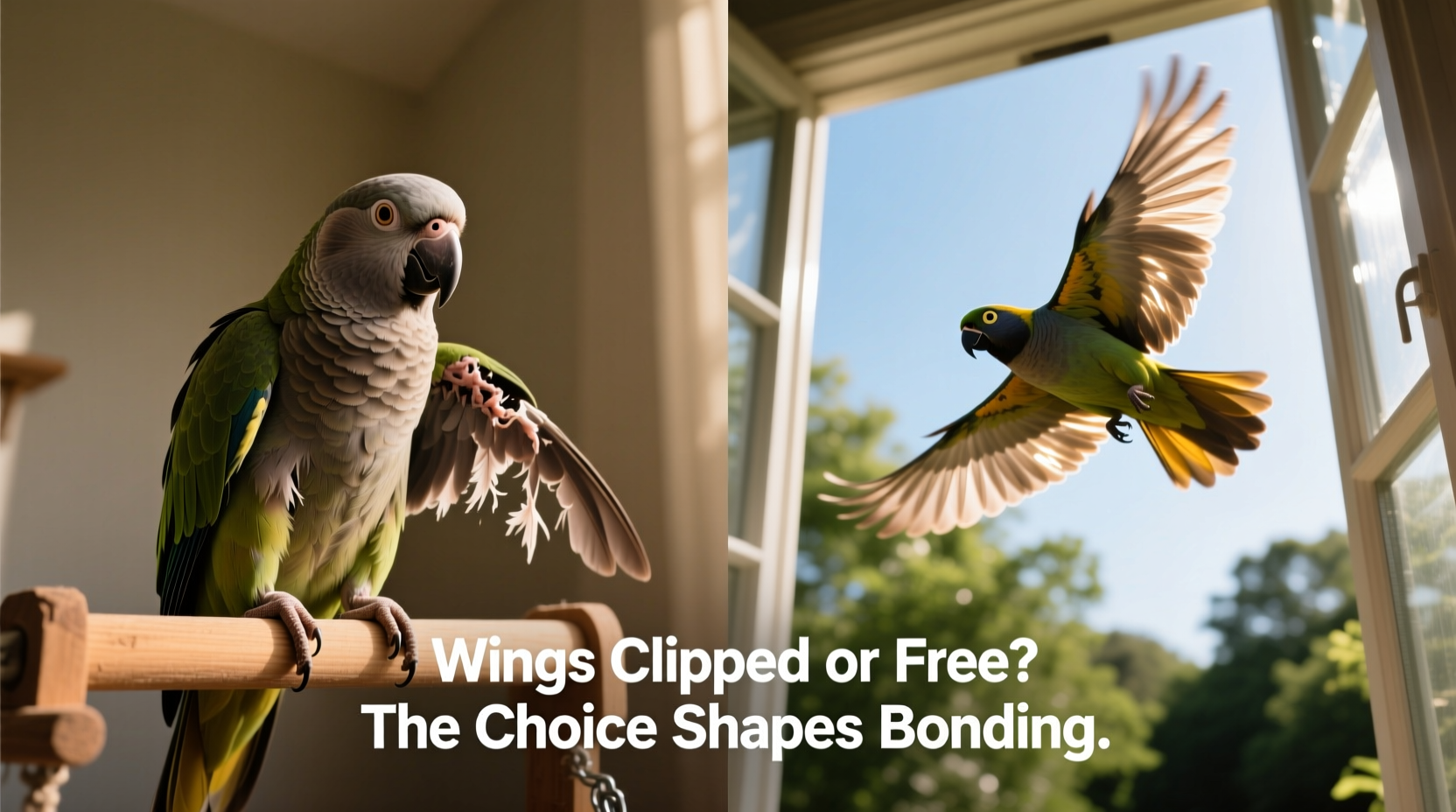
Free flight inside a home can be exhilarating for a bird, offering exercise, mental stimulation, and natural expression of instincts. However, domestic environments are filled with hazards that wild birds would instinctively avoid. Ceiling fans, open windows, stovetops, mirrors, and toxic fumes from non-stick cookware pose serious threats. A startled bird may dart into glass or fly toward a hot surface before the owner can intervene.
In one documented case, a Moluccan cockatoo named Jasper escaped through an unlatched patio door during a family gathering. Despite a month-long search involving flyers and social media, he was never found. His owner later admitted she had assumed his fear of strangers would keep him close—but instinct overrode caution when startled by fireworks.
Tip: If allowing free flight, conduct a thorough \"bird-proofing\" audit of your home: cover mirrors, secure windows, and remove access to kitchens during cooking.The reality is that even intelligent, well-trained birds can react unpredictably under stress. Flight allows rapid escape, which can be dangerous in uncontrolled settings. For this reason, many avian veterinarians recommend restricted flight for inexperienced birds or in high-risk households.
Physical and Psychological Effects of Wing Clipping
Wing clipping involves trimming the primary flight feathers to reduce or eliminate a bird’s ability to gain lift. When done correctly, it doesn’t cause pain—feathers, like human hair, lack nerve endings once mature. However, improper clipping (such as cutting blood feathers or over-trimming) can lead to bleeding, injury, or imbalance during landing.
Beyond physical concerns, the psychological impact of clipping is often underestimated. Birds rely on flight for confidence and control. Restricting this ability can lead to frustration, anxiety, or learned helplessness, especially in species evolved for wide-ranging movement like conures, amazons, or macaws.
“Flight is not optional for birds—it's central to their identity. Depriving them of it without careful consideration can result in behavioral issues such as feather plucking or aggression.” — Dr. Irene Pepperberg, Avian Cognition Researcher
Studies in avian behavior suggest that birds allowed controlled flight exhibit lower cortisol levels (a stress hormone) and higher problem-solving performance. Conversely, permanently clipped birds may become more dependent on humans, not out of affection, but due to limited mobility and reduced environmental control.
Impact on Human-Bird Bonding
The relationship between a bird and its caregiver is deeply influenced by trust and mutual respect. Proponents of free flight argue that allowing a bird to fly strengthens this bond because the bird chooses to stay and interact rather than being physically unable to leave. This voluntary proximity fosters genuine companionship.
In contrast, wing-clipped birds may appear “tamer” because they cannot flee, but this tameness may mask underlying stress. They may tolerate handling not because they enjoy it, but because escape isn’t an option. Over time, this dynamic can erode trust, especially if the bird feels cornered or forced.
A balanced approach involves training. Birds trained in recall commands—returning to the shoulder or perch on cue—can enjoy flight privileges while maintaining safety. This method builds cooperation and reinforces positive reinforcement, deepening the emotional connection.
| Aspect | Free Flight (Trained) | Wing Clipping |
|---|---|---|
| Mobility & Exercise | High – promotes muscle tone and coordination | Low – limited movement increases obesity risk |
| Psychological Well-being | Improved confidence and autonomy | Potential for frustration and dependency |
| Safety Risk | Moderate to high (depends on environment) | Lower immediate risk, but fall injuries possible |
| Bonding Quality | Voluntary interaction enhances trust | Interaction may stem from necessity, not choice |
| Training Required | Essential – recall and hazard awareness | Minimal – but handling still important |
Best Practices: A Balanced Approach
Rather than adopting an absolute stance—always clip or never clip—responsible ownership calls for a nuanced strategy based on the bird’s species, temperament, home environment, and the owner’s commitment to training.
For example, a young African grey in a high-rise apartment with large windows may benefit from a light clip until recall training is established. Meanwhile, a rescued budgie in a dedicated aviary room might thrive with full flight rights and enriched surroundings.
Step-by-Step Guide to Introducing Safe Free Flight
- Start with a safe room: Choose a small, enclosed space free of hazards—no ceiling fans, mirrors, or open water sources.
- Trim initially (optional): A conservative trim can prevent high-speed crashes while the bird learns control.
- Train recall daily: Use treats and a consistent verbal cue (e.g., “Up!”) to encourage returning to your hand or shoulder.
- Gradually increase freedom: Expand flight zones only after reliable recall is achieved.
- Monitor body language: Signs of stress—pinned eyes, flared tail, rapid breathing—mean it’s time to end the session.
- Bird-proof all flight areas: Cover windows with sheer curtains, shut doors, and remove toxic plants.
When Clipping May Be Justified
- The bird has a history of escaping outdoors.
- The household includes very young children or aggressive pets.
- The owner lacks time or knowledge to implement proper flight training.
- The bird has health issues that make flight risky (e.g., heart disease).
If clipping is chosen, it should be done professionally—ideally by an avian vet or experienced groomer—and kept as minimal as possible. Many experts recommend leaving 3–4 primary feathers intact to allow for controlled descent and balance, reducing the risk of injury from uncontrolled drops.
Real Example: Two Homes, Two Outcomes
Consider two Amazon parrots: Luna and Rio.
Luna lives in a home where her wings are fully clipped. She spends most of her time on a stand near the kitchen. Her owners love her and handle her daily, but she becomes aggressive when approached suddenly. She has developed a habit of screaming when left alone and plucks feathers along her chest. Despite a clean bill of health, her vet suspects chronic stress due to limited mobility and lack of environmental control.
Rio, in contrast, lives in a flight-safe living room with covered windows and no ceiling fan. His wings are unclipped, and he flies freely for several hours each day. He has been trained with a solid recall and returns for treats and head scratches. While he occasionally startles and flaps wildly during thunderstorms, he retreats to his cage voluntarily. His plumage is full and vibrant, and he engages in complex foraging behaviors. His owners report a deeper bond, noting that Rio seeks them out—not because he must, but because he wants to.
This comparison doesn’t imply clipping caused Luna’s issues, but it highlights how environment, training, and freedom of movement intersect to shape behavior and emotional health.
Frequently Asked Questions
Does wing clipping hurt the bird?
No, when done correctly on mature feathers, clipping causes no pain. However, cutting a blood feather (a developing feather with a blood supply) can cause bleeding and discomfort. Always ensure the person performing the trim knows how to identify safe feathers.
Can a clipped bird ever fly again?
Yes. Feathers grow back during the next molt cycle, typically every 6–12 months depending on species and health. Once regrown, flight ability returns unless the bird has developed muscle atrophy from prolonged inactivity.
Won’t a flying bird just escape if I open a door?
Possibly—but training reduces this risk. Birds trained with strong recall and positive indoor experiences are less likely to bolt. Additionally, using barriers like baby gates or screen doors can prevent accidental escapes without restricting flight indoors.
Expert Recommendations and Industry Trends
The trend among avian professionals is shifting toward supporting flighted birds in safe environments. The Association of Avian Veterinarians (AAV) emphasizes that flight is a key component of avian welfare and should not be restricted without justification.
“We’re moving away from routine wing clipping as a default practice. It’s now seen as a management tool, not a standard procedure. Each bird deserves an individual assessment.” — Dr. Greg Harrison, DVM, Avian Medicine Specialist
Veterinary schools increasingly teach that flight supports musculoskeletal health and cognitive function. Some rescue organizations now refuse to adopt out birds to homes that insist on permanent clipping, citing animal welfare standards.
Conclusion: Prioritizing Welfare Over Convenience
The decision to clip a bird’s wings or allow free flight is not merely logistical—it reflects deeper values about how we view our companion animals. Is the goal convenience and control, or respect for the bird’s nature and autonomy?
There is no universal answer. Some situations genuinely require temporary flight restriction for safety. But for many owners, investing time in training, bird-proofing, and understanding avian behavior makes free flight not only possible but profoundly enriching—for both bird and human.
Instead of defaulting to clipping out of habit or fear, consider what your bird needs to thrive. With patience and education, most households can create spaces where flight and safety coexist. The reward is a happier, healthier bird and a relationship built on trust, not limitation.
🚀 Ready to explore flight training for your bird? Start today with a 10-minute daily recall session and observe how your bond evolves. Share your journey in the comments below—your experience could inspire another owner to take the leap.








