In homes and restaurants across Asia and beyond, chopsticks are more than utensils—they're cultural staples. But how we store them often reflects more than tradition; it speaks to hygiene, convenience, and aesthetics. With elegant lacquered boxes, minimalist bamboo holders, and compact travel cases now widely available, a question arises: Is a fancy chopstick box actually more hygienic than a basic holder—or is it just decorative?
The answer isn’t as straightforward as it seems. While some designs genuinely enhance cleanliness, others prioritize style over substance. Understanding the differences in materials, airflow, usage context, and maintenance habits reveals what truly matters when it comes to keeping your chopsticks clean and safe.
The Hygiene Factor: What Makes a Storage Solution Effective?
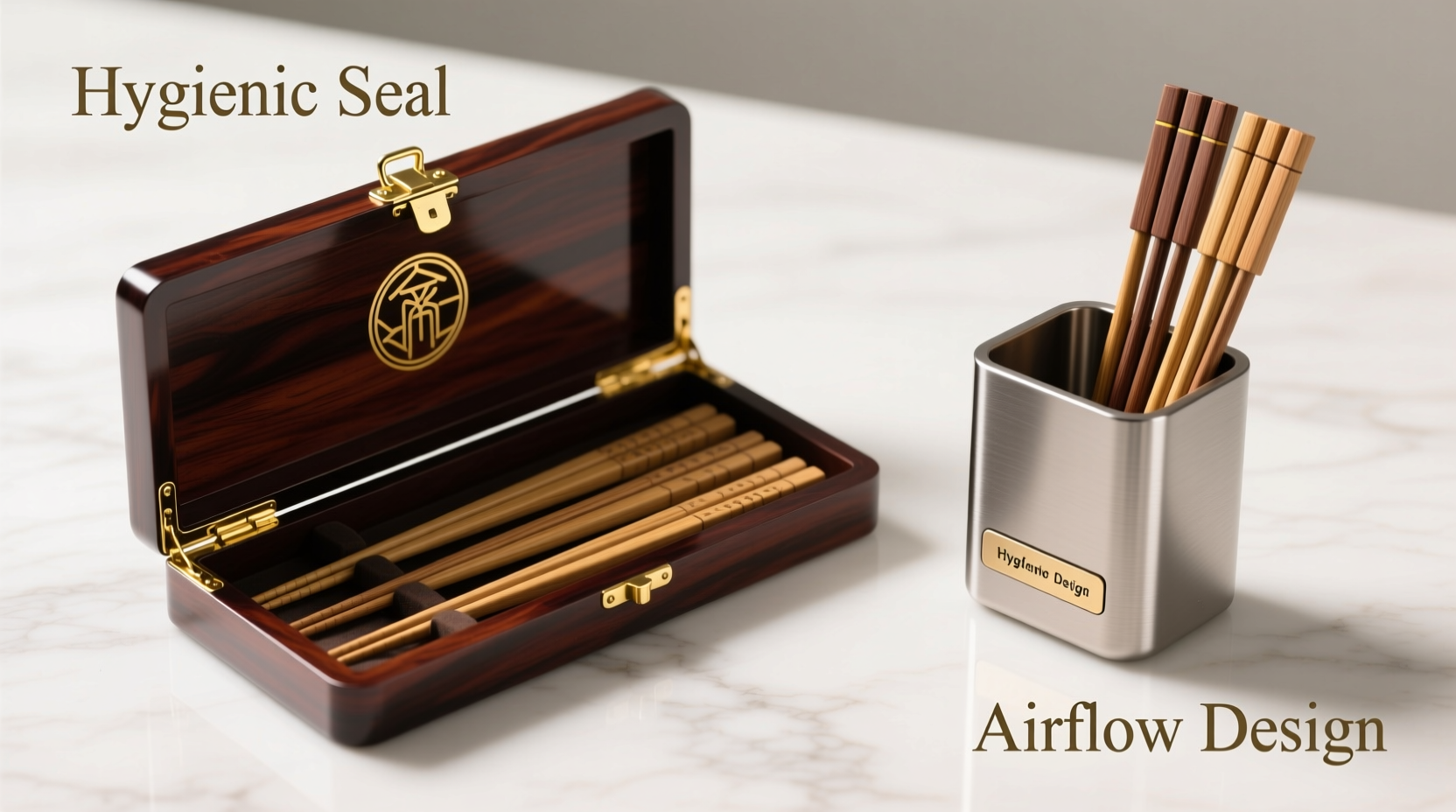
Hygiene in chopstick storage hinges on three key factors: protection from contaminants, ventilation to prevent moisture buildup, and ease of cleaning. A container that seals out dust and microbes but traps humidity may do more harm than good. Conversely, an open holder might allow air circulation but expose chopsticks to kitchen splatter or airborne particles.
Chopsticks—especially wooden or bamboo ones—are porous. When stored damp, they can harbor mold, bacteria, or mildew within hours. Stainless steel or coated pairs fare better but still require dry, clean environments. The ideal storage solution balances protection with breathability.
Tip: Always ensure chopsticks are completely dry before storing—this single step reduces microbial growth by up to 90%.Chopstick Boxes: Functionality Meets Design
Chopstick boxes are typically enclosed containers made from wood, lacquer, plastic, or metal. They range from compact travel cases to ornate desktop displays. Many feature snug compartments that keep pairs separated and upright.
High-end versions, such as Japanese *hashioki* boxes or Korean lacquered sets, are often designed with hygiene in mind. Some include antimicrobial linings or UV-C sanitizing functions (in electric models). However, traditional non-electric boxes may lack ventilation, creating a humid microclimate if damp chopsticks are sealed inside.
Travel boxes offer clear advantages: they shield chopsticks from germs in bags, pockets, or restaurant settings. A well-designed case prevents contact with dirty surfaces and minimizes exposure to pathogens. In this context, the box isn’t just for show—it’s a practical barrier.
“Enclosed storage is essential when transporting chopsticks. Without it, you’re essentially carrying a germ vector through public spaces.” — Dr. Lin Mei, Microbiologist & Food Safety Researcher
Chopstick Holders: Simplicity with Trade-offs
Holders, often called *hashioki* in Japan, are open-top stands designed for home use. Crafted from ceramic, bamboo, or stone, they emphasize accessibility and aesthetic harmony at the dining table. Unlike boxes, they don’t fully enclose chopsticks, allowing air to circulate freely.
This openness aids drying and reduces moisture retention—critical after washing. However, it also means chopsticks are exposed to kitchen aerosols (from cooking), dust, and accidental contact. If placed near a stove or sink, splash contamination becomes a real risk.
Many households favor holders for their elegance and convenience. You can grab a pair quickly without opening a lid. But unless cleaned regularly and positioned thoughtfully, holders may compromise hygiene despite their simplicity.
Comparing Key Features: Box vs Holder
| Feature | Chopstick Box | Chopstick Holder |
|---|---|---|
| Contamination Protection | High (when closed) | Low to moderate |
| Ventilation | Low (unless vented design) | High |
| Drying Efficiency | Poor if sealed while damp | Excellent |
| Portability | Excellent (especially travel cases) | Poor |
| Cleaning Frequency Needed | Weekly (interior can trap moisture) | Bi-weekly (easier surface access) |
| Aesthetic Flexibility | Moderate (often bulkier) | High (many styles and sizes) |
Real-World Example: Two Households, Two Approaches
Consider two Tokyo households. The Nakamuras use a sleek cedar chopstick box for daily storage. Each night, they wash their bamboo chopsticks, wipe them dry, and place them inside. Because they’re meticulous about drying, the box remains mold-free and odorless—even after years of use.
In contrast, the Tanakas use a beautiful ceramic holder on their countertop. But because they often leave wet chopsticks inside after dinner and the holder sits near the sink, mildew begins forming at the base within weeks. Despite regular rinsing, the porous glaze traps moisture, leading to recurring musty smells.
The difference isn’t the container—it’s the habit. Both systems can work, but only when matched with proper care.
Choosing Wisely: A Practical Checklist
Whether you lean toward boxes or holders, use this checklist to ensure your choice supports hygiene:
- ✅ Dry chopsticks thoroughly before storing
- ✅ Choose materials that resist moisture absorption (e.g., stainless steel, sealed wood)
- ✅ Clean the container weekly with warm, soapy water
- ✅ Avoid placing holders near sinks, stoves, or trash bins
- ✅ Opt for vented boxes if storing at home long-term
- ✅ Replace cracked or warped holders—bacteria hide in crevices
- ✅ For travel, always use a closed, rigid case
When Fancy Becomes Functional
Some high-end chopstick boxes go beyond appearance. Brands like Muji and Zojirushi offer models with silicone gaskets, antimicrobial coatings, or even built-in UV sterilization. These features aren’t gimmicks—they address real hygiene concerns.
For instance, UV-C light disrupts bacterial DNA, effectively sanitizing surfaces. While not necessary for every household, such technology benefits those with compromised immune systems or shared living environments. In these cases, the “fancy” aspect delivers measurable health value.
However, many decorative boxes—especially mass-produced lacquered varieties—offer no functional upgrade. They may look impressive on a shelf but perform worse than a simple bamboo holder due to poor airflow and difficult cleaning.
Frequently Asked Questions
Can I store wet chopsticks in a box?
No. Storing damp chopsticks in a sealed container encourages bacterial and fungal growth. Always air-dry them completely first—preferably upright in an open holder—for at least 30 minutes before transferring to a box.
How often should I replace my chopstick container?
Inspect every 6–12 months. Discard if there are cracks, warping, persistent odors, or visible mold—even after cleaning. Porous materials like untreated wood degrade faster and should be replaced sooner.
Are plastic chopstick boxes safe?
Food-grade, BPA-free plastics are generally safe. However, avoid cheap, thin plastics that scratch easily—scratches harbor bacteria. Look for smooth, non-porous finishes that are easy to wipe down.
Final Thoughts: Form Follows Function—But Only If You Let It
A fancy chopstick box isn’t inherently more hygienic. Its value depends on design integrity, material quality, and user behavior. A beautifully crafted box that traps moisture is less sanitary than a modest, well-maintained holder. Conversely, a thoughtfully engineered box with ventilation and antimicrobial properties can elevate everyday hygiene.
The key is alignment: match your storage method to your lifestyle. Frequent travelers need secure, closed cases. Home users benefit from breathable, easy-to-clean holders—provided they dry chopsticks properly. And if you choose a luxury box, verify that its features serve a purpose beyond aesthetics.
🚀 Ready to upgrade your chopstick hygiene? Reassess your current storage, apply the drying and cleaning tips above, and choose a solution that works—for your health, not just your decor.








