Starting your first aquarium can be exciting, but one of the most critical decisions you’ll make is choosing the right tank size. Many beginners assume smaller tanks are easier to manage, but the opposite is often true. A well-sized aquarium sets the foundation for stable water conditions, healthy fish, and a more enjoyable hobby experience. Understanding how tank size impacts maintenance, fish behavior, and long-term success helps new aquarists avoid common pitfalls and build confidence from day one.
Why Tank Size Matters More Than You Think
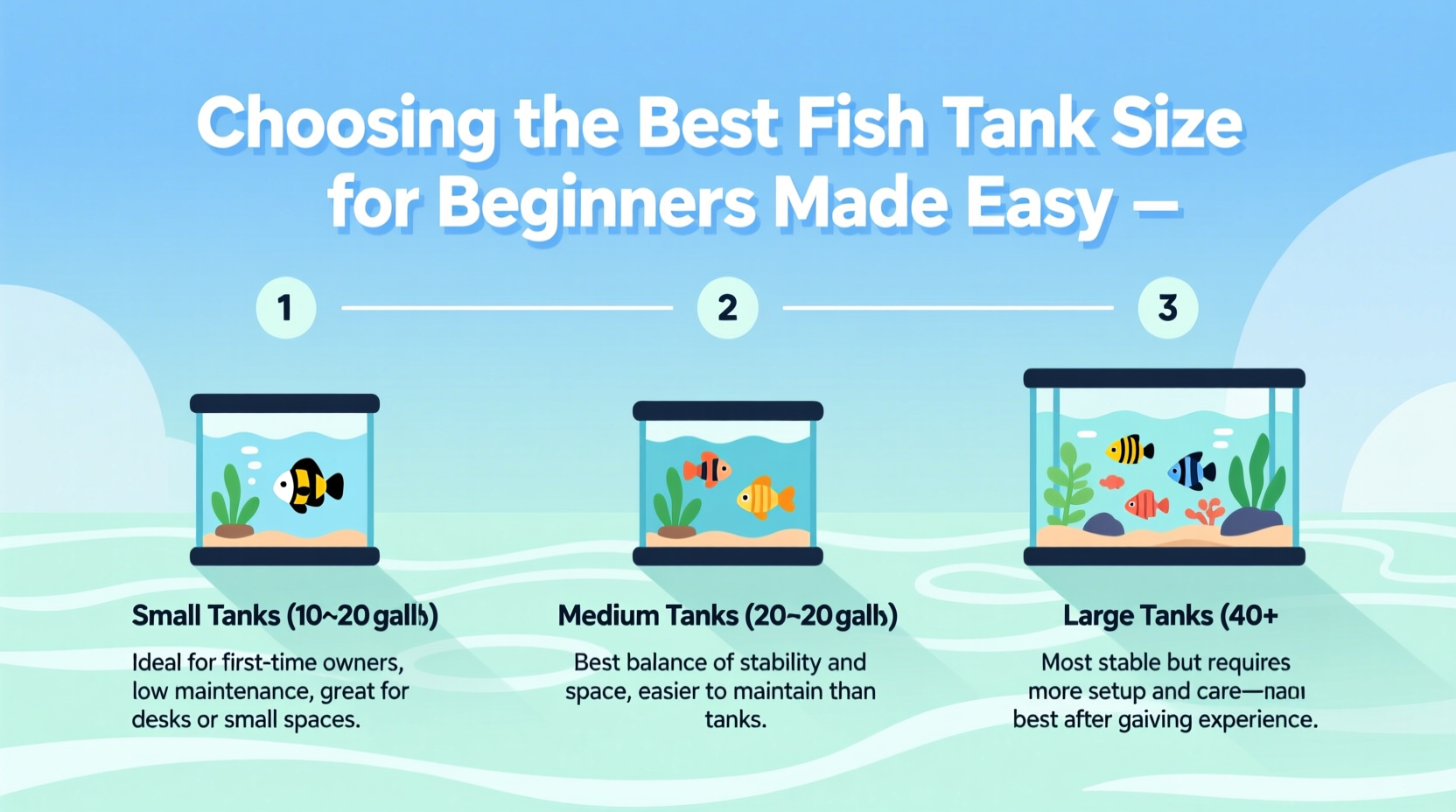
The volume of water in an aquarium directly affects water stability. Larger volumes dilute waste products like ammonia and nitrites more effectively, reducing spikes that can harm fish. Small tanks, especially those under 10 gallons, are prone to rapid fluctuations in temperature, pH, and toxin levels. These changes stress fish and increase the risk of disease and death.
A larger tank also provides more swimming space, allowing fish to exhibit natural behaviors. Overcrowding in a small space leads to aggression, stunted growth, and poor water quality. While a nano tank might look charming on a desk, it demands near-daily monitoring and precise feeding—skills that develop over time, not at the start.
Tip: For beginners, a 20-gallon long or 29-gallon rectangular tank offers the best balance of manageability and stability.Common Beginner Mistakes with Tank Sizing
- Choosing too small a tank – Tanks under 10 gallons are harder to maintain due to unstable parameters.
- Overstocking early – Adding too many fish at once overwhelms the biological filter.
- Misjudging growth – Some fish sold as juveniles outgrow small tanks quickly (e.g., goldfish, tetras).
- Ignoring future plans – Starting small may lead to upgrading later, doubling costs.
Beginners often fall into the trap of thinking “less water = less work,” but in reality, small tanks require more frequent testing and water changes to prevent disaster. Stability—not size—is what makes aquariums manageable.
Recommended Tank Sizes and Their Best Uses
| Tank Size (Gallons) | Best For | Challenges | Fish Examples |
|---|---|---|---|
| 5–10 | Single betta, shrimp, snails | Unstable water; frequent monitoring needed | Betta splendens, cherry shrimp |
| 20 Long | Small community fish | Requires standard stand; heavier when full | Neon tetras, guppies, corydoras |
| 29 | Larger communities or beginner planted tanks | Takes up floor space; higher initial cost | Danios, rasboras, dwarf gouramis |
| 55+ | Experienced beginners or mixed species | Heavy; needs strong support; higher utility use | Angelfish, barbs, loaches |
This comparison shows that while larger tanks have higher upfront costs, they offer greater flexibility and resilience. A 29-gallon tank, for example, allows room for error during cycling and gives you breathing room when adding fish.
Step-by-Step Guide to Choosing Your First Tank
- Assess available space – Measure the area where the tank will go, including ceiling height and floor load capacity. Remember: water weighs about 8.3 pounds per gallon.
- Determine your goals – Do you want colorful tropical fish? A peaceful shrimp tank? A planted aquarium? This influences size and setup.
- Set a realistic budget – Include tank, stand, filter, heater, lighting, substrate, test kit, and initial fish. A 20-gallon setup typically costs $250–$350.
- Research compatible fish – Know adult sizes, temperament, and group needs. Most community fish do best in groups of 6+.
- Choose the largest tank you can fit and afford – Prioritize volume over shape. Rectangular tanks offer better surface area for gas exchange.
- Plan for maintenance – Larger tanks need longer water changes but less frequent parameter corrections.
Real Example: Sarah’s First Aquarium Journey
Sarah started with a 5-gallon tank because it fit on her apartment shelf and seemed “easy.” She added two neon tetras and a snail. Within two weeks, ammonia spiked, and one tetra died. After researching, she learned the tank was too small for even a small school of tetras. She upgraded to a 20-gallon long, cycled it properly, and introduced six ember tetras and two corydoras. Water stayed stable, fish thrived, and maintenance became predictable. Her second attempt succeeded because she chose a size that supported biological balance.
Expert Insight on Tank Selection
“New hobbyists often underestimate how fast small tanks become problematic. I always recommend starting with at least a 20-gallon long. It gives room for learning, houses a balanced ecosystem, and reduces stress—for both the fish and the owner.” — Dr. Alan Perez, Aquatic Biologist and Aquarium Educator
Checklist: Before Buying Your First Fish Tank
- ✅ Measured space and confirmed weight support (water + equipment can exceed 250 lbs for a 29-gallon)
- ✅ Researched local fish store return policies and fish availability
- ✅ Budgeted for essential equipment (filter, heater, thermometer, test kit)
- ✅ Selected a tank shape with good surface-to-volume ratio (rectangular preferred)
- ✅ Planned a fish list based on adult size and compatibility
- ✅ Committed to a 4–6 week nitrogen cycle before adding fish
Frequently Asked Questions
Can I keep goldfish in a 10-gallon tank?
No. Common and comet goldfish can grow over 12 inches and produce significant waste. They require at least a 55-gallon tank or outdoor pond. Even fancy goldfish need 30+ gallons due to their messy nature and sensitivity to poor water quality.
Is a bigger tank harder to clean?
Counterintuitively, larger tanks are easier to maintain. While water changes take longer, the ecosystem is more stable. Parameters fluctuate less, fish are healthier, and mistakes are less likely to be fatal. A 20-minute weekly water change on a 29-gallon tank is more forgiving than daily checks on a 5-gallon.
What’s the smallest tank a beginner should consider?
If space or budget limits you, a 10-gallon can work—but only for specific setups. Ideal uses include a single betta (with heater and filter), a small shrimp colony, or a solitary dwarf frog. Avoid community fish in tanks under 20 gallons unless you have prior experience.
Final Thoughts: Start Smart, Stay Successful
Choosing the right fish tank size isn’t just about fitting it into your home—it’s about creating a sustainable environment where aquatic life can thrive. Beginners who invest in a larger, stable system from the start spend less time troubleshooting and more time enjoying their aquarium. The slight increase in initial cost pays off in lower stress, fewer fish losses, and a deeper appreciation for the hobby.
Don’t let myths about “easy” small tanks mislead you. Opt for a 20-gallon long or 29-gallon rectangular model if possible. Set it up thoughtfully, cycle it completely, and stock it slowly. Your fish—and your future self—will thank you.
🚀 Ready to begin your aquarium journey? Measure your space, review your budget, and choose a tank that supports both your fish and your peace of mind. Share your setup plans in the comments—we’d love to help you get it right!








