
Cheek twitching—those sudden, involuntary contractions of the facial muscles—is something most people experience at least once in their lives. While usually harmless, persistent or severe twitching can be unsettling and may signal underlying health concerns. Understanding what triggers these twitches, recognizing warning signs, and knowing how to manage them empowers you to respond appropriately. This guide explores the science behind cheek twitching, outlines common and rare causes, and provides practical steps for prevention and treatment.
What Causes Cheek Twitching?
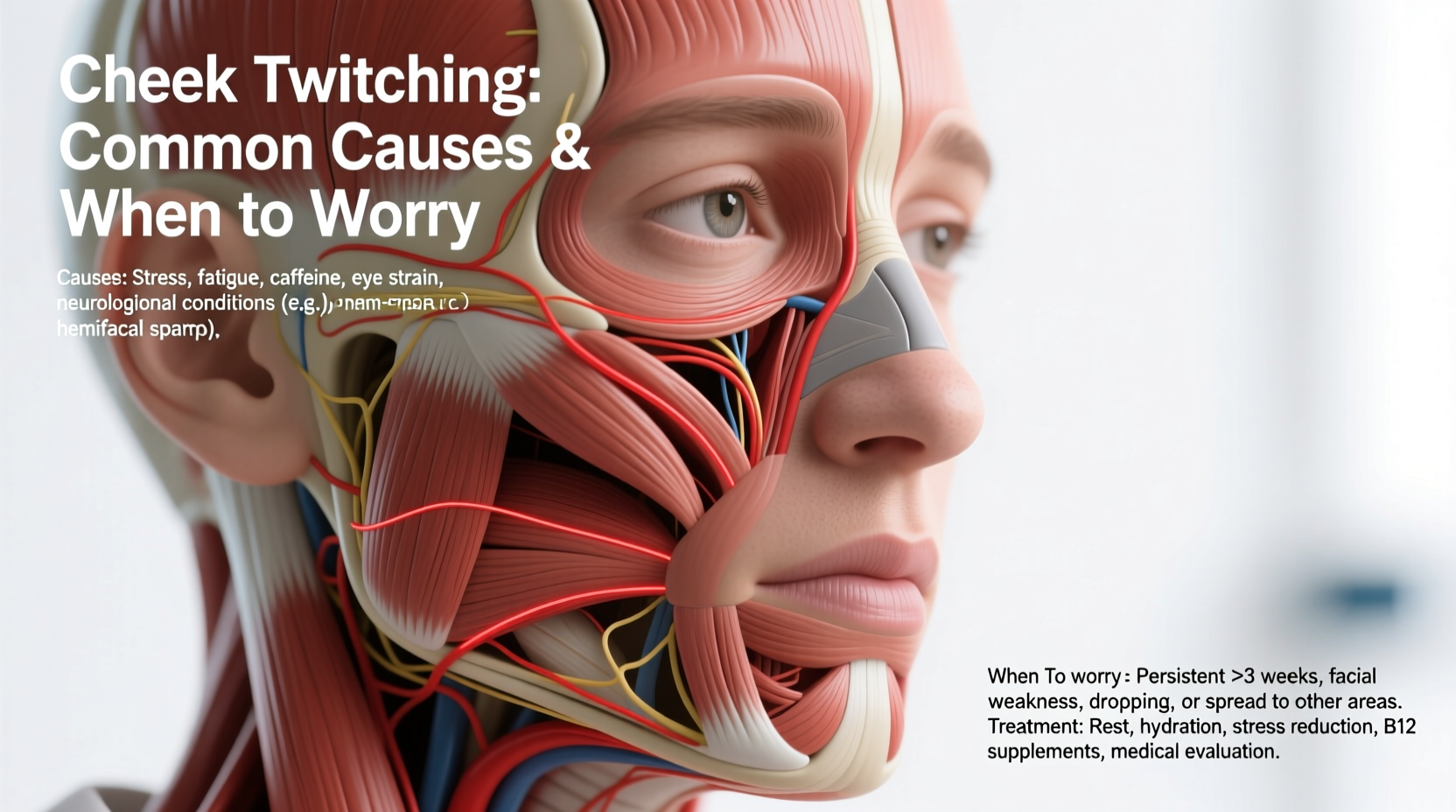
Cheek twitching, medically referred to as facial myokymia, occurs when muscle fibers in the face contract spontaneously. These contractions are typically mild and localized, affecting only a small area around the eye or mouth. The facial nerve (cranial nerve VII) controls these muscles, and any disruption in its function or signaling can lead to twitching.
The most frequent causes are benign and tied to lifestyle factors:
- Stress and anxiety: Elevated cortisol levels can increase nerve excitability, leading to muscle spasms.
- Excessive caffeine: Stimulants overactivate the nervous system, increasing the likelihood of twitching.
- Sleep deprivation: Poor sleep disrupts neuromuscular regulation and recovery.
- Eye strain: Prolonged screen time forces facial muscles to work harder, especially around the eyes.
- Nutritional imbalances: Deficiencies in magnesium, potassium, or calcium impair muscle and nerve function.
When Should You Be Concerned?
Most cases of cheek twitching resolve on their own within days or weeks. However, certain symptoms warrant medical evaluation. Persistent or worsening twitching may indicate neurological conditions that require diagnosis and treatment.
“Facial twitching is usually benign, but if it spreads, persists beyond a few weeks, or is accompanied by other facial weakness, it should be evaluated.” — Dr. Lena Patel, Neurologist at Boston Medical Center
Red Flags That Require Medical Attention
Seek professional help if you experience any of the following:
- Twitching that lasts longer than three weeks without improvement
- Spreading of spasms to other parts of the face or body
- Drooping eyelid, facial asymmetry, or difficulty closing one eye
- Hearing changes or ear pain on the affected side
- Double vision, slurred speech, or limb weakness
Rare but Serious Conditions Linked to Facial Twitching
| Condition | Description | Additional Symptoms |
|---|---|---|
| Facial Nerve Hemifacial Spasm | Chronic twitching on one side of the face due to nerve compression, often by a blood vessel | Persistent spasms spreading from eye to mouth, facial tightness |
| Bell’s Palsy | Sudden facial paralysis due to inflammation of the facial nerve | One-sided drooping, loss of taste, sensitivity to sound |
| Multiple Sclerosis (MS) | An autoimmune disease affecting the central nervous system | Numbness, vision problems, balance issues |
| Brainstem Lesions or Tumors | Rare structural abnormalities pressing on cranial nerves | Headaches, dizziness, swallowing difficulties |
Step-by-Step Guide to Managing Benign Cheek Twitching
If your twitching is mild and likely stress-related, follow this practical timeline to restore balance to your nervous system:
- Day 1–3: Assess Triggers
Keep a journal noting caffeine intake, sleep duration, stress levels, and screen time. Identify patterns that coincide with twitching episodes. - Day 4–7: Reduce Stimulants
Eliminate or cut back on coffee, energy drinks, and dark chocolate. Switch to herbal teas or decaf options. - Week 2: Improve Sleep Hygiene
Go to bed and wake up at consistent times. Avoid screens 1 hour before bed. Aim for 7–8 hours of uninterrupted sleep. - Week 3: Address Nutrition
Incorporate magnesium-rich foods like spinach, almonds, and avocados. Consider a supplement (200–400 mg/day) after consulting your doctor. - Week 4: Incorporate Stress Management
Practice deep breathing, meditation, or gentle yoga for 10–15 minutes daily. Studies show mindfulness reduces autonomic nervous system hyperactivity.
Medical Treatments for Persistent Twitching
When lifestyle changes don’t resolve the issue, doctors may recommend clinical interventions based on the underlying cause.
Common Treatment Options
- Botox Injections: Used for hemifacial spasm, Botox blocks nerve signals to overactive muscles. Effects last 3–6 months and require repeat sessions.
- Medications: Muscle relaxants (like baclofen) or anti-seizure drugs (such as carbamazepine) may be prescribed for nerve-related spasms.
- MRI Scan: If a neurological condition is suspected, imaging helps detect tumors, vascular compression, or MS plaques.
- Microvascular Decompression Surgery: A surgical option for severe hemifacial spasm where a blood vessel is pressing on the facial nerve.
Real Example: When Twitching Was a Warning Sign
Sarah, a 48-year-old teacher, noticed her left cheek twitching occasionally after long workdays. She dismissed it for months until the spasms became constant and started affecting her smile. She also developed slight drooping on that side of her face. Her neurologist ordered an MRI, which revealed a small artery compressing her facial nerve—a diagnosis of hemifacial spasm. After receiving Botox injections every three months, her symptoms improved significantly. Early intervention prevented further discomfort and social anxiety.
Checklist: What You Can Do Today
Use this actionable checklist to address cheek twitching effectively:
- ✅ Log your caffeine and alcohol consumption for three days
- ✅ Set a bedtime alarm to ensure 7+ hours of sleep
- ✅ Take a 10-minute break every hour during screen work
- ✅ Eat one magnesium-rich meal today (e.g., leafy greens with nuts)
- ✅ Practice 4-7-8 breathing: Inhale 4 sec, hold 7 sec, exhale 8 sec (repeat 4 times)
- ✅ Schedule a doctor’s visit if twitching persists beyond 21 days
Frequently Asked Questions
Can dehydration cause cheek twitching?
Yes. Dehydration affects electrolyte balance, particularly sodium and potassium, which are essential for normal nerve signaling. Even mild dehydration can trigger muscle irritability and twitching. Drinking adequate water—typically 6–8 glasses per day—helps maintain fluid and mineral equilibrium.
Is cheek twitching a sign of a stroke?
Isolated cheek twitching is not a typical stroke symptom. However, if twitching is accompanied by facial drooping, arm weakness, slurred speech, or confusion, seek emergency care immediately. These could indicate a transient ischemic attack (TIA) or stroke.
Can eye strain from computers cause facial twitching?
Absolutely. Prolonged focus on digital screens leads to reduced blinking and increased tension in the orbicularis oculi muscle around the eye. This strain can manifest as twitching in the lower eyelid or upper cheek. Following the 20-20-20 rule—every 20 minutes, look at something 20 feet away for 20 seconds—can help prevent this.
Conclusion: Listen to Your Body
Cheek twitching is more than just a minor annoyance—it’s a signal from your body that something may be out of balance. Whether it's too much coffee, poor sleep, or unmanaged stress, addressing the root cause early can prevent escalation. For most people, simple lifestyle adjustments bring quick relief. But when symptoms persist or worsen, timely medical evaluation is crucial to rule out serious conditions.
💬 Have you experienced cheek twitching? What helped you manage it? Share your story in the comments—your insight could help someone find relief.








