
Cats are creatures of habit, comfort, and curiosity. Their choices in resting spots often reflect a blend of instinct, personality, and environment. When it comes to vertical spaces—like cat trees and window perches—the debate isn’t just about aesthetics or space-saving design. It’s about what truly fulfills a cat’s natural behaviors. Do cats prefer the multi-level exploration of a cat tree, or the sun-drenched stillness of a window perch? The answer isn’t universal, but understanding feline psychology, observational studies, and practical considerations can help pet owners make informed decisions.
The Behavioral Science Behind Cat Preferences
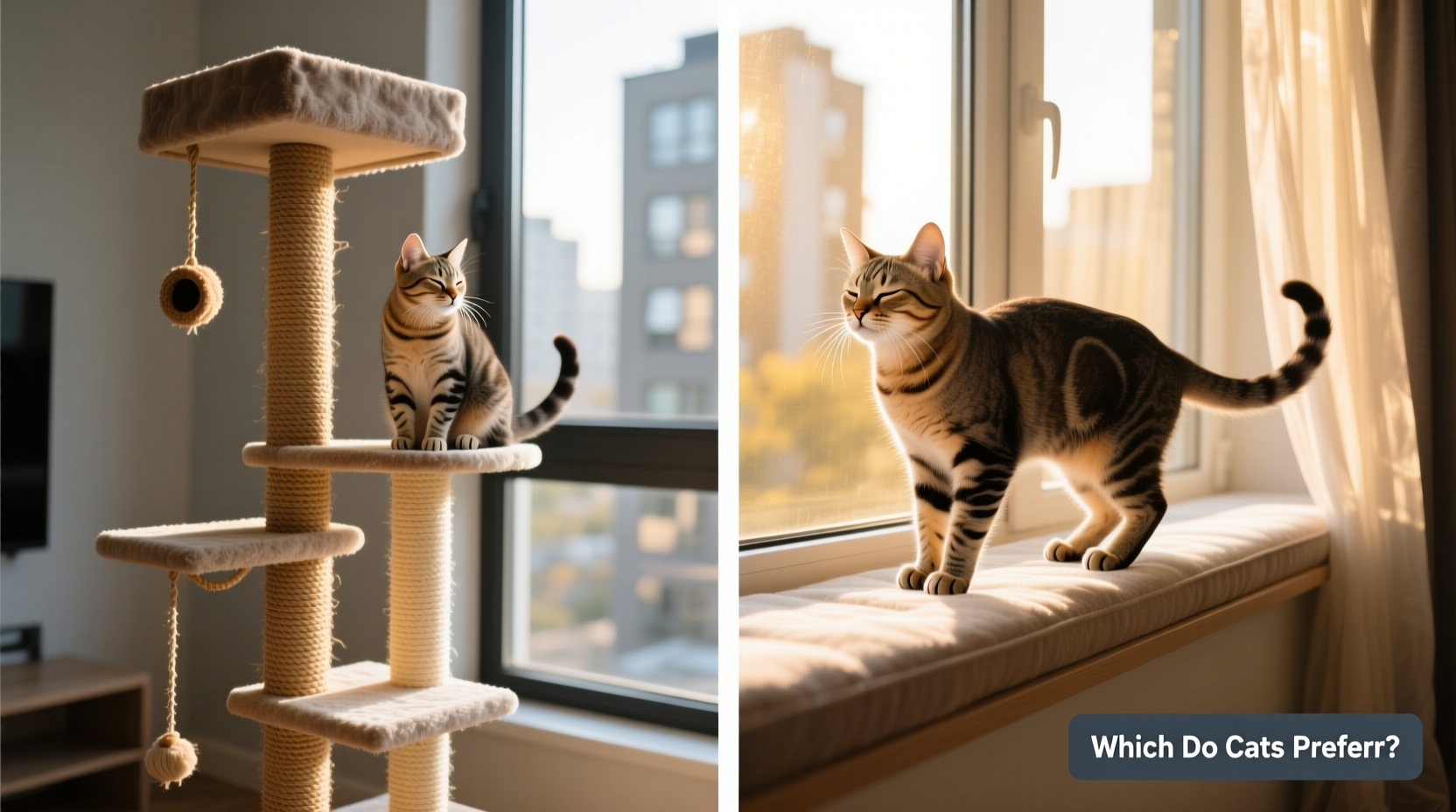
Cats are both predators and prey animals by evolutionary design. This duality shapes their spatial preferences. They seek high vantage points to survey their surroundings, a behavior rooted in survival. Elevated positions allow them to spot potential threats or interesting movements while feeling secure from ground-level disturbances. Both cat trees and window perches fulfill this need—but in different ways.
A 2020 study published in *Applied Animal Behaviour Science* found that indoor cats exhibit significantly lower stress levels when given access to elevated resting areas. The research emphasized that height alone wasn’t the key factor—visibility and environmental engagement were equally important. This means a perch overlooking a bird feeder may reduce anxiety more than a tall cat tree tucked in a quiet corner.
Additionally, cats are highly territorial. They mark their space through scent (from cheek glands) and visual presence. A preferred resting spot becomes part of their domain. Whether that spot is a plush condo atop a cat tree or a cushioned ledge by the living room window depends on how well the location satisfies their sensory and emotional needs.
Tip: Observe your cat’s daily routine for one week. Note where they spend the most time and what activities they engage in at those spots—this reveals more than assumptions ever could.Breaking Down the Cat Tree: Pros, Cons, and Use Cases
Cat trees are multifunctional structures designed to support climbing, scratching, hiding, and lounging. Typically made with sisal-wrapped posts, carpeted platforms, and enclosed cubbies, they mimic the complexity of natural environments like trees or rocky outcrops.
Advantages of Cat Trees
- Multisensory stimulation: Offers opportunities for climbing, jumping, and scratching—key activities for physical health and mental engagement.
- Social dynamics: In multi-cat households, well-designed cat trees provide separate zones, reducing territorial conflict.
- Scratching outlet: Integrated sisal posts help redirect destructive scratching away from furniture.
- Versatility: Available in various sizes and configurations to fit different room layouts.
Drawbacks of Cat Trees
- Space consumption: Larger models can dominate small rooms or clash with interior decor.
- Stability issues: Poorly constructed units may wobble or tip, discouraging use.
- Wear and tear: Fabric coverings collect hair and odors over time; replacement parts aren’t always available.
“Cats don’t just climb for fun—they climb to assess safety. A good cat tree gives them control over their environment.” — Dr. Lydia Chan, Feline Behavior Specialist, Cornell Feline Health Center
Window Perches: Simplicity Meets Sensory Enrichment
Window perches attach directly to glass panes using strong suction cups or brackets anchored to the frame. They offer a compact, minimalist solution for cats who love watching outdoor activity. Positioned at eye level with passing birds, squirrels, or neighborhood foot traffic, these perches tap into a cat’s innate hunting instincts—even if no actual chase occurs.
The appeal lies in passive observation. Unlike the active engagement required by a cat tree, a window perch allows for relaxation with stimulation. Sunlight streaming through the glass provides warmth, encouraging prolonged naps—a critical part of a cat’s daily sleep cycle (averaging 12–16 hours).
Key Benefits of Window Perches
- Natural light exposure: Supports circadian rhythms and improves mood.
- Low footprint: Ideal for apartments or homes with limited floor space.
- High engagement value: Outdoor movement keeps cats mentally stimulated, reducing boredom-related behaviors like over-grooming or meowing.
- Ease of installation: Most models install in minutes without tools.
Limits to Consider
- Single function: Primarily for sitting and observing; lacks scratching or climbing features.
- Weather dependency: Cold drafts or intense summer heat may deter use.
- Security concerns: Suction-based models must be checked regularly for seal integrity, especially in humid climates.
Comparative Analysis: Cat Tree vs Window Perch
| Feature | Cat Tree | Window Perch |
|---|---|---|
| Primary Function | Climbing, scratching, hiding, lounging | Observation, sunbathing, resting |
| Space Required | Large (floor-standing) | Minimal (window-mounted) |
| Mental Stimulation | High (interactive play) | Moderate to High (visual enrichment) |
| Physical Activity | Encourages movement | Largely sedentary |
| Best For | Kittens, active cats, multi-cat homes | Senior cats, apartment dwellers, sun-lovers |
| Lifespan & Durability | 3–7 years (varies by material) | 5+ years (if maintained) |
| Cost Range | $50–$300+ | $25–$80 |
Real-World Insight: A Case Study in Dual Preferences
In a Portland household with two rescue cats—Miso, a 3-year-old tabby mix, and Juno, a 10-year-old Persian—the owner installed both a 5-foot cat tree near the entryway and a suction-mounted window perch overlooking a backyard bird feeder. Over six weeks, she recorded usage patterns using timestamped notes and short video clips.
The results were revealing. Miso used the cat tree almost exclusively during mornings and late afternoons, engaging in bursts of climbing, batting dangling toys, and napping in the top condo. Juno, however, spent an average of 5.5 hours per day on the window perch, particularly between 10 a.m. and 3 p.m., when sunlight flooded the room and chickadees visited the feeder.
Interestingly, neither cat showed interest in the other’s preferred spot. Miso attempted the perch once but jumped down after two minutes, seemingly unimpressed. Juno approached the cat tree twice but avoided climbing past the first platform, likely due to her long fur collecting debris and reduced agility with age.
This case illustrates a broader truth: preference is deeply individual. Age, breed, energy level, and past experiences all shape where a cat feels safest and most engaged.
How to Choose: A Step-by-Step Decision Guide
Selecting between a cat tree and a window perch shouldn’t be based on price or appearance alone. Follow this structured approach to match the option to your cat’s lifestyle.
- Assess your cat’s age and mobility. Kittens and young adults benefit from climbing structures. Senior or arthritic cats may prefer low-effort access to views and warmth.
- Observe current behavior. Does your cat jump onto counters, bookshelves, or refrigerators? That’s a sign they crave height and may enjoy a cat tree. If they linger by windows, they’re likely visually oriented.
- Evaluate your space. Small apartments favor window perches. Larger homes with open layouts can accommodate cat trees without clutter.
- Consider household dynamics. Multiple cats require multiple safe zones. A cat tree with several platforms can prevent competition, while multiple window perches offer parallel but separate observation points.
- Test before investing. Try a budget-friendly window perch first. If your cat ignores it, redirect funds toward a mid-tier cat tree with replaceable parts.
Expert Checklist: What to Look for in Each Option
Not all cat trees or window perches are created equal. Use this checklist to ensure quality and safety.
Cat Tree Buying Checklist
- ✅ Sturdy base (wide footprint prevents tipping)
- ✅ Sisal-wrapped posts (not carpet-covered) for effective scratching
- ✅ Platforms at varying heights (minimum 3 levels recommended)
- ✅ Non-toxic glues and finishes (especially important for kittens)
- ✅ Replaceable or washable cushions
Window Perch Buying Checklist
- ✅ Weight-rated suction cups or secure bracket system
- ✅ Non-slip surface (rubberized or textured fabric)
- ✅ Easy-clean materials (removable covers preferred)
- ✅ Fits your window type (double-hung, casement, etc.)
- ✅ Rounded edges to prevent injury
Frequently Asked Questions
Can I have both a cat tree and a window perch?
Absolutely. Many cats appreciate having options. A cat tree supports activity and scratching, while a window perch offers passive entertainment. Together, they create a more enriched environment, especially in homes without outdoor access.
Are window perches safe for large cats?
Yes, provided they are properly rated for weight. Always check manufacturer specifications. Most premium perches support up to 30–35 pounds. For heavier breeds like Maine Coons, opt for models with bracket mounting rather than suction-only designs.
My cat ignores both—what should I do?
Cats can be hesitant to adopt new furniture. Try placing familiar-smelling items (like a worn t-shirt) on the structure, or sprinkle catnip on the surface. Positioning treats nearby can also encourage exploration. Patience is key—it may take weeks for a cat to accept a new addition.
Final Thoughts: It’s Not Either/Or—It’s About Balance
The question isn’t whether cats enjoy cat trees or window perches more—it’s about recognizing that both serve vital but different roles in feline well-being. A cat tree promotes physical health and interactive play, while a window perch nurtures mental calm and environmental connection. The most satisfied cats often have access to both.
Rather than viewing these items as competing solutions, think of them as complementary components of a holistic enrichment strategy. Just as humans benefit from both exercise and relaxation, cats thrive when their environments support a balance of activity and rest, challenge and comfort.
The best choice reflects your cat’s unique personality—not trends, marketing claims, or what works for someone else’s pet. By observing behavior, prioritizing safety, and being willing to adapt, you can create a home that doesn’t just house your cat, but truly enriches their life.
💬 Have you tried both a cat tree and a window perch? Share your cat’s reaction in the comments—your experience could help another pet owner make the right choice!








