Cats are natural climbers, jumpers, and observers. Their instinct to survey their environment from elevated positions is deeply rooted in their evolutionary behavior. In a domestic setting, providing vertical space isn’t just about saving floor area—it’s essential for mental stimulation, physical health, and emotional well-being. Two of the most popular solutions for fulfilling this need are cat trees and wall-mounted cat shelves. But which one truly keeps your feline more active and happy? The answer depends on your cat’s personality, your home layout, and how you design the climbing experience.
While both options offer vertical territory, they differ significantly in structure, engagement potential, and long-term appeal. Understanding these differences helps you make an informed decision that supports your cat’s natural behaviors and encourages daily activity.
The Importance of Vertical Space for Cats
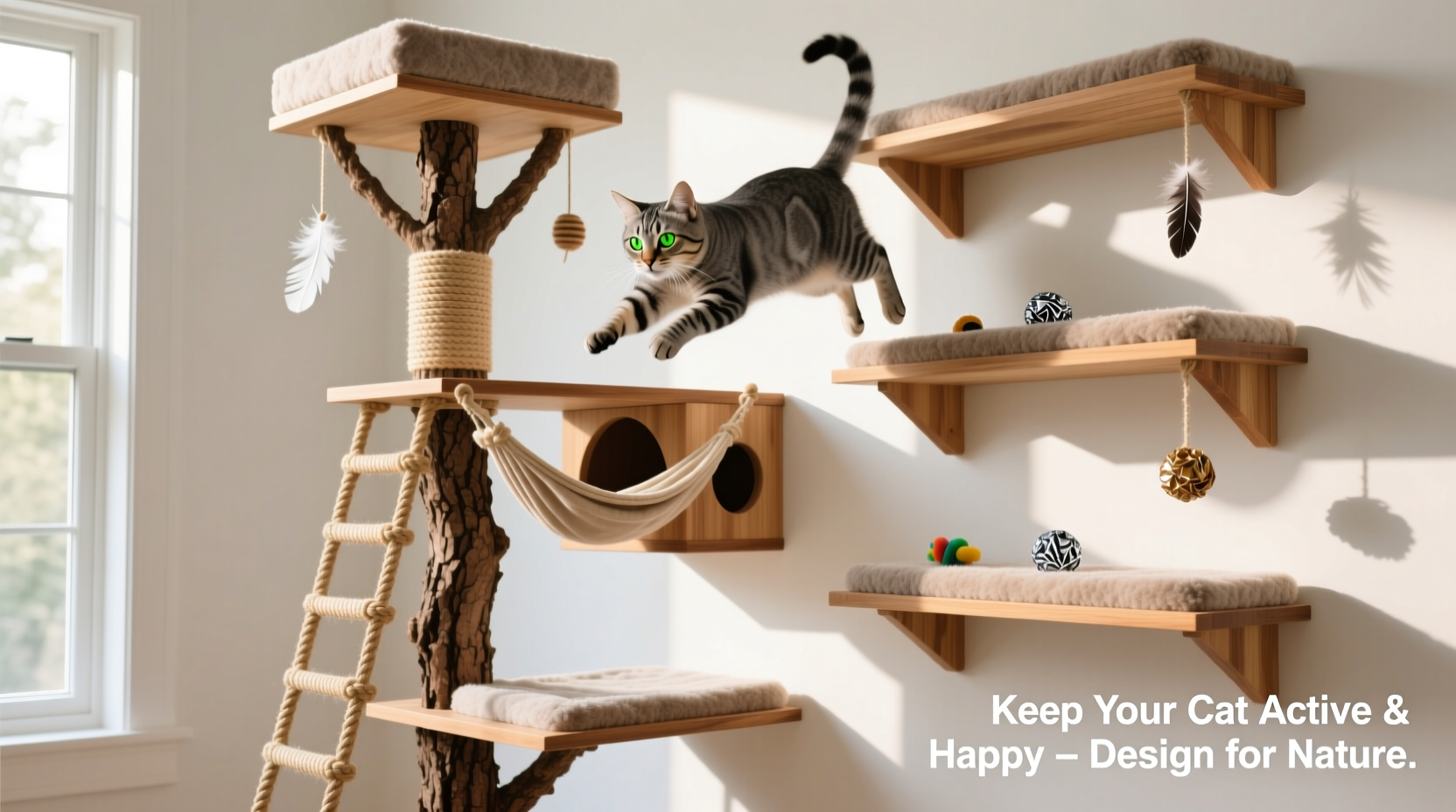
Cats thrive in environments where they can climb, perch, hide, and observe without feeling exposed or vulnerable. In the wild, felines use height to escape threats, spot prey, and rest securely. Domestic cats retain these instincts, even if their “prey” is a feather toy and their “predators” are overly enthusiastic toddlers.
Providing vertical space reduces stress, especially in multi-cat households where territorial disputes are common. A 2020 study published in the *Journal of Feline Medicine and Surgery* found that cats with access to elevated resting spots exhibited lower cortisol levels and fewer signs of anxiety.
“Climbing isn’t a luxury for cats—it’s a behavioral necessity. Without it, they become sedentary, bored, and prone to weight gain or destructive habits.” — Dr. Lydia Chen, Veterinary Behaviorist
Vertical spaces also promote muscle development, balance, and coordination. Whether jumping from shelf to shelf or scaling a multi-tiered cat tree, your cat engages core muscles, improves agility, and burns energy—critical for indoor cats who don’t have the same opportunities for outdoor exploration.
Cat Trees: Structure, Benefits, and Limitations
Cat trees are standalone structures typically made of wood, carpet, sisal rope, and plush materials. They come in various sizes, from compact models under three feet tall to elaborate towers exceeding six feet. Most include platforms, hiding cubbies, scratching posts, and dangling toys.
Advantages:
- All-in-one design: Combines scratching, lounging, playing, and climbing in a single unit.
- Stability: Heavy base provides secure footing, ideal for energetic jumps and rough play.
- Ground-level access: Easier for older or less agile cats to engage with lower platforms.
- Toys and textures: Built-in elements like hanging balls or crinkle tunnels increase interactive play.
Drawbacks:
- Floor space consumption: Larger models can dominate small rooms.
- Static placement: Once positioned, relocation is cumbersome and may disrupt cat usage.
- Limited route variety: Fixed pathways reduce exploration novelty over time.
- Wear and tear: Carpeted surfaces collect fur and odors; sisal wears down and requires replacement.
Wall Shelves: Flexibility, Flow, and Feline Freedom
Wall-mounted cat shelves are individual platforms anchored directly into wall studs. Arranged in sequences or circuits, they create a “cat highway” that allows felines to traverse rooms at different heights. These systems emphasize movement, exploration, and spatial ownership.
Advantages:
- Space-efficient: Frees up floor space while maximizing vertical real estate.
- Customizable routes: You can design unique paths tailored to your cat’s jumping ability and preferences.
- Dynamic engagement: Encourages repeated jumping, turning, and balancing—key for sustained activity.
- Aesthetic integration: Modern designs blend with home decor, doubling as functional art.
Drawbacks:
- Installation complexity: Requires proper mounting into studs for safety; not ideal for renters.
- No built-in toys: Lacks integrated scratching or interactive features unless added separately.
- Less shelter: Open platforms offer minimal hiding spots compared to enclosed cat tree cubbies.
- Learning curve: Some cats take time to adapt to wall-only navigation.
One notable benefit of wall shelves is route variability. By arranging staggered or zig-zagging paths, you encourage problem-solving and physical effort. Unlike a predictable cat tree ladder, shelves force cats to judge distances, adjust speed, and plan jumps—mental and physical challenges that prevent boredom.
Comparative Analysis: Cat Tree vs. Wall Shelves
| Feature | Cat Tree | Wall Shelves |
|---|---|---|
| Physical Activity Level | Moderate (limited jump variation) | High (dynamic jumping and routing) |
| Mental Stimulation | Medium (predictable layout) | High (custom paths, exploration) |
| Floor Space Used | High | Minimal |
| Installation Effort | Low (plug-and-play) | High (requires drilling and planning) |
| Suitability for Seniors/Kittens | High (easy access) | Medium (requires coordination) |
| Durability & Maintenance | Medium (fabric wear, odor retention) | High (easy to clean, solid materials) |
| Customization Potential | Low (fixed structure) | High (expandable, reconfigurable) |
This comparison shows that wall shelves generally promote higher levels of sustained activity and cognitive engagement. However, cat trees offer broader accessibility and integrated functions that benefit certain life stages and personalities.
Real-World Example: How One Household Transformed Cat Behavior
The Rivera family lived in a two-bedroom apartment with two indoor cats: Luna, a 3-year-old Siamese, and Milo, a 7-year-old tabby. Initially, they purchased a large cat tree near the living room window. While Luna used it frequently, Milo preferred the back of the sofa and showed little interest.
After consulting a feline behavior coach, they installed a series of wall shelves forming a loop from the bedroom to the living room, with one shelf adjacent to the existing cat tree. Within days, Milo began using the route, particularly enjoying a shelf above the bookcase that gave him a panoramic view.
Over six weeks, the owners tracked activity using a pet camera. They observed a 68% increase in daily vertical movement and noted both cats spent less time napping on furniture and more time exploring. Luna even began leaping between shelves during play sessions, mimicking hunting patterns.
The key insight? Combining both systems created a richer environment than either could alone. The cat tree served as a central hub with resting and scratching zones, while the wall shelves expanded navigational possibilities.
Step-by-Step Guide to Maximizing Feline Activity
Whether you choose a cat tree, wall shelves, or both, follow this sequence to ensure your cat stays active and engaged:
- Assess Your Cat’s Mobility: Observe jumping ability and confidence. Older or arthritic cats may need lower platforms or ramps.
- Map Out Key Zones: Identify favorite spots (near windows, doorways, heating vents) and connect them vertically.
- Start Low and Build Up: Install the first shelf at a height your cat already jumps to regularly (usually 2–3 feet).
- Space Shelves Strategically: Allow 18–24 inches between platforms for safe landing. Angle alternate shelves to encourage directional changes.
- Incorporate Multi-Functional Elements: Add scratchers to shelf sides or place toys on select platforms to boost interaction.
- Rotate and Refresh: Rearrange shelf order every few months or introduce new scents (silver vine, catnip) to renew interest.
- Monitor and Adjust: Use video or observation to see which routes are used—and which are ignored.
Expert Recommendations and Hybrid Solutions
Leading feline experts increasingly advocate for hybrid setups. “The best environments mimic nature,” says Dr. Arjun Patel, a certified cat behavior consultant. “Cats don’t just want to go up—they want to move through space with purpose. That means combining resting, scratching, and traveling zones in a fluid layout.”
“The ideal setup isn’t cat tree versus wall shelves—it’s cat tree plus wall shelves. Use the tree as a destination and the shelves as connectors.” — Dr. Arjun Patel, Feline Environmental Designer
A growing trend is integrating wall shelves with modular cat trees. For example, placing a wall shelf above a cat tree allows cats to leap from the top platform onto the wall route, extending their journey. Others anchor shelves directly to the sides of sturdy cat trees, creating lateral movement options.
Frequently Asked Questions
Can wall shelves support larger cats?
Yes, provided they are properly mounted into wall studs using appropriate hardware. Most quality shelves support 30–50 pounds. Always check manufacturer specifications and avoid drywall anchors, which can fail under dynamic loads like jumping.
Are cat trees outdated?
No. Cat trees remain valuable, especially for kittens, seniors, or homes with limited wall space. Their integrated features—like enclosed condos and dangling toys—offer comfort and entertainment that shelves alone cannot provide.
How high should I install the first shelf?
Begin at a height your cat currently uses—often the back of a couch or arm of a chair (typically 18–30 inches). This ensures immediate usability and builds confidence for higher jumps.
Action Plan: Creating an Active, Happy Environment
- ✅ Evaluate your cat’s current climbing behavior and preferences.
- ✅ Measure available wall space and identify structurally sound mounting points.
- ✅ Choose between a standalone cat tree, wall shelves, or a hybrid system based on your findings.
- ✅ Prioritize safety: use stud finders, secure fasteners, and load-test each shelf.
- ✅ Introduce the setup gradually, using treats or catnip to encourage exploration.
- ✅ Monitor activity weekly and adjust spacing or configuration as needed.
Conclusion
When it comes to keeping your feline active and happy, wall shelves generally outperform traditional cat trees in promoting sustained physical movement and mental engagement. Their customizable, space-efficient design encourages natural feline behaviors like route planning, jumping, and territorial patrolling. However, cat trees still hold value—particularly for cats needing easier access, sheltered rest areas, or built-in scratching outlets.
The most effective solution often lies in integration. By combining the stability and comfort of a cat tree with the dynamic flow of wall shelves, you create an environment that evolves with your cat’s needs. This layered approach doesn’t just occupy space—it enriches your cat’s daily life.
💬 Ready to transform your home into a feline fitness course? Start by sketching a simple vertical route today—your cat will thank you with leaps, purrs, and boundless energy.








