
When a male cat starts urinating on clothing—whether freshly laundered or piled in a hamper—it’s more than just an unpleasant surprise. It disrupts household hygiene, damages fabrics, and signals deeper issues that need immediate attention. Unlike typical litter box avoidance, targeting clothes suggests specific behavioral or medical triggers unique to male cats. Understanding the root causes and implementing targeted interventions can restore peace to your home and improve your cat’s well-being.
Why Male Cats Target Clothes: Key Reasons
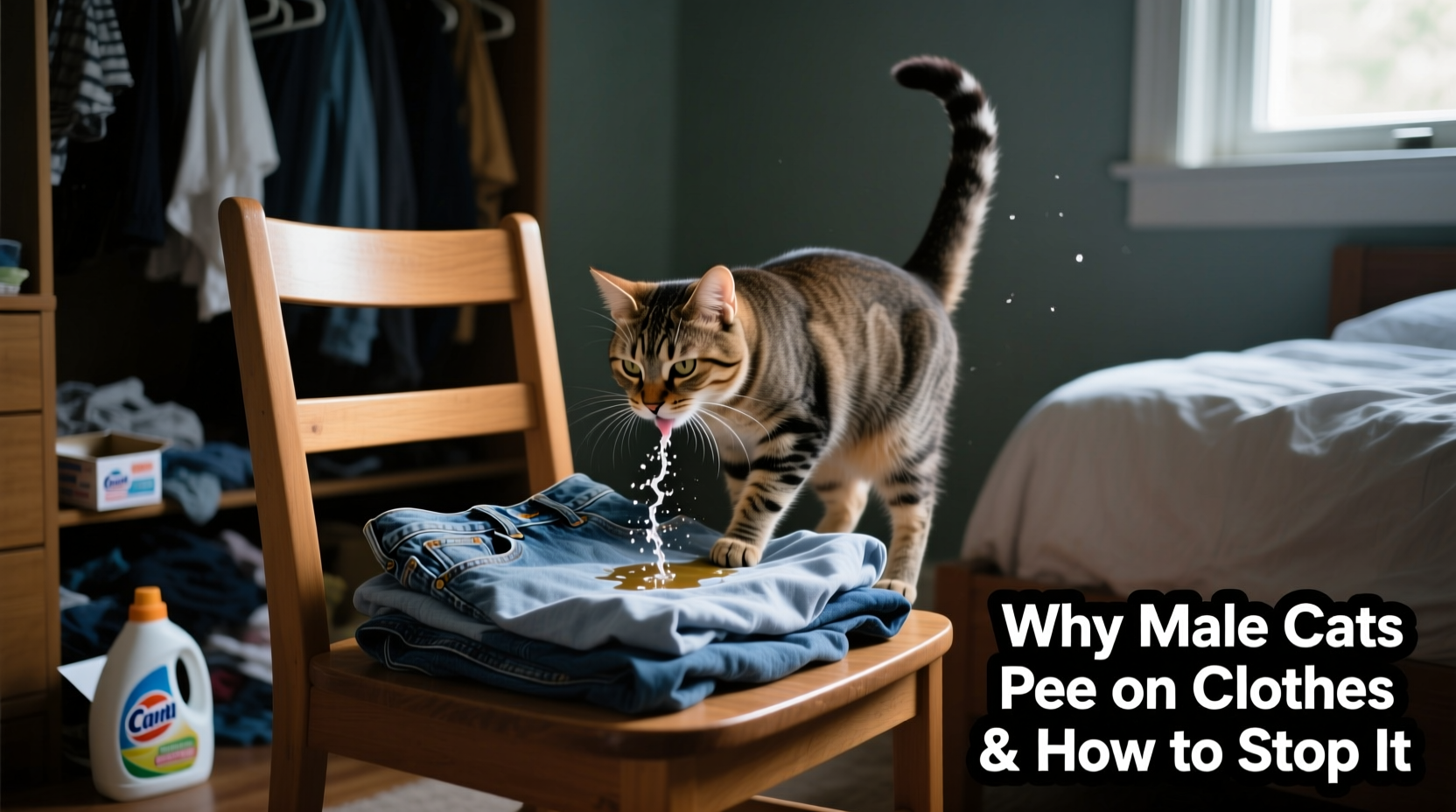
Urine marking is a natural feline behavior, but when directed at personal items like clothes, it often reflects stress, territorial insecurity, or health problems. Male cats, especially unneutered ones, are more prone to urine marking due to hormonal influences. However, even neutered males may engage in this behavior under certain conditions.
- Hormonal drive: Intact male cats use urine to mark territory and attract mates. The strong odor of their spray serves as a chemical signal.
- Stress or anxiety: Changes in the household—new pets, people, or rearranged furniture—can trigger marking behaviors.
- Litter box dissatisfaction: A dirty box, wrong location, or aversion to litter texture can lead cats to seek alternative surfaces.
- Scent attraction: Clothing carries human scent, which some cats find comforting—or threatening—depending on context.
- Medical conditions: Urinary tract infections (UTIs), bladder stones, or kidney disease cause discomfort and frequent urination outside the box.
Medical vs. Behavioral: How to Tell the Difference
Distinguishing between a health problem and a behavioral one is critical. Misdiagnosing a UTI as territorial marking delays treatment and risks serious complications like urethral blockage—a life-threatening condition in male cats.
Signs pointing to a medical issue include:
- Straining to urinate
- Frequent trips to the litter box with little output
- Blood in urine
- Excessive licking of the genital area
- Vocalizing during urination
“Any change in a male cat’s urination habits warrants prompt veterinary evaluation. What looks like misbehavior could be a blocked urethra.” — Dr. Lena Patel, DVM, Feline Internal Medicine Specialist
If no medical cause is found, the behavior is likely rooted in psychology or environment. In these cases, modifying the cat’s surroundings and routines becomes essential.
Step-by-Step Guide to Stop the Behavior
Resolving inappropriate urination requires a systematic approach. Follow this timeline to address both immediate and long-term factors:
- Day 1–3: Vet consultation – Schedule an exam. Provide a urine sample if possible. Rule out infection, crystals, or metabolic disease.
- Day 4–5: Eliminate lingering odors – Use enzymatic cleaners on all soiled areas. Avoid ammonia-based products, which mimic urine scent.
- Day 6–7: Secure clothing storage – Keep laundry baskets closed or in closets. Don’t leave clothes on the floor.
- Week 2: Optimize litter setup – Ensure one box per cat plus one extra. Place boxes in quiet, accessible locations. Scoop daily; change litter weekly.
- Week 3–4: Reduce stressors – Use pheromone diffusers (e.g., Feliway), maintain consistent routines, and provide vertical space (cat trees).
- Ongoing: Monitor and reinforce – Reward appropriate litter use with treats. Never punish accidents—they increase anxiety.
Do’s and Don’ts When Dealing With Cat Urine on Clothes
| Action | Do | Don't |
|---|---|---|
| Cleaning urine stains | Use enzymatic cleaner designed for pet stains | Use bleach or ammonia-based cleaners |
| Laundry storage | Keep hampers closed or in sealed rooms | Leave clothes in open piles on the floor |
| Responding to accidents | Clean thoroughly and calmly after the cat leaves | Yell, rub the cat’s nose in urine, or confine them |
| Litter management | Provide unscented, clumping litter in large, uncovered boxes | Use liners, scented litter, or small covered boxes |
| Behavior modification | Use positive reinforcement for correct litter use | Apply physical punishment or water sprays |
Mini Case Study: Max, the Marking Tabby
Max, a 3-year-old neutered male tabby, began urinating on his owner’s workout clothes in the bedroom hamper. His owner initially assumed laziness or spite. After a vet visit ruled out infection, the focus shifted to environment and routine.
The turning point came when the owner noticed Max watching the neighbor’s cat through the window. Installing opaque window film reduced his visual stress. They also moved the laundry basket to a closet and added a second litter box in the basement. Within three weeks, the incidents stopped completely.
This case highlights how seemingly random behaviors often stem from identifiable stressors—and how simple adjustments can yield dramatic results.
Checklist: Immediate Actions to Take
To regain control and prevent recurrence, complete the following steps:
- ✅ Schedule a veterinary check-up for your male cat
- ✅ Clean all affected clothing and surfaces with enzymatic cleaner
- ✅ Remove access to laundry piles and hampers
- ✅ Evaluate litter box number, placement, and cleanliness
- ✅ Install a pheromone diffuser in high-stress areas
- ✅ Observe your cat’s interactions with other pets or people
- ✅ Maintain a consistent feeding and play schedule
Frequently Asked Questions
Why does my neutered male cat still pee on clothes?
Even after neutering, some male cats continue marking due to learned behavior, residual hormones, or environmental stress. Neutering reduces the behavior in up to 90% of cases, but not always eliminates it. Addressing underlying anxiety or litter preferences is key.
Can I stop this without using medication?
In most cases, yes. Environmental enrichment, proper litter management, and stress reduction techniques resolve the issue. Medication such as anti-anxiety drugs may be prescribed temporarily in severe cases, but only under veterinary supervision.
Is spraying the same as peeing on clothes?
Often, yes. Spraying typically involves backing up to a vertical surface and releasing a small amount of urine. But some cats adapt the behavior to horizontal targets like beds or laundry. The motivation—territorial communication or stress relief—is usually the same.
Conclusion: Restore Harmony With Proactive Care
Male cats urinating on clothes is a solvable problem when approached with patience, observation, and science-backed strategies. Whether the cause is medical, emotional, or environmental, early intervention prevents habit formation and protects both your belongings and your cat’s health. Start with a vet visit, then systematically adjust your home setup to meet your cat’s instinctual needs.
💬 Have you successfully stopped your male cat from peeing on clothes? Share your story in the comments—your experience could help another frustrated pet owner find relief.








