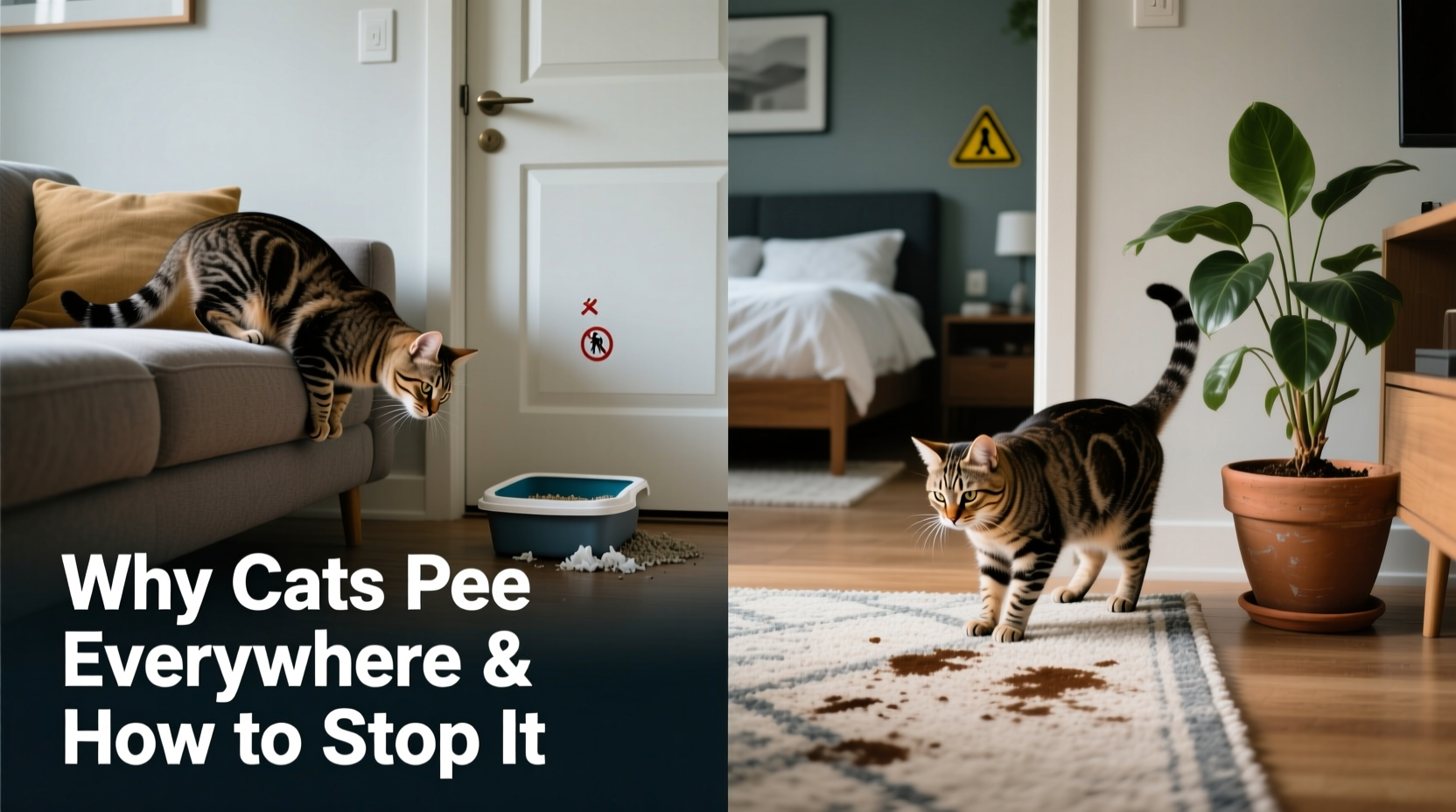
When a cat starts urinating outside the litter box—on beds, carpets, or furniture—it’s more than just a mess. It’s a signal. Whether sudden or gradual, inappropriate urination is one of the most common behavioral complaints among cat owners. While frustrating, this issue is rarely about spite. Instead, it stems from medical conditions, stress, or environmental factors. Understanding the root cause is the first step toward resolution. With patience, observation, and targeted interventions, most cases can be corrected.
Medical Causes Behind Inappropriate Urination
Before assuming behavioral issues, rule out health problems. Cats often hide pain, and urinary changes are early warning signs. Conditions such as urinary tract infections (UTIs), bladder stones, kidney disease, diabetes, or arthritis can make using the litter box painful or difficult.
A 2022 study published in the Journal of Feline Medicine and Surgery found that over 30% of cats presenting with house-soiling behaviors had an underlying medical condition. Symptoms to watch for include:
- Straining to urinate or frequent attempts
- Crying while using the litter box
- Blood in urine
- Excessive licking of the genital area
- Increased thirst or changes in appetite
“Any change in litter box habits should prompt a veterinary visit. Painful urination is a primary reason cats avoid the box.” — Dr. Lena Torres, DVM, Feline Behavior SpecialistTip: Always collect a fresh urine sample when visiting the vet. This helps diagnose infections or crystals quickly.
Behavioral and Environmental Triggers
If medical causes are ruled out, focus shifts to stress and environment. Cats are creatures of habit. Even minor disruptions—a new pet, moving furniture, loud noises, or cleaning product changes—can trigger anxiety-based elimination.
Spraying (urine marking on vertical surfaces) differs from inappropriate urination. Spraying is territorial and often involves a quivering tail and backward stepping. General peeing elsewhere—especially on horizontal surfaces—is usually linked to discomfort, fear, or dissatisfaction with the litter setup.
Common Behavioral Causes Include:
- Litter box aversion due to poor hygiene
- Stress from multi-cat household dynamics
- Fear of location (e.g., noisy basement or high-traffic area)
- Dislike of litter texture, depth, or scent
- Box too small, uncovered, or inaccessible
Step-by-Step Guide to Stop the Behavior
Resolving inappropriate urination requires a systematic approach. Follow these steps in order:
- Visit the veterinarian for a full exam, including urinalysis and possibly blood work.
- Identify patterns: Note where, when, and how often accidents occur. Use a journal or app to track incidents.
- Optimize litter box setup: Follow the “n+1” rule—one box per cat, plus one extra.
- Choose the right litter: Unscented, fine-grained clumping litter is preferred by most cats.
- Clean accidents thoroughly with enzymatic cleaner to eliminate odor cues.
- Reduce stress through pheromone diffusers (e.g., Feliway), safe hiding spots, and consistent routines.
- Restrict access to soiled areas temporarily, then gradually reintroduce under supervision.
Checklist: Litter Box Best Practices
Use this checklist to ensure your litter boxes meet feline needs:
- ☑ At least one box per cat, plus one extra
- ☑ Boxes placed in quiet, low-traffic, easily accessible locations
- ☑ Scooped at least once daily
- ☑ Fully changed and washed monthly with mild soap (no bleach or citrus cleaners)
- ☑ Large enough for cat to turn around comfortably
- ☑ Covered or uncovered based on preference (many cats dislike covered boxes)
- ☑ Filled with 2–3 inches of unscented clumping litter
Real Example: Bella the Anxious Tabby
Bella, a 4-year-old domestic shorthair, began peeing on her owner’s bed after the family adopted a second cat. The owner assumed Bella was jealous, but a vet visit revealed no medical issues. A behavior consultant observed that Bella avoided the single litter box near the new kitten’s feeding area.
The solution included adding a second box in a quiet bedroom, using Feliway diffusers in shared spaces, and creating separate feeding zones. Within three weeks, the accidents stopped. Bella’s case highlights how subtle territorial stress can manifest as elimination issues—even without overt aggression.
Do’s and Don’ts: Quick Reference Table
| Do’s | Don’ts |
|---|---|
| Provide multiple clean litter boxes in different locations | Use only one litter box, regardless of number of cats |
| Clean accidents with enzymatic cleaner | Use ammonia or vinegar-based cleaners (they mimic urine smell) |
| Consult your vet at the first sign of change | Assume the cat is acting out of revenge |
| Gradually introduce environmental changes | Rearrange furniture or move boxes suddenly |
| Offer choices in litter type and box style | Switch litters frequently or use scented varieties |
FAQ: Common Questions Answered
Why is my cat peeing on my bed but not the floor?
Cats often choose soft, absorbent surfaces like bedding because they resemble natural substrates. Additionally, your bed carries your scent, which may be comforting during times of stress. It’s not personal—it’s a combination of texture preference and emotional signaling.
Can changing litter brands cause this problem?
Yes. Cats are highly sensitive to smell and texture. A switch to a coarser, scented, or different-colored litter can lead to rejection. If you must change litter, do so gradually by mixing increasing amounts of the new with the old over 7–10 days.
How long does it take to fix inappropriate urination?
With proper diagnosis and consistent intervention, improvement is often seen within 2–4 weeks. Full resolution may take up to 8 weeks, especially in multi-cat homes or cases involving deep-seated anxiety.
Conclusion: Take Action with Compassion
Cat peeing everywhere isn’t a lost cause—it’s a solvable puzzle. Start with a vet visit, then methodically assess the environment, litter setup, and social dynamics. Success hinges on empathy, not punishment. Every accident is communication. By listening carefully and responding with care, you restore both hygiene and harmony.
💬 Have a story about overcoming your cat’s peeing issues? Share your experience below—your insight could help another frustrated pet owner find relief.








