
For indoor cats, environmental enrichment is essential. Without the stimulation of the outdoors, domestic felines can become bored, stressed, or even develop behavioral issues. Two popular plant-based options—cat grass and catnip—are often introduced to enhance a cat’s indoor experience. While both are marketed as safe and enjoyable for cats, they serve very different purposes and affect felines in distinct ways. Understanding the differences between cat grass and catnip is crucial for pet owners who want to promote happiness, digestive health, and mental well-being in their cats.
This article breaks down the science, benefits, risks, and practical applications of both cat grass and catnip. By the end, you’ll know exactly which one—or whether a combination of both—is best suited to keep your indoor cat thriving.
What Is Cat Grass—and Why Do Cats Eat It?
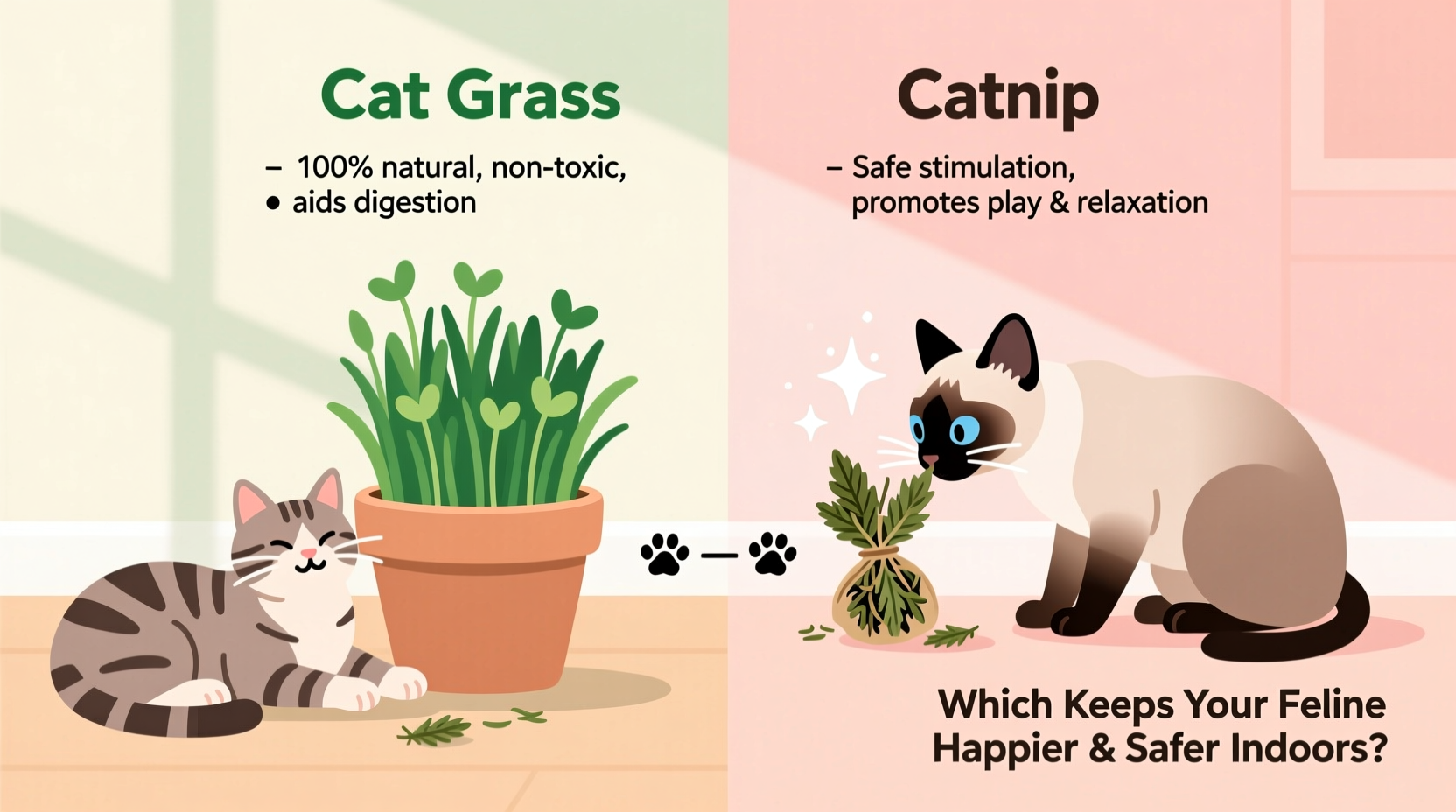
Cat grass typically refers to young cereal grasses such as wheatgrass, oat grass, barley, or rye that are grown specifically for cats to consume. Unlike catnip, cat grass is not psychoactive. Cats eat it primarily for digestive support and natural fiber intake. In the wild, cats often ingest grass to help expel hairballs, aid digestion, or purge intestinal parasites. Indoor cats retain this instinct, and providing access to safe, non-toxic grass satisfies this biological need.
The act of chewing grass stimulates gastric secretions and peristalsis—the muscular contractions that move food through the digestive tract. This can lead to vomiting, but in most cases, it’s a controlled way for cats to clear indigestible materials like fur or feathers from their stomachs. More importantly, regular access to cat grass may reduce the frequency of unexpected hairball regurgitation on your favorite rug.
Tip: Rotate batches of cat grass every 7–10 days to ensure freshness and prevent mold growth, which can be harmful if ingested.Nutritional Benefits of Cat Grass
While cats are obligate carnivores, meaning their primary nutrition comes from animal protein, cat grass provides trace nutrients that can supplement their diet. These include:
- Chlorophyll – May support detoxification and freshen breath.
- Dietary fiber – Aids in smooth digestion and helps regulate bowel movements.
- Folic acid (vitamin B9) – Plays a role in hemoglobin production, which carries oxygen in the blood.
- Natural enzymes – Assist in breaking down food particles and improving gut motility.
Although these benefits are modest, they contribute to overall wellness, especially in cats prone to constipation or hairball issues.
What Is Catnip—and How Does It Affect Cats?
Catnip (Nepeta cataria) is a member of the mint family and contains a volatile oil called nepetalactone. When inhaled, this compound binds to receptors in a cat’s nasal tissue, stimulating sensory neurons that influence the amygdala and hypothalamus—brain regions involved in emotion and behavior. The result is a temporary euphoric or hallucinogenic response lasting 5 to 15 minutes.
Cats exposed to catnip may exhibit behaviors such as rolling, rubbing, purring, vocalizing, or hyperactive running. Some become intensely playful; others go into a blissful trance. After the high wears off, many cats lose interest and may avoid catnip for up to an hour—a built-in refractory period that prevents overstimulation.
Not all cats respond to catnip. Sensitivity is genetic, with estimates suggesting only 50% to 70% of cats inherit the trait. Kittens under six months and senior cats are also less likely to react.
“Catnip doesn’t provide nutritional value, but its behavioral effects can reduce stress and encourage physical activity—both critical for indoor cats.” — Dr. Lena Torres, DVM, Feline Behavior Specialist
Forms of Catnip: Leaves, Sprays, and Toys
Catnip comes in several forms, each with unique advantages:
| Form | Benefits | Drawbacks |
|---|---|---|
| Dried leaves | Strongest effect; long shelf life if stored properly | Can be messy; potency fades over time |
| Sprays | Clean application; ideal for scratching posts or bedding | Shorter duration of effect; may contain solvents |
| Stuffed toys | Encourages play and exercise; reusable | May lose potency; risk of ingestion if torn |
When choosing a form, consider your cat’s personality. Shy cats may prefer a light spray, while energetic ones benefit from interactive toys filled with dried catnip.
Key Differences: Cat Grass vs Catnip
While both plants are safe when used appropriately, their roles in a cat’s life are fundamentally different. The following comparison clarifies their functions, safety profiles, and suitability for various needs.
| Feature | Cat Grass | Catnip |
|---|---|---|
| Purpose | Digestive aid, fiber source | Behavioral stimulant, mood enhancer |
| Effect on Cats | Mild, physiological (chewing leads to possible vomiting or improved digestion) | Psychoactive (inhalation causes euphoria or sedation) |
| Edibility | Fully edible and digestible | Best inhaled; excessive ingestion may cause mild stomach upset |
| Frequency of Use | Daily access recommended | Occasional use (1–2 times per week) |
| Genetic Response Required? | No—benefits are universal | Yes—only ~60% of cats respond |
| Risks | Mold if grown improperly; overconsumption rare | Overstimulation; unsafe for pregnant cats |
This table underscores a key point: cat grass supports long-term health, while catnip offers short-term enrichment. They are not interchangeable but can be complementary.
Real-World Example: Solving Litter Box Avoidance
Consider the case of Luna, a 3-year-old indoor Siamese who began avoiding her litter box and excessively grooming her belly. Her owner initially assumed a urinary issue, but after a clean vet checkup, the veterinarian suggested environmental stress as a cause.
The owner introduced daily access to fresh cat grass and placed a catnip-infused scratching post near a sunny window. Within a week, Luna’s over-grooming decreased significantly. She spent time chewing grass after meals and engaged in short bursts of play with the catnip toy. The combination provided both digestive regulation and mental stimulation, reducing anxiety-driven behaviors.
This scenario illustrates how combining cat grass and catnip—each addressing different aspects of feline wellness—can resolve complex behavioral issues without medication or drastic changes.
Step-by-Step Guide to Introducing Both Safely
Introducing new elements to your cat’s environment should be done thoughtfully. Follow this timeline to integrate cat grass and catnip effectively:
- Week 1: Start with cat grass only. Grow or purchase organic, pesticide-free grass. Place a small tray in a quiet area. Observe your cat’s interest and monitor for any signs of overeating or digestive discomfort.
- Week 2: Monitor and rotate. Replace old grass with a fresh batch. Note how often your cat uses it—especially after eating or grooming. This establishes a healthy routine.
- Week 3: Introduce catnip cautiously. Use a small amount of dried catnip or a spray on a toy. Limit exposure to 10 minutes. Watch for reactions: excitement, relaxation, or indifference.
- Week 4: Customize based on response. If your cat enjoys catnip, offer it weekly during play sessions. Continue daily access to cat grass. Adjust placement based on preference (e.g., near feeding areas for grass, near resting spots for catnip).
- Ongoing: Maintain hygiene. Clean trays regularly, store catnip in airtight containers away from light, and never allow moldy grass to remain accessible.
Common Myths and Misconceptions
Several myths persist about these two plants, leading to confusion among cat owners.
- Myth: Catnip is addictive. Truth: Nepetalactone mimics feline pheromones but does not create dependency. The refractory period naturally limits repeated use.
- Myth: All green plants are safe for cats. Truth: Many common houseplants (lilies, pothos, philodendron) are toxic. Always verify that any plant offered is cat-safe.
- Myth: Eating cat grass means your cat is sick. Truth: Grass consumption is instinctive and preventive, not necessarily a sign of illness.
- Myth: Organic catnip is stronger. Truth: Organic labeling refers to farming practices, not potency. Freshness and proper storage matter more.
Checklist: Safe and Effective Use of Cat Grass and Catnip
Use this checklist to ensure you’re supporting your cat’s well-being responsibly:
- ✅ Use only organic, chemical-free seeds or pre-grown grass
- ✅ Replace cat grass every 7–10 days to prevent mold
- ✅ Offer cat grass daily, especially after meals
- ✅ Test catnip once to confirm sensitivity before regular use
- ✅ Limit catnip sessions to 1–2 times per week
- ✅ Store dried catnip in a cool, dark place in a sealed container
- ✅ Avoid giving catnip to pregnant or highly anxious cats
- ✅ Supervise initial interactions to assess tolerance
- ✅ Combine with other enrichment (toys, climbing structures)
- ✅ Consult your vet if vomiting becomes frequent or concerning
Frequently Asked Questions
Can I grow cat grass and catnip together?
It’s not recommended. Catnip is a perennial herb that spreads aggressively and may overshadow grass growth. Additionally, cats may trample grass while rolling in catnip. Grow them separately—in different pots or locations—to maintain control and hygiene.
Is it safe if my cat eats a lot of catnip?
Small ingestions are generally harmless, but large amounts can cause mild gastrointestinal upset, including nausea or diarrhea. Since the primary effect is olfactory, focus on inhalation rather than consumption. Remove catnip after 10–15 minutes of play.
Why doesn’t my cat react to catnip?
Lack of response is usually genetic. Some cats simply don’t have the receptor sensitivity. Alternatives like silver vine or valerian root may produce similar effects in non-responders. Cat grass, however, remains beneficial regardless of genetics.
Final Verdict: Which Keeps Your Cat Happier and Safer?
When comparing cat grass and catnip, the answer isn’t “either/or”—it’s “both, with priorities.”
Cat grass wins for safety and universal benefit. Every indoor cat can gain from regular access to this simple, natural aid. It supports digestive health, reduces hairball incidents, and fulfills an innate behavioral drive. It’s safe for daily use, poses minimal risks, and requires little maintenance.
Catnip excels in enrichment and emotional stimulation. For responsive cats, it provides joyful bursts of activity that mimic hunting behaviors, helping to combat boredom and sedentary lifestyles. However, its effects are temporary and not universally experienced.
The ideal approach? Prioritize cat grass as a staple of your cat’s environment and use catnip as an occasional treat. Together, they address both physical and psychological needs, creating a more balanced, content indoor life.
“The happiest indoor cats aren’t just fed and sheltered—they’re given outlets for natural behaviors. Cat grass and catnip, when used wisely, fulfill that role beautifully.” — Dr. Rajiv Mehta, Veterinary Ethologist
Take Action Today for a Healthier, Happier Cat
Your cat’s indoor life doesn’t have to be dull or stressful. Start with a small tray of organic cat grass this week. Observe how your cat interacts with it—whether they nibble gently or ignore it at first. Then, test catnip to see if it sparks joy. Keep notes, adjust routines, and remember that small enrichments lead to big improvements in quality of life.
Don’t underestimate the power of plants. In a world designed for humans, cat grass and catnip are simple, affordable tools that honor your cat’s instincts. Implement both wisely, and you’ll not only prevent problems—you’ll nurture a deeper bond rooted in understanding and care.
💬 Have a story about how cat grass or catnip changed your cat’s behavior? Share your experience in the comments and help fellow cat lovers make informed choices!








