Walking a cat on a leash might seem unusual to some, but for many indoor-outdoor guardians, it’s a way to provide mental stimulation, environmental enrichment, and safe exploration. Yet one of the biggest hurdles isn’t training—it’s choosing the right gear. The debate between using a collar versus a harness often centers on safety, escape risk, and most importantly, stress levels. For cats, unfamiliar sensations around the neck or torso can trigger anxiety, fear, or even panic. So, which option—collar or harness—is less likely to freak cats out? The answer depends on design, fit, and feline psychology.
Understanding Feline Stress Triggers During Walks
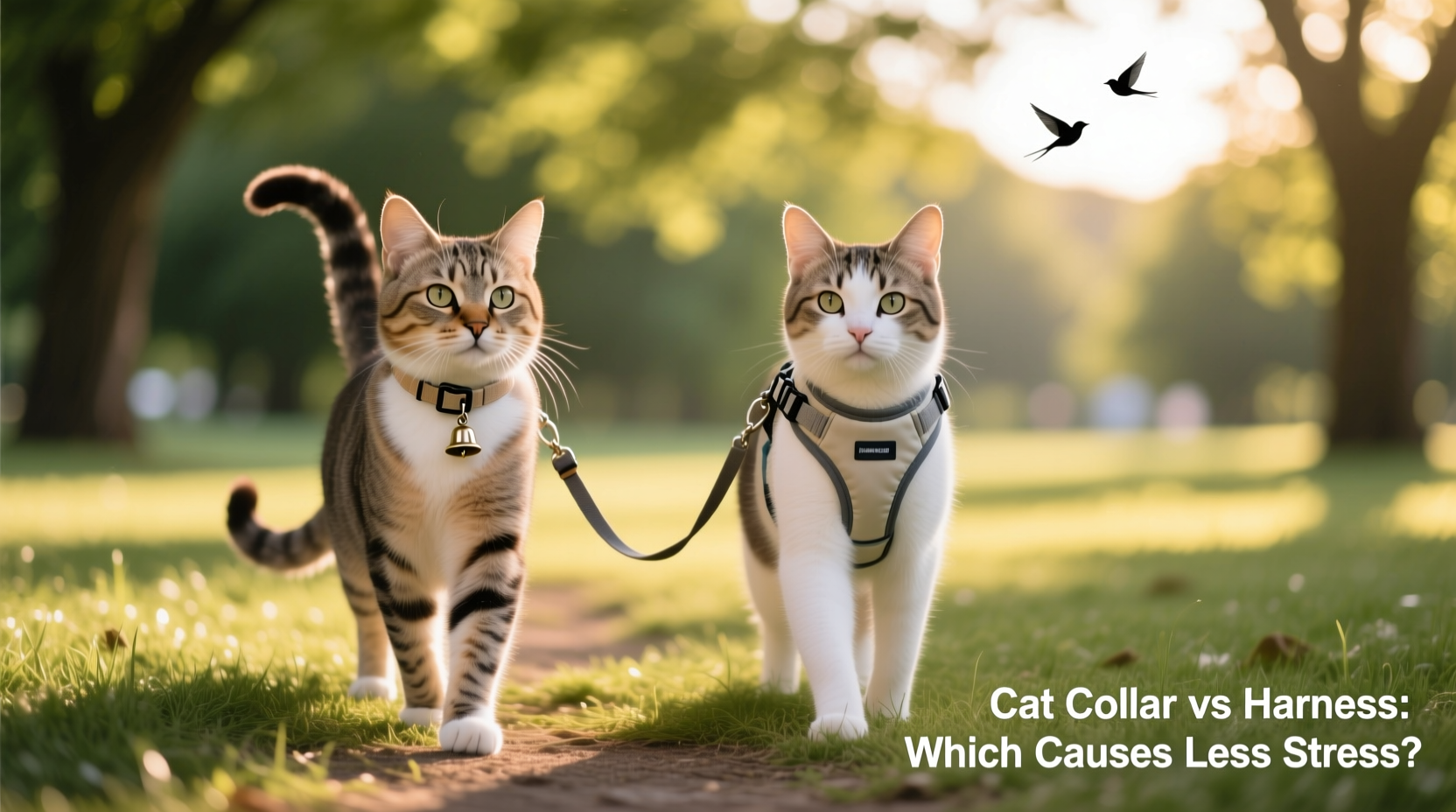
Cats are sensitive creatures, evolved to detect subtle changes in their environment. Anything that restricts movement, applies pressure to vulnerable areas, or feels unpredictable can provoke a stress response. When introducing walking equipment, two primary concerns arise: physical discomfort and perceived entrapment.
A traditional collar—especially one designed only for ID tags—tightens when tension is applied. This mimics the sensation of being grabbed by the scruff, a behavior mother cats use to control kittens. While not inherently painful, this sensation can be deeply unsettling for adult cats, triggering instinctive fear. In contrast, a well-fitted harness distributes pressure across the chest and shoulders, avoiding the throat entirely. This reduces both physical strain and psychological distress.
“Cats associate pressure on the neck with predation or restraint. A harness bypasses that primal fear by engaging the body differently.” — Dr. Lena Patel, Feline Behavior Specialist
Collars: Risks and Limitations for Walking
While collars are essential for identification and microchip tags, they are not designed for walking. Breakaway collars, though safer if snagged, still pose risks when used with leashes:
- Neck trauma: Sudden pulls can injure the trachea, thyroid, or cervical spine.
- Escape risk: Cats are masters at slipping out of loose collars, especially when startled.
- Stress amplification: Even gentle tugging can feel like a predator attack.
In emergency situations—such as a cat bolting after a squirrel—the reflexive jerk on a collar can cause injury or lead to escape. Worse, some cats freeze or panic entirely, refusing future walks. This makes collars a poor choice for regular outdoor excursions, regardless of how calm a cat seems indoors.
Tip: Never attach a leash directly to a standard cat collar. Use it only for ID, never for walking.Harnesses: Design, Fit, and Feline Acceptance
A properly fitted harness significantly reduces stress by eliminating pressure on the neck. Instead, force is distributed across broader, more muscular areas of the torso. However, not all harnesses are created equal. Poorly designed models—particularly those with excessive straps or restrictive leg loops—can cause chafing, limit mobility, or feel like confinement.
The best walking harnesses share key features:
- Adjustable straps at neck, chest, and girth
- Soft, flexible materials (neoprene or nylon blends)
- Front or back leash attachment points (back is typically less intrusive)
- Secure double buckles or snap closures
When introduced gradually, many cats adapt well to harnesses. The key is allowing the cat to wear it indoors first, without tension, so they associate it with safety rather than restriction.
Step-by-Step: Introducing a Harness Safely
- Let your cat sniff and investigate the harness before touching them with it.
- Place it near their bed or food bowl for positive association.
- Fasten loosely for short sessions (5–10 minutes), then reward with treats.
- Gradually increase duration over several days.
- Attach the leash indoors once comfortable, allowing dragging under supervision.
- Begin supervised outdoor sessions in quiet, low-distraction areas.
Comparison: Collar vs. Harness for Cat Walks
| Feature | Collar | Harness |
|---|---|---|
| Pressure Distribution | Concentrated on neck | Distributed across chest and shoulders |
| Escape Risk | High (cats can slip out easily) | Low (when properly fitted) |
| Stress Level | Higher (neck pressure triggers fear) | Lower (feels more natural when adjusted) |
| Safety in Emergencies | Poor (risk of injury or strangulation) | Better (breakaway options available) |
| Best Use Case | ID and microchip tags only | Walking, outdoor exploration, vet transport |
Real-World Example: Luna Learns to Walk
Luna, a 3-year-old domestic shorthair, lived in a high-rise apartment with balcony access. Her owner, Mark, wanted to give her outdoor time without risking falls or escapes. He initially tried a lightweight collar with a leash, but Luna froze, flattened her ears, and tried to rub it off within seconds.
After consulting a vet behaviorist, Mark switched to a soft, H-style harness. He spent ten days acclimating Luna—first letting her wear it during playtime, then attaching a drag leash indoors. By day 14, she walked calmly to her balcony, sniffed the railing, and even sat beside Mark while he read. Within three weeks, they began short courtyard walks. Today, Luna looks forward to her harness like a jacket for adventure.
The difference wasn’t just equipment—it was approach. The harness didn’t eliminate stress; the gradual, patient process did. But without the right tool, progress would have been impossible.
Checklist: Choosing a Low-Stress Walking System
- ✅ Use a breakaway collar only for ID—never for walking
- ✅ Select a harness with adjustable straps and soft lining
- ✅ Measure your cat’s neck, chest, and girth before purchasing
- ✅ Allow 7–14 days of indoor adjustment before going outside
- ✅ Start walks in quiet, familiar environments
- ✅ Watch for signs of stress: panting, freezing, attempts to hide or escape
- ✅ End sessions positively—even if brief—with treats or praise
Frequently Asked Questions
Can cats really be trained to walk on a harness?
Yes, most cats can learn to walk on a harness with patience and positive reinforcement. Kittens often adapt faster, but many adult cats also succeed when introduced gradually and without coercion.
My cat hates the harness—should I keep trying?
If your cat shows extreme fear—vocalizing, trembling, or attempting self-injury—pause the process. Reassess fit and reintroduce more slowly. Some cats may never enjoy walks, and that’s okay. Enrichment can happen indoors through window perches, puzzle feeders, or catio access.
Are certain harness styles better for anxious cats?
Yes. “H-style” and “figure-eight” harnesses tend to be more secure and less restrictive than “V-shaped” designs. Avoid models with leg loops that dig in. Look for brands known for comfort, such as Kitty Holster or Sleepypod, which prioritize ergonomic fit.
Final Thoughts: Prioritizing Comfort Over Convenience
The goal of walking a cat isn’t to mimic dog culture—it’s to enhance their quality of life safely. A collar may seem simpler, but its risks far outweigh any convenience. Harnesses, when chosen and introduced thoughtfully, offer a far gentler experience. They respect feline anatomy and reduce the fear associated with restraint.
Every cat is different. Some will strut down sidewalks like seasoned explorers; others will prefer watching birds from a screened porch. But for those open to adventure, the right harness can make all the difference—turning a potentially terrifying experience into a shared moment of trust and curiosity.
🚀 Ready to try a stress-free walk? Pick a well-reviewed harness, start slow, and let your cat set the pace. Share your journey in the comments—we’d love to hear how your cat adapts!








