When it comes to equipping a kitchen, few decisions spark as much debate as choosing between a cast iron skillet and a nonstick pan. One promises lifelong durability with proper care; the other offers effortless release and quick cleanup. But behind the sizzle lies a deeper question: Is maintaining a cast iron skillet really as difficult as people say? And is the convenience of nonstick worth the trade-offs in longevity and performance? The answer isn’t black and white—it depends on how you cook, what you value, and how willing you are to adapt your habits.
The Core Differences: What Sets Them Apart
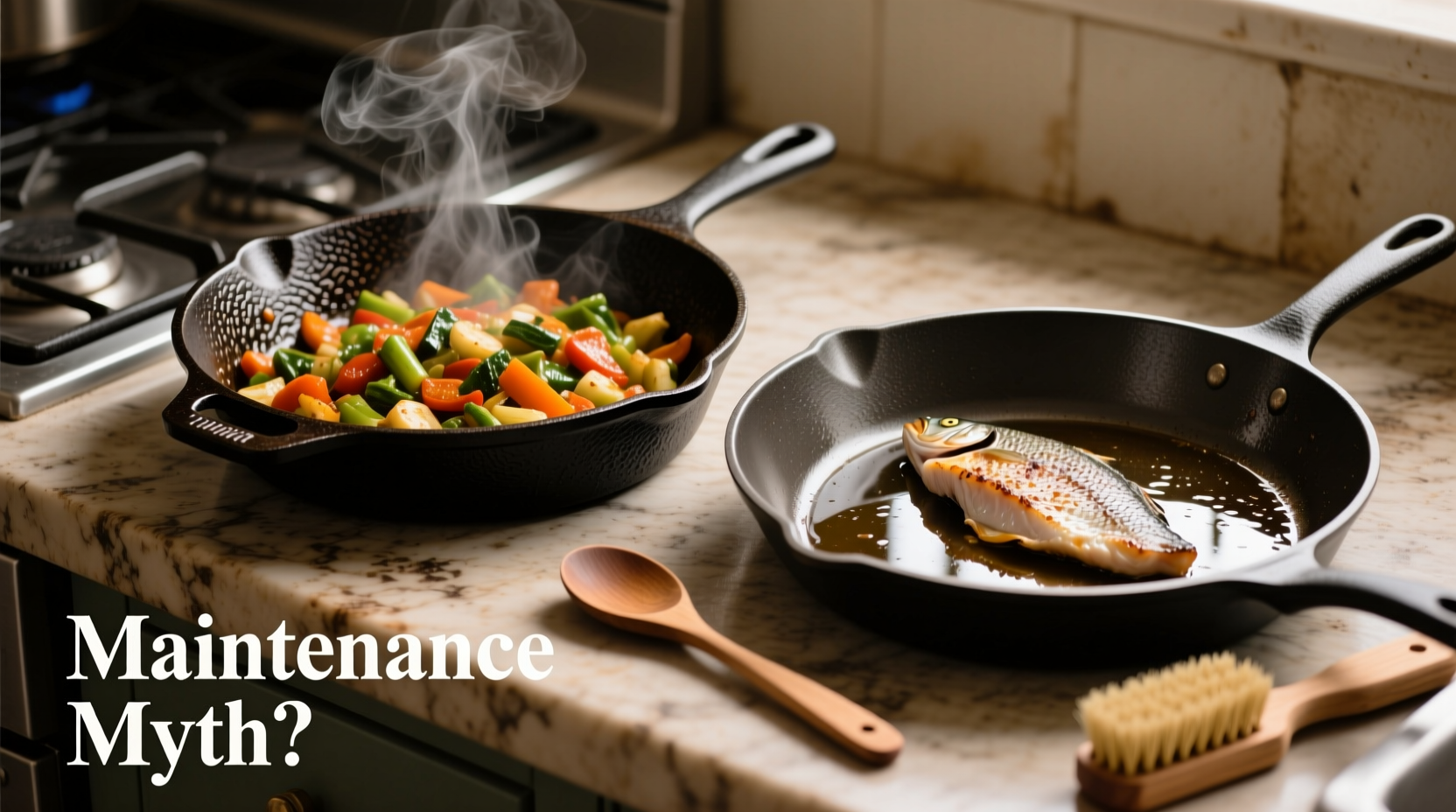
At first glance, both pans serve the same basic function—cooking food over heat. But their materials, performance, and long-term behavior couldn't be more different.
Cast iron skillets are made from heavy, dense iron that retains heat exceptionally well. When properly seasoned, they develop a natural nonstick surface through layers of polymerized oil. They’re oven-safe, can handle high temperatures, and grow better with age if cared for correctly.
Nonstick pans, typically aluminum with a synthetic coating like PTFE (Teflon), prioritize ease of use. Eggs slide right off, cleanup is minimal, and they require little to no oil. However, the coating degrades over time, especially when exposed to high heat or metal utensils, and most last only 2–5 years under regular use.
The contrast isn’t just about cooking—it’s about philosophy. Cast iron rewards patience and consistency; nonstick rewards convenience and speed.
Maintenance Myths: Is Cast Iron Really High-Maintenance?
A common misconception is that cast iron demands constant attention, special cleaning rituals, and daily seasoning. In reality, maintenance is simple once you understand the principles. The key is consistency, not complexity.
Many home cooks fear water will ruin their skillet, but brief contact with water during washing won’t cause immediate rust—especially if dried thoroughly afterward. Modern understanding has moved past the “never use soap” dogma. Mild dish soap is safe, though excessive scrubbing or soaking should be avoided.
Tip: After cooking, clean your cast iron while it’s still warm (not scorching hot) using a soft sponge or brush. This makes stuck-on food easier to remove without damaging the seasoning.Seasoning—the process of baking oil into the metal to form a protective layer—is often misunderstood. It doesn’t need to be done weekly. A well-used skillet naturally maintains its seasoning through regular cooking with fats. Re-seasoning once or twice a year, or when food starts sticking, is usually sufficient.
In contrast, nonstick pans require careful handling to preserve their coating. No metal utensils, no stacking without protection, and no cooking above 500°F (which many stovetops exceed). While cleaning is easier, the long-term upkeep involves behavioral restrictions rather than active maintenance.
Performance Comparison: Heat, Versatility, and Longevity
When evaluating pans, performance matters more than convenience alone. How a pan heats, sears, transitions from stove to oven, and ages over time defines its real value.
| Feature | Cast Iron Skillet | Nonstick Pan |
|---|---|---|
| Heat Retention | Excellent – holds heat evenly and steadily | Fair – heats quickly but loses heat when food is added |
| Max Temperature | Up to 500°F+ (safe for broiling and grilling) | Limited to ~500°F (coating breaks down at high heat) |
| Searing Ability | Superior – creates deep Maillard browning | Poor – struggles to achieve high-heat sear |
| Oven-Safe | Yes – fully oven and broiler safe | Sometimes – check manufacturer guidelines |
| Lifespan | Generations (with care) | 2–5 years (average) |
| Weight | Heavy – requires strength to handle | Light – easy to maneuver |
For tasks like searing steaks, roasting vegetables, or baking cornbread, cast iron outperforms nonstick consistently. Its thermal mass ensures even cooking and superior crust development. Nonstick excels in delicate applications—scrambled eggs, crepes, or reheating leftovers—where sticking is the primary concern.
“Cast iron isn’t high-maintenance; it’s low-tolerance for neglect. Treat it reasonably, and it will serve you for decades.” — Daniel Gritzer, Culinary Director at Serious Eats
Step-by-Step: Maintaining Your Cast Iron Skillet
Caring for cast iron doesn’t require special products or expertise. Follow this routine after each use to keep your skillet in top condition:
- Cool Slightly: Let the pan cool enough to handle safely, but clean while still warm for easier residue removal.
- Scrub Gently: Use a soft sponge, nylon brush, or chainmail scrubber. Avoid steel wool unless removing rust.
- Rinse Thoroughly: Use warm water. A small amount of mild soap is acceptable if needed.
- Dry Immediately: Wipe completely with a towel, then place on a stove burner over low heat for 2–3 minutes to evaporate any remaining moisture.
- Oil Lightly: Apply a thin layer of neutral oil (like flaxseed, grapeseed, or vegetable oil) using a paper towel. Wipe off excess—too much oil leads to stickiness.
- Store Properly: Keep in a dry place. If stacking, place a paper towel between pans to prevent moisture buildup.
For occasional deep reconditioning—especially if food sticks or rust appears—bake the skillet upside down in a 375°F oven for one hour with a light oil coat. Repeat 2–3 times if restoring an old pan.
Real-World Example: A Week in Two Kitchens
Consider two cooks: Maya uses a well-seasoned 10-inch cast iron skillet daily. She sears salmon, fries potatoes, and bakes skillet cookies. After cooking, she wipes it clean, rinses briefly, dries over heat, and oils it. Once every few months, she notices slight stickiness and bakes on a fresh layer of seasoning.
James prefers nonstick for its ease. He scrambles eggs every morning and reheats frozen meals. Over time, he accidentally uses a metal spatula once, causing a scratch. Within a year, the coating begins peeling. By year three, he replaces the pan.
Maya’s skillet, purchased secondhand five years ago, improves with use. James replaces his nonstick pan every 2–3 years, spending more over time and generating waste. Both get good results in their preferred tasks—but their long-term outcomes differ significantly.
Tip: Never store a cast iron skillet while damp. Even in humid environments, residual moisture can lead to rust within hours.Environmental and Economic Impact
The choice between these pans extends beyond personal preference—it affects sustainability and cost-efficiency.
A single cast iron skillet can last 30, 50, or even 100 years. Many are passed down through generations. They’re made from recyclable materials and don’t shed microplastics. Though heavier to ship, their lifespan offsets environmental impact over time.
Nonstick pans, due to their limited durability, contribute to household waste. The PTFE coating, when overheated, can release toxic fumes harmful to birds and potentially humans. Disposal is problematic—most aren’t recyclable and end up in landfills.
Financially, replacing a $30 nonstick pan every few years adds up. Over a decade, that’s $100–$150 spent on replacements. A $30–$50 cast iron pan, meanwhile, becomes a one-time investment.
Checklist: Choosing the Right Pan for Your Lifestyle
- ✅ Do you cook at high heat often? → Choose cast iron.
- ✅ Do you bake or use the broiler frequently? → Cast iron handles this best.
- ✅ Are you cooking delicate foods daily (eggs, fish)? → Nonstick may suit you better.
- ✅ Do you prefer minimal cleanup with no drying or oiling? → Nonstick wins here.
- ✅ Are you looking for a long-term, sustainable option? → Cast iron is ideal.
- ✅ Do you have limited storage or strength to handle heavy pans? → Nonstick is lighter and easier to manage.
- ✅ Are you willing to spend 2 extra minutes after cooking for long-term payoff? → Cast iron is manageable.
You don’t have to choose one exclusively. Many professional kitchens and experienced home cooks own both. Use cast iron for searing, frying, and oven tasks. Reserve nonstick for eggs, delicate proteins, and quick weeknight meals.
Frequently Asked Questions
Can I use soap on my cast iron skillet?
Yes, modern mild dish soap is safe. Avoid harsh detergents or soaking, but a quick wash with soap won’t destroy seasoning. The myth stems from older soaps that were more caustic. Today’s formulas are gentle enough for occasional use.
Why does food stick to my cast iron even after seasoning?
Sticking usually happens due to insufficient fat during cooking, heating the pan too quickly, or a compromised seasoning layer. Preheat gradually, use enough oil, and avoid cooking acidic foods (like tomatoes) frequently in new skillets, as they can strip seasoning.
Is nonstick cookware dangerous?
Modern nonstick pans are safe under normal cooking conditions. However, when heated above 500°F, the coating can degrade and release fumes. To stay safe, avoid preheating empty pans, use vented hoods, and replace pans with visible scratches or peeling.
Conclusion: Maintenance Isn’t Hard—It’s Meaningful
The idea that cast iron is “high-maintenance” overlooks the deeper relationship between cook and tool. Yes, it requires drying, occasional oiling, and mindful use. But these small acts aren’t chores—they’re rituals that build competence and connection in the kitchen. Unlike nonstick, which degrades passively, cast iron improves actively with care.
Nonstick pans offer undeniable convenience, especially for beginners or those with physical limitations. But their short lifespan and performance limits make them better suited as supplements, not staples.
If you're willing to invest a few extra minutes after cooking, a cast iron skillet delivers unmatched versatility, durability, and performance. The maintenance isn’t hard—it’s simply intentional. And for many, that intentionality is part of the joy of cooking.
🚀 Ready to upgrade your kitchen game? Try a cast iron skillet for one month. Follow the simple care steps, and see how it transforms your cooking. Share your experience—or your favorite tip—in the comments below.








