When it comes to achieving a perfect sear—deep brown, caramelized crust with rich flavor—the right pan makes all the difference. Two of the most common choices in home kitchens are cast iron skillets and non-stick pans. While both have their place, they perform very differently under high heat, especially when searing proteins like steak, chicken, or fish. Understanding their strengths, limitations, and ideal use cases ensures you’re not just cooking, but mastering the art of browning.
The sear isn’t just about appearance—it’s a chemical transformation. The Maillard reaction, which occurs between amino acids and reducing sugars at high temperatures, creates complex flavor compounds that elevate even simple ingredients. But this reaction requires dry surfaces, high heat, and proper surface contact. Not every pan delivers that reliably.
Understanding Heat Performance: The Core Difference
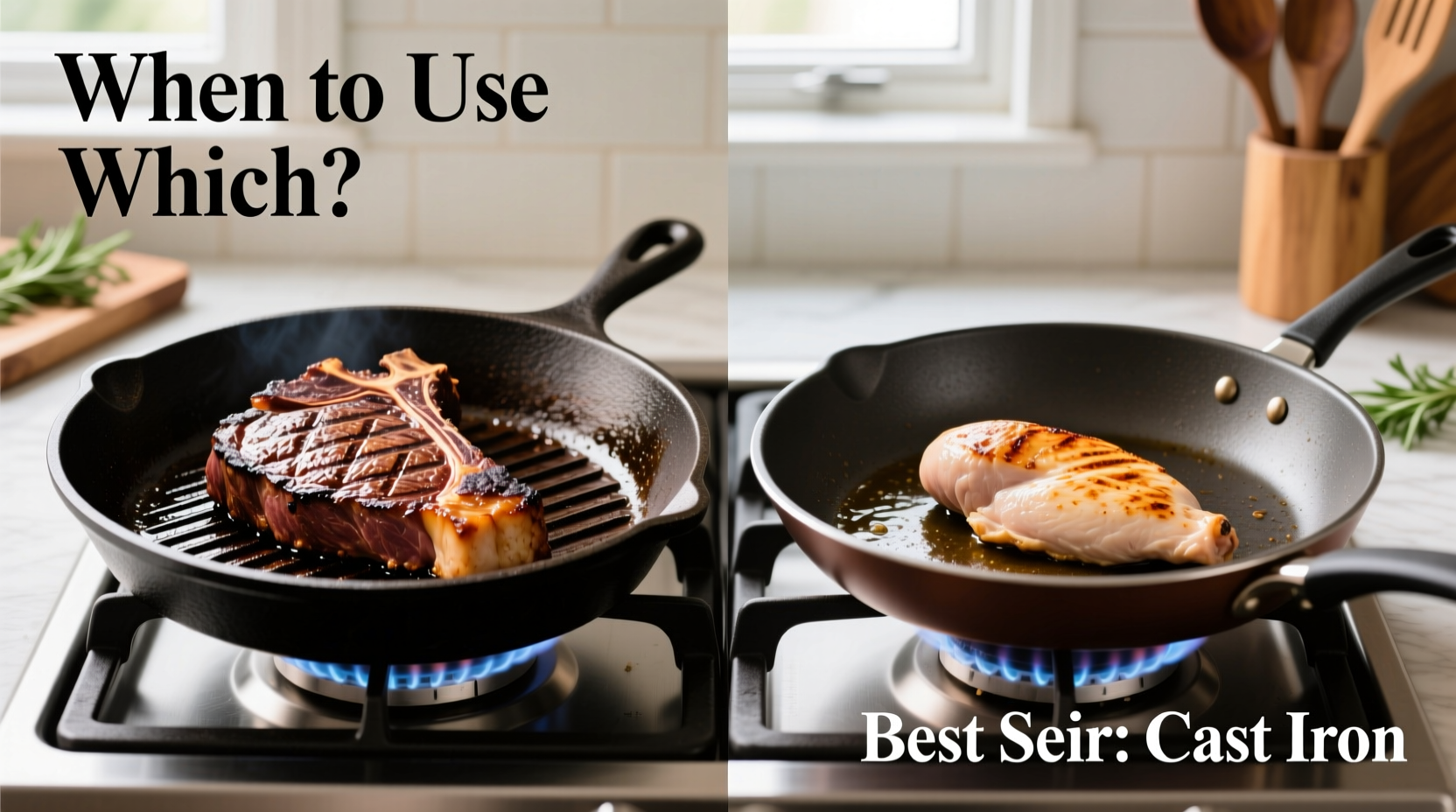
At the heart of the decision between cast iron and non-stick is thermal performance. Cast iron excels in heat retention and distribution. Once heated, it holds temperature exceptionally well, even when cold food is added. This stability allows for consistent browning without sudden drops in pan temperature.
Non-stick pans, typically made from aluminum with a PTFE (Teflon) or ceramic coating, conduct heat quickly but retain it poorly. They respond fast to burner adjustments, making them great for delicate tasks, but falter under high-heat demands. When a thick steak hits a non-stick surface, the pan cools rapidly, leading to steaming instead of searing.
“Searing is about energy transfer. If your pan can’t maintain 375°F+ on contact, you’re boiling, not browning.” — Chef Marcus Reed, Culinary Instructor at Pacific Coast Cooking School
Additionally, most non-stick coatings begin to degrade around 500°F. Some emit harmful fumes when overheated, making them unsafe for high-temp searing. Cast iron, by contrast, can safely exceed 600°F, making it ideal for stovetop-to-oven transitions and true restaurant-style sears.
When to Use a Cast Iron Skillet
Cast iron is the go-to choice for any application requiring sustained high heat. Its dense material absorbs and radiates heat evenly, creating an optimal environment for Maillard development. Here are the primary scenarios where cast iron outperforms:
- Seared steaks and chops: Thick cuts benefit from cast iron’s ability to recover heat after contact, ensuring even crust formation.
- Pan-roasted chicken: Skin-on thighs or breasts develop crisp, golden skin without sticking when properly preheated.
- Stovetop-to-oven dishes: Dishes like frittatas, skillet cornbread, or bone-in ribeyes transition seamlessly from burner to oven.
- Browning ground meat: Whether for chili or tacos, cast iron evaporates moisture quickly, promoting browning over steaming.
How to Maximize Sear Quality in Cast Iron
- Dry the protein thoroughly with paper towels—moisture is the enemy of browning.
- Preheat the skillet until a drop of water dances and evaporates instantly.
- Add a high-smoke-point oil (avocado, grapeseed, or refined peanut).
- Place food gently and avoid moving it for at least 2–3 minutes to allow crust formation.
- Flip only once; resist the urge to poke or press down, which releases juices.
When Non-Stick Pans Are the Better Choice
Despite its limitations for searing, non-stick has clear advantages in specific contexts. It shines when working with delicate foods that would otherwise stick to uncoated surfaces—even seasoned cast iron.
Fish fillets, especially flaky white varieties like sole or tilapia, often fall apart in traditional skillets. Eggs, pancakes, and crepes also require a truly non-reactive surface. In these cases, non-stick reduces friction and eliminates the need for excess fat, supporting lighter, healthier cooking.
| Cooking Task | Best Pan Type | Why |
|---|---|---|
| Searing a ribeye steak | Cast iron | High heat retention and superior browning capability |
| Cooking scrambled eggs | Non-stick | Prevents sticking and allows easy release without butter overload |
| Pan-frying salmon skin-on | Cast iron (skin-side first) | Delivers crisp skin if pan is hot and oil is sufficient |
| Reheating leftovers | Non-stick | Gentle heat prevents burning; no need for aggressive searing |
| Stir-frying vegetables | Cast iron or carbon steel | High heat needed for wok hei and char |
Note: Some modern non-stick pans are marketed as “oven-safe” or “high-heat compatible,” but few support temperatures above 450°F. Even then, repeated exposure degrades the coating over time. For true searing, they remain a poor substitute.
Real-World Example: Steak Night at Home
Consider two cooks preparing filet mignon for a dinner party. Both pat the steaks dry and season them with salt and pepper.
Cook A uses a well-seasoned 12-inch cast iron skillet. After preheating for six minutes on medium-high, they add avocado oil and place the steaks in the pan. An immediate sizzle confirms contact. After three minutes, a golden-brown crust forms. They flip once, finish in a 400°F oven for five minutes, and rest before serving. The result: deeply flavored, restaurant-quality sear.
Cook B reaches for a non-stick pan. Despite heating it, the surface doesn’t reach the same thermal threshold. When the steak hits the pan, there’s a weak sizzle followed by pooling liquid. The steak steams rather than sears. After flipping, the second side sticks slightly. The final product lacks crust and tastes flat.
This scenario illustrates that equipment choice directly impacts outcome—not due to skill, but physics. Cook B didn’t fail because of technique; they used the wrong tool for the job.
Maintenance and Longevity: A Hidden Factor
Lifespan and care habits also influence your choice. A well-maintained cast iron skillet can last generations. Seasoning—the polymerized layer of oil baked into the metal—builds over time, enhancing non-stick properties and rust resistance.
In contrast, non-stick pans degrade with use. Metal utensils, abrasive scrubbing, and high heat accelerate coating breakdown. Most manufacturers recommend replacing non-stick cookware every 3–5 years, or sooner if scratching appears.
“Think of cast iron as an investment. It gets better with age. Non-stick is more like disposable tech—convenient now, limited lifespan.” — Dana Liu, Cookware Materials Scientist
Proper cast iron care includes wiping clean (no soap recommended), drying thoroughly, and applying a thin oil coat after use. Non-stick should be washed gently with soft sponges and stored carefully to avoid scratches.
Checklist: Choosing the Right Pan for Searing
Use this checklist to decide which pan to grab when searing matters:
- ✅ Is the food thick, moist, or protein-rich? → Choose cast iron
- ✅ Do you plan to finish in the oven? → Choose cast iron
- ✅ Is the dish sensitive to sticking (e.g., eggs, fish)? → Choose non-stick
- ✅ Are you using high heat (above 400°F)? → Avoid standard non-stick
- ✅ Is the pan scratched or peeling? → Replace non-stick immediately
- ✅ Have you preheated the pan? → Essential for cast iron success
Frequently Asked Questions
Can I sear fish in a non-stick pan?
You can, but with caveats. Delicate fish like cod may stick less in non-stick, but you’ll sacrifice crust development. For better results, use a thin fillet in a very hot non-stick pan with minimal oil, and avoid moving it until release is natural. For thicker, skin-on fish like salmon, cast iron produces superior texture and flavor.
Is it safe to use non-stick pans on high heat?
No. Traditional PTFE-coated pans begin to break down at 500°F, releasing toxic fumes that can cause polymer fume fever in humans and are lethal to birds. Always use non-stick on low to medium heat. Ceramic-coated pans tolerate slightly higher temps but still fall short of cast iron’s limits.
Does seasoning eliminate the need for oil in cast iron?
Seasoning prevents rust and improves release, but it doesn’t make the pan completely non-stick. You still need oil when searing, especially with sticky proteins like chicken or fish. Think of seasoning as a foundation, not a replacement for proper technique.
Final Recommendations and Best Practices
The truth is, most kitchens benefit from owning both types of pans—but knowing when to use each is key. Reserve your non-stick for eggs, reheating, light sautéing, and delicate fish. Keep cast iron for anything involving high heat, browning, or oven finishing.
If space or budget forces a single choice, prioritize cast iron. Its versatility, durability, and unmatched searing performance make it the cornerstone of serious home cooking. With proper care, one skillet can handle 90% of high-heat tasks while lasting decades.
For those new to cast iron: don’t fear sticking. It’s usually due to insufficient preheating or wet food. Master the preheat-sizzle test, keep proteins dry, and let the crust form undisturbed. The payoff is richer flavor and professional results.
Tip: To test if your cast iron is hot enough, flick a few drops of water into the pan. If they bead up and dance (Leidenfrost effect), it’s ready. If they evaporate instantly, it might be too hot for oil—cool slightly.Conclusion: Match the Tool to the Task
The debate isn’t about which pan is “better” overall—it’s about suitability. A non-stick pan is invaluable for low-fat, low-friction cooking. But when it comes to searing, nothing beats the thermal mass and resilience of a well-used cast iron skillet.
Great cooking starts with understanding your tools. By aligning your pan choice with the science of heat, moisture, and surface interaction, you take control of outcomes. Next time you’re tempted to throw a steak into whatever’s clean, pause. Reach for cast iron. Let it heat. Trust the process. The aroma of a perfect sear will confirm you made the right call.
💬 What’s your go-to pan for searing? Share your experience, tips, or favorite recipe in the comments below—help fellow cooks make smarter choices in the kitchen.








