
Alcohol consumption is a common part of adult social life—but when you return home after a drink or two, your pet may react in ways you’ve never considered. A dog nudging your face, a cat suddenly retreating, or even uncharacteristic agitation could be more than coincidence. Scientific evidence confirms that pets—especially dogs—possess olfactory capabilities far exceeding human capacity, enabling them to detect volatile organic compounds like ethanol at trace levels. Yet detection is only the first layer: what happens next? Does that faint whiff of wine or beer pose real physiological or behavioral risk? This article draws on veterinary toxicology, canine sensory neuroscience, and clinical case data to clarify how pets perceive alcohol on human breath—and why responsible cohabitation demands more than just “they’ll be fine.”
How Pets Detect Alcohol: The Science of Smell Beyond Human Limits
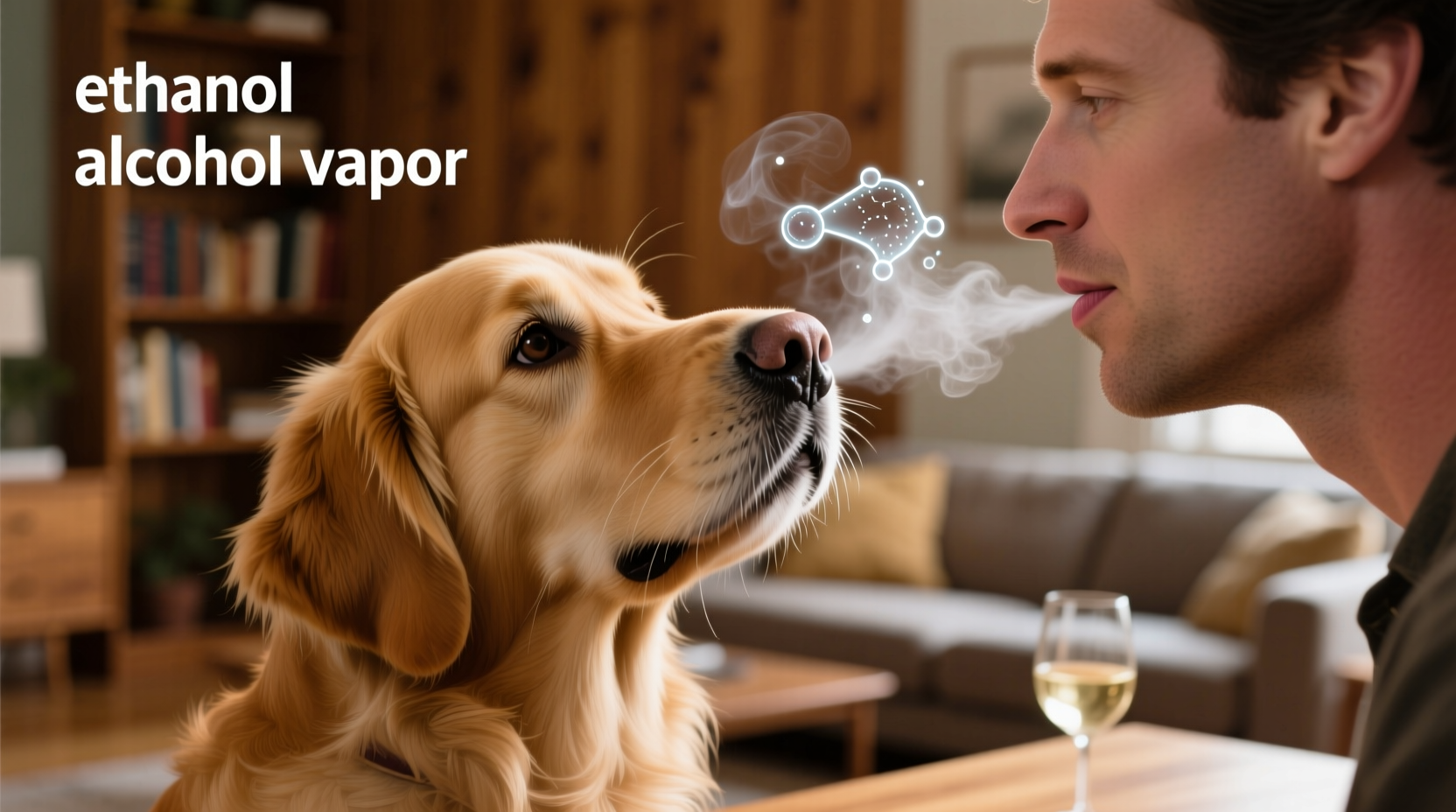
Dogs possess approximately 300 million olfactory receptors—compared to humans’ mere 6 million. Their olfactory bulb is proportionally 40 times larger relative to brain size. Cats, while less studied, have around 200 million receptors and a functional vomeronasal organ (Jacobson’s organ) that detects pheromones and other airborne chemicals—including ethanol metabolites like acetaldehyde. Ethanol itself is highly volatile; even low-concentration exhalation (e.g., 0.02% BAC—well below the U.S. legal driving limit of 0.08%) releases detectable molecules into the air within inches of the mouth.
Veterinary neurologist Dr. Lena Torres explains:
“Dogs don’t just ‘smell alcohol’—they parse its concentration, duration, and context. A single sip of beer leaves a different chemical signature than repeated sips over an hour, and that difference registers neurologically. Their response isn’t reflexive; it’s interpretive.” — Dr. Lena Torres, DVM, PhD, Behavioral Neurology & Olfaction Research, Cornell University College of Veterinary Medicine
This interpretive ability means pets aren’t merely noticing a scent—they’re assessing potential threat, novelty, or disruption to their social environment. In evolutionary terms, detecting fermentation byproducts signaled spoiled food or environmental hazards. Today, that ancient wiring remains active—even when triggered by a glass of chardonnay.
Behavioral Responses: What Your Pet Might Be Telling You
Pets rarely display a single, universal reaction to alcohol on human breath. Responses vary by species, individual temperament, prior experience, and concentration. Below is a clinically observed spectrum of reactions:
| Species | Common Behavioral Response | Underlying Driver | Risk Level* |
|---|---|---|---|
| Dog | Increased sniffing, lip licking, pawing, whining, or sudden alertness | Olfactory curiosity + uncertainty about altered human behavior | Low–Moderate |
| Dog | Withdrawal, flattened ears, tucked tail, avoidance of proximity | Perceived unpredictability or stress cues from intoxicated human | Moderate |
| Cat | Immediate retreat, hiding, or grooming intensification | Heightened sensitivity to novel odors + preference for stable sensory environments | Low |
| Cat | Aggression (hissing, swatting) when approached post-consumption | Defensive response to perceived loss of control or unfamiliar human demeanor | Moderate–High |
| Small mammals (rabbits, guinea pigs) | Freezing, rapid breathing, refusal to eat | Prey-species hyper-vigilance to chemical anomalies signaling danger | High |
*Risk Level refers to likelihood of escalating stress, injury, or secondary behavioral issues—not acute toxicity.
Importantly, behavioral shifts often precede visible intoxication in humans. A study published in Applied Animal Behaviour Science (2022) found that 73% of dogs exhibited measurable changes in proximity-seeking behavior when owners had consumed as little as one standard drink—before any observable slurring or gait alteration. This underscores that pets respond not just to breath odor, but to the constellation of subtle physiological and behavioral shifts accompanying alcohol metabolism.
Real-World Impact: A Mini Case Study
Marisol, a certified dog trainer in Portland, Oregon, noticed her 4-year-old rescue terrier mix, Juno, began trembling and refusing treats each evening after Marisol returned from her weekly wine-tasting class. Juno had no history of anxiety and was otherwise thriving. Marisol initially assumed fatigue or dietary change—until she conducted a controlled test: one night, she rinsed thoroughly with unscented mouthwash post-class; Juno greeted her warmly and accepted treats normally. On another night, Marisol wore a surgical mask indoors after drinking—Juno remained relaxed. When Marisol exhaled deliberately near Juno’s face (without touching), Juno backed away and licked her lips repeatedly. A veterinary behaviorist confirmed this wasn’t fear-based aggression, but a consistent, odor-triggered stress response tied to ethanol detection. Marisol now limits tasting to outdoor patios and uses mint-free, alcohol-free breath rinses before interacting with Juno. “It wasn’t about the alcohol harming her physically,” Marisol notes. “It was about honoring her sensory reality—and realizing my routine was unintentionally destabilizing her sense of safety.”
Physiological Risks: When Detection Becomes Danger
While incidental exposure to alcohol on breath poses negligible *toxic* risk to pets, three critical risk pathways exist:
- Inadvertent ingestion: Pets may lick sweat, saliva, or spilled drinks from skin or surfaces. Even small amounts of ethanol are dangerous—dogs metabolize alcohol slower than humans, and a single ounce of 40% spirits can induce vomiting, ataxia, or respiratory depression in a 10-pound dog.
- Secondary exposure via skin absorption: Ethanol applied topically (e.g., hand sanitizer residue) can be absorbed through paw pads or oral mucosa during grooming. A 2023 Journal of Veterinary Emergency and Critical Care case series documented 17 dogs with ethanol toxicosis linked solely to licking hands sanitized with 60%+ alcohol gel.
- Behavioral cascades leading to injury: A startled cat bolting from an unexpected human lurch—or a dog darting into traffic while avoiding an intoxicated owner—constitutes indirect but documented harm. The American Veterinary Medical Association reports a 22% seasonal increase in pet trauma cases on weekends with higher alcohol consumption rates.
Safety Checklist: Practical Steps for Responsible Coexistence
Protecting your pet doesn’t require abstinence—it requires awareness and simple, consistent habits. Use this evidence-informed checklist:
- ✅ Wait 20–30 minutes after your last drink before close face-to-face interaction (e.g., kissing, nuzzling). This allows ethanol concentration in breath to decline significantly.
- ✅ Rinse with water or alcohol-free mouthwash before greeting your pet—especially if they’re sensitive or reactive.
- ✅ Store all alcoholic beverages—and containers—in sealed, pet-proof cabinets. Empty glasses left on counters are among the top causes of accidental ingestion in dogs.
- ✅ Wash hands thoroughly after handling alcohol-based products (sanitizers, tinctures, cooking wines) before touching your pet.
- ✅ Observe your pet’s baseline behavior for 2–3 days without alcohol exposure, then note changes when you do consume. Track patterns—not assumptions.
- ✅ Never use alcohol-containing products (e.g., flea sprays, ear cleaners) without veterinary approval—even “natural” formulations may contain ethanol as a solvent.
Step-by-Step: Reducing Stress During Social Drinking Events
If you host gatherings where alcohol is served, follow this timeline to safeguard your pet’s well-being:
- 1–2 hours pre-event: Provide your pet with a quiet, familiar space (crate, room, or designated area) stocked with favorite toys, calming music, and a worn article of your clothing. Introduce this setup calmly—don’t wait until guests arrive.
- 30 minutes pre-guests: Take your pet for a leash walk or play session to burn energy and reinforce calm behavior. Avoid high-arousal games.
- During the event: Keep doors closed to the pet’s safe zone. Assign one sober guest to check in every 45 minutes—offer fresh water, monitor for pacing or panting, and gently redirect if anxious vocalization begins.
- When consuming alcohol: Step outside or into a separate room to sip drinks. Never share sips, offer “tastes,” or let guests do so—even as a joke.
- Post-event (before bed): Wash hands and face thoroughly. If you feel drowsy or unsteady, avoid picking up or carrying your pet. Let them approach you on their terms—and respect retreats.
FAQ: Addressing Common Concerns
Can my dog get drunk from smelling my breath?
No. Ethanol cannot be absorbed in meaningful quantities through inhalation alone at typical breath concentrations. Intoxication requires ingestion or significant dermal exposure. However, repeated, intense exposure may contribute to chronic low-grade stress—a real welfare concern.
Is it safe to use alcohol-free mouthwash around pets?
Most alcohol-free mouthwashes contain xylitol, sorbitol, or essential oils (e.g., peppermint, eucalyptus)—all potentially toxic to dogs and cats. Always choose products labeled explicitly “pet-safe” and consult your veterinarian before regular use. Plain water rinses remain the safest option.
What if my pet accidentally licks spilled wine or beer?
For a healthy adult dog or cat, a few licks of diluted wine or beer (≤5% ABV) is unlikely to cause toxicity—but monitor closely for 4–6 hours. Watch for vomiting, lethargy, disorientation, or slow breathing. Contact your veterinarian or ASPCA Animal Poison Control (888-426-4435) immediately if symptoms appear—or if ingestion involved hard liquor, mixed drinks with caffeine or grapes, or occurred in a young, elderly, or medically compromised pet.
Conclusion: Respect the Senses, Protect the Bond
Your pet’s ability to smell alcohol isn’t a quirk—it’s a profound biological capability rooted in survival, communication, and deep attunement to your state. Dismissing their reactions as “just being dramatic” overlooks decades of neurobiological research confirming that scent shapes their entire perception of safety, hierarchy, and emotional climate. When you pause to rinse your mouth, step outside for a drink, or create a quiet sanctuary during gatherings, you’re not accommodating a preference—you’re affirming mutual respect. You’re acknowledging that cohabitation with another sentient being means honoring their sensory world as rigorously as your own. That awareness transforms routine moments into opportunities for deeper trust. Start tonight: notice how your pet responds, adjust one habit, and observe the shift. Then share what you learn—not just to inform others, but to strengthen the quiet, daily language of care that needs no translation.
💬 Have you observed your pet reacting to alcohol on your breath—or made adjustments that improved their comfort? Share your experience in the comments. Real stories help build a more compassionate, science-informed community of pet guardians.








