After a rainy walk through the park or a post-storm romp across the backyard, your dog’s paws often bear the full brunt of mud, salt, pollen, grass clippings, and unseen environmental contaminants. It’s natural to reach for a convenient wipe—especially one labeled “pet-safe” and “alcohol-based”—to quickly clean them before they track grime into the house or lick their feet raw. But convenience doesn’t equal safety—or efficacy. In fact, using even “pet-safe” alcohol wipes on muddy paws is medically inadvisable, potentially harmful, and fundamentally misaligned with veterinary dermatology best practices. This article unpacks the science behind paw skin physiology, explains why alcohol—even at low concentrations—disrupts canine epidermal integrity, and delivers actionable, vet-vetted alternatives that truly support paw health without compromising safety.
Why Alcohol Wipes Fail (and Harm) Canine Paw Skin
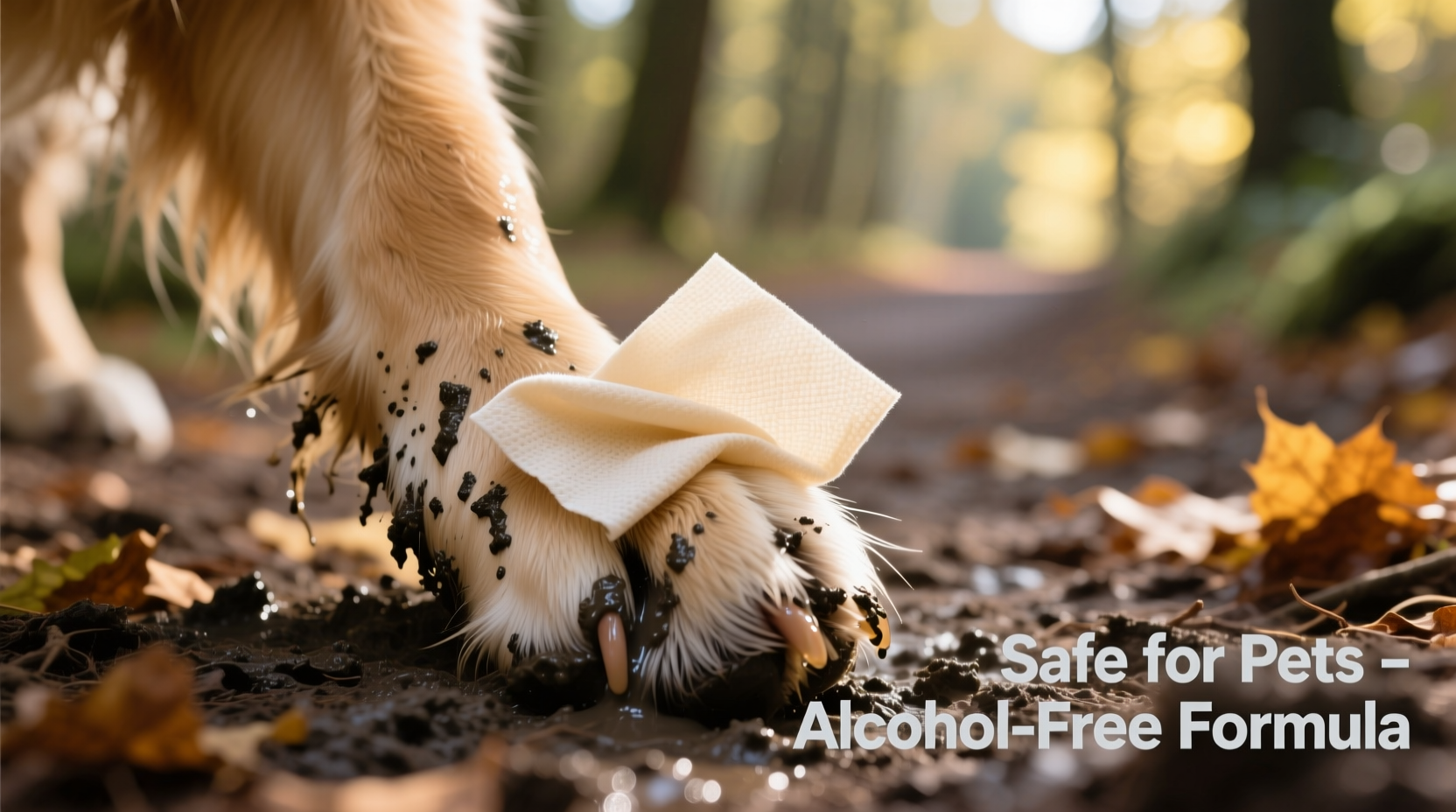
Dog paws are structurally unlike human hands. They lack sebaceous glands, rely heavily on a thin but vital stratum corneum barrier, and host a dense, species-specific microbiome critical for immune regulation and wound defense. Alcohol—whether ethanol or isopropanol—functions as a rapid desiccant and protein denaturant. Even at 30–40% concentrations (common in “pet-safe” formulations), it strips away intercellular lipids, compromises tight junctions between keratinocytes, and triggers transepidermal water loss. A 2022 study published in Veterinary Dermatology found that repeated topical alcohol exposure reduced paw pad moisture retention by 67% within 48 hours and increased transdermal allergen penetration by over 3.5× compared to untreated controls.
Mud isn’t just dirt—it’s a complex matrix: clay particles embed in microfissures, organic matter ferments on warm skin, and de-icing salts corrode keratin. Alcohol wipes don’t lift or emulsify this debris; they dry the surface, cementing grit deeper into cracks and accelerating microabrasions. Worse, many “pet-safe” wipes contain additional irritants like fragrances, preservatives (e.g., methylisothiazolinone), or quaternary ammonium compounds—all flagged by the American College of Veterinary Dermatology (ACVD) as high-risk for contact sensitization in dogs with recurrent pododermatitis.
Tip: Never use any wipe containing >5% alcohol on paws—regardless of marketing claims. If the ingredient list includes “ethanol,” “isopropyl alcohol,” or “SD alcohol,” set it aside. True paw safety starts with hydration, not disinfection.What Veterinarians Actually Recommend for Post-Walk Paw Care
Veterinary dermatologists emphasize a triage-based approach: assess first, cleanse second, protect third. The goal isn’t sterility—it’s mechanical removal of irritants while preserving barrier function. Dr. Lena Torres, DVM, DACVD, explains: “We don’t prescribe ‘disinfection’ for routine mud removal. That’s a human hygiene reflex misapplied to canine anatomy. Dogs don’t need antiseptic paws—they need resilient, hydrated, microbiome-intact pads.”
“Alcohol wipes create a false sense of cleanliness while undermining the very barrier that prevents infection, allergy, and chronic inflammation. If you wouldn’t put rubbing alcohol on a baby’s diaper rash, don’t use it on your dog’s paws.” — Dr. Lena Torres, Board-Certified Veterinary Dermatologist
Effective post-walk care prioritizes gentle physical removal followed by targeted moisturization—not antimicrobial action. This aligns with the ACVD’s 2023 Clinical Guidelines for Canine Pododermatitis Prevention, which explicitly state: “Routine use of alcohol-based or chlorhexidine-containing wipes for non-infected paws lacks evidence and carries documented risks of barrier disruption and sensitization.”
A Step-by-Step, Vet-Approved Paw Cleaning Protocol
Follow this sequence every time your dog returns from a muddy or chemically treated environment (e.g., sidewalks with ice melt):
- Pre-wipe assessment: Check between toes, under nail folds, and around dewclaws for embedded thorns, foxtails, or dried salt crystals. Use blunt-tipped tweezers if needed—but never force removal.
- Rinse with lukewarm water: Hold each paw under a gentle stream for 15–20 seconds. Water alone removes ~85% of loose mud, salts, and pollen without disrupting pH or microbiota.
- Soft-bristle brush (optional): For stubborn caked-on mud, use a dedicated, soft-bristled toothbrush dipped only in water. Brush *away* from the nail bed—not toward it—to avoid driving debris deeper.
- Pat—don’t rub—dry: Use a clean, absorbent cotton towel. Rubbing creates friction-induced microtears, especially on already softened or cracked pads.
- Targeted moisturization (if needed): Apply a pea-sized amount of veterinary-formulated balm (e.g., those containing ceramides, panthenol, or colloidal oatmeal) *only* to visibly dry, cracked, or flaking areas—not healthy, plump pads.
This protocol takes under 90 seconds and avoids all known irritants. Crucially, it respects the paw’s natural defense systems rather than overriding them with chemical intervention.
Safe, Effective Alternatives to Alcohol Wipes: A Comparison
Not all wipes are created equal—and not all “alcohol-free” options are appropriate either. Below is a vet-reviewed comparison of common alternatives, ranked by safety profile, efficacy for mud removal, and impact on paw health:
| Product Type | Key Ingredients | Effective for Mud Removal? | Risk of Barrier Disruption | Vet Recommendation Status |
|---|---|---|---|---|
| Water-only rinse + microfiber towel | Pure H₂O | ✓✓✓ (High—mechanical action) | None | Strongly recommended |
| Hypoallergenic, pH-balanced wipes (alcohol-free) | Chamomile, aloe, glycerin, mild surfactants | ✓✓ (Moderate—requires wiping pressure) | Low (if fragrance- and preservative-free) | Conditionally acceptable for occasional use |
| Coconut oil–based balms (used *after* rinsing) | Organic coconut oil, beeswax, vitamin E | ✗ (Not for cleaning—only for protection) | Low (but avoid if yeast-prone) | Recommended for dry/cracked pads only |
| “Pet-safe” alcohol wipes (30–70% ethanol/isopropanol) | Alcohol, fragrance, preservatives | ✗ (Dries surface, binds grit) | High (proven barrier damage) | Not recommended—avoid |
| Baby wipes (even unscented) | Phenoxyethanol, sodium benzoate, PEG compounds | ✗ (Inadequate for mud; occlusive residue) | Moderate-High (known sensitizers) | Discouraged |
Note: “Effectiveness” here refers specifically to safe, complete removal of environmental contaminants—not antimicrobial activity. Sterilization is unnecessary and counterproductive for routine outdoor exposure.
Real-World Case Study: When Convenience Led to Chronic Pain
Meet Maya, a 4-year-old Labrador mix in Portland, Oregon. During winter months, her owner used “veterinarian-approved” alcohol wipes (labeled 40% ethanol, “safe for daily use”) to clean paws after walks on salted sidewalks. Within six weeks, Maya began licking her front paws obsessively, especially at night. Her primary vet diagnosed bilateral interdigital pododermatitis—red, swollen, oozing fissures between her toes. Culture revealed no bacterial or fungal infection, but histopathology showed severe epidermal necrosis and lymphocytic infiltration consistent with contact irritant dermatitis.
The treatment plan? Immediate discontinuation of all wipes, twice-daily lukewarm Epsom salt soaks (to draw out residual salts and reduce inflammation), and application of a ceramide-repair balm. After eight weeks of strict adherence, Maya’s lesions resolved—but her paw pads remained hyperpigmented and prone to seasonal cracking for over a year. Her dermatologist noted: “This wasn’t an allergic reaction. It was iatrogenic damage—caused entirely by repeated, inappropriate use of a product marketed as safe.” Today, Maya’s routine is simple: 20-second water rinse, pat dry, and targeted balm only on days when temperatures drop below freezing.
FAQ: Addressing Common Concerns
Can I use hand sanitizer on my dog’s paws if I run out of wipes?
No—absolutely not. Hand sanitizers typically contain 60–95% alcohol, plus gelling agents and bitterants (like denatonium benzoate) that cause intense oral aversion and gastrointestinal distress if licked. Even a single accidental ingestion can lead to ethanol toxicosis—symptoms include lethargy, vomiting, ataxia, and respiratory depression. Keep all hand sanitizers securely stored away from pets.
My dog hates having paws rinsed. Are there safer wipe alternatives I can try?
Yes—but prioritize acceptance training over compromise. Start with 5-second water exposure on one toe, paired with high-value treats. Gradually increase duration and coverage over 10–14 days. If wipes are unavoidable during travel, choose only those certified by the National Animal Supplement Council (NASC) with zero alcohol, zero fragrance, and a pH of 5.5–6.5 (matching canine skin). Always test on a small area first and monitor for 48 hours.
Do I need to clean paws after every walk—even on dry pavement?
Not necessarily. Assess based on risk: clean after walks on salted roads, near construction sites, in high-pollen seasons, or following rain (when pollutants concentrate in runoff). On dry, clean sidewalks in residential neighborhoods, a quick visual inspection and optional towel wipe suffice. Over-cleaning dries pads unnecessarily—just as under-cleaning invites irritation.
Building a Sustainable, Science-Backed Paw Care Habit
Paw health isn’t about perfection—it’s about consistency grounded in biology, not branding. Every time you reach for a wipe, ask two questions: “Does this remove the threat?” and “Does this support the barrier?” Alcohol fails both tests. Water passes both—with zero cost, zero risk, and maximal efficacy. Integrating the step-by-step protocol into your post-walk routine takes less time than scrolling social media. Keep a dedicated microfiber towel by the door. Store a small bottle of pH-balanced balm in your coat pocket for winter walks. Teach children to help rinse paws—it becomes a bonding ritual, not a chore.
Remember: Your dog’s paws carry them through every adventure, every recovery, every quiet moment of rest. They deserve care rooted in evidence—not convenience, not marketing, and certainly not compromise. When you choose water over alcohol, observation over assumption, and patience over speed, you’re not just cleaning paws—you’re honoring the intricate, resilient biology that lets your dog run, explore, and thrive.
💬 Your experience matters. Have you switched from alcohol wipes to water-based care? Did you notice improvements in your dog’s comfort or skin health? Share your story in the comments—your insight could help another pet parent make a safer, smarter choice today.








