
Dogs don’t just notice the scent of spilled wine or a forgotten beer bottle—they detect alcohol vapors at concentrations humans cannot begin to perceive. This isn’t anecdotal curiosity; it’s rooted in biology, training science, and veterinary medicine. With 220–300 million olfactory receptors (compared to our mere 5–6 million), dogs process scent information with unmatched precision. Alcohol—whether ethanol in beverages, isopropyl in hand sanitizers, or methanol in antifreeze—is not only perceptible to them but often *highly aversive*, *confusing*, or even *toxic* when encountered. For pet owners, understanding this ability isn’t about fascination—it’s about safety, prevention, and responsible cohabitation.
How a dog’s nose detects alcohol: beyond human limits
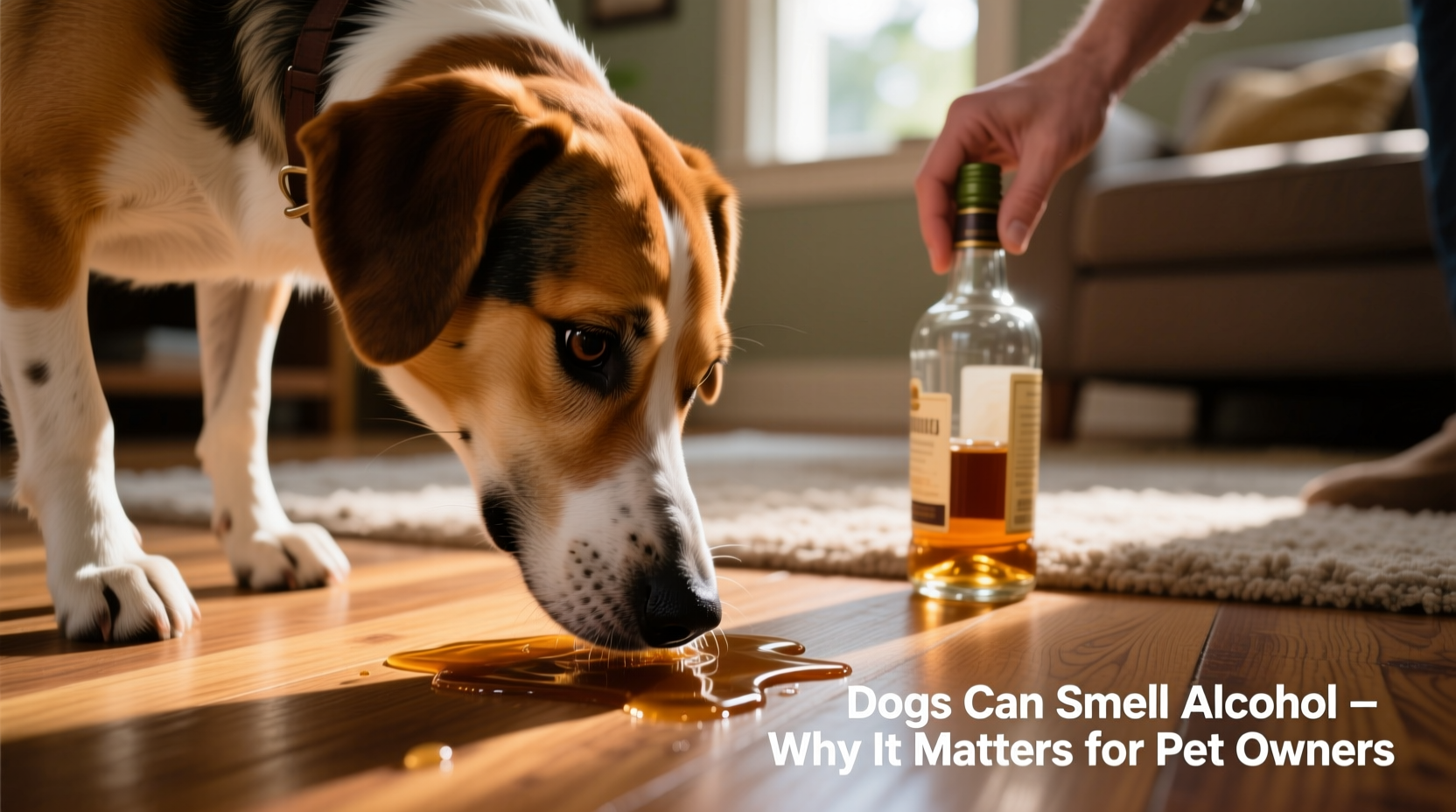
A dog’s olfactory system operates on a different scale entirely. Their nasal cavity contains turbinate bones layered with scent-detecting epithelium, and each sniff draws air into two parallel pathways: one for respiration, the other dedicated solely to odor analysis. When ethanol molecules volatilize—evaporating from liquid into airborne particles—they bind to specific receptor sites in the dog’s olfactory bulb. Studies using electro-olfactogram (EOG) recordings confirm dogs respond to ethanol at concentrations as low as 100 parts per trillion—equivalent to detecting a single drop of alcohol diluted across two Olympic-sized swimming pools.
This sensitivity extends across alcohol types:
- Ethanol (in beer, wine, spirits): Most commonly detected due to its high volatility and prevalence in households.
- Isopropyl alcohol (in rubbing alcohol, disinfectant wipes): Stronger odor profile; often triggers avoidance behaviors more intensely than ethanol.
- Methanol and ethylene glycol (in antifreeze, screen wash, some solvents): Extremely toxic—even minute exposure can cause rapid kidney failure. Dogs may detect these before humans smell anything, sometimes nudging or pawing at containers out of instinctive alarm.
Crucially, dogs don’t “smell alcohol” as an abstract concept. They perceive it as part of a complex odor signature: the sweetness of fermented fruit in wine, the sharpness of grain alcohol in vodka, or the chemical tang mixed with coolant in antifreeze. Their brain cross-references scent with memory, context, and prior experience—making detection both precise and behaviorally meaningful.
Why it matters: 4 real-world risks every owner should know
Knowing dogs can smell alcohol is only useful if paired with awareness of what that means in daily life. These aren’t hypothetical concerns—they’re documented causes of emergency vet visits and preventable tragedies.
Tip: Never assume your dog won’t investigate an open drink—even if they’ve never shown interest before. A change in routine, stress, boredom, or illness can lower inhibitions and increase exploratory behavior.Risk 1: Ingestion of alcoholic beverages
Even small amounts of ethanol are dangerous for dogs. A 10 kg (22 lb) dog consuming just 100 mL of 5% beer can develop clinical signs of toxicity: vomiting, ataxia (wobbliness), lethargy, hypothermia, and respiratory depression. At higher doses, seizures, coma, and death follow. Dogs don’t metabolize alcohol efficiently—their liver lacks sufficient alcohol dehydrogenase—and blood alcohol levels rise faster and stay elevated longer than in humans.
Risk 2: Exposure to household disinfectants
The surge in alcohol-based hand sanitizers post-2020 led to a 41% year-over-year increase in canine isopropyl alcohol poisoning cases reported to the ASPCA Animal Poison Control Center. Unlike ethanol, isopropyl alcohol is rapidly absorbed through skin and mucous membranes. A curious lick from a recently sanitized hand—or chewing a dropped bottle—can cause disorientation, drooling, low blood pressure, and metabolic acidosis within minutes.
Risk 3: Antifreeze ingestion — silent and deadly
Ethylene glycol has a sweet taste and strong odor dogs detect easily. Tragically, that sweetness makes it attractive—not deterrent. As little as 1.4 mL/kg (about one teaspoon for a medium dog) can be fatal. Symptoms appear in stages: initial drunkenness-like behavior (within 30 minutes), then apparent recovery (2–12 hours), followed by acute kidney failure (24–72 hours). By the time vomiting or lethargy appears, irreversible damage is often underway.
Risk 4: Behavioral confusion and stress responses
Alcohol vapors can trigger unexpected reactions—not just in intoxicated dogs, but in sober ones exposed to ambient odors. A study published in Applied Animal Behaviour Science observed that dogs housed near home bars or breweries showed elevated cortisol levels and increased pacing when ethanol concentrations exceeded 0.5 ppm in indoor air. For anxious or noise-sensitive dogs, the combination of unfamiliar scents and associated human activity (loud voices, sudden movements, spilled liquids) compounds stress—potentially worsening separation anxiety or triggering aggression.
What research says: evidence from labs, K9 units, and clinics
Scientific validation comes from multiple domains. In controlled trials at the University of Pennsylvania’s Working Dog Center, detector dogs identified ethanol-spiked water samples at 0.0000001% concentration—outperforming gas chromatography-mass spectrometry in speed and field adaptability. Meanwhile, veterinary toxicologists consistently report patterns: over 68% of alcohol-related ER cases involve dogs accessing unattended drinks at parties; 22% stem from spilled hand sanitizer on floors or furniture; and 9% trace back to garage or driveway exposure to automotive fluids.
“Dogs don’t need to taste alcohol to suffer consequences. Inhalation alone can depress their central nervous system—especially in brachycephalic breeds like Bulldogs or Pugs, whose compromised airways concentrate volatile compounds.”
— Dr. Lena Torres, DVM, DACVECC, Veterinary Critical Care Specialist, UC Davis School of Veterinary Medicine
K9 units further reinforce this reality. Customs agencies worldwide deploy dogs trained to detect alcohol in sealed containers—not because alcohol is contraband, but because its presence signals possible smuggling of narcotics hidden in liquid matrices. These dogs achieve >99.3% accuracy in double-blind field tests, proving alcohol’s olfactory footprint is both distinct and reliably discriminable—even amid complex scent backgrounds like luggage, cargo, or vehicle interiors.
Practical prevention checklist: safeguard your home today
Prevention doesn’t require radical lifestyle changes—just consistent, intentional habits. Use this actionable checklist to close common vulnerability gaps:
- ✅ Store all alcoholic beverages in closed cabinets—not on countertops, bars, or coffee tables.
- ✅ Wipe down surfaces immediately after using hand sanitizer or cleaning products containing alcohol.
- ✅ Keep automotive fluids in sealed, labeled containers stored in locked sheds or high shelves—never on garage floors.
- ✅ Supervise dogs closely during parties, holidays, or gatherings where drinks circulate freely.
- ✅ Choose pet-safe antifreeze formulas containing propylene glycol instead of ethylene glycol (check labels carefully—many “low-toxicity” brands still contain harmful variants).
- ✅ Install motion-sensor trash cans with secure lids—alcohol-soaked napkins, fruit peels from sangria, or discarded cocktail garnishes pose secondary ingestion risks.
Mini case study: The spilled margarita incident
In Austin, Texas, a 3-year-old Labrador named Rio was left alone for 12 minutes while his owner ran to the mailbox. During that time, a neighbor’s child accidentally knocked over a glass of margarita left on the patio table. Rio—who had never shown interest in human drinks—approached the spill, licked the salt-rimmed puddle, and consumed approximately 60 mL of tequila-lime mixture. Within 18 minutes, he began stumbling, panting heavily, and collapsing after brief attempts to stand. His owner rushed him to the nearest emergency clinic, where bloodwork confirmed a blood alcohol concentration (BAC) of 0.21%—nearly three times the legal human limit. Rio received IV fluids, temperature support, and close monitoring for 14 hours. He recovered fully—but the episode cost $2,140 in care and served as a stark reminder: accessibility, not intention, determines risk.
Afterward, the family implemented three changes: a designated “pet-safe zone” indoors during gatherings (with baby gates), outdoor drink stations placed away from patios where dogs rest, and a “no unattended liquids” rule enforced by all household members—including teens and guests.
Alcohol exposure: what to do (and what not to do) — step-by-step
If you suspect your dog has ingested or been significantly exposed to alcohol, act deliberately—not frantically. Follow this clinically validated sequence:
- Remove immediate access: Gently but firmly separate your dog from the source. Do not chase or shout—this can elevate heart rate and accelerate absorption.
- Assess exposure route: Was it ingestion? Skin contact? Inhalation? Note approximate volume, concentration (e.g., “half a shot of whiskey,” “licked entire palm of hand sanitizer”), and time elapsed.
- Do NOT induce vomiting: Unlike many toxins, alcohol is rapidly absorbed. Vomiting delays treatment and increases aspiration risk—especially if your dog is already sedated or uncoordinated.
- Contact your veterinarian or poison control immediately: Provide exact details. The ASPCA Animal Poison Control Center (888-426-4435) offers 24/7 guidance and can advise whether urgent care is needed.
- Monitor vital signs en route to clinic: Watch for slow breathing (<10 breaths/min), pale gums, rectal temperature below 97°F (36.1°C), or inability to stand. Keep your dog warm and quiet.
At the clinic, treatment focuses on supportive care: IV fluids to promote excretion, thermoregulation, oxygen supplementation if needed, and medications to manage symptoms like nausea or seizures. Prognosis is excellent with early intervention—most dogs recover fully within 24–48 hours.
FAQ: quick answers to urgent questions
Can dogs smell alcohol on a person’s breath—and does it affect their behavior?
Yes—dogs readily detect ethanol on human breath, especially after recent consumption. While most dogs don’t react overtly, some may become unusually alert, nudge the person’s face, whine, or display heightened vigilance. This isn’t “judgment”—it’s neurological processing of a potent, biologically relevant odor cue. In service or therapy dogs, handlers are advised to avoid alcohol before sessions to prevent unintended behavioral shifts.
Is rubbing alcohol safe to use on my dog’s paws after walks?
No. Isopropyl alcohol is irritating to skin and highly toxic if licked. Even small amounts absorbed through paw pads or ingested during grooming can cause vomiting, disorientation, or metabolic disturbances. Use pet-safe wipes or plain water instead. If you suspect exposure, rinse thoroughly with lukewarm water and contact your vet.
My dog drank a little wine—should I wait to see if symptoms appear?
No. Ethanol toxicity progresses unpredictably. There is no “safe” amount. Contact your veterinarian or poison control immediately—even if your dog seems fine. Early decontamination and supportive care drastically improve outcomes.
Conclusion: knowledge is the first layer of protection
Understanding that dogs smell alcohol isn’t about marveling at their biology—it’s about honoring the responsibility that comes with sharing space with a creature whose senses operate on a plane we can’t perceive. Every open bottle, every dropped wipe, every garage spill represents a potential crisis point—not because dogs are reckless, but because their world is saturated with chemical signals we ignore. You don’t need to eliminate alcohol from your life to keep your dog safe. You need consistency: secure storage, mindful habits, and readiness to act. Start tonight. Move that half-finished glass to the cabinet. Check the antifreeze label in your shed. Wipe the counter after sanitizing your hands. These aren’t chores—they’re quiet acts of stewardship. Your dog’s health, comfort, and longevity depend on the choices you make when no one’s watching. And that, ultimately, is what defines compassionate, informed ownership.
💬 Have you experienced an alcohol-related scare with your dog? Share your story and prevention tip in the comments—your insight could help another owner avoid panic, expense, or heartbreak.








