Dogs don’t just notice alcohol—they perceive it with a precision humans cannot fathom. Their olfactory system is not merely “better” than ours; it’s functionally alien in scale and resolution. When someone sips wine, spills vodka, or even uses an alcohol-based hand sanitizer, a dog doesn’t register “a faint odor.” It registers molecular signatures—ethanol concentration gradients, fermentation byproducts like acetaldehyde, and volatile organic compounds unique to specific beverages—all layered with contextual cues like stress hormones or changes in gait. This isn’t anecdotal curiosity. It’s neurobiological fact, validated across veterinary behavior studies, detection-dog training programs, and emergency response protocols. Understanding how and why dogs respond to alcohol isn’t just about satisfying scientific interest—it informs responsible pet ownership, supports addiction recovery environments, and shapes humane approaches to canine welfare in homes, shelters, and clinical settings.
The Science of Canine Olfaction: Why Alcohol Is Impossible to Hide
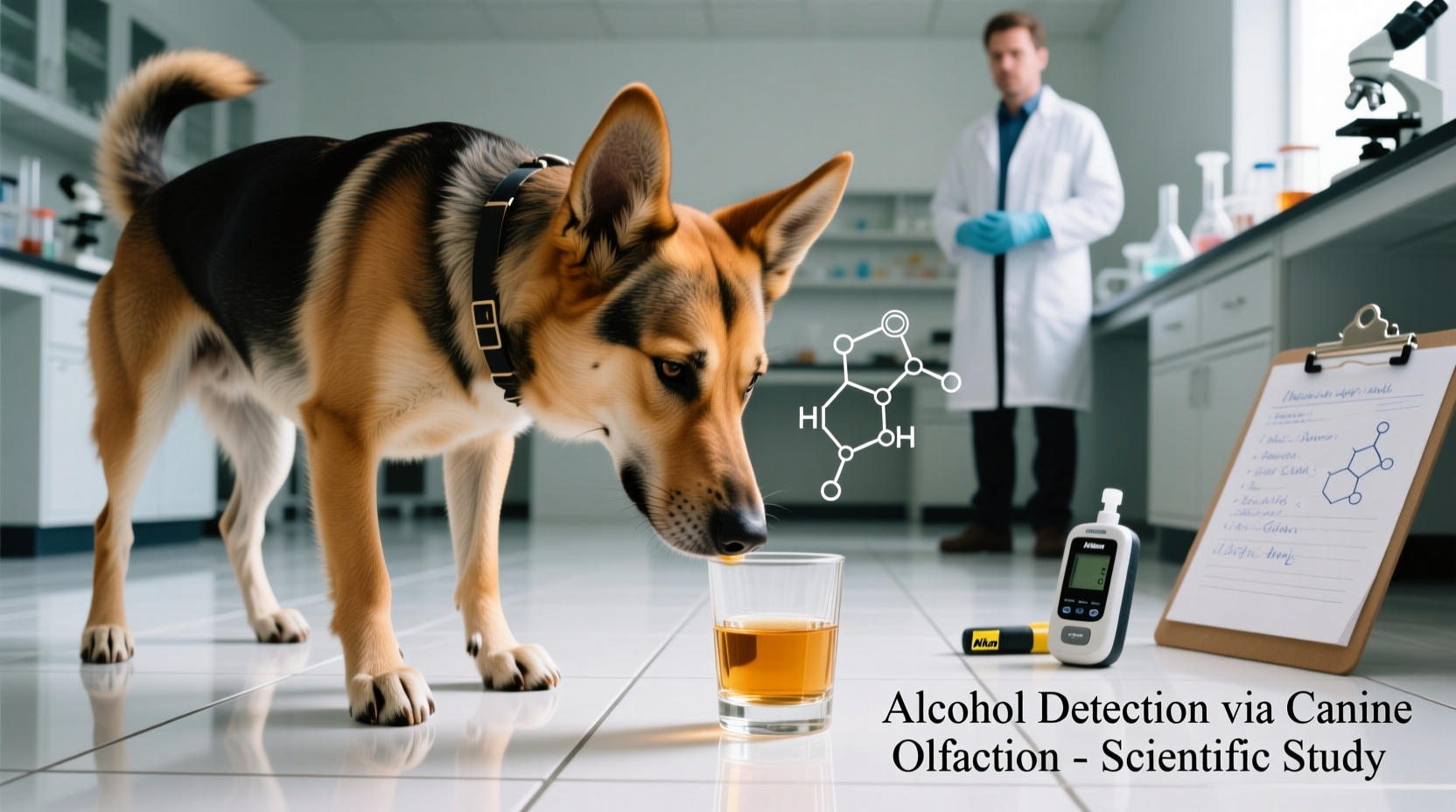
A human nose contains roughly 6 million olfactory receptors. The average dog has between 220 million and 300 million—some breeds, like Bloodhounds, exceed 300 million. More critically, the canine olfactory bulb (the brain region processing scent) is proportionally 40 times larger than a human’s relative to total brain size. This neural architecture enables dogs to detect certain volatile organic compounds at concentrations as low as one part per trillion—equivalent to identifying a single drop of liquid in 20 Olympic-sized swimming pools.
Alcohol—specifically ethanol—is highly volatile and readily evaporates into airborne molecules. Dogs detect not only pure ethanol but also its metabolic derivatives: acetaldehyde (produced during alcohol breakdown), esters formed during fermentation (e.g., isoamyl acetate in beer), and fusel oils in distilled spirits. These compounds create distinct “scent profiles” that trained dogs differentiate with over 95% accuracy in controlled trials. A 2021 study published in Frontiers in Veterinary Science demonstrated that untrained pet dogs spent 3.7 times longer investigating cloth samples soaked in 5% ethanol solution versus water controls—even when masked with coffee or citrus odors.
This sensitivity isn’t abstract. It translates directly to real-world detection: breath alcohol levels as low as 0.02% BAC (well below the U.S. legal driving limit of 0.08%) produce measurable exhalation of ethanol vapor—and dogs consistently orient toward, sniff, and alert to individuals at this threshold.
How Dogs Typically React to Alcohol Odors
Dogs don’t have a universal “alcohol response.” Their reaction depends on genetics, training history, prior associations, and immediate context—but patterns emerge reliably:
- Investigative behavior: Prolonged, focused sniffing—especially around breath, hands, clothing seams, or spilled liquids—often accompanied by head tilting and ear pricking.
- Alert posturing: Stiffening of the body, raised hackles, intense eye contact, and cessation of ambient activity (e.g., stopping mid-play).
- Behavioral shifts: Increased whining, pacing, or clinginess in anxious or bonded dogs—particularly if alcohol exposure coincides with owner intoxication and subsequent unpredictability.
- Aversion or avoidance: Turning away, lip licking, yawning, or retreating—especially in dogs with negative past experiences (e.g., being startled or reprimanded while owner was intoxicated).
- Excitement or fixation: Some dogs, particularly those with strong food-motivation or prior positive reinforcement (e.g., receiving treats near open wine bottles), may approach eagerly—mistaking fermented scents for edible substances.
Crucially, dogs rarely react solely to ethanol. They simultaneously process co-occurring cues: elevated cortisol (stress hormone) in sweat, altered gait, slurred speech patterns, or even subtle shifts in body temperature. Their assessment is holistic—not chemical, but contextual.
Tip: If your dog suddenly fixates on your breath or hands after you’ve consumed alcohol, don’t assume it’s “just curious.” Observe their full body language—tail position, ear carriage, and muscle tension—to determine whether they’re alerting, anxious, or seeking reassurance.Real-World Implications: From Detection Work to Household Safety
In professional settings, dogs leverage this ability with life-saving precision. Alcohol detection dogs are deployed in correctional facilities to intercept contraband liquor, in addiction treatment centers to support accountability, and increasingly in schools and youth programs to identify underage drinking. Their reliability stems from rigorous training protocols that teach discrimination between ethanol and thousands of distractor scents—including mouthwash, vanilla extract, and ripe fruit.
But the most consequential applications occur in everyday life. Consider this scenario:
Mini Case Study: Maya and Luna
Maya, a 34-year-old teacher recovering from alcohol use disorder, adopted Luna, a rescue Labrador mix, six months into sobriety. During early recovery, Maya occasionally experienced cravings triggered by environmental cues—like the smell of her partner’s whiskey glass. One evening, after her partner left a half-finished tumbler on the counter, Luna repeatedly nudged it with her nose, then sat rigidly beside Maya, making sustained eye contact and gently pawing her knee. Maya recognized this as Luna’s “alert” behavior—previously trained during shelter enrichment sessions. She later learned Luna had been exposed to scent-discrimination exercises involving ethanol vials. That night, Luna’s behavior prompted Maya to call her sponsor instead of reaching for her old coping mechanisms. Over time, Luna began alerting *before* Maya felt the craving intensify—suggesting she detected subtle physiological shifts, not just residual odor.
This isn’t isolated. Therapists specializing in animal-assisted recovery report similar anecdotes—though formal longitudinal data remains limited. What’s empirically clear is that dogs’ ability to detect alcohol-related biochemical changes makes them unintentional bio-sensors in domestic spaces.
Do Dogs Understand the Effects of Alcohol? What Research Shows
No evidence suggests dogs comprehend alcohol as a psychoactive substance. They don’t infer cause-and-effect relationships (“That liquid makes humans wobble”). Instead, they learn robust associative patterns through classical conditioning: ethanol odor + owner’s unsteady movement + raised voice = heightened vigilance. Or ethanol odor + dropped treat + playful interaction = approach behavior.
A landmark 2019 study at the University of Helsinki observed 42 pet dogs in controlled home environments where owners consumed standardized doses of wine (0g, 10g, or 20g ethanol). Researchers measured canine proximity, vocalizations, and physical contact before, during, and 90 minutes after consumption. Results showed dogs significantly increased proximity and gentle nudging at the 10g dose—but exhibited avoidance and reduced interaction at the 20g dose, correlating with observable owner impairment (slurred speech, delayed responses). Notably, dogs did not distinguish between wine, beer, or vodka when ethanol concentration was matched—confirming their detection targets the compound itself, not beverage-specific aromas.
Dr. Sarah K. Johnson, a veterinary neuroethologist at Colorado State University, clarifies the boundary between perception and cognition:
“Dogs detect alcohol with astonishing fidelity—but they don’t ‘know’ it’s alcohol. They know it’s a predictor. A predictor of change. Of unpredictability. Of opportunity—or threat. Their response is rooted in evolutionary survival: tracking metabolic shifts in social partners signals potential danger or resource availability. We mistake their precision for understanding, when it’s actually profound pattern recognition honed over millennia.”
Practical Guidance for Pet Owners: Do’s, Don’ts, and Safety Protocols
Understanding canine alcohol detection transforms routine habits into proactive safety measures. Below is a concise, evidence-informed checklist for households where alcohol is present:
✅ Alcohol & Dog Safety Checklist
- Store all alcoholic beverages—including cooking wines, extracts, and hand sanitizers—in sealed, inaccessible cabinets (not countertops or open shelves).
- Wipe down surfaces immediately after spills using vinegar-water solution (alcohol-free) to eliminate residual scent trails.
- Never offer dogs alcohol-containing foods (e.g., rum cake, sangria-soaked fruit)—even small amounts can cause ethanol toxicity.
- If hosting guests who drink, provide your dog with a quiet, scent-reduced space (e.g., crate with familiar bedding) to prevent overstimulation or anxiety.
- Observe your dog’s baseline reactions to alcohol odors—document patterns in a journal to identify early signs of stress or confusion.
- Consult a certified veterinary behaviorist if your dog exhibits persistent agitation, aggression, or avoidance linked to alcohol exposure.
For households navigating recovery or supporting someone with alcohol use disorder, canine presence adds both complexity and opportunity. Dogs don’t judge—but they do respond. Leveraging that response requires intentionality.
| Scenario | Recommended Action | Rationale |
|---|---|---|
| Dog licks spilled wine off floor | Immediately rinse mouth with water; monitor for vomiting, lethargy, or disorientation for 12 hours. | Even small volumes (1–2 tsp) can cause hypoglycemia or metabolic acidosis in small dogs. |
| Dog fixates on owner’s breath post-drinking | Redirect calmly with a known command (e.g., “touch” or “settle”) and reward relaxed behavior. | Reinforces calm association rather than reinforcing anxiety or attention-seeking. |
| Using alcohol-based flea spray | Apply outdoors; keep dog away until fully dry (minimum 2 hours); never use near face or mucous membranes. | Respiratory absorption and dermal uptake pose higher risk than ingestion in topical products. |
| Guests bring alcoholic drinks to home | Designate a “dog-safe zone” with closed door; place absorbent mats near entryways to trap residue from shoes. | Reduces involuntary scent exposure and prevents accidental ingestion from discarded glasses. |
FAQ: Addressing Common Concerns
Can dogs get drunk from smelling alcohol?
No. Ethanol must be ingested, inhaled in high-concentration aerosolized form (e.g., vaporizing rubbing alcohol), or absorbed through skin to cause intoxication. Passive inhalation of ambient ethanol vapor—even at close range—does not deliver sufficient dose to affect blood alcohol levels in dogs. However, prolonged exposure to high concentrations (e.g., industrial settings) may irritate respiratory mucosa.
Why does my dog lick my hands after I’ve had a drink?
Licking serves multiple functions: taste sampling (ethanol has a slightly sweet-bitter profile), gathering scent information via the vomeronasal organ (Jacobson’s organ), and social bonding. Saliva contains enzymes that break down ethanol into less volatile compounds, so licking may also be an unconscious attempt to “neutralize” the odor—a behavior observed more frequently in dogs with strong nurturing instincts.
Are some dog breeds better at detecting alcohol?
All dogs possess the biological hardware, but performance varies. Breeds with deeper nasal cavities and greater receptor density—Bloodhounds, Basset Hounds, German Shepherds, and Labrador Retrievers—consistently outperform others in detection trials. However, individual temperament, training quality, and motivation matter more than breed alone. A well-socialized, food-motivated terrier may outperform an unmotivated hound in real-world scenarios.
Conclusion: Respecting the Nose, Honoring the Bond
Recognizing that dogs detect alcohol with superhuman acuity isn’t about anthropomorphizing their experience—it’s about honoring the depth of their perception and adjusting our behavior accordingly. Every bottle uncorked, every glass set down, every spill wiped up carries sensory weight in their world. This awareness invites humility: we share our homes not with passive observers, but with sentient collaborators attuned to biochemical subtleties we miss entirely. Whether you’re managing household safety, supporting recovery, or simply deepening your bond with a beloved companion, start by observing—not assuming. Notice where your dog pauses, sniffs, or turns away. Track patterns without judgment. And remember: their nose doesn’t lie, but it doesn’t interpret either. That responsibility rests with us.
💬 Your observations matter. Have you noticed consistent reactions in your dog to alcohol odors? Did a moment of unexpected canine awareness shift how you interact with substances at home? Share your experience in the comments—your insight could help another owner navigate this quietly profound aspect of human-canine connection.








