
For dog owners who worry every time their pet dashes out the front gate or vanishes into a wooded trail, losing a beloved companion is more than inconvenient—it’s emotionally devastating. As technology advances, two primary tools have emerged to help prevent such tragedies: Bluetooth trackers and GPS pet collars. While both promise to keep dogs safe, they function in fundamentally different ways, each with distinct advantages and limitations. Understanding these differences is critical—especially for anxious owners seeking reliable, real-time reassurance about their dog’s whereabouts.
The choice between a Bluetooth tracker and a GPS collar isn’t just about price or brand loyalty; it hinges on lifestyle, environment, budget, and how much control you need over your dog’s location at any given moment. Some owners live in quiet suburbs where a lost dog might only wander a few blocks. Others hike regularly in remote areas where even a mile of separation can become dangerous. The right device must match not only the dog’s behavior but also the owner’s emotional threshold for uncertainty.
How Bluetooth Trackers Work for Pets
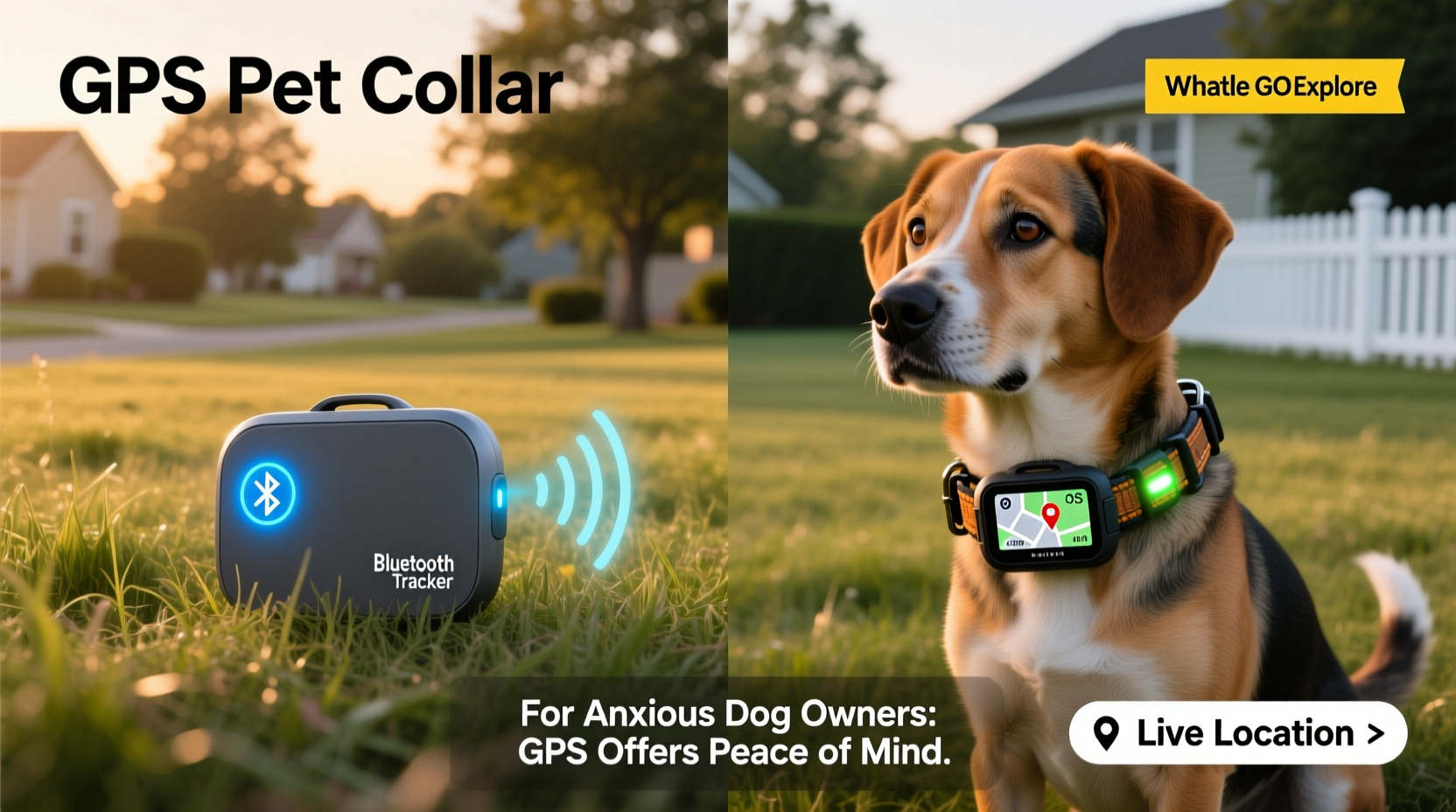
Bluetooth trackers like Tile, AirTag, and Chipolo rely on short-range wireless signals to connect to smartphones via Bluetooth Low Energy (BLE). These small devices attach to a dog’s collar and emit a signal that can be detected by nearby phones—typically within a 100- to 300-foot range, depending on environmental conditions.
When a dog goes missing, the owner opens a companion app to check the last known location based on the phone’s GPS when it was still in range of the tracker. If another user in the same network (e.g., Apple’s Find My network) comes near the lost tracker, their device anonymously relays its location back to the owner. This creates a crowdsourced tracking system that can sometimes locate a pet miles away—even if the owner’s phone isn’t nearby.
However, Bluetooth trackers are passive systems. They don’t provide live updates or movement history. Their usefulness depends heavily on population density and the presence of other network users. In rural areas or during nighttime hours, this network effect diminishes significantly.
Tip: Pair a Bluetooth tracker with a physical ID tag—technology fails, but engraved contact info never does.How GPS Pet Collars Provide Real-Time Tracking
GPS pet collars, such as those from Whistle, Fi, and Tractive, use cellular networks and satellite positioning to deliver real-time location data. These devices contain built-in SIM cards and connect to LTE or 4G networks, allowing them to transmit precise coordinates directly to an owner’s smartphone through a dedicated app.
Unlike Bluetooth trackers, GPS collars offer continuous monitoring. Owners can view their dog’s exact location on a map, set up geofenced boundaries (virtual fences), and receive instant alerts if the dog leaves a designated safe zone. Some models even include activity tracking, health monitoring, and temperature sensors—features that appeal strongly to detail-oriented or high-anxiety pet parents.
The trade-off is cost. GPS collars require monthly subscription fees ranging from $5 to $15, plus the upfront hardware expense of $100–$300. Battery life is shorter too—typically lasting 3 to 7 days per charge, compared to months or even years for Bluetooth tags.
“Real-time GPS tracking gives owners immediate situational awareness, which is crucial during the first 30 minutes after a dog escapes—the most critical window for recovery.” — Dr. Lisa Chen, Veterinary Behaviorist and Pet Safety Advocate
Comparing Key Features: A Practical Breakdown
| Feature | Bluetooth Tracker | GPS Pet Collar |
|---|---|---|
| Tracking Range | Up to 300 feet (direct connection); indirect via crowd network | Global (with cellular coverage) |
| Real-Time Updates | No – last seen location only | Yes – live GPS tracking |
| Battery Life | 1–3 years (replaceable battery) | 3–7 days (rechargeable) |
| Subscription Cost | None | $5–$15/month |
| Setup & Usability | Simple – pair with phone | Requires app setup, account, and ongoing service |
| Best For | Urban/suburban homes, low-budget owners, backup safety net | Frequent travelers, off-leash hikers, high-risk escape artists |
Real-World Example: Two Dogs, Two Technologies
Consider two scenarios involving golden retrievers named Max and Buddy—both prone to bolting when startled.
Max lives in downtown Seattle with his owner, Sarah. One afternoon, he slips out during a delivery. Sarah checks her Tile app and sees the last known location near her apartment building. Within an hour, a neighbor walking their dog passes within range of Max’s Tile. The Tile network updates Sarah’s app, showing Max is three blocks east. She retrieves him quickly, grateful for the community-powered alert.
Buddy, on the other hand, escapes during a camping trip in Montana. His owner, Mark, uses a Fi GPS collar. Within seconds of Buddy crossing the geofence around their campsite, Mark receives a push notification with a live map showing Buddy moving rapidly toward a riverbank. Using real-time tracking, Mark follows the signal, finds Buddy stuck in brush, and rescues him before he enters the current.
Both dogs were recovered—but under very different circumstances. Max benefited from urban density and luck. Buddy’s outcome relied on constant connectivity and immediate feedback. For anxious owners, especially those in remote areas, the predictability of GPS often outweighs cost concerns.
Choosing Based on Your Dog’s Behavior and Lifestyle
The decision should begin with an honest assessment of your dog’s habits and your daily routine. Ask yourself:
- Does my dog frequently attempt to escape?
- Do we travel to rural or wilderness areas?
- Am I comfortable relying on chance (crowd detection) if my dog goes missing?
- Can I afford a monthly subscription for added security?
- How quickly do I need to act if my dog disappears?
If your dog is generally well-behaved but occasionally darts out the door, a Bluetooth tracker may suffice—especially in cities. But if your dog has a history of escaping, chases wildlife, or accompanies you on hikes, a GPS collar offers proactive protection. It transforms reactive searching into strategic recovery.
Tip: Use both technologies together—a GPS collar as your primary tool and a Bluetooth tracker as a backup in case the main device fails or loses charge.Step-by-Step Guide to Implementing a Tracking Solution
- Evaluate your dog’s risk level. Consider past escapes, temperament, and environment.
- Determine your budget. Include both initial cost and ongoing fees (for GPS).
- Test collar fit and comfort. Ensure the device doesn’t rub, slip, or interfere with movement.
- Set up the app and test features. Walk your dog while monitoring the signal to confirm reliability.
- Establish geofences if using GPS. Define home zones and common walking areas.
- Train your dog gradually. Let them wear the collar indoors first to adjust.
- Check battery status weekly. Create calendar reminders to avoid downtime.
- Update emergency contacts in the app. Include vet info and secondary caregivers.
Common Misconceptions About Pet Trackers
Many anxious owners assume all tracking devices work the same way. This leads to disappointment when a Bluetooth tag fails to locate a dog in a forest or a GPS collar runs out of battery mid-hike.
One widespread myth is that Bluetooth trackers “ping” continuously and can be found anywhere. In reality, they only update when another compatible device comes within range. Another misconception is that GPS collars are infallible. Poor cellular coverage in mountains or basements can disrupt signals, and water exposure may damage electronics despite advertised waterproofing.
No device replaces responsible supervision. A tracker is a safety net—not a substitute for secure fencing, proper training, or attentive ownership.
FAQ: Common Questions From Anxious Dog Owners
Can a Bluetooth tracker find my dog if it’s in a moving car?
Only if someone with a connected device passes near the car. Even then, updates are delayed and imprecise. GPS collars are far more effective in tracking moving vehicles.
Do GPS collars work internationally?
Some do, but coverage depends on the provider. Tractive offers global plans, while others are limited to North America. Always verify roaming capabilities before traveling.
Are there long-term health risks from GPS collars emitting radiation?
The radiofrequency emissions from GPS collars are extremely low—similar to smartphones. No scientific evidence suggests harm to pets, but rotating collar positions can minimize skin irritation.
Final Recommendation: Match Technology to Anxiety Level
For truly anxious dog owners, peace of mind is non-negotiable. If the thought of waiting hours—or days—for a Bluetooth update causes distress, investing in a GPS collar is justified. The ability to watch your dog’s movements in real time, receive instant alerts, and trace their path reduces panic and accelerates response.
Bluetooth trackers serve best as affordable supplements—not standalone solutions—for lower-risk situations. They’re ideal for urban dwellers with contained yards or older dogs who rarely wander. But when anxiety stems from unpredictable behavior or high-stakes environments, GPS provides the clarity and control that many owners need to feel secure.
Ultimately, the best device is the one that aligns with your emotional needs as much as your dog’s physical ones. Technology cannot eliminate risk entirely, but it can dramatically improve outcomes—and for anxious owners, that difference can mean everything.
🚀 Take action today: Assess your dog’s escape risk, compare two top-rated GPS collars or Bluetooth tags, and choose one that gives you genuine peace of mind. Your future self—calmly locating your dog in minutes instead of hours—will thank you.








