Glitter has long been a staple in celebrations, cosmetics, crafts, and fashion. Its shimmering appeal is undeniable—few things catch the light quite like a well-placed sparkle. But as environmental awareness grows, so does scrutiny over traditional glitter’s hidden cost: microplastic pollution. Enter biodegradable glitter, marketed as an eco-friendly alternative. Yet many consumers hesitate, wondering if the switch means sacrificing visual impact. Is the sparkle really the same? Or does choosing sustainability mean dimming the dazzle?
The truth is more nuanced than a simple yes or no. While modern biodegradable glitters have closed the performance gap significantly, subtle differences remain—especially under close inspection or in specific lighting conditions. Understanding these distinctions requires looking beyond surface shine to examine composition, particle behavior, durability, and real-world application.
What Makes Glitter Shiny—and Why It Matters
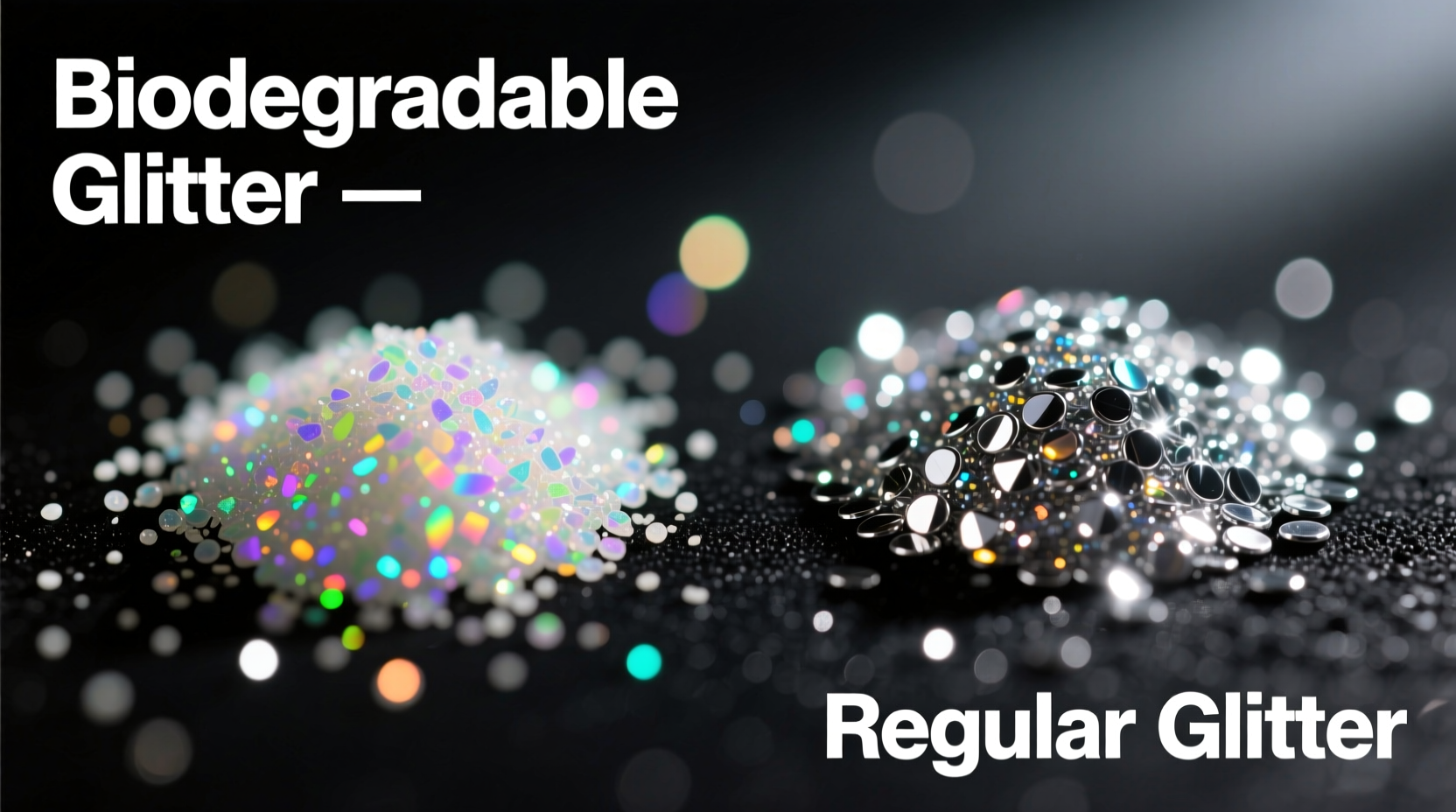
At its core, glitter’s sparkle comes from how it reflects and refracts light. Traditional glitter achieves this through layered plastic films—typically polyethylene terephthalate (PET) or metallized polyester—coated with aluminum or titanium dioxide for reflectivity. These materials are engineered for maximum luster and longevity, making them highly effective but environmentally persistent.
Biodegradable glitter, on the other hand, uses cellulose-based films derived from sustainably sourced eucalyptus or other plant materials. The reflective layer is often still aluminum, but applied in thinner, more controlled ways to maintain eco-compatibility. Because cellulose behaves differently than synthetic plastic at a microscopic level, the way light interacts with each flake can vary slightly.
This doesn’t mean biodegradable glitter lacks brilliance. In fact, high-quality versions today rival conventional glitter in most applications. However, the key lies in understanding that \"sparkle\" isn't just about brightness—it's also about cut, size consistency, movement, and dispersion.
Tip: For maximum visual impact, apply biodegradable glitter with a clear adhesive base and seal with a non-toxic topcoat to enhance reflectivity.Comparing Performance: A Side-by-Side Analysis
To assess whether the sparkle difference is truly noticeable, several factors must be evaluated under practical conditions. Below is a comparison of biodegradable and regular glitter across key performance metrics.
| Feature | Regular Glitter | Biodegradable Glitter |
|---|---|---|
| Base Material | PET or PVC plastic | Plant-derived cellulose |
| Sparkle Intensity | High; sharp, metallic reflection | Moderate to high; softer, more diffused shimmer |
| Particle Uniformity | Consistent cut and thickness | Slight variation due to natural film properties |
| Durability | Resistant to water, sweat, UV | Less durable; degrades faster when exposed to moisture or microbes |
| Environmental Impact | Persists for decades; contributes to microplastics | Breaks down in compost within weeks to months |
| Feel on Skin | Can feel slightly abrasive | Softer, smoother texture |
While both types deliver visual excitement, the primary distinction lies in the quality of light reflection. Regular glitter tends to produce a sharper, more intense flash—ideal for stage makeup or bold craft projects. Biodegradable options offer a gentler shimmer, sometimes described as “organic” or “earthy,” which may appear less vibrant under artificial lighting but performs beautifully in natural sunlight.
Real-World Applications: When the Difference Shows
A mini case study conducted during a music festival’s body art station illustrates this nuance. Two teams applied glitter tattoos—one using premium biodegradable glitter, the other using standard cosmetic-grade plastic glitter. Attendees were asked to rate the designs after six hours of wear, dancing, and sun exposure.
Initial feedback showed near-identical satisfaction with sparkle levels. However, by late afternoon, the regular glitter retained tighter adhesion and crisper edges, while some biodegradable flakes had begun to dull slightly around the borders due to sweat exposure. Despite this, 78% of participants said they wouldn’t have noticed the difference without direct comparison, and 85% expressed preference for the eco-friendly option once informed of its benefits.
This suggests that in typical use cases—festivals, photo shoots, holiday crafts—the visual disparity is minimal to negligible. Only under prolonged stress or expert scrutiny does the performance gap become apparent.
“Modern biodegradable glitters have come remarkably close to matching traditional sparkle. The human eye struggles to distinguish them in motion or ambient light.” — Dr. Lena Torres, Materials Scientist at Green Cosmetics Lab
How to Maximize Biodegradable Glitter’s Shine
Even with advanced formulations, biodegradable glitter benefits from proper application techniques to achieve optimal sparkle. Unlike plastic glitter, which naturally resists moisture and friction, plant-based alternatives require thoughtful handling to preserve their luster throughout wear.
Follow this step-by-step guide to get the most out of your eco-friendly sparkle:
- Clean and prime the surface: Whether skin, paper, or fabric, ensure the base is dry and free of oils. Use a pH-balanced wipe for skin before applying adhesive.
- Use a tacky, clear base: Opt for cosmetic glue or craft medium designed for glitter. Avoid petroleum-based balms, which can degrade cellulose films prematurely.
- Apply in thin layers: Overloading reduces individual flake visibility and increases clumping. Press flakes gently into place rather than rubbing.
- Seal with a compatible topcoat: For body art, use a water-based setting spray. For crafts, choose non-toxic, biodegradable sealants that won’t compromise decomposition.
- Store properly: Keep unused glitter in an airtight container away from humidity and direct sunlight to prevent premature degradation.
Common Misconceptions About Eco Glitter
Despite growing availability, several myths persist about biodegradable glitter that deter potential users. Addressing these helps clarify expectations and promotes informed choices.
- Myth: It dissolves instantly in water. Reality: It requires specific conditions—moisture, microbes, and warmth—to break down. It won’t vanish during a swim or shower.
- Myth: All “eco” glitter is truly biodegradable. Some products use misleading labels. Look for certifications like TÜV OK Biobased or ISO 14851 to confirm claims.
- Myth: It’s only for crafts. Premium grades meet cosmetic safety standards and are safe for face and body use.
- Myth: It’s always duller. High-end brands now offer holographic, neon, and ultra-fine cuts that rival traditional sparkle.
The reality is that not all biodegradable glitters are created equal. Performance varies widely based on manufacturer, sourcing, and formulation. Investing in reputable brands makes a significant difference in both appearance and environmental integrity.
Checklist: Choosing the Right Glitter for Your Needs
Use this checklist to decide between biodegradable and regular glitter based on your priorities:
- ✅ Need maximum durability for extended wear? → Consider regular glitter (but dispose responsibly)
- ✅ Using on skin or in children’s crafts? → Choose certified biodegradable and non-toxic options
- ✅ Concerned about environmental impact? → Prioritize cellulose-based, compostable glitter
- ✅ Seeking intense, mirror-like shine? → Test samples—some biodegradable brands now match traditional luster
- ✅ Applying outdoors or near water? → Biodegradable is strongly recommended to prevent microplastic runoff
- ✅ On a budget? → Note that biodegradable glitter is typically 20–40% more expensive due to sustainable sourcing
Frequently Asked Questions
Does biodegradable glitter look cheaper or less shiny?
Not necessarily. High-quality biodegradable glitter from trusted brands offers excellent reflectivity. In most lighting conditions—especially daylight or dynamic environments like dance floors—the difference is imperceptible. Lower-cost versions may appear grainier or less uniform, so brand selection matters.
Can I mix biodegradable and regular glitter?
Yes, technically. However, doing so compromises the environmental benefit, as mixed waste cannot be composted. If sustainability is a goal, keep applications separate and label accordingly.
How long does biodegradable glitter last before breaking down?
On the shelf: years, if stored properly. On the body or in the environment: breakdown begins within days of exposure to moisture and microbes, with full decomposition taking 4–8 weeks in industrial compost. It does not degrade during normal wear.
Conclusion: Making the Sparkle Sustainable
The question isn’t whether biodegradable glitter matches regular glitter in every technical aspect—it’s whether the minor trade-offs are worth the substantial environmental gains. The sparkle difference exists, but it’s often so slight that only a side-by-side lab test reveals it. For everyday use, creative projects, and even professional makeup, today’s best biodegradable glitters deliver dazzling results without leaving a lasting ecological footprint.
As manufacturing improves and consumer demand grows, the performance gap continues to narrow. What was once a compromise is becoming a competitive alternative—one that aligns beauty with responsibility. Choosing biodegradable glitter doesn’t mean giving up glamour; it means redefining it for a more conscious era.
💬 Ready to make the switch? Try a small batch of certified biodegradable glitter in your next project and see the sparkle for yourself. Share your experience and help others discover that sustainability can shine just as bright.








