Dogs bark for many reasons—territorial instinct, alertness, or excitement—but when it’s directed at delivery personnel, it can become a daily disruption for both the household and visitors. The good news is that excessive barking doesn’t have to be permanent. With patience, consistency, and humane training methods, you can teach your dog to remain calm when someone approaches your door. This guide focuses on science-backed, reward-based strategies that build trust and reduce anxiety rather than suppress behavior through fear or punishment.
Understanding Why Dogs Bark at Delivery People
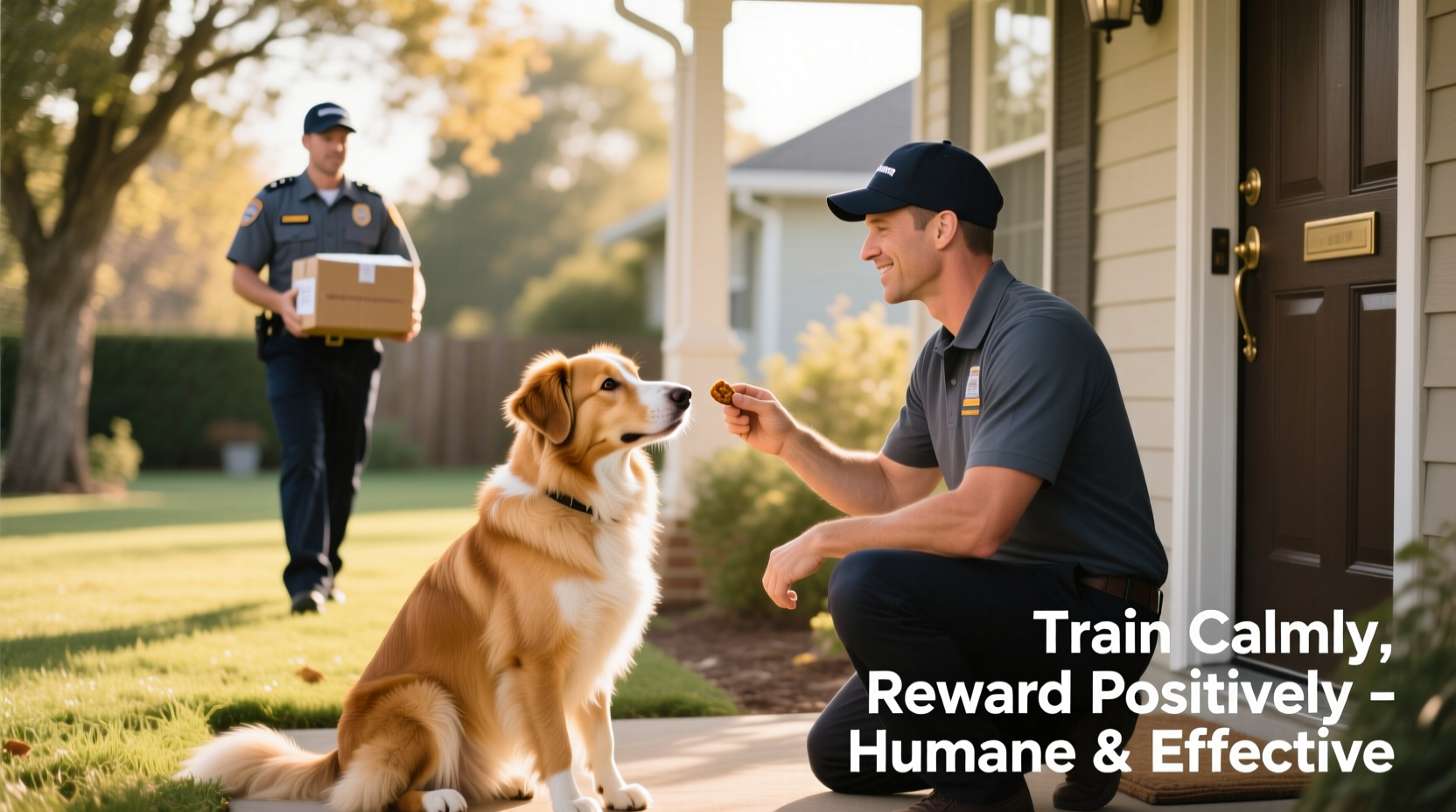
Barking at delivery workers is a common behavior rooted in instinct. Dogs are naturally territorial animals. When they see unfamiliar people approaching their home—even through a window or screen door—they perceive a potential threat. This triggers a protective response: barking to warn off the intruder and alert their humans.
For some dogs, this behavior becomes reinforced over time. Each time the delivery person leaves after the dog barks, the dog interprets the departure as a result of their own actions. “I barked, they left—that means my barking worked!” This cycle makes the behavior self-rewarding and harder to break without intervention.
It's important to recognize that this isn't defiance or aggression in most cases—it's communication. The goal isn't to silence your dog entirely but to teach them a more appropriate way to respond to visitors.
“Barking is a natural canine behavior. Our job as owners isn’t to eliminate it completely but to redirect it constructively.” — Dr. Sophia Yang, Certified Applied Animal Behaviorist
Step-by-Step Training Plan to Reduce Doorstep Barking
Training your dog to stay calm during deliveries requires structure, repetition, and positive reinforcement. Follow this timeline-based approach for best results:
- Identify Triggers: Observe what exactly sets your dog off—footsteps, knocking, uniforms, or packages being placed down. Note whether barking starts at sight, sound, or both.
- Create Distance: During early training, keep your dog in a room far from the front door where they can’t see or hear arrivals clearly. This reduces arousal and makes learning easier.
- Teach an Incompatible Behavior: Train your dog to go to a specific mat or bed and lie down on cue. Use high-value treats (like small pieces of chicken or cheese) to reinforce calm behavior.
- Simulate the Scenario: Have a friend mimic a delivery person—walking up the path, knocking, or ringing the bell—while you practice the “go to place” command. Reward heavily for compliance.
- Gradually Decrease Distance: As your dog succeeds consistently, move the training closer to windows or the front door, increasing exposure slowly.
- Add Real-Life Practice: Coordinate with neighbors or schedule test deliveries (e.g., food delivery apps) to practice under real conditions.
- Maintain Consistency: Continue reinforcing the behavior weekly, especially during peak delivery times.
This process typically takes 3–8 weeks depending on your dog’s temperament and prior training experience. Progress may be non-linear—some days will be better than others—and that’s normal.
Tip: Always end training sessions on a positive note, even if progress was slow. A final successful command followed by a treat helps maintain motivation.Effective Techniques That Work Without Punishment
Humane training relies on rewarding desired behaviors rather than punishing unwanted ones. Here are three proven techniques:
1. Positive Reinforcement with Treats
Reward your dog for staying quiet when someone approaches. Begin by clicking or marking (with a word like “yes”) the moment your dog notices the trigger but doesn’t bark. Immediately follow with a treat. Over time, your dog learns that silence = reward.
2. The “Look at That” Game (LAT)
Developed by trainer Leslie McDevitt, LAT teaches dogs to associate the sight of triggers with good things. When your dog sees a delivery person, say “look at that” calmly and give a treat—even if they bark initially. Repeat frequently. Eventually, your dog will look at you expectantly upon seeing the trigger, anticipating a reward instead of reacting aggressively.
3. Management Tools: Baby Gates and Curtains
Prevent rehearsal of unwanted behavior by blocking visual access to the front door. Close blinds, use opaque window film, or install baby gates to restrict movement. This isn’t avoidance—it’s setting your dog up for success while training occurs.
| Technique | Best For | Time to See Results |
|---|---|---|
| Positive Reinforcement | Dogs responsive to food rewards | 2–6 weeks |
| “Look at That” Game | Anxious or reactive dogs | 3–8 weeks |
| Environmental Management | All dogs, especially high-energy breeds | Immediate effect when combined with training |
Common Mistakes to Avoid
Even well-meaning owners can unintentionally worsen the problem. Watch out for these pitfalls:
- Yelling “No!” or “Quiet!” – To a dog, loud voices can sound like joining in the barking. It often escalates excitement instead of calming them.
- Punishing after the fact – Dogs don’t connect delayed correction with past behavior. Scolding your dog minutes after a delivery leaves teaches nothing but fear.
- Allowing barking sometimes – Inconsistent rules confuse dogs. If barking works occasionally (e.g., only when you're not home), it becomes harder to extinguish.
- Overexposure during training – Flooding your dog with too many triggers too soon increases stress and setbacks.
Real Example: How Max the Border Collie Learned Calmness
Max, a 3-year-old Border Collie in suburban Denver, would bark uncontrollably at every Amazon driver, UPS van, and mail carrier. His owner, Lisa, tried shushing him and even crated him during deliveries, but his anxiety only grew.
She consulted a certified dog trainer who recommended starting with environmental management: closing the living room blinds and placing Max’s bed in the kitchen, away from the front of the house. Then, she began teaching the “go to mat” command using boiled chicken as a reward.
Next, Lisa enlisted her neighbor to walk up the driveway while she practiced giving Max treats for looking at her instead of lunging toward the window. At first, Max needed a clicker to mark correct behavior, but within two weeks, he began running to his mat automatically when he heard footsteps.
After five weeks of daily practice and controlled exposures, Max now lies quietly on his mat when deliveries arrive. He still watches with interest but no longer barks. Lisa credits the change to consistency and avoiding punishment-based methods.
Checklist: What You Need to Start Training Today
Use this checklist to ensure you’re prepared to begin training your dog to stop barking at delivery people:
- ✅ High-value treats (small, soft, and smelly—like cooked meat or cheese)
- ✅ A designated “safe spot” or mat where your dog can relax
- ✅ Clicker or verbal marker (“yes,” “good”)
- ✅ Opaque curtains or window covers to block view
- ✅ Baby gate or barrier to manage access
- ✅ Schedule of regular delivery times (to plan training sessions)
- ✅ Notebook to track progress and setbacks
- ✅ Support from a family member or friend to simulate deliveries
Frequently Asked Questions
Can older dogs learn to stop barking at delivery people?
Yes. While puppies are more adaptable, adult and senior dogs can absolutely learn new behaviors. Older dogs may take longer due to established habits, but with patience and consistency, change is possible at any age.
What if my dog only barks when I’m not home?
This suggests separation-related anxiety or lack of supervision. Consider using a pet camera with two-way audio to issue cues remotely. Alternatively, hire a trainer to assess whether underlying anxiety needs to be addressed before behavioral training begins.
Is it okay to use a bark collar as a last resort?
No. Bark collars—including citronella, vibration, or shock types—are not humane solutions. They suppress symptoms without teaching alternative behaviors and can increase fear or aggression. Focus on positive training instead.
Conclusion: Building a Calmer, Happier Home
Training your dog to stop barking at delivery people isn’t about dominance or control—it’s about communication and cooperation. By understanding your dog’s instincts and using compassionate, evidence-based methods, you create a more peaceful environment for everyone: your pet, your household, and the essential workers who serve your community.
The key is consistency, not perfection. Some days your dog will succeed; other days will require patience. Celebrate small wins, avoid punishment, and focus on building confidence through positive experiences. With time, your dog can learn that the arrival of a delivery person doesn’t mean danger—it just means life going on as usual.
💬 Have a success story or challenge with doorstep barking? Share your experience in the comments—your insights could help another dog owner find peace at home.








