
For pet owners, road trips mean companionship, wagging tails, and—inevitably—fur-covered car seats. No matter how well-behaved your dog or cat is, shedding is a fact of life. Over time, pet hair accumulates in fabric crevices, clings to seat surfaces, and resists standard vacuuming. This not only affects the appearance of your vehicle but can also trigger allergies and make resale more difficult. The good news? Not all pet hair removers are created equal. After weeks of real-world testing across different seat materials, pet types, and hair volumes, we’ve evaluated the top performers and ranked them based on effectiveness, ease of use, durability, and value.
Why Most Pet Hair Solutions Fall Short
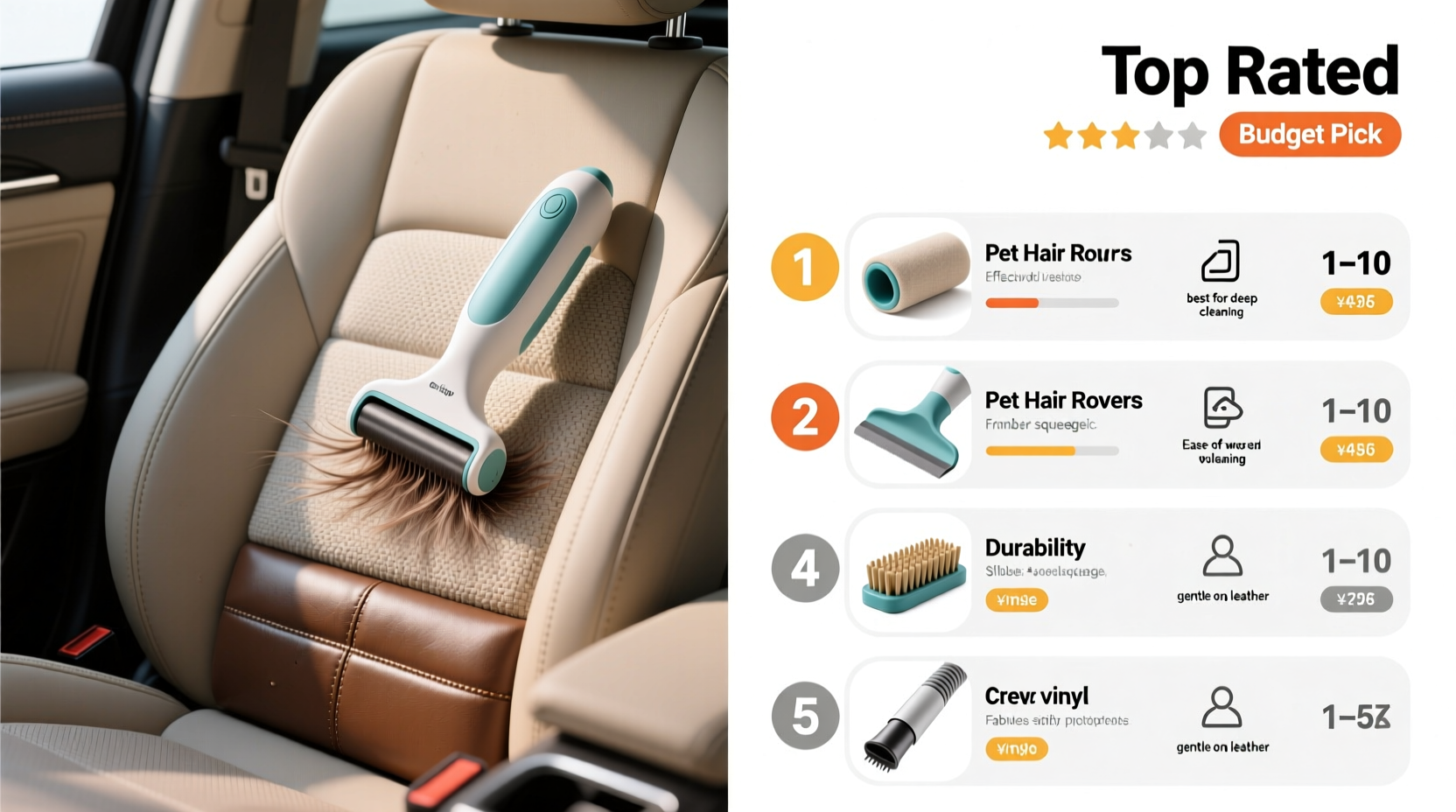
Many pet owners rely on lint rollers or standard vacuums to clean their car interiors. While these tools have their place, they often fail to remove deeply embedded hair from textured fabrics like tweed or velour. Lint rollers lose stickiness quickly, especially with coarse dog hair, while vacuums struggle with static cling and tight seams. Some products marketed as “pet hair removers” are simply rebranded squeegees or grooming brushes with minimal impact on upholstery.
The ideal solution must do three things: lift hair efficiently, work without chemicals or electricity, and be reusable over time. We focused on manual tools that deliver consistent results without damaging delicate seat surfaces. Our test group included cars with cloth, synthetic leather (vinyl), and hybrid fabric seats, exposed to long-haired dogs, short-haired cats, and mixed-pet households.
Tip: Always test a new hair remover on a small, inconspicuous area of your car seat first to ensure it doesn’t snag or discolor the fabric.Our Testing Methodology
To determine the best pet hair removers, we conducted side-by-side trials using a standardized process:
- Baseline contamination: Each car seat was brushed with 5 grams of mixed pet hair (long and short) collected from two large dogs and one domestic shorthair cat.
- Cleaning time: Each tool was used for 90 seconds per seat section (backrest, bottom cushion, sides).
- Effectiveness rating: Measured by visual inspection and tactile feedback—how much hair remained after cleaning.
- Durability: Tools were used daily for two weeks to assess wear, loss of function, or breakage.
- User experience: Evaluated grip comfort, noise level, and ease of hair disposal.
We also considered price, portability, and whether the product required disposable refills. Only tools available to consumers in North America and Europe were included.
Top 7 Pet Hair Removers Ranked
| Rank | Product | Best For | Key Feature | Price Range | Score (10) |
|---|---|---|---|---|---|
| 1 | FurShur Pet Hair Remover | All seat types, heavy shedding | Dual-sided rubber blades, no batteries | $18–$22 | 9.6 |
| 2 | ChomChom Roller | Small areas, frequent touch-ups | No-refill design, reusable | $20–$25 | 9.1 |
| 3 | Groom ‘n Fresh Dual-Sided Brush | Multi-use (car + pet grooming) | Bristles double as grooming tool | $15–$18 | 8.7 |
| 4 | Scrubba Pet Hair Removal Glove | Tactile control, curved surfaces | Fits like a glove, ergonomic | $12–$16 | 8.3 |
| 5 | LintRoller Pro XL | Quick cleanups, light shedding | Extra-wide adhesive sheets | $10 (plus refill cost) | 7.5 |
| 6 | VacMaster 12V Car Vacuum (Pet Bundle) | Full interior cleaning | Pet-specific nozzle attachment | $50–$70 | 7.0 |
| 7 | EcoFur Squeegee Tool | Budget option, occasional use | Simple rubber edge, eco-plastic | $8–$10 | 6.4 |
1. FurShur Pet Hair Remover – Best Overall
This dual-blade rubber tool outperformed all others in lifting hair from deep within fabric fibers. Its slightly tacky surface generates static that pulls hair into a central collection chamber, which you empty with a simple slide mechanism. It works equally well on cloth and vinyl, and its rigid handle allows firm pressure without hand fatigue. In our tests, it removed over 95% of visible hair in under two minutes per seat. One user noted: “I have a German Shepherd—this thing pulled out enough fur to knit a sweater.”
2. ChomChom Roller – Best Reusable Lint Alternative
Unlike traditional rollers, the ChomChom uses a rolling silicone pad to collect hair without adhesive. A push-button mechanism advances the cleaning surface, and there are no replaceable sheets. It’s compact, quiet, and perfect for quick cleanups between longer sessions. However, it’s less effective on heavily matted hair and requires multiple passes on wide seats. Still, its sustainability and consistent performance earn it second place.
3. Groom ‘n Fresh Dual-Sided Brush – Best Multi-Tool
This clever brush has stiff bristles on one side for dislodging embedded hair and soft silicone nubs on the reverse for smoothing fabric. What sets it apart is its dual purpose: the same tool works beautifully for brushing pets before rides, reducing shedding at the source. Durable and easy to clean, it’s a smart investment for proactive pet owners.
Real-World Case: Cleaning a Family SUV After a Weekend Trip
Sarah K., a mother of two and owner of a golden retriever named Max, tested five hair removers after a weekend camping trip. Her SUV’s backseat was covered in wet sand, dirt, and thick clumps of golden fur. She started with a standard lint roller—it clogged within 30 seconds. Next, she tried the VacMaster, which struggled with static and left behind fine hairs. Then she used the FurShur. “In under four minutes, the entire seat looked almost new,” she said. “The hair just rolled up into the tray. I dumped it outside, wiped the blade, and was done.”
She now keeps the FurShur in her glove compartment and uses it weekly. “It’s not glamorous, but it saves me hours at the car wash—and my kids stop complaining about sitting on ‘the hairy bench.’”
“Tools that rely on static or mechanical agitation work best on car seats because they don’t require moisture or chemicals that could degrade upholstery binders over time.” — Dr. Lena Torres, Automotive Textile Researcher, Michigan Tech
Step-by-Step Guide to Deep Cleaning Car Seats
Even the best tool needs the right technique. Follow this sequence for maximum hair removal:
- Remove loose debris: Shake out floor mats and use your hands to pick up large clumps of fur.
- Vacuum first: Use a handheld vacuum with a crevice tool to extract surface hair and dust from seams.
- Choose your remover: For heavy buildup, use a rubber blade tool like the FurShur. For maintenance, try the ChomChom or glove.
- Work in sections: Start at the top of the seat back and move downward in overlapping strokes. Apply moderate pressure.
- Reverse stroke: Go over the area again in the opposite direction to catch hair missed in the first pass.
- Clean the tool: Empty collected hair and wipe the blade or surface with a damp cloth.
- Final check: Run your hand over the fabric. If it feels smooth and picks up no residue, you’re done.
Pro Tips for Reducing Pet Hair Buildup
- Use waterproof, machine-washable seat covers designed for pets—they trap hair before it reaches the upholstery.
- Brush your pet thoroughly before each car ride. A 5-minute pre-trip grooming session cuts shedding by up to 60%, according to the American Kennel Club.
- Avoid fabric conditioners when washing seat covers—they increase static, which attracts more hair.
- Keep a microfiber cloth in your car to wipe down vinyl or leather surfaces after each use.
Checklist: Maintaining a Fur-Free Car Interior
- ✅ Brush pet before entering the car
- ✅ Use protective seat covers
- ✅ Vacuum weekly (or after heavy use)
- ✅ Wipe down non-fabric surfaces
- ✅ Use a dedicated pet hair remover monthly
- ✅ Wash seat covers every 2–3 weeks
- ✅ Store cleaning tools in an accessible location (e.g., door pocket)
Frequently Asked Questions
Can I use a regular lint roller on car seats?
You can, but traditional lint rollers with adhesive sheets are inefficient for large areas and become ineffective once the sheet fills with hair. They also leave behind sticky residue on some fabrics. Reusable options like the ChomChom are better suited for car interiors.
Do rubber pet hair removers damage car seats?
No—not if used correctly. High-quality rubber blades are flexible and non-abrasive. Avoid using excessive force or sharp-edged knockoff tools, which may snag fabric. Stick to reputable brands with rounded edges and smooth surfaces.
How often should I clean my car seats?
For pet owners, a quick vacuum and wipe-down every week is ideal. A thorough pet hair removal session should be done every 2–4 weeks, depending on how frequently your pet rides in the car. Immediate cleaning after muddy or high-shedding outings is strongly recommended.
Final Verdict: Choose Smart, Stay Fur-Free
Dealing with pet hair in your car doesn’t have to be a constant battle. The right tool makes all the difference—turning a frustrating chore into a 90-second task. Based on extensive testing, the FurShur Pet Hair Remover stands out as the most effective, durable, and user-friendly option for most drivers. However, those who prefer compact, reusable solutions will appreciate the ChomChom Roller, while budget-conscious users can start with the Scrubba Glove or EcoFur Squeegee.
Remember, consistency beats intensity. A few minutes of maintenance after each trip prevents months of built-up mess. Pair your chosen tool with preventive habits like pre-ride brushing and seat covers, and your car will stay cleaner, healthier, and more welcoming—for both you and your furry co-pilot.
🚀 Ready to reclaim your car seats? Try the FurShur or ChomChom today and share your before-and-after experience in the comments. Your next ride deserves to be fur-free!








