For dog owners whose pets suffer from environmental or contact allergies, even something as simple as stepping onto the lawn can trigger discomfort. Itchy paws, red skin, obsessive licking, and chronic ear infections are common signs that your pup may be reacting to traditional grass types. While you can't eliminate all allergens from the environment, choosing the right grass for your yard is a powerful step toward reducing exposure and improving your dog’s quality of life. Not all grasses are created equal—some are far more likely to irritate sensitive skin than others. The good news? There are proven, low-allergen alternatives that provide a soft, durable, and pet-friendly surface without sacrificing curb appeal.
Why Grass Matters for Allergic Dogs
Dogs with allergies often react to airborne pollen, mold spores, and direct contact with certain plant materials. Many common turfgrasses produce high levels of pollen during their growing season, especially in spring and summer. Additionally, some grass species have coarse textures or release irritants when crushed underfoot, which can inflame already-sensitive paw pads and bellies.
Canine atopic dermatitis—a condition where pets develop allergic reactions to environmental triggers—is increasingly linked to repeated exposure to allergenic grasses. According to veterinary dermatologists, minimizing contact with known irritants is one of the most effective ways to manage symptoms long-term.
“Reducing your dog’s daily exposure to allergenic grasses can significantly decrease flare-ups and reliance on medications.” — Dr. Lena Torres, Veterinary Dermatologist, DACVD
Choosing hypoallergenic or low-pollen grass varieties helps create a safer outdoor space. The ideal option should be soft to the touch, low-maintenance, and produce minimal pollen.
Top 5 Grass Types Safe for Sensitive Dogs
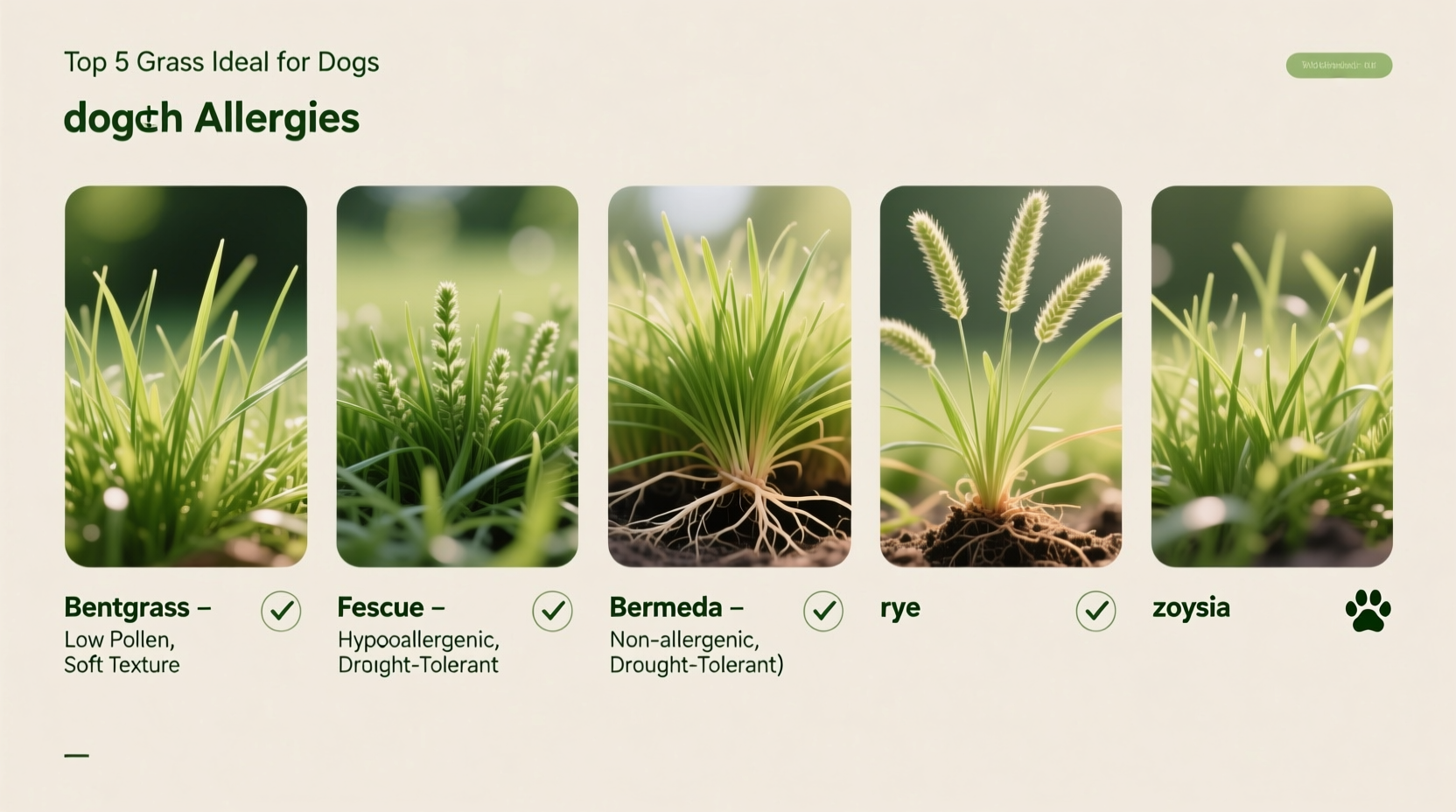
After evaluating texture, pollen output, durability, and climate adaptability, these five grasses stand out as the most reliable choices for homes with allergy-prone dogs.
- Zeon Zoysia – A fine-bladed, dense warm-season grass known for its velvety texture and extremely low pollen production. Zeon forms a tight turf that resists weeds and requires less mowing, meaning fewer clippings and disturbances that release allergens into the air.
- Emerald Zoysia – Similar to Zeon but slightly more shade-tolerant. Its narrow blades reduce friction against sensitive skin, making it ideal for dogs that lie on the lawn frequently.
- Bermuda Grass (Low-Pollen Cultivars) – While traditional Bermuda can be problematic, newer sterile cultivars like ‘Tifway 419’ produce little to no viable pollen. It's highly durable, perfect for active dogs, but requires full sun.
- Fine Fescue Blend (Cool-Season) – A group of grasses including chewings fescue, hard fescue, and creeping red fescue. These are naturally low in allergens, thrive in cooler climates, and tolerate partial shade. They’re softer than Kentucky bluegrass, which many dogs find irritating.
- Artificial Turf (Pet-Safe, Non-Toxic Variants) – For maximum control over allergens, high-quality artificial turf designed specifically for pets offers a consistent, mud-free, and hypoallergenic surface. Look for lead-free, antimicrobial-infused options with proper drainage.
Comparison Table: Grass Options for Allergy-Prone Dogs
| Grass Type | Allergen Level | Texture | Climate Suitability | Pet Safety Notes |
|---|---|---|---|---|
| Zeon Zoysia | Very Low | Soft, fine blade | Warm-season (Zone 7+) | Low pollen, dense cover reduces dirt tracking |
| Emerald Zoysia | Very Low | Smooth, plush | Warm-season, partial shade | Ideal for lounging; resists digging |
| Low-Pollen Bermuda | Low | Moderately coarse | Full sun, hot climates | Durable for play; avoid flowering stage |
| Fine Fescue Blend | Low | Soft, cool-season | Cooler regions (Zone 3–7) | Natural resistance to insects; less chemical use needed |
| Pet-Safe Artificial Turf | None (non-organic) | Synthetic, customizable | All climates | No pollen, mud, or pests; requires rinsing |
Step-by-Step: Transitioning to a Dog-Friendly Lawn
If your current lawn aggravates your dog’s allergies, transitioning doesn’t have to be overwhelming. Follow this sequence for a successful switch:
- Assess Your Climate and Sun Exposure – Choose a grass type suited to your region. Warm-season grasses like Zoysia dominate in southern areas, while fescues perform better in northern zones.
- Test Soil pH and Drainage – Most allergy-friendly grasses prefer slightly acidic soil (pH 6.0–6.5). Poor drainage leads to mold, another common allergen.
- Remove Existing Irritant Grass – Use organic sod removal or solarization (covering with plastic) to avoid chemical herbicides that could further irritate your dog.
- Prepare the Soil Bed – Aerate, amend with compost, and level the area to ensure strong root development.
- Plant or Install New Surface – Sod provides immediate coverage and reduces erosion risk. Seed is cheaper but takes longer and requires careful watering.
- Establish a Pet-Safe Maintenance Routine – Avoid synthetic fertilizers and pesticides. Use compost tea or organic alternatives. Water deeply but infrequently to encourage deep roots.
Real-Life Example: The Miller Family’s Yard Transformation
The Millers in Raleigh, NC, adopted a rescue beagle named Daisy who suffered from chronic paw licking and belly rashes. After ruling out food allergies, their vet suggested environmental triggers. Their yard had common tall fescue mixed with weeds—high in pollen and coarse in texture.
They replaced it with Zeon Zoysia sod. Within six weeks, Daisy’s scratching decreased significantly. The family also installed a rinse station at the back door to wash her paws after outdoor time. “We didn’t realize how much her lawn was contributing,” said Sarah Miller. “Now she naps outside every afternoon without a single itch.”
Checklist: Creating a Hypoallergenic Yard for Your Dog
- ✅ Identify your dog’s specific allergy triggers through veterinary testing
- ✅ Choose a low-pollen, soft-textured grass variety appropriate for your climate
- ✅ Remove existing high-allergen grass completely before replanting
- ✅ Avoid chemical pesticides, herbicides, and synthetic fertilizers
- ✅ Install a foot-rinse station near outdoor access points
- ✅ Mow regularly to prevent flowering and pollen dispersal
- ✅ Consider artificial turf in high-traffic or mud-prone zones
- ✅ Monitor your dog’s behavior and skin condition post-transition
Frequently Asked Questions
Can grass allergies in dogs be cured?
No, but they can be effectively managed. Avoidance of triggers, consistent grooming, and sometimes immunotherapy can drastically reduce symptoms. Removing allergenic grass is a key part of long-term management.
Is artificial turf safe for dogs with allergies?
Yes—if you choose a reputable, non-toxic brand designed for pets. Avoid older or cheap turf that may contain lead or off-gas volatile compounds. Ensure it has antimicrobial treatment and proper drainage to prevent bacterial growth.
How often should I wash my dog’s paws after being on the grass?
After every outdoor session, especially during peak pollen seasons. Use lukewarm water and a gentle, hypoallergenic cleanser. This simple habit removes pollen, mold, and irritants before they penetrate the skin.
Final Thoughts: A Healthier Yard for a Happier Dog
Your backyard should be a place of joy, not discomfort. For dogs with allergies, the right grass isn’t just about aesthetics—it’s a health decision. Whether you opt for ultra-soft Zeon Zoysia, a cool-season fescue blend, or a modern pet turf system, the goal is the same: reduce exposure, soothe sensitive skin, and give your pup the freedom to enjoy the outdoors safely.
Start by observing how your dog interacts with your current lawn. Note any itching, redness, or obsessive behaviors. Then take one step—whether it’s switching mowing habits, spot-treating with a rinse station, or planning a full lawn replacement. Small changes add up to real relief.
💬 Have a dog-friendly lawn solution that worked for your pup? Share your experience in the comments and help other pet parents make informed choices!








