For multi-cat households, managing litter box hygiene is a constant challenge. The more cats you have, the faster litter becomes soiled, odors build up, and maintenance demands increase. Traditional scooping quickly turns into a daily chore—often multiple times a day. Automatic litter boxes offer a smart solution by reducing manual labor, minimizing odor, and improving cleanliness. But not all models are built to handle the demands of two or more cats. Choosing the right one requires understanding capacity, reliability, cleaning cycles, waste management, and long-term durability.
This guide evaluates the top-performing automatic litter boxes specifically suited for homes with multiple cats. Each model has been assessed based on real-world performance, user feedback, and technical specifications. Whether you have two playful kittens or three senior cats sharing space, this comparison will help you find the ideal system to maintain a cleaner, more comfortable environment for both pets and owners.
Key Features to Consider for Multi-Cat Households
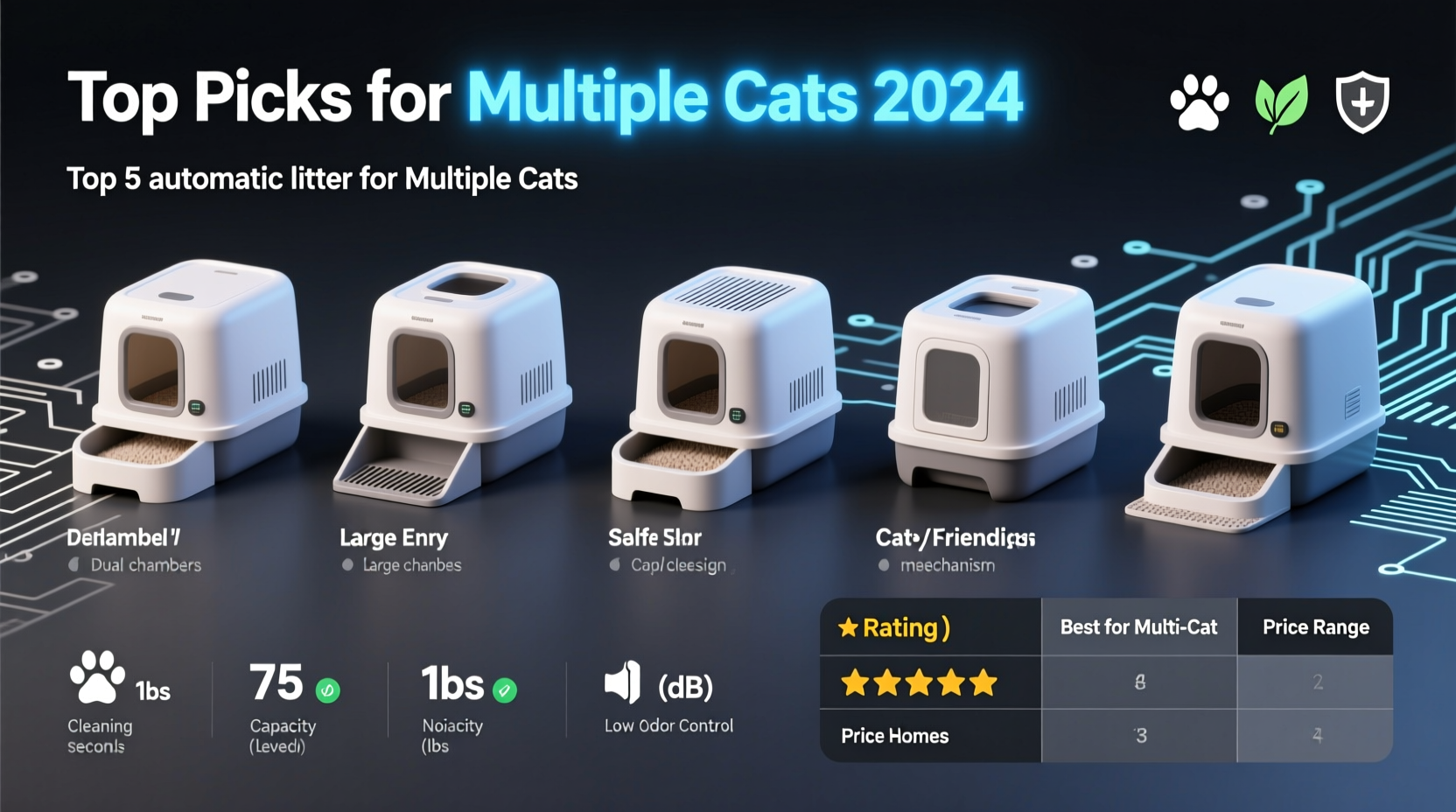
When selecting an automatic litter box for more than one cat, several critical factors influence performance and longevity. These aren’t just about convenience—they directly affect how well the unit handles frequent use and whether it remains hygienic over time.
- Capacity and size: The litter box must be large enough to accommodate cats of varying sizes without feeling cramped. A spacious interior prevents tracking and reduces territorial avoidance.
- Waste compartment volume: Larger waste drawers mean fewer emptying sessions. For three or more cats, a high-capacity tray (30+ uses) is essential.
- Detection technology: Advanced weight and motion sensors ensure the box only activates after a cat exits, preventing accidents during use.
- Cleaning mechanism: Raking systems should be durable and designed to sift clumps efficiently without scattering litter.
- Odor control: Sealed designs with carbon filters significantly reduce ammonia and fecal smells, especially important in shared living spaces.
- Power source: While most units are electric, backup battery options prevent malfunctions during outages.
- Multi-cat mode: Some brands offer settings optimized for multiple users, adjusting cycle timing and sensor sensitivity accordingly.
Top 5 Automatic Litter Boxes for Multiple Cats: In-Depth Review
1. Litter-Robot 4 Open Air
The Litter-Robot 4 remains a gold standard in self-cleaning technology. Its globe-shaped design provides privacy and contains odors effectively. With a generous cavity (suitable for cats up to 20 lbs), it comfortably serves homes with three or four cats.
New improvements include whisper-quiet operation, customizable wait times (7–15 minutes post-exit), and seamless app integration via the Whisker app. The updated raking system reduces jamming, even with dense clumping litters. Waste is deposited into a lined drawer that can hold up to 2 weeks of use for two cats—or about a week with three active users.
One standout feature is its open-air ventilation, which eliminates the need for replaceable filters. However, because it lacks a fully sealed hood, strong odors may escape during rotation if not emptied regularly.
2. PetSafe ScoopFree Ultra Self-Cleaning Litter Box
PetSafe takes a different approach: crystal-based non-clumping litter trays that last 20–30 days per pan. The ScoopFree Ultra uses disposable trays with a rake that moves every 20 minutes or after detected activity. This makes it ideal for households where consistent cleaning is prioritized over traditional clay litter.
The tray’s length accommodates larger cats, and the see-through lid allows monitoring without disturbing your pets. Since there’s no scooping or dumping, maintenance is minimal—just swap in a new tray monthly. For homes with two to three cats, buying trays in bulk keeps costs manageable.
A downside? It requires proprietary litter trays, which can become expensive over time. Also, some cats resist the texture of crystal litter, leading to initial reluctance.
“Automatic litter boxes like the Litter-Robot 4 have transformed multi-cat home management. They reduce behavioral issues linked to dirty boxes and give owners peace of mind.” — Dr. Lena Torres, DVM, Feline Behavior Consultant
3. CatGenie Self-Washing Litter Box
The CatGenie stands apart by washing and drying reusable granules after each use. Connected to a water line and drain (or used with a portable hose kit), it flushes waste directly away—ideal for those who dislike handling soiled litter altogether.
Its wash-dry cycle takes about 20 minutes and can be scheduled automatically. Designed for unlimited use, it’s perfect for homes with four or more cats. Granules are gentle on paws and highly effective at controlling odor.
Installation is the main hurdle. You’ll need access to a bathroom or laundry room with nearby plumbing. Power outages also halt operation unless a generator or alternate setup is available. Still, for committed users, the CatGenie offers unmatched long-term hygiene and convenience.
4. Petlur Pura MAX
The Pura MAX combines large capacity with advanced air purification. Equipped with a dual HEPA + carbon filter system, it actively scrubs the air during and after each cleaning cycle. Its wide entrance and low step-over height make it accessible for older or arthritic cats.
With a massive 7-liter waste bin and support for up to four cats, it can go 2–3 weeks between cleanouts under moderate use. App control allows remote monitoring, filter replacement alerts, and cycle adjustments. The raking system is quiet and efficient, though occasional clump bridging occurs with very fine dust-like litters.
Unlike many competitors, the Pura MAX includes a deodorizing mist function (optional) that releases a light scent post-cycle—an appreciated touch for odor-prone areas.
5. OhMyCat Fully Automatic Self-Cleaning Litter Box
Budget-friendly yet robust, the OhMyCat model delivers core functionality without excessive frills. It features a top-entry design with a large interior and a front-facing waste drawer capable of holding 14–20 uses depending on cat number and litter type.
Sensor calibration is straightforward, and the slow-motion rake minimizes noise. While it doesn’t offer app connectivity, its mechanical reliability has earned praise from users with two to three cats. Assembly is simple, and replacement parts are widely available.
It does lack advanced odor control beyond a basic carbon filter, so placement in well-ventilated areas is recommended. But for those seeking dependable automation at a lower price point, OhMyCat hits a sweet spot.
Comparison Table: Key Specs at a Glance
| Model | Max Cats Supported | Waste Capacity | App Control | Odor Control | Price Range |
|---|---|---|---|---|---|
| Litter-Robot 4 Open Air | 3–4 | ~14–20 uses | Yes | Ventilation + optional liner | $699 |
| PetSafe ScoopFree Ultra | 2–3 | One tray = 20–30 days | No | Sealed tray + crystals | $250 + $30/tray monthly |
| CatGenie | Unlimited (with proper use) | Flushes waste continuously | Yes | Wash cycle + drying | $600 + installation effort |
| Pura MAX | Up to 4 | 7L bin (~2–3 weeks) | Yes | Dual HEPA + carbon + optional mist | $599 |
| OhMyCat | 2–3 | 14–20 uses | No | Basic carbon filter | $329 |
Real-World Example: Managing Three Cats with the Litter-Robot 4
Sarah from Portland adopted two rescue kittens last year, joining her existing adult male tabby. Within weeks, the single litter box became a battleground—both literally and hygienically. One kitten developed inappropriate elimination habits, likely due to stress from competition.
She invested in the Litter-Robot 4, placing it in a quiet corner of the basement. After a week-long acclimation period using treats and gradual activation, all three cats began using it independently. The app alerted her when the waste drawer was full, typically every 8–10 days with three active users.
Within a month, the inappropriate urination stopped. Sarah noted that the quieter motor and consistent cleanliness made the box more appealing. “It’s not cheap,” she admits, “but I’ve saved hundreds in vet co-pays from urinary issues alone.”
Step-by-Step Guide to Setting Up an Automatic Litter Box for Multiple Cats
- Choose the right location: Pick a low-traffic, quiet area accessible to all cats but away from loud appliances or foot traffic.
- Introduce the unit offline: Let cats investigate the empty box with power off. Place familiar litter inside to encourage use.
- Run test cycles manually: Trigger a cleaning cycle when the box is empty so cats hear the sound without being startled.
- Enable auto-mode gradually: Start with longer wait times (e.g., 15 minutes) to avoid premature raking.
- Monitor usage patterns: Use app data or physical observation to confirm all cats are using the box regularly.
- Maintain a cleaning schedule: Empty waste drawers weekly (or as needed), wipe surfaces monthly, and replace filters according to manufacturer guidelines.
- Have a backup plan: Keep a traditional litter box available during transitions or power failures.
Frequently Asked Questions
Can one automatic litter box handle three or more cats?
Yes—but only if it’s designed for high-volume use. Models like the Litter-Robot 4, Pura MAX, and CatGenie are engineered to support three to four cats with proper maintenance. Monitor waste capacity and cleaning frequency closely; exceeding limits leads to overflow and hygiene issues.
Do automatic litter boxes work with all types of litter?
No. Most require clumping clay litter between 4–8 lbs in weight. Crystal, silica, or lightweight plant-based litters may interfere with sensors or raking mechanisms. Always check manufacturer recommendations before switching brands.
Are automatic litter boxes safe for kittens and older cats?
Generally yes, but supervision is advised during initial use. Kittens under 6 months or under 5 lbs may not trigger weight sensors reliably. Older cats with mobility issues benefit from low-entry models like the Pura MAX or ScoopFree Ultra.
Checklist: Choosing the Right Model for Your Home
- ☐ Assess how many cats will use the box daily
- ☐ Measure available floor space and ceiling clearance
- ☐ Confirm compatibility with your preferred litter type
- ☐ Evaluate noise level tolerance in your household
- ☐ Determine willingness to perform regular maintenance
- ☐ Check for app features or smart home integration needs
- ☐ Consider proximity to power outlet and (if needed) water source
- ☐ Read recent customer reviews focusing on multi-cat experiences
Final Thoughts and Recommendation
Managing litter in a multi-cat home doesn’t have to mean endless scooping and persistent odors. Modern automatic litter boxes bring significant relief, but success depends on choosing the right model for your specific situation. For ultimate performance and scalability, the Litter-Robot 4 and CatGenie lead the pack, offering proven reliability across large households. If budget is a concern, the OhMyCat delivers solid automation at a lower entry cost. Meanwhile, the Pura MAX excels in odor elimination, making it ideal for apartments or small homes.
No single product fits every scenario. Consider your cats’ behaviors, your living space, and your tolerance for maintenance before deciding. Once properly introduced, a high-quality automatic litter box can improve feline health, reduce owner workload, and create a more harmonious home.
💬 Have experience with automatic litter boxes in a multi-cat home? Share your story or advice in the comments below—your insights could help another pet owner make a confident choice!








