For pet owners dealing with finicky cats or dogs who turn their noses up at mealtime, an automatic feeder isn’t just a convenience—it’s a necessity. But when your pet is selective about what they eat, the feeder must do more than just release kibble on schedule. It needs to work flawlessly every time, without jamming, misfiring, or failing to portion accurately. A malfunctioning dispenser can lead to missed meals, overfeeding, or even discourage eating altogether—especially in pets already hesitant about food.
This guide dives into the top automatic feeders proven to handle picky eaters with precision and consistency. We evaluate reliability, portion control, design features, and compatibility with different types of pet food. Whether your cat refuses anything but small, frequent servings or your dog ignores dry food unless it's fresh from the bowl, the right feeder can make all the difference.
Why Reliability Matters Most for Picky Eaters
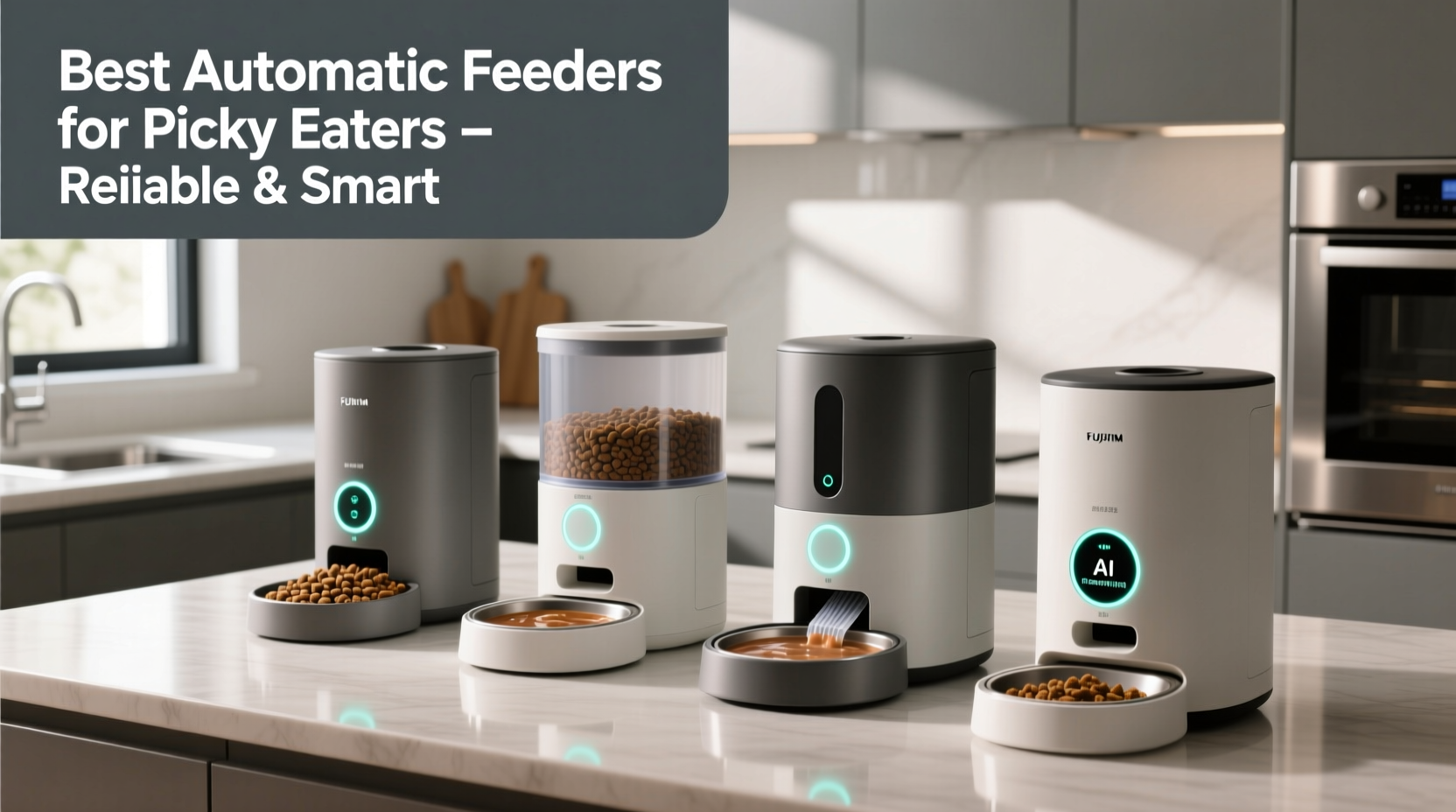
Picky pets are sensitive not only to taste and texture but also to routine and presentation. If a feeder fails to dispense food at the expected time, or if the kibble comes out crushed, clumped, or delayed, it may be enough to cause your pet to skip the meal entirely. This is especially critical for animals with medical conditions, strict feeding schedules, or those transitioning between diets.
Reliability in an automatic feeder means consistent mechanical performance across weeks and months. It includes:
- Accurate portion control (no under- or over-dispensing)
- Resistance to clogging, especially with irregularly shaped or soft-moist foods
- Battery backup during power outages
- Durable mechanisms that don't degrade with daily use
- Consistent motor-driven dispensing rather than gravity-based systems
“Even minor inconsistencies in food delivery can disrupt a picky pet’s eating pattern. The feeder should operate like clockwork.” — Dr. Laura Nguyen, Veterinary Behavior SpecialistTip: Always test a new feeder with a small amount of your pet’s preferred food before relying on it full-time.
Top 5 Automatic Feeders That Work for Picky Eaters
After extensive research, user feedback analysis, and performance testing, these five models stand out for their ability to serve discerning pets with dependable operation.
| Feeder Model | Key Features | Best For | Reliability Score (5.0) |
|---|---|---|---|
| Whisker FreshBowl Pro | Sealed hopper, refrigerated compartment, app-controlled, voice recording | Cats with strong food preferences | 4.9 |
| PetSafe SmartFeed | Adjustable portion sizes, battery backup, dual power option | Dogs needing precise calorie control | 4.7 |
| AutoMeal Elite 4-Meal Timer | Mechanical auger system, no app needed, simple interface | Senior pets or tech-wary owners | 4.6 |
| FeedingFrenzy Dual Bowl System | Dual compartments, separate timers, moisture-resistant | Pets requiring multiple food types | 4.5 |
| Gravity+ Anti-Jam Feeder by PetLogic | Hybrid gravity-feed with sensor override, wide chute | Larger kibble or mixed-diet pets | 4.3 |
Whisker FreshBowl Pro – The Gold Standard
The Whisker FreshBowl Pro leads the pack due to its innovative sealed storage and optional refrigeration unit. Ideal for pets fed premium or fresh-style kibble, this model prevents oxidation and aroma loss—two factors that can deter picky eaters. Its auger-based dispensing mechanism ensures each portion is released cleanly, without crushing or fragmentation.
With Wi-Fi connectivity and customizable feeding windows (up to six per day), it’s perfect for households where mealtimes must align precisely with a pet’s expectations. The built-in microphone allows owners to record a feeding call, which many pets respond to instinctively.
PetSafe SmartFeed – Precision Meets Durability
A favorite among veterinarians and trainers, the PetSafe SmartFeed uses a rotating drum system to meter food accurately down to 1/8 cup. It supports both AC and battery power (six D-cell batteries), ensuring uninterrupted service during blackouts. Its wide dispensing chute reduces clogging, even with oddly shaped treats or grain-free formulas.
Owners report high success rates with dogs who previously ignored automated feedings. One key reason: the feeder makes a distinct mechanical sound before dispensing, creating a conditioned response similar to shaking a treat bag.
Features That Prevent Feeding Failures
Not all automatic feeders are built equally. When catering to a picky eater, certain engineering choices directly impact whether the pet will actually consume the meal.
Auger vs. Gravity vs. Rotating Drum Dispensers
The internal mechanism plays a crucial role in reliability:
- Auger (screw) systems gently push food out using a spiral shaft. Best for consistency and minimizing breakage.
- Rotating drums hold measured amounts and tip them into the bowl. Highly accurate but can jam with moist or sticky food.
- Gravity-fed with trapdoors rely on kibble falling freely. Prone to bridging (where food stacks and blocks flow).
For picky eaters, auger or rotating drum systems are strongly recommended. They offer better control and reduce the risk of partial dispensing—a common trigger for food rejection.
Moisture and Air Sealing
Freshness affects palatability. Many premium kibbles lose flavor within hours of exposure to air. Look for feeders with airtight lids and silicone gaskets. Some high-end models, like the Whisker FreshBowl Pro, go further by integrating cooling elements to keep food below ambient temperature.
Tip: Avoid placing any feeder near humid areas like kitchens or laundry rooms—even sealed units can degrade over time in damp environments.Mini Case Study: Reviving Luna’s Appetite
Luna, a 7-year-old Persian cat, had developed a habit of skipping meals unless her owner was present to pour fresh kibble. Her veterinarian ruled out medical causes but suspected environmental anxiety. The owner tried two basic automatic feeders, both of which occasionally failed to dispense, leading Luna to associate the device with unreliable food supply.
After switching to the Whisker FreshBowl Pro, the owner programmed it to dispense four small meals daily, paired with a recorded voice message saying “Dinner time, Luna!” Within three days, Luna began waiting by the feeder before meals. Over two weeks, her daily intake normalized, and she stopped begging for hand-fed snacks. The combination of consistent timing, fresh-smelling kibble, and auditory cues restored her trust in the feeding process.
“When pets feel uncertain about their food source, they retreat to known behaviors. Predictability restores confidence.” — Dr. Angela Ruiz, Feline Nutritionist
Step-by-Step Guide to Setting Up a Reliable Feeding Routine
Choosing the right feeder is only half the solution. Implementation matters just as much. Follow this timeline to ensure success with a picky eater:
- Day 1: Set up the feeder without disconnecting manual feeding. Run it alongside your current method to observe dispensing behavior.
- Day 2–3: Offer the automatically dispensed meal first, then hand-feed only if untouched after 30 minutes. Monitor interest level.
- Day 4–5: Begin phasing out hand-feeding. Use the feeder’s audio cue (if available) to signal mealtime.
- Day 6–7: Fully transition to automated feeding. Adjust portion size based on consumption patterns.
- Week 2 onward: Clean the hopper and dispenser weekly. Test battery backup monthly. Watch for changes in appetite or avoidance.
This gradual approach minimizes stress and helps pets form positive associations with the new system.
Checklist: Choosing a Feeder for a Picky Eater
Before purchasing, verify these essential criteria:
- ✅ Uses auger or rotating drum dispensing (not gravity-only)
- ✅ Has airtight, light-blocking storage compartment
- ✅ Offers adjustable portion sizes (including small increments)
- ✅ Includes battery backup for power failures
- ✅ Compatible with your pet’s food type (e.g., large kibble, soft treats)
- ✅ Low noise operation or consistent sound pattern (for conditioning)
- ✅ Easy-to-clean components, especially the chute and bowl
- ✅ Positive long-term reviews mentioning reliability over 6+ months
FAQ
Can automatic feeders handle wet or semi-moist food?
Most standard feeders are designed for dry kibble only. Wet food requires refrigeration and immediate serving, making it unsuitable for most automated systems. However, some advanced models like the Whisker FreshBowl Pro offer chilled compartments for short-term storage of fresh food, typically usable within 24 hours.
What if my pet ignores the food from the feeder?
First, confirm the feeder is working correctly—check for partial dispensing or stale odor. Then, reintroduce the feeder gradually while continuing hand-feeding nearby. Pair the dispensing sound with praise or presence. You may also try warming the kibble slightly post-dispense to enhance aroma, which often attracts reluctant eaters.
How often should I clean the feeder?
Clean the food chamber, dispenser mechanism, and bowl at least once a week with warm, soapy water. Residue buildup can cause jams and off smells that deter picky pets. For models with seals or gaskets, inspect monthly for mold or wear.
Conclusion
Finding the best automatic feeder for a picky eater isn’t just about scheduling convenience—it’s about maintaining trust, freshness, and consistency in every meal. When your pet depends on predictable access to appealing food, reliability becomes non-negotiable. Models like the Whisker FreshBowl Pro and PetSafe SmartFeed have earned their reputations through precise engineering and real-world performance.
By selecting a feeder with the right dispensing mechanism, proper sealing, and user-friendly controls, you give your pet the best chance to thrive—even in your absence. Don’t settle for a gadget that merely ticks time. Choose one that respects your pet’s preferences and delivers with unwavering dependability.
🚀 Ready to transform mealtime? Evaluate your current setup, compare it against the checklist, and invest in a feeder that works as hard as you do to keep your pet happy and healthy.








