Small aquariums present unique aesthetic challenges. Limited space can make fish appear crowded and tank decor feel cramped. However, one of the most effective yet underrated tools for transforming a compact setup is the right aquarium background. When chosen wisely, a background doesn’t just hide equipment—it creates visual depth, enhances colors, and gives the illusion of a much larger underwater world. Unlike adding more lighting or rearranging hardscape, installing a well-designed background offers immediate spatial transformation with minimal effort.
The science behind this effect lies in perception. The human eye—and by extension, how we interpret an aquarium’s size—relies heavily on context. A plain white wall behind a tank emphasizes its boundaries, reinforcing its physical dimensions. In contrast, a thoughtfully selected background introduces gradients, textures, and imagery that trick the brain into perceiving greater distance. This article explores the most effective aquarium backgrounds for enhancing perceived size, evaluates material options, and provides practical guidance for installation and customization.
How Aquarium Backgrounds Create Depth
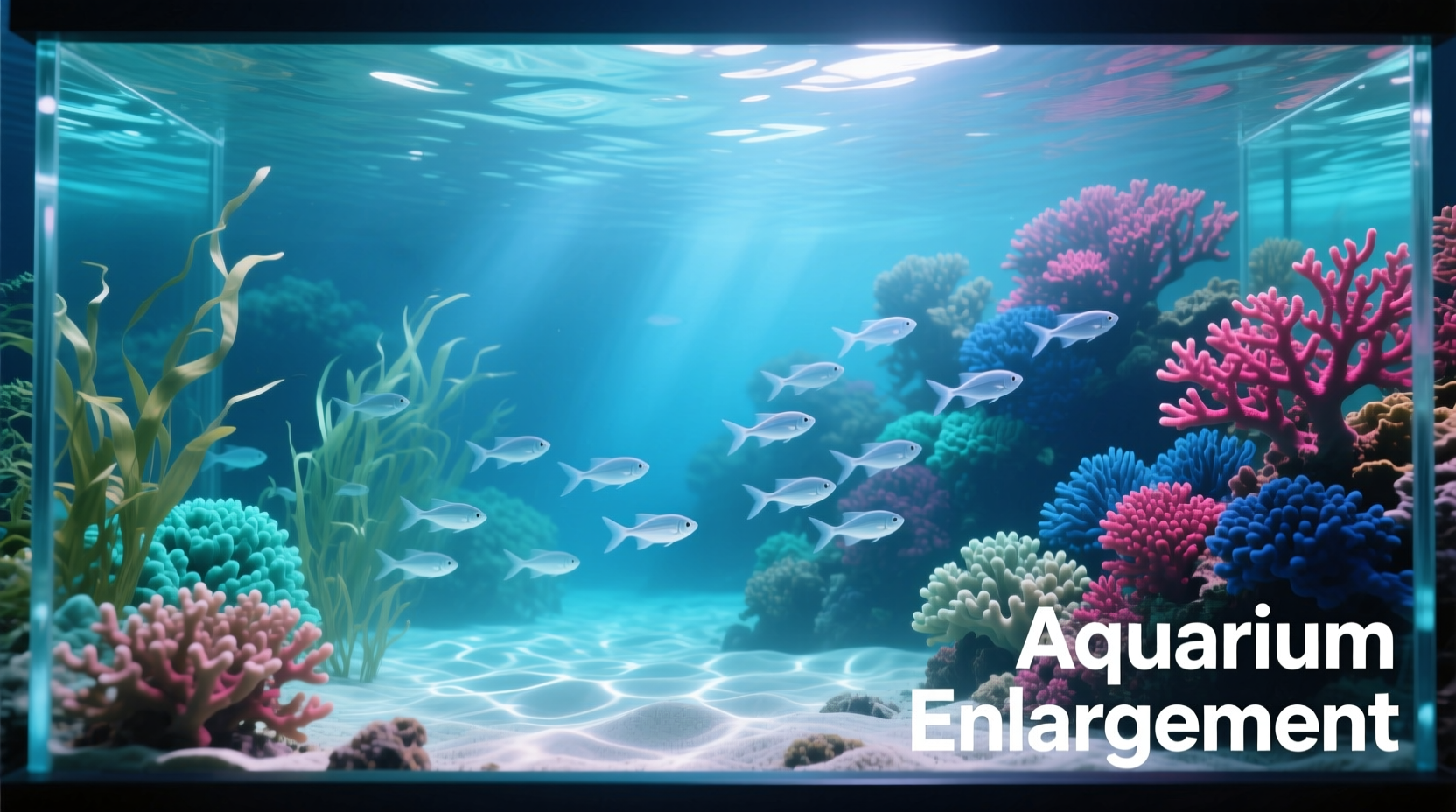
Visual depth in aquarium design stems from several psychological and optical principles. Foreground objects appear sharp and detailed, while distant ones are softer and less defined. A good background mimics this natural gradient. Solid-color backgrounds, especially dark ones, absorb light and recede visually, making the front of the tank appear farther away. Textured or image-based backgrounds go further by simulating realistic environments such as coral reefs, dense forests, or open ocean expanses.
One key factor is contrast. High-contrast elements at the front (like bright plants or colorful fish) against a low-contrast, blurred background enhance the sense of layering. This technique, borrowed from photography and cinematography, is known as “depth stacking.” Another principle is continuity: when the background seamlessly extends beyond the tank’s edges, it disrupts the viewer’s ability to pinpoint boundaries, effectively dissolving the tank’s physical limits.
Tip: Use matte-finish backgrounds to reduce glare and reflections, which can break the illusion of depth.Top 5 Types of Aquarium Backgrounds for Expanding Visual Space
Not all backgrounds deliver equal results. Some amplify spatial perception; others may even make a tank feel smaller. Below are the five most effective types, ranked by their ability to create the illusion of size, ease of use, and compatibility with standard tank setups.
- 3D Foam Panels – Molded from closed-cell foam, these textured panels attach directly to the back of the tank. Their raised surfaces cast subtle shadows, mimicking rock formations or cave walls. Because they add physical dimension, they break up flatness and suggest recessed space.
- Gradient Vinyl Films – These self-adhesive sheets feature smooth color transitions, typically from dark blue at the top to black at the bottom. The fade effect suggests infinite depth, similar to looking into open water. They’re easy to cut and install.
- Natural Cork Sheets – Organic and eco-friendly, cork backgrounds provide a soft, earthy texture. While not printed with images, their irregular surface diffuses light naturally and pairs well with planted tanks, suggesting a forest floor or riverbank.
- Custom Printed Murals – High-resolution prints of deep-sea scenes, sunken ships, or jungle vistas can be tailored to your tank’s dimensions. The realism pulls the eye outward, making the tank feel like a window into a larger ecosystem.
- DIY Painted Backdrops – For creative aquarists, hand-painting a background with acrylics on waterproof board allows full control over color, texture, and theme. Gradual blending of blues and greens can simulate underwater fog or distant terrain.
Among these, gradient vinyl and 3D foam consistently rank highest in user satisfaction for small tanks under 30 gallons, according to a 2023 survey by the Aquatic Design Guild.
Material Comparison: Pros, Cons, and Best Uses
| Material | Pros | Cons | Best For |
|---|---|---|---|
| 3D Foam Panels | Creates real depth, durable, hides equipment well | Can trap algae if not sealed, harder to clean | Tanks with visible filters or heaters |
| Gradient Vinyl | Easy installation, affordable, non-toxic options available | Limited texture, may peel over time | Budget-conscious beginners |
| Cork Sheets | Natural look, breathable, promotes biofilm balance | May discolor over time, not ideal for marine tanks | Planted freshwater setups |
| Printed Murals | Highly immersive, customizable themes | Expensive, reflective if glossy | Show tanks or themed displays |
| Hand-Painted | Unique, artistic control, deeply personal | Time-consuming, requires skill | Experienced hobbyists |
Step-by-Step: Installing a Background for Maximum Effect
Even the best background will fail if installed poorly. Follow this sequence to ensure optimal visual impact:
- Measure Your Tank – Record the exact height and width of the back panel. Add half an inch to each dimension if you plan to wrap the edges slightly.
- Clean the Glass Thoroughly – Use isopropyl alcohol and a lint-free cloth to remove fingerprints, dust, and residues. Any debris will show through transparent films.
- Dry-Fit the Background – Hold the material in place without adhering it. Check alignment and ensure no wrinkles or bubbles are forming.
- Apply Adhesive (If Needed) – For vinyl, use aquarium-safe silicone around the edges. Avoid glues with solvents. Foam panels often come with adhesive backing—activate with water or pressure.
- Install from Top to Bottom – Smooth the material downward using a credit card or squeegee to eliminate air pockets.
- Fill the Tank Gradually – Wait at least 24 hours before adding water. Pour slowly down a plate to avoid dislodging the background.
- Evaluate After Setup – View the tank from multiple angles. If reflections occur, consider adding a hood or adjusting room lighting.
Expert Insight: What Professionals Recommend
Aquascaping professionals emphasize that background choice should align with overall tank composition. Dr. Lena Torres, marine biologist and exhibit designer at the Pacific Ocean Center, explains:
“The background isn’t decoration—it’s part of the habitat narrative. In small tanks, I always recommend dark gradients or 3D textures because they support behavioral enrichment. Fish feel more secure when they can’t see surrounding movement, and viewers perceive more space due to reduced visual clutter.” — Dr. Lena Torres, Aquatic Exhibit Designer
This dual benefit—enhancing both animal welfare and human perception—makes background selection a critical step in responsible aquarium design.
Real Example: Transforming a 10-Gallon Nano Tank
Mark R., a hobbyist from Portland, struggled with his 10-gallon freshwater tank. Despite healthy plants and active tetras, the setup felt “boxed in” and uninviting. He initially used a plain black poster board, which helped but created harsh contrasts. After researching depth-enhancing solutions, he replaced it with a gradient blue-to-black vinyl film and added floating plants to soften the water’s surface reflection.
The change was dramatic. Guests regularly asked if the tank was a 20-gallon due to the apparent depth. Mark noted calmer fish behavior and easier photography. “It’s like putting on glasses,” he said. “Suddenly everything had dimension.”
Checklist: Choosing & Installing the Right Background
- ☐ Measure tank dimensions accurately
- ☐ Choose a material compatible with your tank type (freshwater vs. saltwater)
- ☐ Opt for dark or gradient tones to maximize depth illusion
- ☐ Ensure the material is non-toxic and aquarium-safe
- ☐ Clean glass thoroughly before application
- ☐ Install in a dust-free environment
- ☐ Allow adhesive to cure before filling
- ☐ Assess visual impact from typical viewing angles
Frequently Asked Questions
Can I use regular wallpaper as an aquarium background?
No. Standard wallpaper contains adhesives and dyes that can leach toxins into the water. Always use products labeled as aquarium-safe. If you want a custom print, have it laminated with food-grade sealant or sandwich it between acrylic sheets.
Will a background affect plant growth?
Indirectly, yes. Darker backgrounds absorb more light, which can reduce overall tank brightness. Compensate by increasing LED intensity slightly or positioning lights closer to the water surface. Most aquatic plants adapt well as long as PAR values remain sufficient.
How do I clean a background without damaging it?
For vinyl or foam, use a soft sponge and tank water during routine maintenance. Avoid scrubbing. Cork should never be cleaned directly—rely on biological stability to prevent buildup. Replace murals only if peeling or discoloration occurs.
Final Recommendations for Long-Term Success
The best aquarium backgrounds do more than conceal—they transform. For small tanks, the goal is not to hide the enclosure but to transcend it. Gradient vinyl and 3D foam offer the strongest return on investment for beginners and experts alike. When paired with proper lighting and strategic hardscaping, these backgrounds create immersive environments where fish thrive and viewers lean in, trying to glimpse what lies beyond.
Remember, the background sets the stage. It influences mood, perception, and even fish behavior. Take time to select one that complements your aquascape rather than competes with it. Neutral tones often work better than busy patterns, especially in nano tanks where every inch counts.
“An aquarium is not just a container of water—it’s a frame for an experience. The background is the edge of that frame. Get it right, and the world inside feels limitless.” — Rafael Jin, Award-Winning Aquascaper
Take Action Today
Your small tank doesn’t need to stay small in appearance. With a single afternoon and a modest investment, you can dramatically expand its visual footprint. Measure your tank, choose a depth-enhancing background, and install it using the steps outlined here. Observe the difference—not just in how the tank looks, but in how your fish behave and how guests respond. Share your transformation online or with fellow hobbyists. Small tanks deserve big beauty. Give yours the depth it deserves.
💬 Have you upgraded your tank with a new background? Share your results, tips, or questions in the comments—your experience could inspire another aquarist to see their tank in a whole new light.








