For men building a consistent grooming routine, few decisions spark more debate than whether to use beard oil, beard balm, or both. With countless products flooding the market—each promising softer hair, reduced itch, and a polished look—it's easy to feel overwhelmed. Are these two staples truly distinct? Can one replace the other? And perhaps most importantly, is it necessary to invest in both?
The short answer: not always. But understanding the unique roles of beard oil and beard balm—and how they complement each other—can transform your grooming experience from routine maintenance to intentional self-care.
Understanding Beard Oil: Hydration and Nourishment
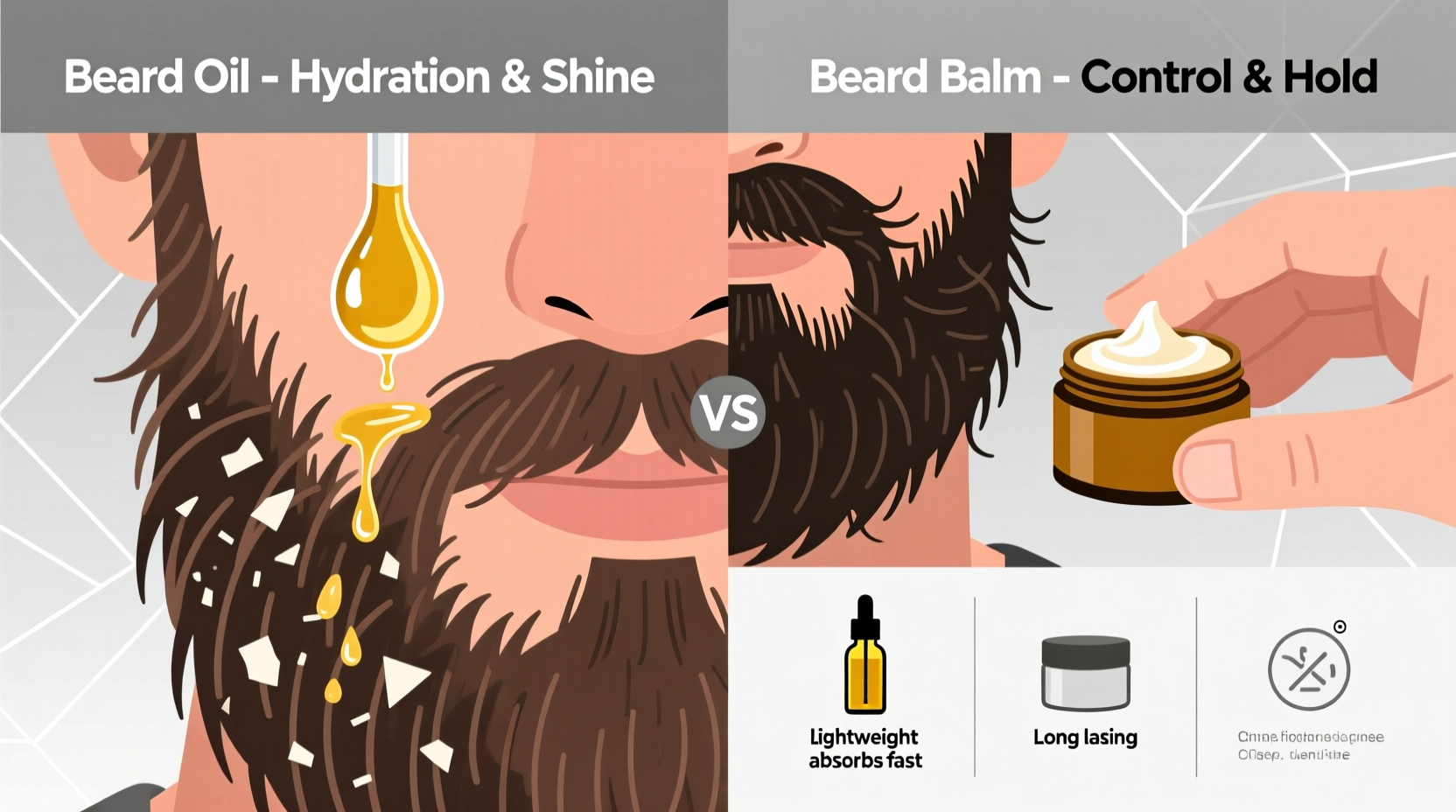
Beard oil is primarily designed to moisturize both facial hair and the skin beneath. As beards grow, the natural oils produced by your skin (sebum) struggle to travel down longer strands, leading to dryness, brittleness, and irritation. Beard oil bridges this gap.
Most formulations combine carrier oils—like jojoba, argan, or grapeseed—with essential oils for fragrance. Jojoba oil, for instance, closely mimics human sebum, making it highly effective at penetrating the hair shaft and hydrating the follicle without clogging pores.
Key benefits include:
- Reduces beard itch during early growth stages
- Softens coarse hair over time
- Prevents flakiness and dandruff (often called \"beardruff\")
- Improves shine and manageability
Application is simple: a few drops warmed between palms and massaged into the beard and underlying skin. It absorbs quickly, leaving no greasy residue when used correctly.
Tip: Apply beard oil after a shower when pores are open and hair is clean for maximum absorption.What Beard Balm Does: Hold, Shape, and Moisture
If beard oil is about internal nourishment, beard balm is about external control. Think of it as the styling product of your grooming arsenal. Most balms contain a base of beeswax or shea butter, combined with similar carrier oils found in beard oils. This gives them a thicker consistency and light hold.
The wax component allows you to tame flyaways, shape your beard, and maintain a neat appearance throughout the day—especially useful for medium to long beards. Unlike heavy pomades or gels, quality beard balms don’t harden or flake; they offer flexible control while still conditioning.
Additional advantages include:
- Provides light-to-medium hold for shaping sideburns, mustaches, and jawlines
- Locks in moisture after applying beard oil
- Adds subtle texture and volume
- Protects against environmental factors like wind and dry air
Because of its thicker texture, beard balm requires slightly more effort to apply. Scoop a small amount with your fingernail, warm it between your palms, then work it through the beard from root to tip before styling with a comb or brush.
Head-to-Head Comparison: Key Differences
To clarify the distinction, here’s a direct comparison of beard oil and beard balm across critical categories:
| Feature | Beard Oil | Beard Balm |
|---|---|---|
| Primary Function | Hydrate skin and hair | Style and condition with light hold |
| Texture | Liquid, fast-absorbing | Creamy, waxy, semi-solid |
| Main Ingredients | Carrier oils + essential oils | Carrier oils + beeswax/butter + essential oils |
| Best For | Dry skin, short to medium beards, daily hydration | Longer beards, taming frizz, all-day shaping |
| Hold Level | None | Light to medium |
| Shine Level | Medium to high (natural sheen) | Low to medium (matte finish) |
| Application Time | Morning or post-shower | After oil, as finishing step |
This table underscores a fundamental truth: beard oil addresses health, while beard balm addresses form. They serve different purposes but are not mutually exclusive.
Do You Need Both? A Practical Guide
You don’t *need* both products—but using them together can elevate your grooming game significantly. The decision depends on your beard length, skin type, lifestyle, and aesthetic goals.
Consider this real-world scenario:
Mini Case Study: James, a 34-year-old project manager, grew his beard over eight months. At first, he used only beard oil to combat itchiness. By month five, his beard became unruly—especially the cheek lines and mustache. He started using beard balm in the mornings after applying oil. Within days, he noticed better control, less morning bed-head beard, and fewer complaints from colleagues about “wild” hairs. His skin stayed hydrated, and his beard looked groomed without looking stiff.
James’s experience reflects a common progression. Many men begin with beard oil alone and add balm as their beard matures. However, someone with a short stubble or patchy growth may never need balm. Conversely, a man with thick, curly hair in a dry climate might benefit from both daily.
Here’s a checklist to help determine if you should consider using both:
Checklist: Do You Need Both Beard Oil and Balm?- ☑ Beard is longer than 1 inch
- ☑ Experience flyaways or difficulty shaping
- ☑ Live in a dry or cold climate
- ☑ Skin under beard tends to get dry or itchy
- ☑ Want a polished, put-together appearance daily
- ☑ Already use beard oil but lack control
If three or more apply, combining both products is likely beneficial.
Expert Insight: What Professionals Say
Grooming experts emphasize that layering products isn’t excess—it’s strategy. Just as skincare routines often combine serums and moisturizers, beard care can benefit from targeted layers.
��Using beard oil and balm together is like pairing a serum with a daytime moisturizer with SPF. One feeds the skin, the other protects and sets the finish. For anyone serious about beard health and presentation, this duo makes perfect sense.” — Marcus Reed, Master Barber & Founder of Urban Timber Grooming Co.
Reed also warns against overapplication: “More isn’t better. Start with a dime-sized amount of balm and 3–5 drops of oil. Adjust based on beard density, not length alone.”
How to Use Them Together: A Step-by-Step Routine
If you decide to use both, order matters. Follow this sequence for optimal results:
- Wash and towel-dry your beard – Clean hair absorbs products better. Use a beard-specific shampoo 2–3 times per week.
- Apply beard oil first – Dispense 3–6 drops (depending on beard size), rub between palms, and massage into the skin beneath the beard. Work outward to coat each strand.
- Wait 1–2 minutes – Allow the oil to absorb into the skin and hair shaft.
- Apply beard balm – Scoop a pea- to dime-sized amount, warm it thoroughly, then distribute evenly through the beard. Focus on ends and areas needing shaping.
- Style with a comb or brush – Use a boar bristle brush to distribute oils, train hair direction, and achieve a smooth finish.
- Optional: Reapply balm midday – If your beard loses shape, a tiny touch-up (no oil reapplication needed) can refresh your look.
This layered approach ensures deep hydration while providing structure. Skipping the oil and applying balm alone may lock in dryness; skipping balm after oil may leave a well-conditioned but untamed beard.
Frequently Asked Questions
Can I use beard balm instead of beard oil?
You can, but it’s not ideal. While beard balm contains oils, the wax content limits absorption. It won’t penetrate the skin as effectively as pure oil, potentially leaving you prone to dryness and itch. If you must choose one, opt for beard oil for overall health.
Will using both make my beard greasy?
Not if applied correctly. Overuse is the main culprit behind greasiness. Stick to recommended amounts: 3–5 drops of oil and a small scoop of balm. Adjust based on your beard’s response. If residue persists, wash and restart with less product.
Can I make my own beard oil and balm?
Absolutely. DIY options allow full control over ingredients. A basic beard oil mix is 1 oz jojoba oil + 10–15 drops of essential oil (e.g., cedarwood, sandalwood). For balm, melt 1 part beeswax, 1 part shea butter, and 3 parts carrier oil, then pour into tins. Test small batches first for scent and consistency.
Final Verdict: Complementary, Not Redundant
Beard oil and beard balm are not interchangeable, nor are they redundant. They address different aspects of beard care—one internal, one external. Whether you need both depends on your individual needs, but dismissing either outright could mean missing out on comfort, health, or appearance benefits.
Short beards or sensitive skin may thrive on oil alone. Long, thick, or curly beards often require the added control of balm. And for many men, especially those who value both softness and structure, using both in tandem delivers the best of both worlds.
The key is intentionality. Choose products based on your beard’s behavior, your environment, and your personal standards—not marketing hype. Read labels, test gradually, and adjust as your beard evolves.
💬 Ready to refine your routine? Start with beard oil if you haven’t already. After two weeks, assess whether you need more control. If yes, introduce a quality balm. Share your journey or ask questions in the comments—your insights could help another man grow with confidence.








