
Walking with a baby strapped to your body may seem like second nature after a few weeks of parenthood, but the reality is that not all carriers are created equal—especially when it comes to protecting your back during extended outings. Whether you're navigating city sidewalks, hiking trails, or simply strolling through a park, choosing between a baby wrap and a structured carrier can significantly impact your physical comfort, posture, and long-term spinal health. While both options offer hands-free convenience, their design, weight distribution, and ergonomic support vary dramatically.
The decision isn't just about personal preference—it's about biomechanics. Long walks place sustained stress on the lower back, shoulders, and hips. A poorly supported carry can lead to muscle strain, postural imbalances, or even chronic discomfort. Parents who regularly walk with their babies need a carrier that aligns with the body’s natural mechanics, supports proper hip positioning for the child, and minimizes load on the wearer’s spine. Understanding the functional differences between wraps and structured carriers is essential for making an informed choice.
Understanding the Core Differences
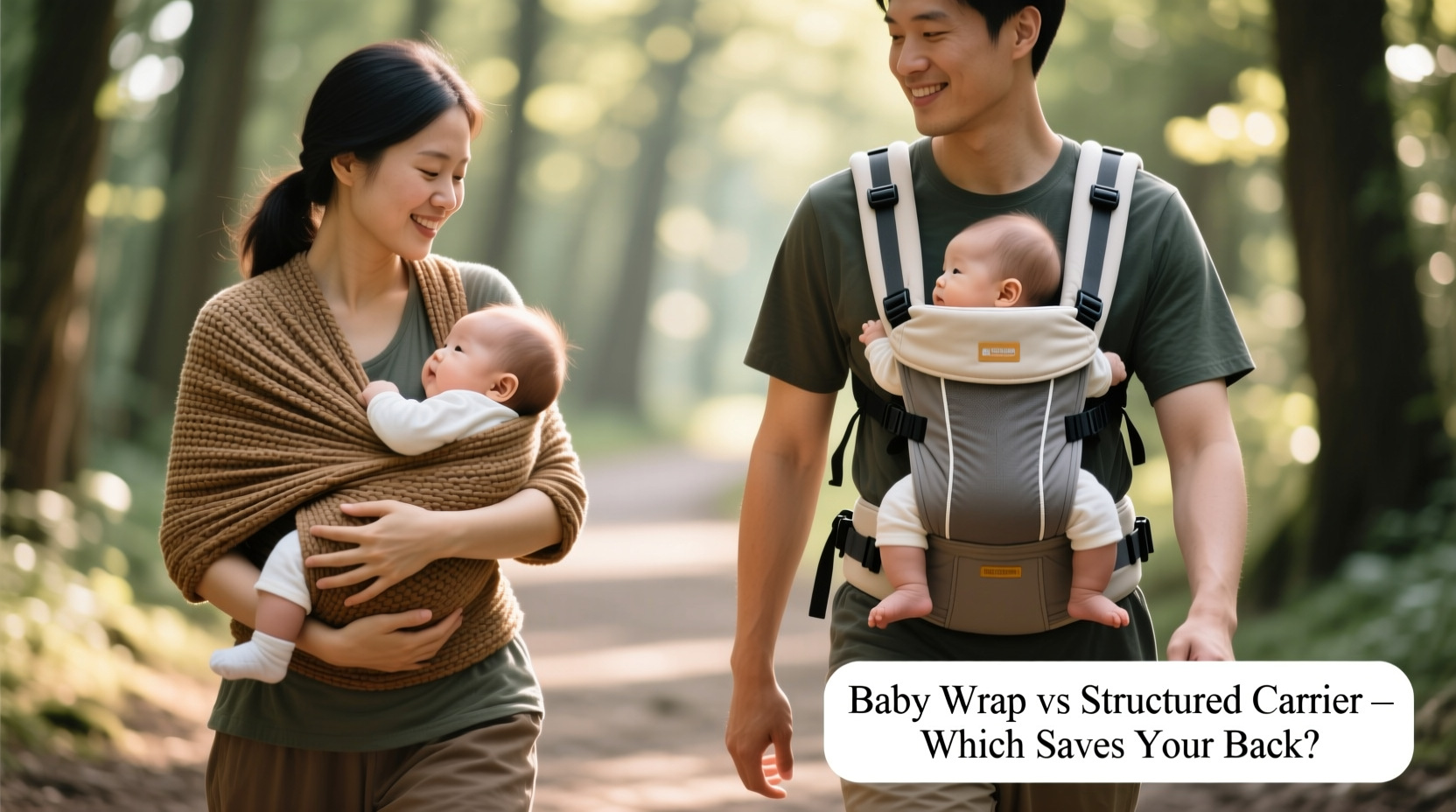
At first glance, a baby wrap and a structured carrier might appear to serve the same purpose: holding a baby close while freeing up the caregiver’s hands. However, their construction, method of use, and physiological impact diverge in key ways.
A **baby wrap** is typically a long piece of woven or stretchy fabric (ranging from 3 to 6 meters) that is tied around the wearer’s torso and shoulders to create a sling-like hold. Wraps require learning specific tying techniques—such as the front cross carry or ruck carry—and depend heavily on user skill for secure and comfortable placement. They conform closely to the body, offering a snug, custom fit that many parents describe as “wearing” rather than “carrying” the baby.
In contrast, a **structured carrier** features built-in shoulder straps, waist belts, buckles, and padded panels. These carriers are often referred to as \"ergonomic backpacks\" for babies. They come in various forms—soft-structured carriers (SSCs), mei tais, and frame-based systems—but all provide pre-shaped support with adjustable settings. The baby sits in a defined seat, and weight is distributed across the hips and shoulders via load-bearing components.
While wraps excel in adaptability and closeness, structured carriers prioritize support and ease of use. But when it comes to long-distance walking, which system truly protects the caregiver’s back?
Ergonomics and Spinal Load: What Research and Experts Say
From a biomechanical standpoint, prolonged carrying places demands on the lumbar spine, particularly when the load (the baby) is positioned forward. This creates an anterior shear force, increasing disc pressure and engaging core stabilizers continuously. How effectively a carrier mitigates this force determines its back-saving potential.
Dr. Laura Pizzichemi, a pediatric physical therapist and certified child passenger safety technician, explains:
“The ideal carrier shifts as much weight as possible to the hips, where the pelvis is designed to bear load. Carriers that rely solely on shoulder suspension increase strain on the thoracic and cervical spine, especially over time.”
This insight highlights a critical advantage of structured carriers: their integrated waist belts. By anchoring the carrier at the pelvis—essentially transferring up to 70% of the baby’s weight to the hips—these systems reduce reliance on the upper back and shoulders. In contrast, most traditional wraps (particularly stretchy ones) lack waist support and suspend the baby primarily from the shoulders, concentrating pressure along the trapezius and upper lumbar regions.
Woven wraps, however, present a nuanced case. When tied correctly using advanced techniques like the ruck carry or pocket carry, they can distribute weight across both shoulders and the upper back, creating a supportive hammock effect. But this requires expertise, precise tensioning, and frequent adjustments—skills that many new parents haven’t yet mastered. Improperly tied wraps can lead to uneven loading, slouching, or compromised posture, negating any potential benefit.
Tip: If using a wrap for long walks, practice tying it securely beforehand and check your posture in a mirror—your back should remain straight, not hunched.Comparative Analysis: Wrap vs Structured Carrier
| Feature | Baby Wrap | Structured Carrier |
|---|---|---|
| Weight Distribution | Shoulder and upper back dominant; limited hip support | Hips bear 60–70% via waist belt; shoulders assist |
| Adjustability | High—customizable fit based on tying method | Moderate—adjustable straps and buckles |
| Learning Curve | Steep—requires practice for safe, ergonomic carries | Gentle—intuitive setup with clear instructions |
| Back Support | Low to moderate—depends on technique and fabric | High—built-in lumbar padding and pelvic stabilization |
| Durability on Long Walks | Variable—can loosen or sag over time | Consistent—maintains tension and alignment |
| Baby Positioning | Natural M-position possible with proper technique | Guaranteed ergonomic seat with leg support |
The data suggests that structured carriers have a clear edge in back protection during extended use. Their engineered support systems are specifically designed to minimize spinal strain, making them a safer bet for walks lasting more than 30–45 minutes. That said, experienced users of woven wraps—particularly those using double hammock or ruck methods—report excellent comfort and minimal back fatigue, provided the wrap is well-tensioned and the wearer maintains good posture.
Real-World Scenario: A Parent’s Experience
Sophie, a mother of twins from Portland, Oregon, used a stretchy wrap for her first three months of babywearing. “I loved how soft and cozy it felt,” she recalls. “But during our daily 2-mile walks, I started getting sharp pains in my lower back by the 45-minute mark. I thought it was normal—just part of being a new mom.”
After consulting a chiropractor, she switched to a structured carrier with a wide, padded waistbelt. “The difference was immediate. I could walk for over an hour without discomfort. The weight felt anchored, not dangling. I didn’t realize how much my back was compensating until I stopped doing it.”
Sophie’s experience reflects a common pattern: initial emotional attachment to the “snugness” of wraps giving way to physical limitations during sustained activity. Her story underscores the importance of prioritizing function over familiarity when health is at stake.
Step-by-Step Guide to Choosing the Right Carrier for Long Walks
- Assess Your Typical Walking Duration: If you regularly walk more than 45 minutes, prioritize a carrier with hip support.
- Check Weight Distribution Features: Look for a structured carrier with a contoured waistbelt that sits above the hip bones and transfers load effectively.
- Test Posture Alignment: When wearing the carrier, ensure your spine remains neutral—no leaning forward or rounding shoulders.
- Consider Baby’s Age and Size: Newborns may fit well in wraps, but as babies grow (beyond 15 lbs), structured carriers become more practical and safer for the wearer’s back.
- Practice Transitions: Even with a structured carrier, improper tightening or asymmetrical adjustment can cause strain. Recheck fit midway through long walks.
When a Wrap Might Still Be the Better Option
Despite the advantages of structured carriers, wraps aren’t obsolete for long walks. Woven wraps—especially those made from stiff, supportive cotton or linen blends—can offer excellent back support when used correctly. Techniques like the ruck carry (a backpack-style carry) shift the baby high and centered, aligning their weight directly over the wearer’s center of gravity. This reduces torque on the spine and mimics balanced backpacking principles.
Additionally, wraps provide unmatched adaptability. They can be used in multiple positions—front, hip, and back—without reconfiguring hardware. For parents who switch carries mid-walk to relieve pressure points, this flexibility is invaluable. However, this benefit only applies to users who have mastered advanced tying methods and can maintain consistent tension throughout the walk.
Essential Checklist Before Buying or Using a Carrier
- ✅ Does the carrier support the baby’s hips in an M-shape (knees above bottom)?
- ✅ Is there a padded, load-bearing waistbelt for hip support?
- ✅ Can you maintain an upright posture without hunching?
- ✅ Is the shoulder strap width sufficient to avoid nerve compression?
- ✅ Have you tested the carrier with full clothing and shoes (simulating real conditions)?
- ✅ Does the carrier allow for easy breathing and monitoring of the baby?
- ✅ Have you consulted a certified babywearing educator if using complex wraps?
Frequently Asked Questions
Can I use a stretchy wrap for long walks?
Stretchy wraps are best suited for short durations and younger infants. Their elastic material can stretch under load, reducing support over time and increasing strain on the wearer’s back. For walks exceeding 30 minutes, a woven wrap or structured carrier is recommended.
Do all structured carriers protect the back equally?
No. Cheaper models may have narrow waistbelts or flimsy padding that fail to transfer weight effectively. Invest in a carrier with a wide, rigid waistband and anatomically shaped shoulder straps. Brands like Tula, Ergobaby, and Lillebaby are known for ergonomic engineering.
Is it safe to hike with a baby in a wrap?
For light trails and short distances, a properly tied woven wrap can be safe. However, for rugged terrain or extended hikes, a structured carrier with a frame or added lumbar support (like a hiking-specific model) is safer and more stable.
Final Verdict: Which One Saves Your Back?
For the majority of caregivers engaging in long walks, the structured carrier is the superior choice for back preservation. Its engineered weight distribution, consistent support, and ease of correct use make it a reliable option for daily wear. While skilled users can achieve excellent ergonomics with woven wraps, the margin for error is higher, and fatigue can set in more quickly without perfect tensioning.
Ultimately, the best carrier is one that supports both the baby and the wearer in a sustainable, healthy way. Back pain shouldn’t be a badge of parenting endurance. With thoughtful selection and proper use, babywearing can be comfortable, bonding, and physically manageable—even on mile-long adventures.
🚀 Ready to protect your back on every walk? Evaluate your current carrier using the checklist above, and consider upgrading if it lacks hip support or causes discomfort. Share your experience with other parents—your insight could help someone avoid months of back strain.








