
Choosing the right automated feeding solution for your pet is more than a matter of convenience—it’s about ensuring consistent nutrition, especially when dealing with wet food. Wet food spoils quickly, requires temperature control, and poses mechanical challenges in dispensing. As pet owners increasingly rely on technology to manage feeding schedules, two primary options emerge: automatic pet feeders and timed dispensers. While these terms are often used interchangeably, key differences exist—particularly in how they handle moisture-rich, perishable meals.
This article examines both systems in depth, focusing specifically on their ability to store, preserve, and dispense wet food effectively. From design mechanics to real-world usability, we’ll break down what sets them apart and help you determine which option better suits pets dependent on canned or fresh-style diets.
Understanding the Core Differences
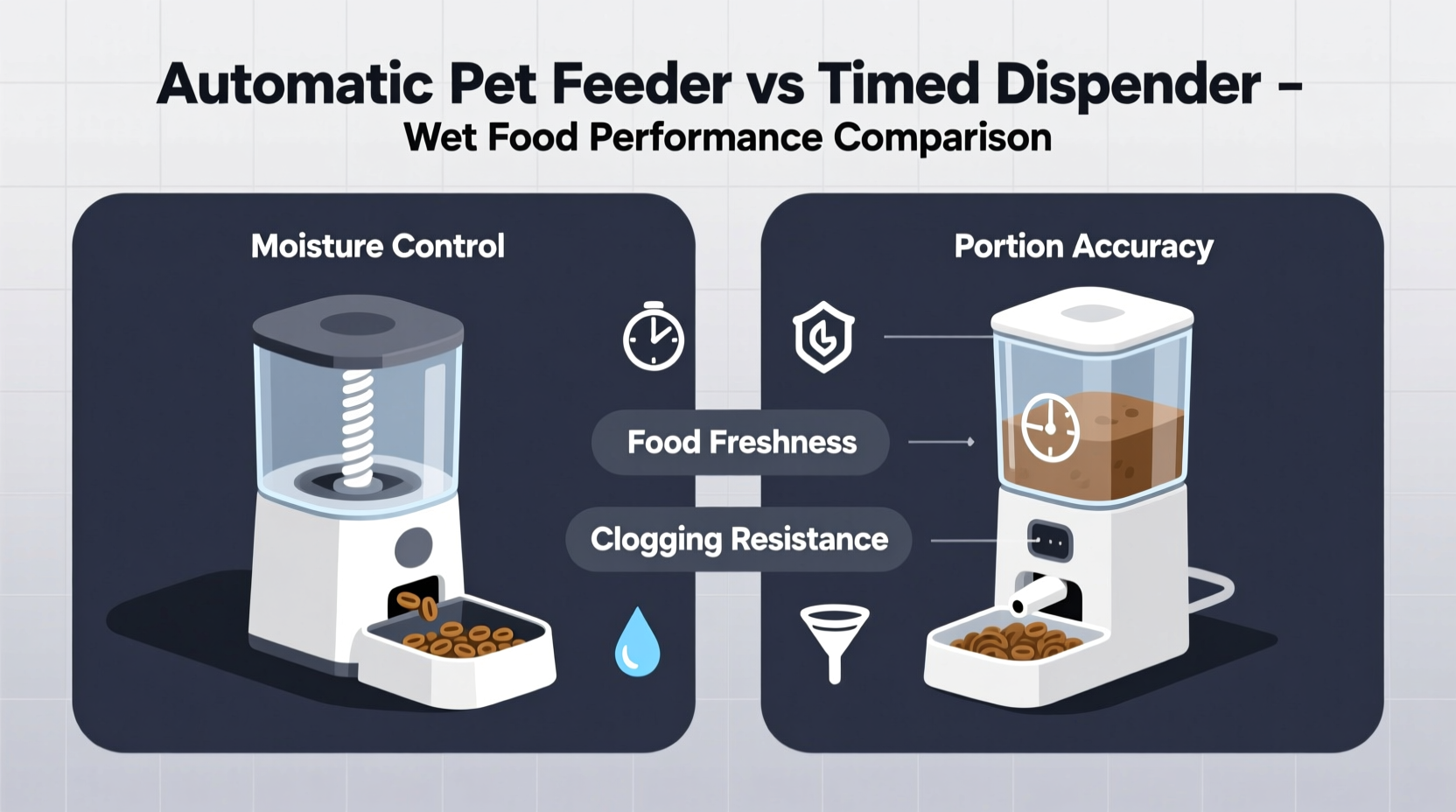
The confusion between “automatic pet feeder” and “timed dispenser” often stems from overlapping functionality. However, distinctions in design, capacity, and intended use can significantly impact performance with wet food.
An automatic pet feeder typically refers to a broader category of devices that automate meal delivery. These units may include features like portion control, mobile app integration, voice recording, and even camera monitoring. They are generally designed for dry kibble but have evolved to accommodate wet food—with varying success.
A timed dispenser, on the other hand, emphasizes precise scheduling. It operates on a clock-based mechanism, releasing food at pre-set intervals. Some models are engineered specifically for short-term storage of moist or refrigerated portions, making them potentially more suitable for wet food applications.
The critical factor isn’t just timing—it’s environmental control. Wet food begins degrading within 30 minutes at room temperature, developing bacterial growth and losing palatability. Any device claiming to handle wet food must address this issue through insulation, cooling, or single-use sealed compartments.
Wet Food Challenges in Automated Systems
Wet food presents unique obstacles that many standard feeders aren't built to overcome:
- Temperature sensitivity: Canned or pouch-based food should ideally be kept below 40°F (4°C) until serving.
- Stickiness and clumping: High-moisture content causes food to adhere to surfaces, clogging dispensing mechanisms.
- Odor development: Spoiling wet food emits strong odors, attracting pests and creating hygiene concerns.
- Portion consistency: Unlike dry kibble, wet food doesn’t flow freely, making accurate portioning harder.
These factors make most traditional gravity-fed or auger-based feeders unsuitable for wet food. Even models marketed as “wet food compatible” often require immediate consumption post-dispensing, limiting true automation benefits.
Tip: If using wet food in any automated feeder, never load more than one day’s worth—and only if the unit has active cooling or disposable trays.Comparative Analysis: Features That Matter
| Feature | Automatic Pet Feeder | Timed Dispenser |
|---|---|---|
| Primary Design Focus | Broad automation (scheduling, monitoring, alerts) | Precise time-based release |
| Wet Food Compatibility | Limited; mostly relies on ice packs or short exposure windows | Better; some models include refrigerated compartments |
| Dispensing Mechanism | Auger, paddle, or gravity drop (often clogs with wet food) | Servo-controlled tray release or rotating carousel |
| Cooling Capability | Rare; passive insulation only | Available in premium models (e.g., Pintofeed, Catlogie Cool) |
| App Integration | Common (Wi-Fi, notifications, manual override) | Less common; basic timer programming |
| Best For | Dry food, occasional mixed meals, remote monitoring | Frequent wet meals, temperature-sensitive diets |
As shown, while automatic feeders excel in connectivity and user interface, timed dispensers—especially those built for freshness—offer superior handling of perishable foods. The distinction becomes crucial for pets on prescription diets, kittens, or senior animals requiring high-moisture intake.
Real-World Performance: A Mini Case Study
Sarah Thompson, a veterinary technician from Portland, adopted a diabetic cat named Milo who requires three small, precisely timed meals of wet food daily. Initially, she used a popular Wi-Fi-enabled automatic feeder with multiple compartments. Within days, Milo began refusing meals left sitting for over 20 minutes. Sarah noticed condensation inside the chambers and a faint sour smell by midday.
She switched to a timed dispenser with a built-in thermoelectric cooler (the Catlogie FreshFeeder Pro). Each compartment holds a single sealed pouch, chilled until the exact feeding time. When the timer triggers, a motorized tray slides open, exposing the food only when it’s time to eat.
“The difference was immediate,” Sarah said. “Milo eats every portion now, and I don’t worry about spoilage during my 10-hour shifts.” She still uses her old automatic feeder for dry treats between meals, but for wet food, the timed, cooled model proved indispensable.
This case illustrates a growing trend: hybrid solutions where timed dispensers handle perishables, while smart feeders manage dry food supplementation.
“Pets on exclusive wet food diets need more than scheduling—they need freshness preservation. A timer without cooling is just a countdown to spoilage.” — Dr. Lena Patel, DVM, Small Animal Nutrition Specialist
Step-by-Step Guide to Choosing the Right System
Selecting the best device depends on your pet’s dietary needs and your lifestyle. Follow this sequence to make an informed decision:
- Assess your pet’s diet: Does your pet eat wet food exclusively, occasionally, or not at all? If wet food is a major component, prioritize cooling and quick-dispense features.
- Determine feeding frequency: Multiple wet meals per day favor timed dispensers with reliable clocks and independent compartments.
- Evaluate portion size: Larger portions increase spoilage risk. Choose a device with compartment sizes matching single servings.
- Check for active cooling: Look for models with thermoelectric coolers or refrigerated zones—not just insulated walls.
- Review cleaning accessibility: Moisture-prone components must be easy to disassemble and sanitize weekly.
- Test backup power options: Power outages can be dangerous. Units with battery backups (6+ hours) prevent missed meals.
- Read long-term user reviews: Pay attention to mentions of mold, jamming, or odor buildup—common red flags with wet food use.
Key Features to Demand for Wet Food Use
Not all devices are created equal. When shopping for a system that handles wet food well, insist on the following:
- Sealed, individual compartments: Prevent cross-contamination and allow pre-loading of multiple meals.
- Active cooling (not passive insulation): Thermoelectric or mini-compressor cooling maintains safe temperatures.
- Quick-exposure mechanism: Food should only be exposed seconds before feeding, minimizing air contact.
- Non-stick, dishwasher-safe trays: Essential for preventing residue buildup and simplifying cleaning.
- Humidity control or desiccant slots: Helps reduce internal condensation, which accelerates spoilage.
- Open-chamber alerts: Notifications if food hasn’t been retrieved within 15–30 minutes of dispensing.
Devices lacking these features may work for occasional wet snacks but are ill-suited for primary wet food diets.
FAQ: Common Questions About Wet Food Feeders
Can I use ice packs in a regular automatic feeder for wet food?
You can, but it’s not ideal. Ice packs melt within 4–6 hours, losing effectiveness. Condensation can also drip into food or electrical components. This method works only for short absences and isn’t a substitute for true refrigeration.
Are there feeders that automatically heat wet food?
A few advanced models (like the PetKit Fresh Element Solo) offer warming functions after dispensing. However, heating increases spoilage risk if food isn’t consumed immediately. Most veterinarians recommend serving wet food at room temperature rather than warmed unless medically necessary.
How often should I clean a wet food feeder?
After every use if storing perishable food. At minimum, wash and dry all food-contact surfaces daily. Perform a deep clean with pet-safe disinfectant weekly to prevent biofilm formation.
Checklist: Is Your Feeder Ready for Wet Food?
Before relying on any device for wet food, verify the following:
- ✅ Has a dedicated cooling system (not just insulation)
- ✅ Uses sealed or covered compartments
- ✅ Dispenses food directly into a bowl or accessible tray
- ✅ Allows precise timing (within 5-minute increments)
- ✅ Includes power backup (battery or UPS compatibility)
- ✅ Is made with BPA-free, odor-resistant materials
- ✅ Offers easy disassembly for cleaning
- ✅ Comes with a warranty of at least 1 year
If your current or prospective feeder doesn’t meet at least six of these criteria, reconsider its suitability for wet food.
Conclusion: Matching Technology to Dietary Needs
The choice between an automatic pet feeder and a timed dispenser ultimately hinges on how central wet food is to your pet’s diet. For pets eating primarily dry kibble with occasional wet toppings, a smart automatic feeder offers excellent value through app control and monitoring. But for pets reliant on frequent, perishable meals, a timed dispenser with active cooling isn’t just preferable—it’s essential.
Technology should enhance pet care, not compromise it. As manufacturers respond to demand for fresher, safer feeding options, the line between these two categories is blurring. The future lies in hybrid systems: intelligent, connected devices that combine precise timing with refrigeration, humidity control, and seamless integration into daily routines.
🚀 Ready to upgrade your pet’s feeding routine? Evaluate your current setup against the checklist above, and consider investing in a cooled timed dispenser if wet food is a staple. Your pet’s health—and appetite—will thank you.








