For pet owners, maintaining proper nutrition starts with portion control. Overfeeding is one of the leading causes of obesity in pets—over 50% of dogs and cats in the U.S. are overweight or obese, according to the Association for Pet Obesity Prevention. Whether you feed your pet manually or use an automatic feeder, how consistently and accurately meals are measured plays a critical role in their long-term health. The debate between automatic pet feeders and manual feeding isn’t just about convenience; it’s about precision, routine, and accountability. This article examines both approaches, focusing on how each impacts portion control, and provides evidence-based insights to help pet owners make informed decisions.
The Role of Portion Control in Pet Health
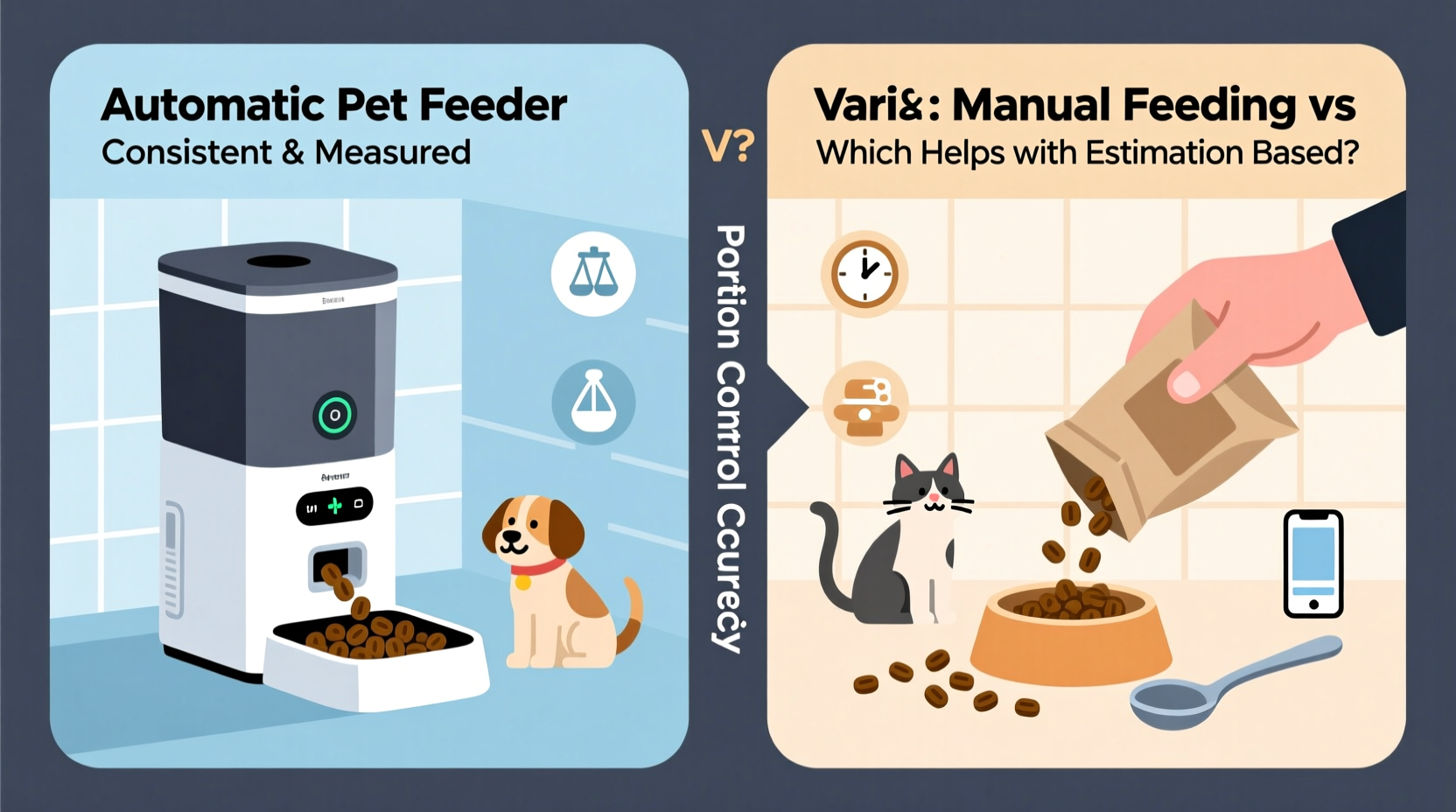
Portion control ensures that pets receive the right amount of calories and nutrients based on their age, weight, breed, and activity level. Too much food—even healthy food—can lead to weight gain, joint problems, diabetes, and reduced lifespan. On the flip side, underfeeding can result in malnutrition and low energy. Veterinarians emphasize that consistent meal sizes are key to preventing these issues.
Unlike humans, pets don’t self-regulate their intake well. Many will eat continuously if given access to food, making scheduled, measured meals essential. This is where portion control becomes non-negotiable. But how do we ensure consistency? That depends largely on the feeding method chosen.
Manual Feeding: Tradition, Touch, and Human Error
Manual feeding involves a human physically measuring and serving food at set times. It’s the most common method and offers direct interaction between pet and owner—a valuable bonding opportunity. However, its reliability for portion control depends heavily on human behavior, which introduces variability.
Common challenges include:
- Inconsistent measuring (e.g., eyeballing instead of using a measuring cup)
- Feeding extra treats without adjusting main meals
- Schedule disruptions due to travel, work, or illness
- Family members feeding at different times or amounts
A study published in the *Journal of the American Veterinary Medical Association* found that over 40% of pet owners underestimated how much they fed by more than 20%. This kind of unintentional overfeeding accumulates quickly and can add hundreds of excess calories per week.
“Even small deviations in daily portions can lead to significant weight changes over time. Consistency is as important as the initial calculation.” — Dr. Karen Becker, Integrative VeterinarianTip: Always use a standard measuring cup—not a kitchen spoon or random container—to serve pet food. Label the cup with your pet’s ideal portion size for quick reference.
Automatic Pet Feeders: Precision and Automation
Automatic feeders dispense pre-set amounts of food at scheduled times. Most models allow users to program multiple meals per day, set portion sizes down to the fraction of a cup, and even monitor feeding remotely via smartphone apps. These features offer distinct advantages when it comes to portion control.
Key benefits include:
- Consistent measurements: Once programmed, the same amount is dispensed every time.
- Timed delivery: Prevents free-feeding and supports metabolic regulation.
- Remote monitoring: Some feeders send alerts when meals are served or missed.
- Backup during absences: Ensures pets aren’t overfed by well-meaning guests or caregivers.
Advanced models feature portion-lock settings, voice recording, and anti-jam mechanisms. Some even integrate with smart home systems to align feeding with other routines like lighting or security checks.
However, not all automatic feeders are created equal. Low-end models may misfire, jam, or dispense uneven portions. Maintenance is also crucial—moisture, clumping, or mechanical wear can affect performance. Owners must still verify that the correct amount is being delivered, especially after refilling.
Choosing the Right Automatic Feeder for Portion Accuracy
When selecting a model focused on portion control, consider these factors:
- Adjustable portion settings: Look for devices that allow fine-tuning (e.g., 1/8 cup increments).
- Dual power options: Battery backup prevents disruption during outages.
- Transparent dispensing chamber: Lets you visually confirm portion size before release.
- User reviews focused on accuracy: Prioritize feedback about consistency over aesthetics.
- Compatibility with kibble size: Large or oddly shaped kibble may clog some mechanisms.
Comparing Both Methods: A Practical Breakdown
To understand which method better supports portion control, let’s compare them across key dimensions.
| Factor | Manual Feeding | Automatic Feeder |
|---|---|---|
| Portion Accuracy | Depends on user diligence; prone to variation | High, once properly calibrated |
| Consistency | Varies with schedule and caregiver | High—runs on fixed programming |
| Human Interaction | High—direct contact during feeding | Low unless owner is present |
| Travel/Flexibility | Requires someone else to feed | Operates independently |
| Error Risk | Overpouring, missed meals, double-feeding | Jams, power failure, programming errors |
| Cost | Minimal (only food and bowl) | $50–$200+ depending on features |
| Maintenance | Wash bowl regularly | Clean hopper, check mechanism monthly |
The table shows that while automatic feeders excel in precision and scheduling, they lack the personal touch of manual feeding. Yet when portion control is the priority, automation reduces human error—the single largest variable in inconsistent feeding.
Real-World Example: Managing a Cat’s Weight with Automation
Sarah, a software engineer from Portland, struggled to manage her 12-pound cat Milo’s weight. Despite following vet-recommended portions, Milo continued gaining weight. After tracking her habits, Sarah realized she often gave “just a little extra” when working late, and her partner occasionally fed Milo a second dinner, thinking the first had been skipped.
She invested in a mid-range automatic feeder with app notifications and programmed two 1/3-cup meals daily. Within six weeks, Milo lost 0.8 pounds and stabilized. The feeder’s logs helped her identify irregularities, and the family adapted to a unified routine. “It removed the guesswork,” Sarah said. “We weren’t being careless—we were just inconsistent. The machine doesn’t forget.”
This case illustrates how even well-intentioned manual feeding can undermine portion goals. Automation provided transparency, accountability, and consistency—all essential for effective weight management.
Step-by-Step Guide to Improving Portion Control
Whether you choose manual feeding or an automatic feeder, follow this sequence to maximize portion accuracy:
- Consult your veterinarian to determine your pet’s ideal daily calorie intake and portion size.
- Use a measuring cup labeled with your pet’s meal size—don’t rely on the scoop that comes with the food bag, which may be oversized.
- Divide daily intake into appropriate meals (typically 2–3 for adult pets).
- Choose your feeding method:
- If manual: designate one person as primary feeder and establish a visible log.
- If automatic: test dispensing accuracy and set reminders for refills.
- Track weight monthly using a pet scale or veterinary visits to adjust portions as needed.
- Limit treats to 10% of daily calories and record them in a feeding journal.
- Review and recalibrate every 3 months, especially if activity levels or life stages change.
Expert Recommendations and Industry Insights
Veterinary nutritionists increasingly recommend tools that support feeding consistency. Dr. Jennifer Larsen, a board-certified veterinary nutritionist at UC Davis, notes: “Technology isn’t replacing care—it’s enhancing it. When used correctly, automatic feeders can be excellent tools for managing chronic conditions like obesity or diabetes.”
However, experts caution against over-reliance. “The device is only as good as its setup,” says Dr. Larsen. “Owners must still engage, monitor, and validate what the machine does.”
Additionally, behavioral specialists warn that removing all human-fed meals can reduce bonding opportunities. A hybrid approach—using automation for main meals but offering one hand-fed session daily—can balance precision with connection.
Frequently Asked Questions
Can automatic feeders handle wet food or raw diets?
Most automatic feeders are designed for dry kibble. Wet food and raw diets require refrigeration and spoil quickly, making them unsuitable for standard models. Specialized feeders with cooling compartments exist but are rare and expensive. For portion-controlled wet food, manual feeding remains the best option.
What if my pet eats too fast, even with portion control?
Some pets gulp food rapidly, increasing the risk of bloat or regurgitation. In such cases, consider slow-feed bowls or puzzle feeders in combination with portion-controlled meals. These tools extend eating time without altering portion size.
Do automatic feeders work for multiple pets?
Only if pets are fed the same diet and schedule. If animals require different portions or foods, separation during feeding is necessary. Some owners use feeders in closed rooms or use microchip-activated feeders that open only for the designated pet.
Checklist: Optimizing Portion Control Regardless of Method
- ✓ Verified ideal portion size with a veterinarian
- ✓ Acquired a standardized measuring cup
- ✓ Established a consistent feeding schedule
- ✓ Assigned one household member as primary feeder
- ✓ Set up a feeding log or tracker
- ✓ Limited treats to 10% of daily intake
- ✓ Scheduled monthly weight checks
- ✓ Cleaned feeding equipment weekly
- ✓ Tested automatic feeder accuracy (if applicable)
- ✓ Planned for backup feeding during emergencies
Conclusion: Precision Matters More Than Method
The choice between automatic pet feeders and manual feeding ultimately hinges on lifestyle, budget, and commitment to consistency. While automatic feeders offer superior portion control through precise, repeatable dispensing, they are tools—not replacements—for engaged pet ownership. Manual feeding can achieve the same results, but only with rigorous discipline and awareness.
For pets needing strict dietary management—due to weight, medical conditions, or behavioral issues—automation provides a measurable advantage. For others, a well-structured manual routine with clear protocols can be equally effective.
The real takeaway is this: portion control isn’t about the tool you use—it’s about the intention behind it. Whether your hand or a machine delivers the food, what matters is that the right amount arrives at the right time, every time. Start today by measuring one meal accurately, logging it, and committing to consistency. Your pet’s health depends on it.
💬 Have experience with automatic feeders or portion control challenges? Share your story in the comments to help fellow pet owners find balance between convenience and care.








