
For cat owners, cleaning the litter box is a non-negotiable chore. Whether you're a seasoned pet parent or new to feline companionship, the daily ritual of scooping waste can feel tedious—especially on busy mornings or after long workdays. Enter the automatic litter box: a high-tech solution promising hands-free cleanup, odor control, and more time with your pet instead of bent over a plastic tray. But does it live up to the hype? And when glitches arise, is the convenience still worth the frustration?
This isn't just about laziness or luxury. It's about practicality, hygiene, budget, and understanding how technology fits into real-life pet care. Let’s break down the pros and cons of automatic versus traditional litter maintenance and determine whether that robotic upgrade delivers lasting value—or just another gadget gathering dust.
The Daily Grind: How Traditional Scooping Works
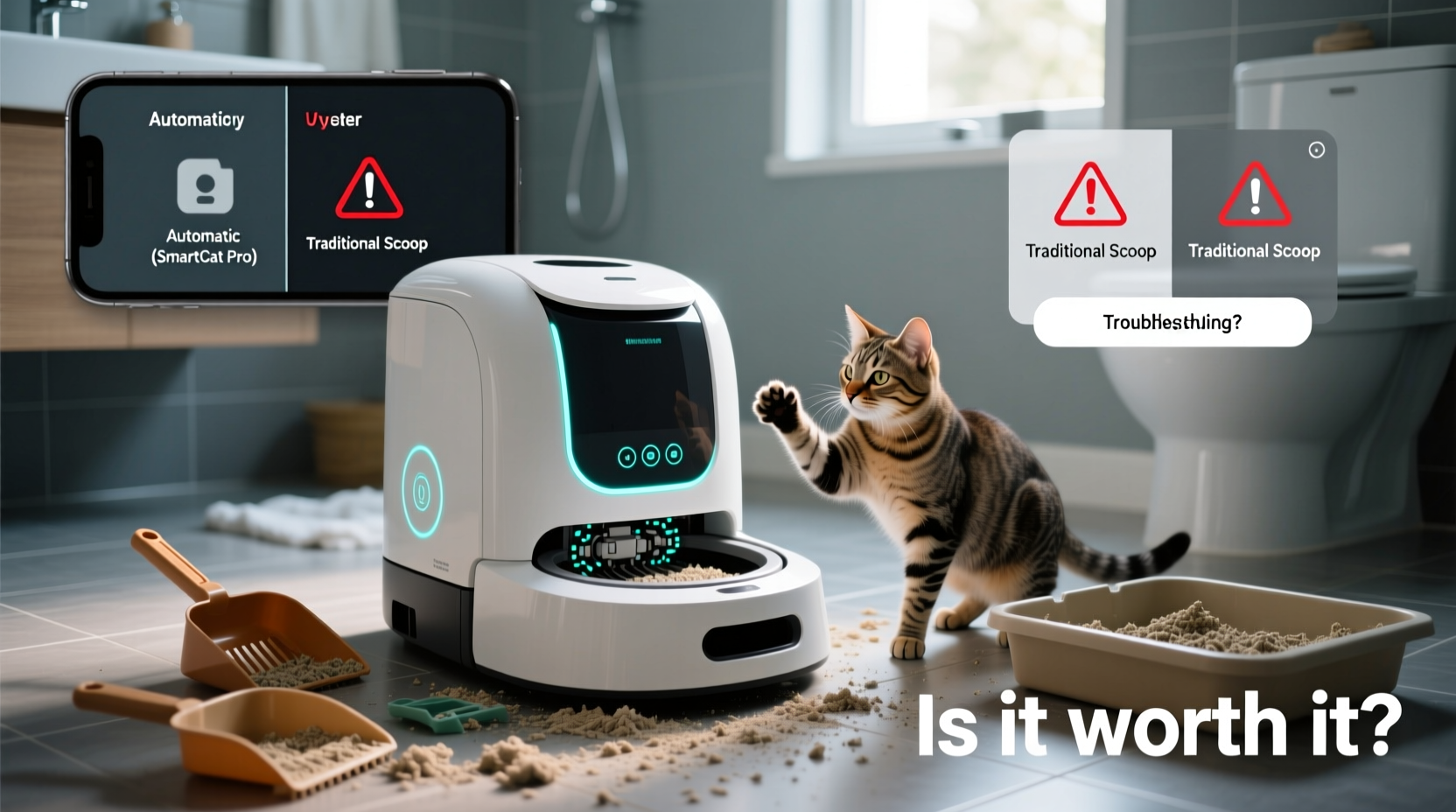
Scooping a litter box is straightforward: once or twice a day, you remove solid waste and clumps of urine-soaked litter using a handheld sifter. The rest stays in place until full replacement, which typically happens every 2–4 weeks depending on usage and litter type.
Traditional systems rely on absorbent, clumping clay or plant-based litters that form solid masses when wet. These are easy to isolate and dispose of, minimizing waste and preserving usable material. Many cat owners find this method predictable, affordable, and reliable—with no moving parts to fail.
The primary advantages include low upfront cost (a basic box and scoop cost under $30), complete control over cleaning frequency, and compatibility with nearly all cats. Some felines, especially those sensitive to noise or movement, distrust automated units and may avoid them entirely.
Tip: Use unscented, low-dust litter to reduce respiratory irritation for both you and your cat.How Automatic Litter Boxes Work—and Where They Fall Short
Automatic litter boxes use sensors, rakes, or rotating mechanisms to detect when a cat has used the box and initiate self-cleaning within minutes. Waste is separated from clean litter and deposited into a sealed compartment, often lined with a disposable bag. Popular models like the Litter-Robot, PetSafe Scooper, and CatGenie offer varying levels of automation, app connectivity, and waste disposal methods.
These devices promise freedom from daily scooping. For people with mobility issues, packed schedules, or multiple cats, that’s a compelling benefit. However, automation comes at a price—both financially and functionally.
Most units cost between $300 and $700, with some requiring proprietary accessories or subscription services. More critically, they introduce mechanical complexity. Motors stall, sensors misfire, and rakes jam—especially if your cat digs vigorously or produces unusually large waste. Moisture buildup, poor ventilation, or infrequent bag changes can also lead to odor leakage or bacterial growth inside the unit.
“While smart litter boxes reduce physical labor, they shift the burden from manual cleaning to technical maintenance.” — Dr. Lena Patel, DVM, Feline Behavior Consultant
Side-by-Side Comparison: Key Factors at a Glance
| Factor | Traditional Scooping | Automatic Litter Box |
|---|---|---|
| Upfront Cost | $10–$30 | $300–$700+ |
| Ongoing Costs | Litter only (~$15–$25/month) | Litter + bags/cartridges (~$30–$50/month) |
| Daily Time Commitment | 5–10 minutes | Nearly zero (after setup) |
| Maintenance Effort | Regular scooping; full change every few weeks | Empty waste drawer weekly; clean sensors monthly |
| Reliability | Very high (no moving parts) | Moderate to low (mechanical failures possible) |
| Cat Acceptance | High (familiar design) | Variable (noise, motion, size may deter some) |
| Odor Control | Good (with quality litter and frequent scooping) | Better (sealed waste compartments) |
Real-Life Scenario: One Owner’s Experience
Jamie, a software engineer and owner of two rescue cats, invested in a top-tier automatic litter box after years of dreading morning scooping. “I loved the idea of walking past a clean box every day,” she said. “And for six months, it worked perfectly.”
Then, during a weekend trip, the unit failed to reset after a power surge. Her cats avoided the malfunctioning machine, opting instead for corners of the bathroom rug. By the time she returned, there was significant soiling and lingering odor. Repairs took three weeks, and customer support required video proof of proper usage before honoring the warranty.
“It saved me time—but when it broke, the mess was worse than anything I’d dealt with manually,” Jamie reflected. She now uses the robot as a backup and returns to a traditional box for daily use. “I keep it because my partner finds it helpful, but I wouldn’t recommend it to someone who wants a truly ‘set it and forget it’ system.”
When Automation Makes Sense: A Practical Checklist
An automatic litter box isn’t universally better or worse—it depends on your lifestyle, expectations, and willingness to troubleshoot. Use this checklist to evaluate whether one suits your needs:
- You have a consistent schedule and can monitor the unit regularly
- Your cat(s) are medium to large and produce predictable waste patterns
- You’re comfortable learning technical features (app sync, calibration, error codes)
- You can afford the initial investment and ongoing supply costs
- You have space for a larger unit (most automatic boxes are significantly bigger than standard trays)
- You’re prepared to switch back to manual scooping temporarily if repairs are needed
Step-by-Step Guide to Evaluating the Switch
- Assess your current routine: Track how much time you spend scooping each week and note any pain points (odor, tracking, frequency).
- Research models thoroughly: Read verified buyer reviews focusing on long-term reliability, not just initial impressions.
- Check compatibility: Ensure the unit accommodates your cat’s weight, digging habits, and number of pets.
- Calculate total cost of ownership: Include litter, replacement parts, electricity, and potential repair fees over 2–3 years.
- Test acceptance: If possible, borrow or rent a model before buying. Watch your cat’s reaction closely during trial periods.
- Prepare for failure: Keep a spare traditional box ready in case of breakdowns, especially during travel.
Common Pitfalls and How to Avoid Them
Even satisfied users encounter challenges. Here are frequent issues and proactive solutions:
- Frequent false triggers: Cats stepping in briefly or playing near the unit can activate cleaning cycles. Adjust sensitivity settings or position the box away from foot traffic.
- Jammed rakes: Long-haired cats or excessive digging increase clog risk. Groom your cat regularly and avoid overfilling the litter chamber.
- Odor buildup: Sealed waste bins trap smells over time. Empty them every 3–5 days and clean with enzymatic sprays monthly.
- Power dependency: Most units require constant outlet access. Use a surge protector and consider a battery backup during storms.
- App connectivity issues: Wi-Fi-enabled models sometimes disconnect. Reset routers regularly and ensure firmware updates are enabled.
“The best litter system is the one you’ll maintain consistently—whether that’s high-tech or old-school.” — Sarah Kim, Certified Feline Care Specialist
Frequently Asked Questions
Do automatic litter boxes work with all types of litter?
No. Most manufacturers specify compatible clumping litters, often excluding lightweight or crystal varieties. Using unapproved litter can void warranties and cause mechanical issues. Always follow product guidelines.
Can multiple cats use the same automatic box?
Yes, but with caveats. High-end models like the Litter-Robot 4 claim support for up to four cats. However, heavy usage increases wear and jamming risks. Monitor performance closely and clean more frequently in multi-cat homes.
Are automatic litter boxes truly hands-free?
Not entirely. While they eliminate daily scooping, they still require weekly waste drawer emptying, monthly sensor cleaning, occasional part replacements, and troubleshooting. Think of them as “low-touch,” not “no-touch.”
Weighing the Trade-Offs: Is It Worth the Headache?
The answer hinges on what you value most: time savings versus control, convenience versus cost predictability. For some, the ability to skip scooping—even with periodic fixes—is transformative. For others, the anxiety of potential malfunctions outweighs the benefits.
Consider this: a traditional litter box might take 10 minutes a day, totaling about 60 hours per year. At minimum wage, that’s roughly $600 in labor. An automatic unit costing $500 breaks even on time alone—if it works flawlessly. But downtime, repairs, and supplies extend that payback period significantly.
Moreover, peace of mind matters. Knowing your system won’t fail mid-week or while traveling adds intangible value. Conversely, discovering your cat hasn’t used the box due to a silent error can result in costly cleanup and behavioral setbacks.
Final Verdict and Call to Action
Automatic litter boxes aren’t magic—they’re tools with strengths and limitations. They excel in households where users accept their role as active managers of a semi-autonomous device, not passive beneficiaries of flawless robotics.
If you're intrigued by the idea, start small. Rent or buy a refurbished model to test compatibility. Pair it with a backup tray. Talk to other owners in online communities about long-term experiences, not marketing claims. And remember: the goal isn’t technological novelty, but better care for your cat and improved quality of life for you.
🚀 Ready to make a decision? List your top three priorities (time, cost, ease, hygiene) and match them to the system that aligns best. Share your thoughts or experiences in the comments—your insight could help another cat owner avoid a costly mistake.








