
For cat owners, managing a clean litter box is a non-negotiable part of pet care. But as technology advances, the debate between traditional scooping and automatic litter boxes has intensified. On one hand, automatic systems promise hands-free waste removal and consistent cleanliness. On the other, they come with mechanical noise, higher costs, and potential reliability issues. The core question remains: Is the cleaning convenience of an automatic litter box truly worth the trade-off in noise and complexity?
This article breaks down both options from practical, financial, and lifestyle perspectives. Whether you're a busy professional, sensitive to sound, or simply trying to maintain harmony between hygiene and household peace, understanding the real-world implications of each system can help you make a confident decision.
The Evolution of Litter Management
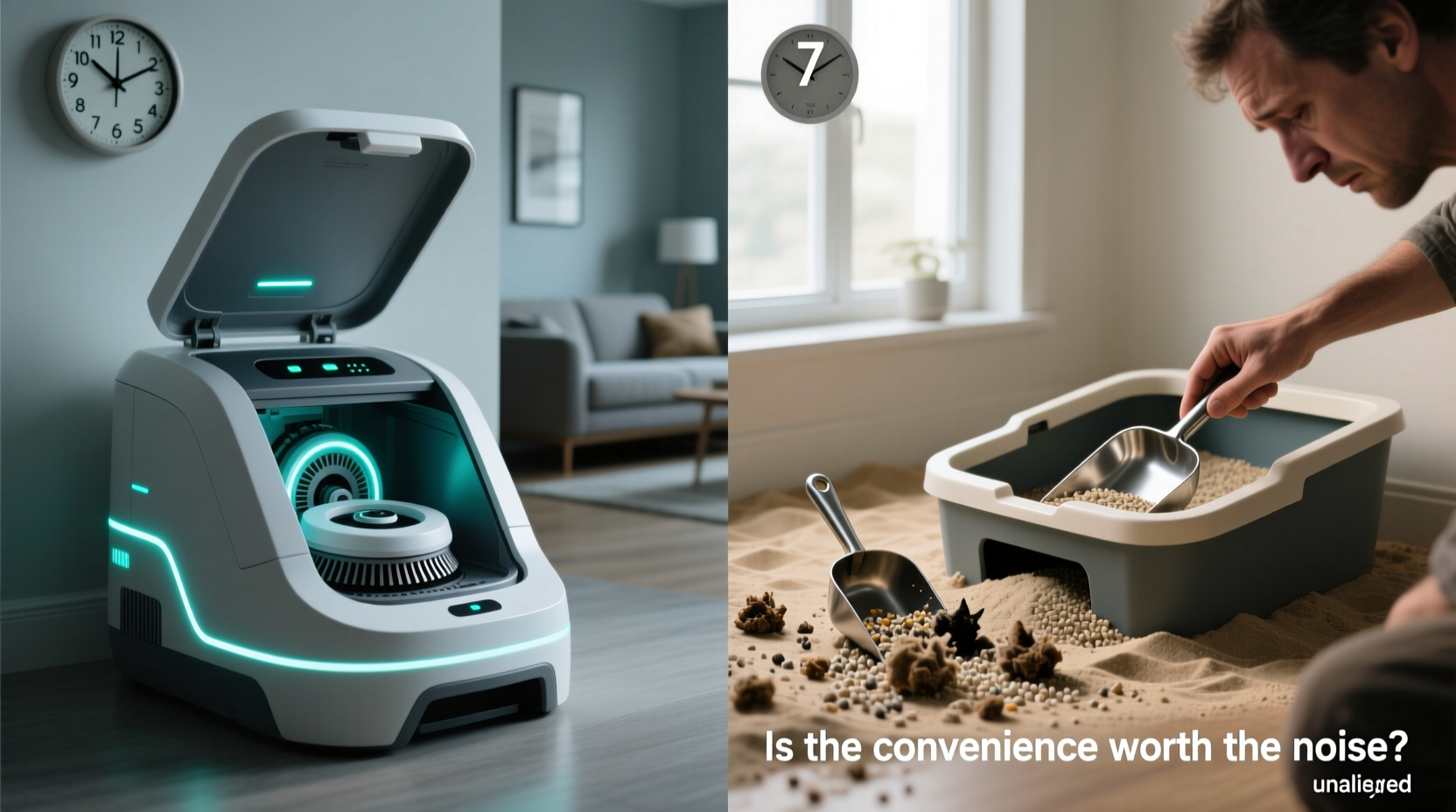
Cat ownership has evolved significantly over the past two decades. What was once a simple tray filled with clay now includes clumping formulas, odor-neutralizing gels, and high-tech self-cleaning mechanisms. Automatic litter boxes entered the mainstream in the early 2000s, with brands like Litter-Robot and PetSafe leading innovation. These units use sensors, rakes, and waste compartments to separate solids and clumps from clean litter, depositing waste into sealed bins that require less frequent emptying.
Despite their sophistication, many cat owners still rely on manual scooping—using a handheld tool to remove waste daily. It’s low-cost, quiet, and gives full control over cleanliness. But it demands consistency and time, which not every schedule allows.
How Automatic Litter Boxes Work
Most automatic litter boxes operate on a similar principle: after your cat exits the box, a sensor triggers a cleaning cycle. A rotating rake or sifting mechanism moves through the litter, separating clumps and depositing them into a sealed waste drawer. The clean litter is left behind, ready for the next use. Some models offer app connectivity, usage tracking, and even voice alerts.
These systems typically require specific types of clumping litter and regular maintenance beyond just emptying the waste bin—such as checking for jams, cleaning sensors, and replacing carbon filters. They also need a stable power source, making them less ideal for homes without nearby outlets.
Tip: Always use clumping litter recommended by your automatic box manufacturer to prevent clogs and ensure proper separation.Noise Levels: A Real Concern
One of the most frequently cited drawbacks of automatic litter boxes is noise. Most units produce 50–70 decibels during operation—comparable to a dishwasher or vacuum cleaner at a distance. For light sleepers, those working from home, or cats with anxiety, this can be disruptive.
The timing of the cycle matters. Many models activate immediately after the cat leaves, which may coincide with early mornings or late nights. Others allow delayed cycles or manual triggering via app, offering more control over when noise occurs.
In contrast, traditional scooping generates minimal sound. A plastic scoop scraping against the bottom of a tray is barely audible, especially if done gently. This makes manual cleaning far less intrusive in shared living spaces or quiet households.
Convenience vs. Control: A Practical Breakdown
The primary appeal of automatic litter boxes lies in reduced labor. Once set up, they handle daily waste removal with little human intervention. For people with mobility issues, tight schedules, or multiple cats, this can be transformative.
However, convenience comes at a cost—both financially and functionally. High-end models range from $300 to $700, with ongoing expenses for replacement parts and specialized litter. Additionally, malfunctions such as stuck rakes, sensor errors, or power failures can leave the box unusable until repaired.
Manual scooping, while requiring daily effort, offers complete oversight. You see exactly what’s happening with your cat’s waste—a critical factor in monitoring health. Changes in urine volume, stool consistency, or frequency can signal medical issues early. With automatic systems, waste is hidden away quickly, potentially delaying detection of problems.
“Owners using automatic boxes must stay vigilant. Hiding waste too efficiently can mask early signs of urinary tract infections or digestive issues.” — Dr. Lena Patel, Feline Veterinarian
Maintenance Requirements Compared
Both systems require upkeep, but the nature of that maintenance differs significantly.
| Task | Automatic Litter Box | Traditional Scoop |
|---|---|---|
| Daily Cleaning | Runs automatically; user checks bin status | User manually scoops waste |
| Waste Drawer Emptying | Every 5–7 days (varies by model/cat count) | N/A (waste removed daily) |
| Litter Replacement | Every 2–4 weeks (some models conserve litter) | Every 2–4 weeks (depends on usage) |
| Mechanical Maintenance | Monthly sensor wipe, rake inspection, filter change | None |
| Full Box Wash | Every 1–2 months | Every 1–2 months |
| Troubleshooting | Required for jams, resets, app sync issues | Rarely needed |
While automatic boxes reduce daily labor, they introduce technical responsibilities that some users find burdensome. A jammed rake or misaligned sensor can turn a “set-it-and-forget-it” device into a source of frustration.
Real-Life Scenarios: Who Benefits Most?
Not all households are equally suited for automatic litter boxes. Lifestyle, environment, and individual cat behavior play decisive roles.
Mini Case Study: The Remote Worker in a Studio Apartment
Sarah, a graphic designer working from her 500-square-foot apartment, adopted a shy rescue cat named Milo. She initially purchased a top-tier automatic litter box to minimize disruption during video calls. However, she found the unit’s post-use rumble startled Milo, who began avoiding the box altogether. After two weeks of stress-induced accidents, Sarah switched back to a covered traditional box and scooped twice daily. The silence restored Milo’s confidence, and Sarah adjusted her routine to accommodate the extra task during lunch and evening breaks.
In this case, the noise undermined both feline comfort and human convenience—proving that technological benefits don’t always translate to real-world success.
Who Should Consider an Automatic Box?
- Families with multiple cats: Frequent use makes daily scooping tedious; automation spreads the burden.
- People with physical limitations: Bending or gripping a scoop may be difficult; touchless operation helps.
- Busy professionals: Those leaving home early and returning late benefit from automated upkeep.
- Multi-level homes: Placing a unit on an upper floor reduces the need to carry waste down stairs.
Who Might Prefer Traditional Scooping?
- Light sleepers or noise-sensitive individuals: Even moderate sounds can disrupt rest.
- Owners of anxious or elderly cats: Sudden movements or noises may deter use.
- Budget-conscious pet parents: Upfront and long-term costs add up quickly with automated systems.
- Those monitoring health closely: Immediate visual access to waste aids early diagnosis.
Step-by-Step Guide to Choosing the Right System
Deciding between automatic and manual litter management doesn’t have to be overwhelming. Follow this structured approach to evaluate your needs:
- Assess your daily routine. Do you have time for a 2–3 minute scooping session each day? If not, automation may be worth exploring.
- Evaluate your living space. Is the litter box near a bedroom, office, or quiet area? Noise sensitivity should influence your choice.
- Consider your cat’s temperament. Is your cat skittish, older, or easily stressed? Observe how they react to appliances like vacuums or dryers.
- Calculate long-term costs. Include the initial price, replacement parts, filters, and compatible litter over 12 months.
- Test compatibility. Try a short-term rental or read reviews focused on reliability and customer support.
- Monitor health impact. Whichever system you choose, ensure you can still observe waste patterns regularly.
FAQ: Common Questions Answered
Do automatic litter boxes really save time?
Yes, in terms of daily labor—they eliminate the need to scoop every day. However, time saved may be offset by troubleshooting, maintenance, and learning curves. For most users, net time savings are modest unless managing multiple cats.
Can noise from an automatic box scare my cat?
It can. Cats vary widely in sensitivity. Some adapt quickly; others avoid the box entirely after one loud cycle. Models with quieter motors and delayed start features tend to perform better with nervous cats.
Are there hybrid options available?
Yes. Semi-automatic trays exist—like hooded boxes with easy-pour spouts or sift-style dual-chamber designs that let you separate waste with a shake. These offer partial convenience without electronics or noise.
Checklist: Making Your Decision
Use this checklist to determine which litter solution fits your life best:
- ☐ I have a reliable power outlet near the litter area
- ☐ My cat tolerates moderate appliance noise
- ☐ I’m willing to invest $300+ upfront
- ☐ I own more than one cat
- ☐ I struggle with physical tasks like bending or lifting
- ☐ I can commit to monthly mechanical maintenance
- ☐ I prioritize silent operation and simplicity
- ☐ I monitor my cat’s waste closely for health changes
If most checked items are from the first five, an automatic box could be a strong fit. If the last three dominate, traditional scooping likely serves you better.
Weighing the Trade-Offs Honestly
The allure of automation is powerful—especially in an era where smart devices promise to simplify every aspect of life. But pet care isn’t purely logistical; it involves sensory environments, animal psychology, and personal habits. An automatic litter box isn’t inherently superior. It’s a tool designed for specific circumstances.
The convenience of not scooping daily is real. So is the irritation of waking to a grinding motor at 6:15 a.m., or discovering your cat has started eliminating beside the box because it feels unsafe. Likewise, the simplicity of a traditional tray shouldn’t be underestimated. It’s affordable, predictable, and puts you in direct contact with your cat’s well-being.
Ultimately, the best choice aligns with your household dynamics—not marketing claims. Technology should serve your lifestyle, not complicate it.
Conclusion: Make the Choice That Works for You and Your Cat
There’s no universal answer to whether the cleaning convenience of an automatic litter box is worth the noise. For some, the trade-off delivers peace of mind and reclaimed time. For others, the intrusion outweighs the benefits. What matters most is observing your cat’s behavior, respecting your own limits, and choosing a system you can sustain long-term.
Don’t feel pressured by trends or premium pricing. Whether you opt for a $60 tray and scoop or a $600 robotic unit, consistency and attention are what keep your home clean and your cat healthy. Test options, listen to your instincts, and remember: the best litter solution is the one that works—quietly and reliably—every single day.
💬 Have experience with both systems? Share your story in the comments below—your insight could help another cat owner make a smarter choice today.








