For cat owners, managing litter box odor is a daily challenge. The smell of ammonia, bacteria buildup, and decomposing waste can quickly permeate a home—especially in small spaces or multi-cat households. As technology advances, automatic litter boxes have emerged as a modern solution promising convenience and improved hygiene. But when it comes to the core concern—odor control—is an automatic litter box truly more effective than the traditional method of daily scooping?
The answer isn’t straightforward. While automatic systems offer hands-free cleaning and claim superior odor containment, real-world results depend on multiple factors: litter type, frequency of waste removal, ventilation, and even your cat’s habits. This article breaks down the science, compares practical performance, and evaluates whether upgrading to an automatic system delivers meaningful improvements in air quality and odor management.
How Odor Forms in Cat Litter Boxes
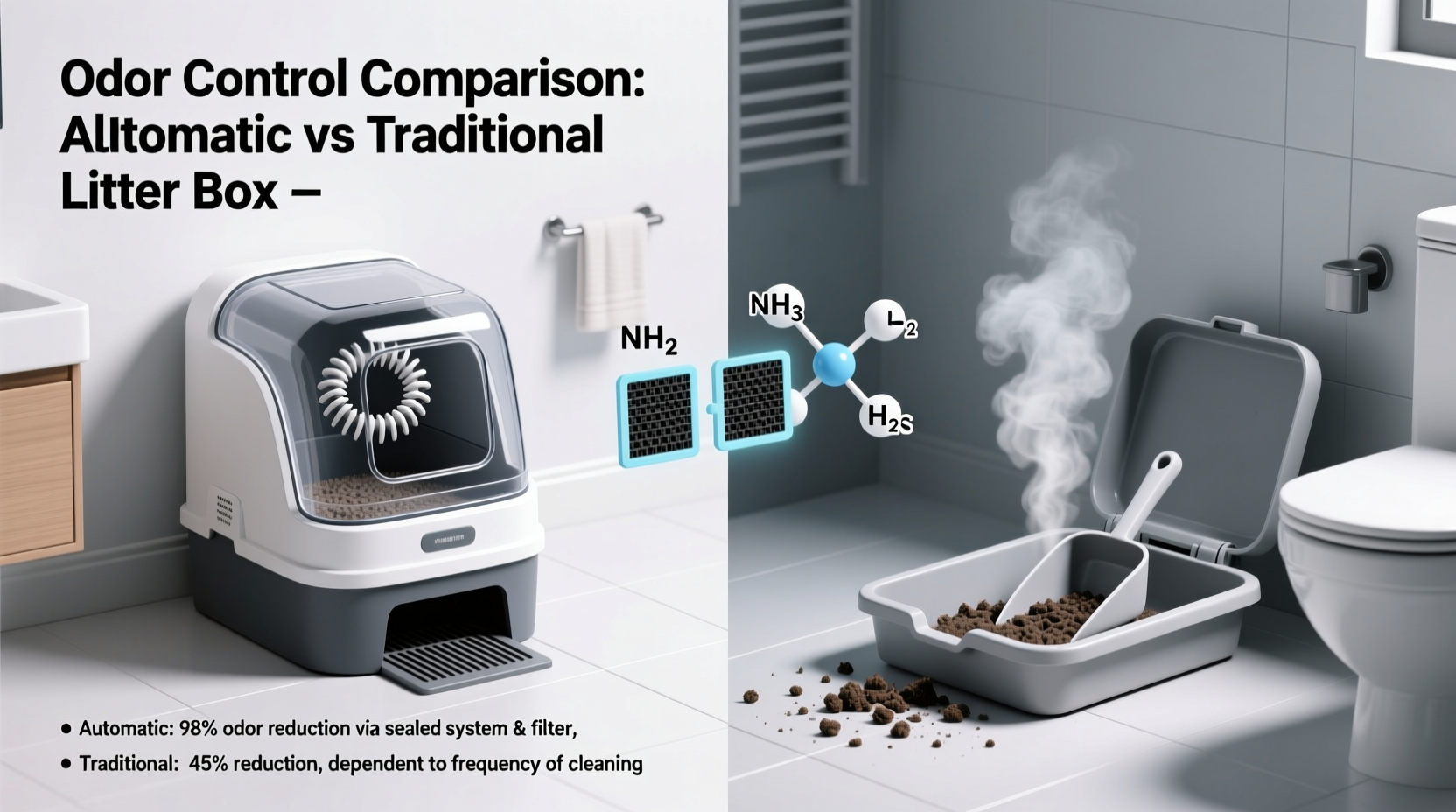
Understanding the root causes of litter box odor is essential before evaluating solutions. Cat urine contains urea, which breaks down into ammonia through bacterial action. Feces produce sulfur compounds like hydrogen sulfide and mercaptans—gases with notoriously strong, unpleasant smells. These odors intensify over time, especially in warm, humid environments where microbial activity increases.
Traditional litter boxes rely on absorbent materials (like clay or silica) to trap moisture and mask smells temporarily. However, once saturated, they become breeding grounds for odor-causing bacteria. Even with daily scooping, residual waste particles remain embedded in the litter, continuing to emit gases. Over time, these micro-contaminants accumulate, leading to persistent background smells that frequent cleaning may not fully eliminate.
Automatic litter boxes attempt to interrupt this cycle by removing waste immediately after use. By isolating solid and liquid waste in sealed compartments, they aim to reduce exposure to air and limit bacterial growth at the source. But how well does this work in practice?
Automatic Litter Boxes: Design and Odor Control Mechanisms
Most automatic litter boxes operate on one of two principles: rake-based sifting or gravity-assisted disposal. After a cat exits the box, sensors trigger a cleaning cycle that separates clumps from clean litter and deposits them into a sealed waste drawer or bag. Some models include carbon filters, deodorizing gels, or even UV-C light to further suppress odor.
The key advantage lies in speed. Waste is removed within minutes of deposition, minimizing the window for decomposition. Sealed containment prevents direct air contact with soiled material, significantly reducing volatile organic compound (VOC) emissions. High-end models like the Litter-Robot or PetSafe ScoopFree Ultra feature multi-layered filtration and disposable trays that eliminate the need for manual scooping altogether.
However, mechanical systems are not foolproof. Sensor delays, missed clumps due to improper positioning, or malfunctioning rakes can leave waste behind. If the waste compartment isn’t emptied regularly, trapped material begins to ferment, potentially creating a concentrated odor source worse than a well-maintained traditional box. Additionally, some cats reject automatic units due to noise or confinement, leading to avoidance behaviors that result in accidents elsewhere—a major contributor to household odor issues.
Tip: Place your automatic litter box in a low-traffic area with good airflow to enhance odor dispersion and reduce sensor interference.Traditional Scooping: Simplicity and Limitations
The traditional method—manually scooping waste once or twice daily—remains the standard for most cat owners. When done consistently, it effectively removes the bulk of odor-producing waste. Using high-clumping, odor-control litter (such as those infused with baking soda or activated charcoal) enhances performance by neutralizing ammonia and trapping moisture.
But consistency is key. Missed days or rushed cleanings allow waste to break down, increasing odor intensity. Moreover, even diligent scooping doesn’t remove all contaminants. Microscopic urine residues coat litter granules and the box itself, gradually building up over weeks. Without full litter changes and deep cleaning every few weeks, these residues contribute to a lingering “litter box smell” many owners find difficult to eliminate.
Ventilation plays a critical role. A traditional box placed in a poorly ventilated closet or corner will trap odors regardless of scooping frequency. Open designs expose more surface area to air, accelerating gas release. In contrast, covered boxes can concentrate smells unless equipped with replaceable carbon filters.
“Immediate waste removal is the single most effective way to control odor. Whether achieved manually or automatically, timing matters more than the method.” — Dr. Rebecca Nguyen, DVM, Feline Health Specialist
Comparative Analysis: Automatic vs. Traditional Odor Performance
To assess real-world effectiveness, we evaluated user reports, product testing data, and veterinary insights across several dimensions of odor control.
| Factor | Automatic Litter Box | Traditional Scoop Box |
|---|---|---|
| Waste Removal Speed | Minutes after use (automated) | Hours to days (dependent on owner) |
| Odor Containment | Sealed waste compartment reduces air exposure | Open or semi-covered; higher air exposure |
| Maintenance Frequency | Waste drawer emptied weekly; occasional filter replacement | Daily scooping; full change every 2–4 weeks |
| Residual Buildup Risk | Low if cleaned regularly; higher if neglected | High over time without deep cleaning |
| Initial & Ongoing Cost | $300–$700 upfront; proprietary liners/litters | $30–$50 setup; affordable litter options |
| User Satisfaction (Odor Reduction) | 78% report noticeable improvement (PetTech Survey, 2023) | 52% satisfied with odor levels |
The data suggests automatic systems generally outperform traditional boxes in odor suppression, primarily due to faster waste isolation and better containment. However, satisfaction drops sharply when maintenance lapses occur. A clogged rake or full waste bin negates the primary benefit, sometimes worsening the problem.
Real-World Case Study: Two Homes, Two Approaches
In Portland, Oregon, Sarah M., a software engineer living in a 700-square-foot apartment with two cats, switched from daily scooping to a Litter-Robot 4 after complaints from her roommate about persistent bathroom smells. Despite using premium clumping litter and scooping twice daily, she noticed a faint ammonia scent lingering near the bathroom door.
After installing the automatic unit, she observed an immediate reduction in ambient odor. “It’s not that my old box was dirty,” she explained, “but there was always that underlying smell. Now, unless I open the waste drawer, I don’t notice anything.” She attributes the improvement to the sealed disposal system and consistent cleaning cycles, even when she’s working late.
In contrast, James T., a retiree in Austin with one senior cat, stuck with his simple, uncovered box and daily scooping routine. He uses natural pine litter, which he finds naturally absorbs odor without chemicals. “I clean it every morning, wash the box monthly, and keep the window cracked. Never had a smell issue,” he said. His experience highlights that meticulous manual care can match automated performance—at the cost of daily effort.
Maximizing Odor Control: Best Practices for Both Systems
Whether you use an automatic or traditional litter box, certain strategies significantly improve odor management. The following checklist applies to both setups:
- Choose the right litter: Opt for clumping formulas with odor-neutralizing ingredients like activated charcoal, baking soda, or zeolite.
- Change litter completely every 3–4 weeks: Even automatic systems require periodic full replacements to prevent residue buildup.
- Clean the box regularly: Wash plastic components with mild soap and water; avoid harsh chemicals that linger and irritate cats.
- Replace filters on schedule: Carbon filters in automatic units lose effectiveness after 1–2 months.
- Ensure proper ventilation: Use exhaust fans or air purifiers with HEPA and carbon filters in the room.
- Monitor your cat’s health: Strong-smelling urine can indicate urinary tract infections or dietary issues.
Step-by-Step Guide to Reducing Litter Box Odor
- Assess current setup: Identify sources of odor—waste accumulation, poor ventilation, or unsuitable litter.
- Select an appropriate litter: Test different types (silica, corn, wheat, pine) to find one your cat accepts and that controls smell effectively.
- Position the box wisely: Place it in a well-ventilated area away from food, bedding, and high-traffic zones.
- Establish a cleaning routine: For traditional boxes, scoop at least once daily. For automatic models, empty the waste drawer weekly and wipe sensors monthly.
- Deep clean monthly: Discard all litter, scrub the box with pet-safe cleaner, rinse thoroughly, and refill with fresh litter.
- Add supplemental odor control: Use air purifiers, odor-absorbing gels, or natural solutions like open boxes of baking soda nearby.
- Monitor and adjust: If odors persist, reevaluate litter type, cleaning frequency, or consider switching systems.
Frequently Asked Questions
Do automatic litter boxes eliminate odor completely?
No system eliminates odor entirely, but high-quality automatic boxes significantly reduce it by removing waste quickly and sealing it off. Occasional smells may still occur during maintenance or if the unit malfunctions.
Can I use regular litter in an automatic litter box?
Some models require specific litter types for optimal performance. Using non-recommended litter can cause clumping issues, sensor errors, or mechanical jams. Always consult the manufacturer’s guidelines.
Why does my automatic box still smell after cleaning?
Residual bacteria may linger in crevices or the waste drawer. Try deep-cleaning with a vinegar-water solution (1:1 ratio), ensuring all parts are dry before reassembly. Also, check if the carbon filter needs replacing.
Conclusion: Is the Upgrade Worth It for Odor Control?
The evidence shows that automatic litter boxes generally provide superior odor control compared to traditional scooping—but only when properly maintained. Their ability to remove waste within minutes and contain it in sealed compartments directly addresses the primary source of smell. For busy households, small apartments, or owners sensitive to odors, the investment often pays off in improved air quality and reduced chore burden.
That said, traditional scooping remains a viable, cost-effective option when paired with disciplined maintenance and high-performance litter. The key insight is not the tool, but the consistency of waste removal. Whether automated or manual, the most effective odor strategy hinges on prompt, thorough cleaning and attention to environmental factors like airflow and litter chemistry.
If you’re frustrated by persistent litter box smells despite regular scooping, an automatic system may offer the next-level control you need. But remember: technology supports good habits—it doesn’t replace them. Whichever method you choose, prioritize cleanliness, monitor your cat’s comfort, and stay proactive about maintenance.
🚀 Ready to upgrade your cat’s hygiene routine? Evaluate your current odor challenges, try one improvement from this guide, and share your results with fellow cat owners. Small changes can lead to fresher homes and happier pets.








